
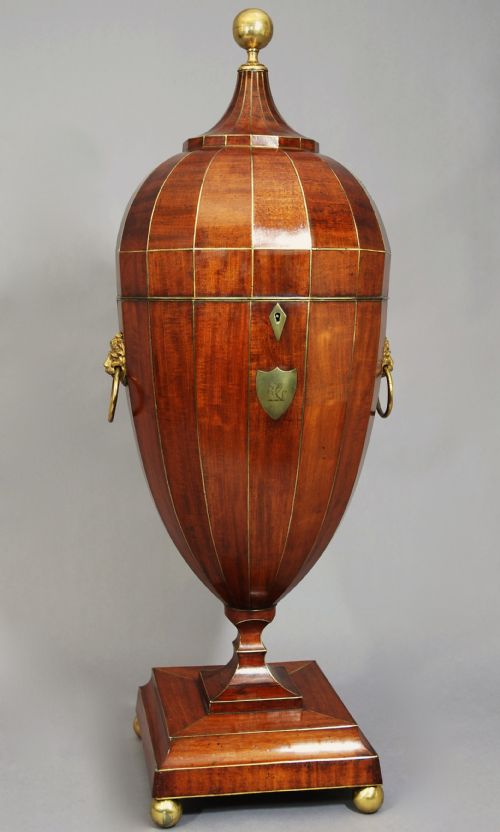


Antique Knife Urn
An antique knife urn is a formal dining room vessel designed to hold cutlery, bringing sculptural elegance to a Georgian interior.
Antique Knife Urn
An antique knife urn is a formal receptacle created during the Georgian and Victorian eras to store dining cutlery on pedestals or sideboards. The pieces seen here span the eighteenth century and the nineteenth century, encompassing George III and Sheraton styles.
The most common forms are tapered urns and sloping lidded boxes, frequently encountered in matched or paired sets alongside single examples. Mahogany is the predominant wood, complemented by satinwood and boxwood details.
While primarily constructed as cutlery storage, many examples show subsequent adaptation into stationery boxes or general storage. The origins remain rooted in English cabinetmaking traditions from the 18th century onward.
Materials and construction
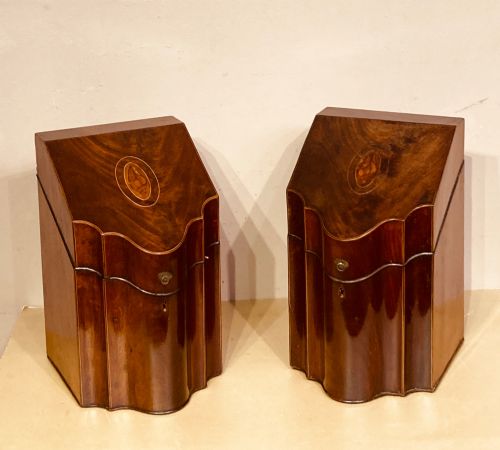
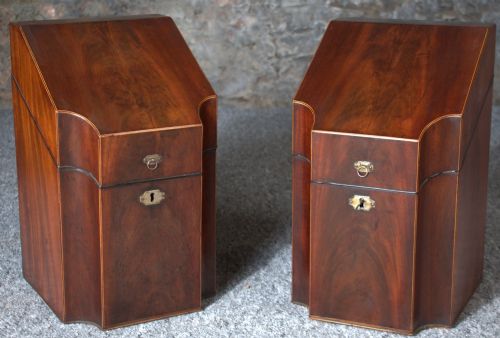
Cabinetmakers utilised solid and figured mahogany as the primary structural timber, often shaped with serpentine fronts or bow-front profiles. Wood inlay, including boxwood and satinwood banding, provides linear contrast and decorative enrichment across the surfaces.
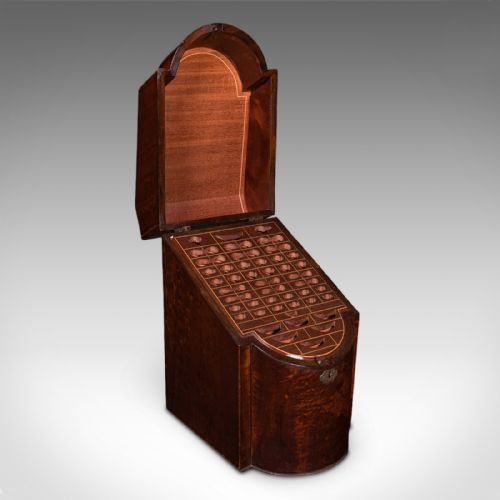
Metal components play a structural and decorative role, featuring brass fittings, locks, and solid silver mounts. Interior compartments are engineered specifically to accommodate handled cutlery items securely.
Several dining urns were thoughtfully converted into stationery boxes, proving that even formal eighteenth-century tableware enjoys a second career answering letters.
Assessing craftsmanship and condition
Quality rests in the figuring of the mahogany and the precision of the wood inlay work. Finely articulated serpentine curves and robust brass or silver mounts separate superior examples from plain variants.
The integrity of the original interior fitments and the depth of the timber patina dictate the standing of a piece. Urns retaining their internal knife storage blocks or conversion fittings demonstrate greater historical continuity.
The Antique Knife Urn Glossary
- Knife Urn
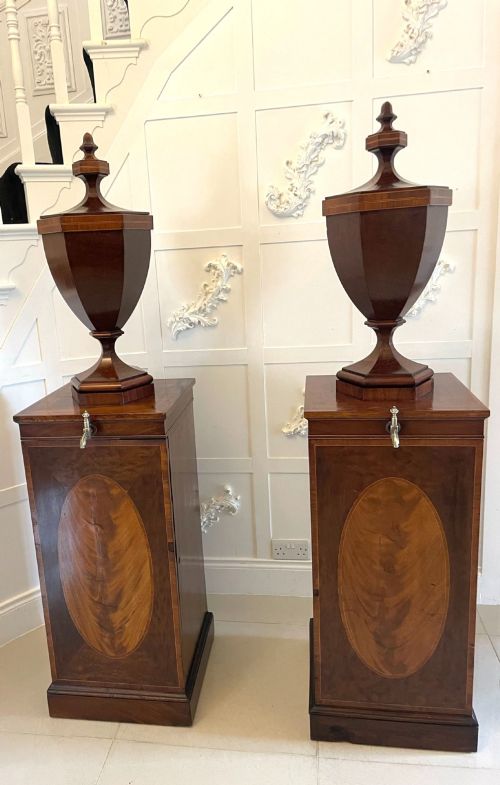
- A tall, vase-shaped wooden vessel used on dining room pedestals for storing cutlery during the eighteenth century. These pieces usually feature a removable cover and an internal tiered matrix.
- Serpentine Front
- A furniture facade shaped with a central convex curve flanked by two concave sweeps. This profile requires high carpentry skill and indicates a superior Georgian piece.
- Boxwood Inlay
- Contrasting pale wood inserted into recesses within a darker timber ground to create geometric borders. It defines the neoclassical aesthetic common in Sheraton furniture.
- Pedestal Cupboard
- A matching wooden base upon which dining urns were historically displayed in grand dining rooms. They elevated the cutlery storage to the height of the main serving surface.
- Patina
- The surface sheen and mellow tone developed by aged wood through decades of handling and wax polishing. A deep patina evidences genuine age and careful maintenance.
Antique Knife Urn: Frequently Asked Questions
What is an antique knife urn?
An antique knife urn is a decorative wooden vessel made during the Georgian or Victorian periods to hold dining cutlery on a sideboard or pedestal.
These hollow vessels often feature lift-off covers and internal tiers designed to keep handled blades organised and concealed when not in dining use.
How were knife urns used?
They were placed in dining rooms to store and present cutlery sets near the dining table before and after meals.
Servants retrieved the knives from the interior fittings when laying the table for large formal dinners.
How do I distinguish George III urns?
George III pieces typically display neoclassical proportions, figured mahogany timber, and precise boxwood or satinwood stringing.
They frequently incorporate serpentine shaping and original brass or silver hardware characteristic of late eighteenth-century cabinetmaking.
Can I use them for modern storage?
Many examples function well for holding modern stationery, letters, or small collectables thanks to their fitted internal compartments.
Careful placement away from direct heat sources protects the antique wood and any delicate interior linings.