


Antique Khorjin Cushion Face
An antique khorjin cushion face brings the rich weaving traditions of Persian nomads directly into modern interiors as tactile art.
Antique Khorjin Cushion Face
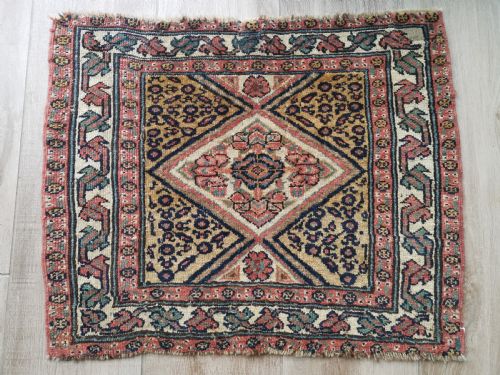
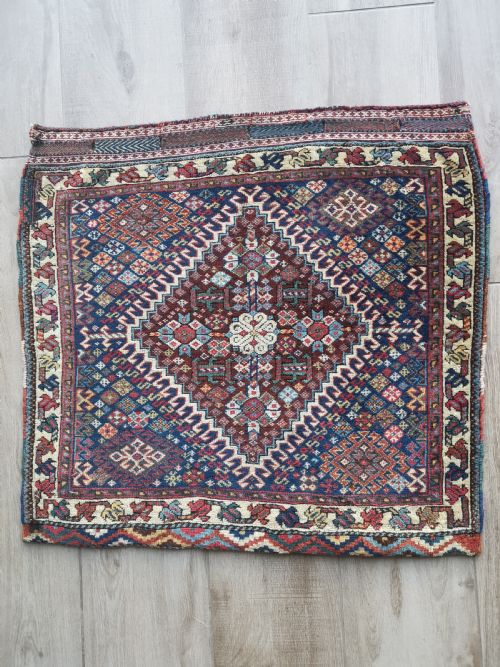
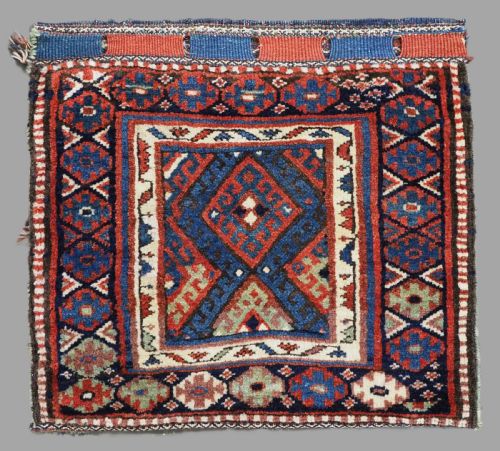
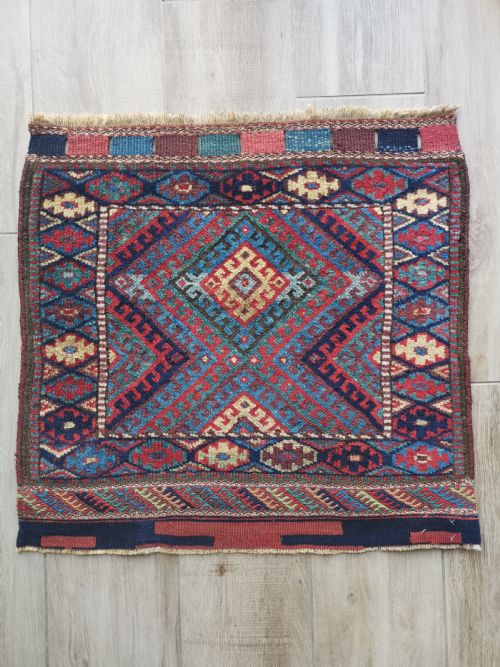
When searching for an antique khorjin cushion face, collectors examine fragments and complete panels originating from various nomadic and tribal groups across Persia. These pieces represent the utilitarian storage sacks and saddlebags of pastoral peoples, repurposed over time into decorative cushions or preserved as flat textiles.
The versions most commonly met on this page date from the nineteenth century up to the early twentieth century, spanning decades of traditional tribal weaving. Examples range from complete bag faces with original plain weave backs to individual half-saddlebags and soumak panels.
Origins trace directly to specific regional confederations and tribes, including the Qashqai, Shahsavan, Afshar, Khamseh, Jaf Kurd, and Luri peoples. Each group imparts distinct regional motifs, structural methods, and wool qualities to their weaving.
Materials and construction
Makers utilised hand-spun wool for the pile and foundation, combining it with cotton in certain examples. This wool is frequently paired with natural dyes that yield rich, deep colour palettes over decades of age.
Weaving techniques vary between symmetrical or asymmetrical knotting for pile surfaces and flatweave structures like soumak work. Many pieces incorporate banded weft work designs alongside structural plain weave backs.
Listings feature pieces spanning the nineteenth century through to the early twentieth century, originating from regions including Fars, Azerbaijan, and Luristan.
Quality variations in tribal weaving
Knot density and the precision of the weave set individual examples apart, alongside the crispness of geometric and figurative motifs. Finer pieces demonstrate tight, controlled handling of complex patterns such as boteh designs or bird and dragon iconography.
The vibrancy and depth of the natural dyes heavily influence the visual impact of a piece. Lustrous, luminous wool combined with stable, saturated dye baths distinguishes superior weaving from standard production.
The Antique Khorjin Cushion Face Glossary
- Khorjin
- A traditional tribal saddlebag used by nomadic peoples for transport and storage. These double-pouch containers are frequently divided into individual cushion faces today.
- Soumak
- A supplementary weft wrapping technique that creates a durable, textured surface without knotting. Shahsavan weavers frequently utilise this method for detailed geometric compositions.
- Boteh
- A stylised floral motif resembling a pear or curved almond shape. This ancient Persian symbol appears frequently across tribal bag faces.
- Plain weave
- A simple interlacing of warp and weft threads creating a flat, unpiled fabric. Many bag faces retain sections of this foundational structure on their reverse sides.
Antique Khorjin Cushion Face: Frequently Asked Questions
What is a khorjin?
A khorjin is a traditional double-pouch saddlebag woven by nomadic and tribal groups in Persia for carrying possessions during seasonal migrations. These bags were constructed with durable materials to withstand constant travel.
Over time, many of these bags have been separated into individual cushion faces or preserved as textile art for interior display.
How do I live with a bag face cushion?
Bag face cushions bring rich texture and deep historical character to modern seating areas or displayed flat on walls. Their robust wool construction handles gentle daily use in domestic spaces.
Keep these textiles away from direct sunlight to protect the natural dyes from fading over extended periods.
How do I identify tribal origins?
Tribal origins are identified by examining the specific palette, structural technique, and characteristic motifs used in the weaving. Different confederations like the Qashqai or Shahsavan employed distinct design vocabularies.
Examining the handling of wool and edge finishes also provides clear indicators of regional provenance.
What is the difference between pile and soumak?
Pile weaving involves knotting individual strands of wool onto the warp threads to create a plush, velvety surface. This method allows for thick, tactile cushion faces.
Soumak is a flatweave technique where coloured weft threads are wrapped around warp threads in intricate patterns, producing a firm, textured finish.