


Antique Karaja Rug
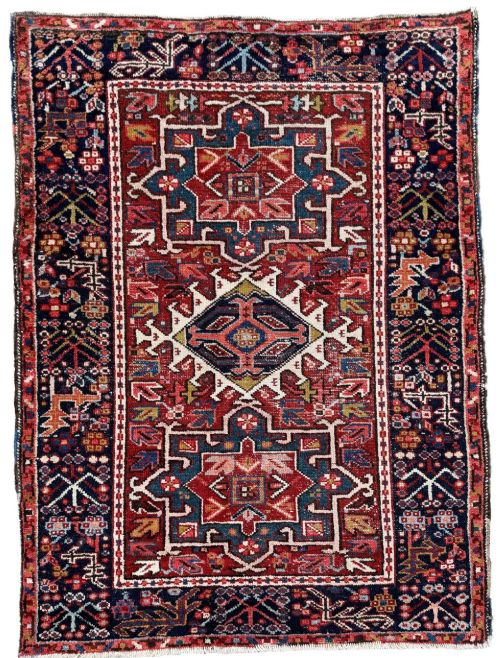
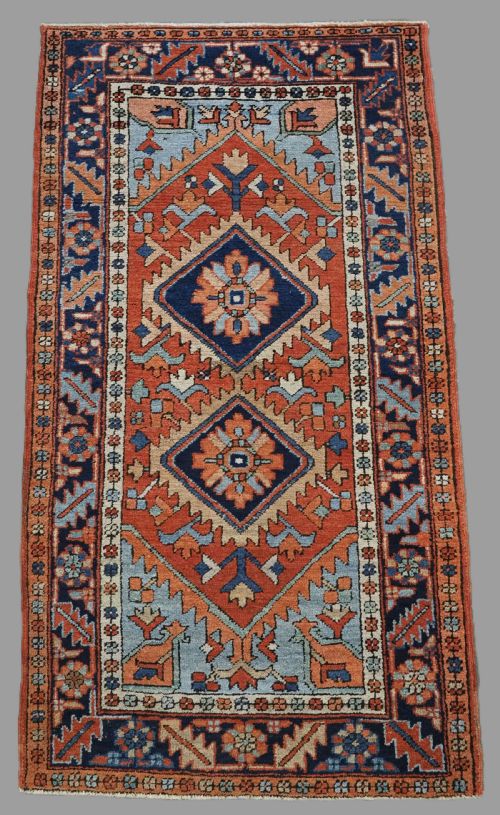
An antique karaja rug brings robust northwest Persian tribal character to a floor through geometric field designs and intense colours.
Antique Karaja Rug
An antique karaja rug is a woven floor covering originating from northwest Persia, spanning village and tribal formats from small scatter sizes up to larger gallery carpets. These pieces typically display traditional Persian geometric motifs, medallions, and bold border arrangements suited to functional daily use.
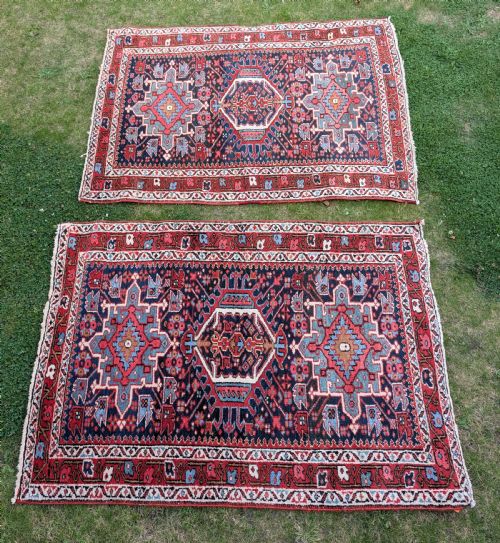
The version you are most likely to meet on this page is the single scatter rug or small village piece dating from around eighteen ninety through to nineteen thirty. Pairs and larger room formats also appear, reflecting the varied output of the region.
What varies in quality
Quality in these village carpets rests on the handling of wool and the saturation of dye. Tightly packed knots and resilient wool foundations produce a firmer handle and sharper geometric definition.
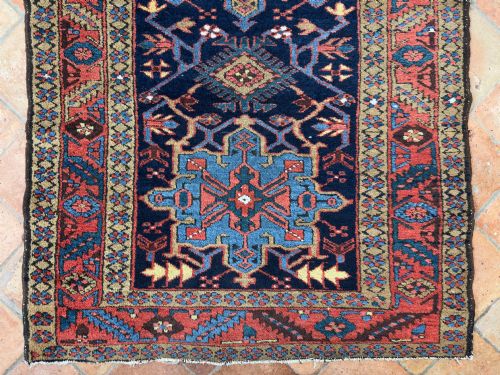
The visual impact depends on the depth and intensity of the natural palette, where skilled dye work elevates a standard village runner into a striking decorative object.
Antique Karaja Rug Retail Price Guide 2026
Typical asking prices for karaja rug among the pieces listed under this phrase on Sellingantiques today, from the lower quarter to the upper quarter. They describe what is for sale here now, not the wider market.
Listings span periods from eighteen ninety to nineteen thirty, utilising wool and cotton across traditional Persian tribal styles.
The Antique Karaja Rug Glossary
- Karaja rug
- A hand-knotted carpet originating from the town and surrounding villages of Karaja in northwest Persia. These pieces are known for robust construction and geometric tribal designs.
- Northwest Persian
- A geographical designation covering major weaving districts including Karaja and Heriz. This region is famous for durable wool carpets featuring strong rectilinear patterns.
- Gallery Kelleh
- A long, narrow carpet format designed for hallways or large rooms. These extended runners provide substantial floor coverage.
- Village rug
- A piece woven domestically or in small community workshops rather than large urban manufactories. Such rugs often show expressive, less formal interpretations of traditional designs.
Antique Karaja Rug: Frequently Asked Questions
Where were antique karaja rugs made?
These rugs were produced in the town of Karaja and surrounding villages located in the northwest region of Persia. The area is part of a broader traditional weaving tradition shared with nearby Heriz.
Local workshops and village weavers relied on regional wool supplies and time-tested geometric design motifs handed down through generations.
How do I style an antique karaja rug?
The bold geometric patterns and intense colours anchor traditional and contemporary interiors alike. Smaller scatter formats suit entryways, hearths, and studies.
Larger gallery sizes and runners provide durable pathways in corridors or living spaces while adding distinct Persian tribal character to the floor.
Are these rugs durable for daily use?
These pieces were built as hard-wearing furnishing rugs designed for active household life. The combination of sturdy wool pile and cotton foundations handles regular foot traffic well.
Proper placement on a quality underlay helps protect the wool structure and extends the working life of the carpet.
How do I date an antique karaja piece?
Dating relies on stylistic indicators, structure, and material characteristics observed across known examples from eighteen ninety through the early decades of the twentieth century. Northwest Persian village pieces from this era show specific wool textures and natural dye palettes.
Comparing knot density, fringe condition, and border styles helps establish the approximate period of manufacture.