
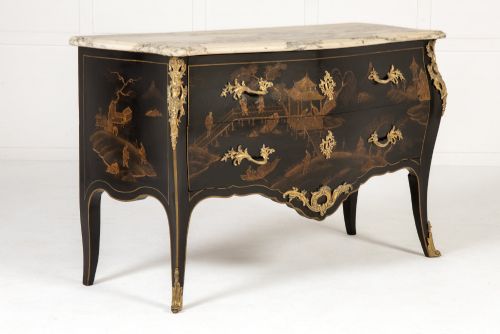


Antique Japanned Chest
An antique japanned chest brings layered lacquer, raised figures and gilded scenes into a room, offering striking decorative storage.
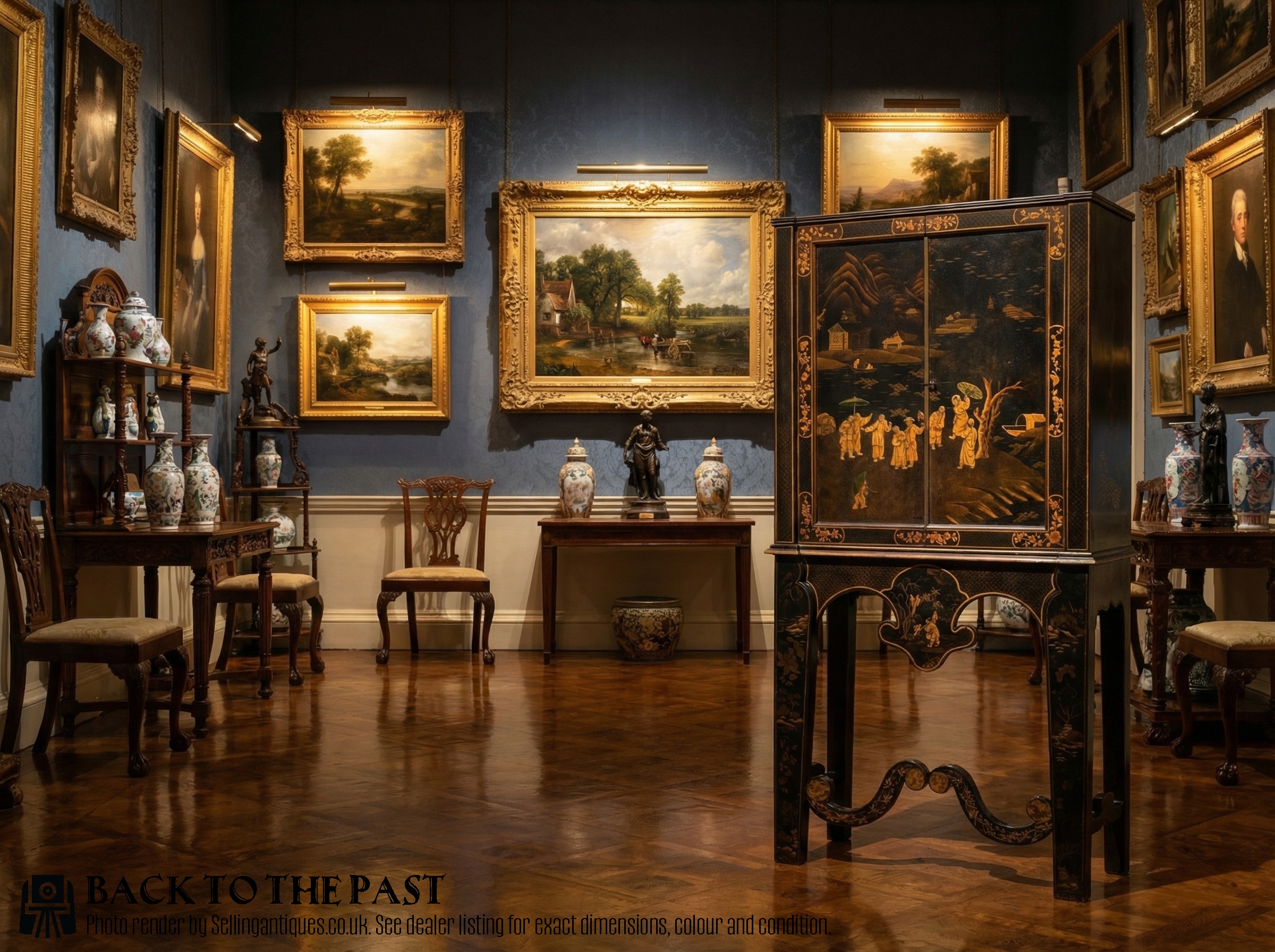
Antique Japanned Chest
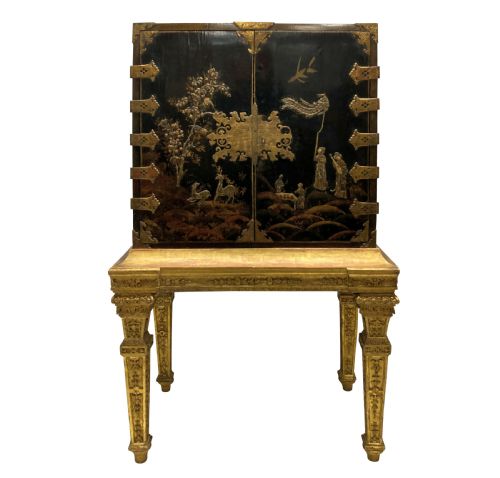
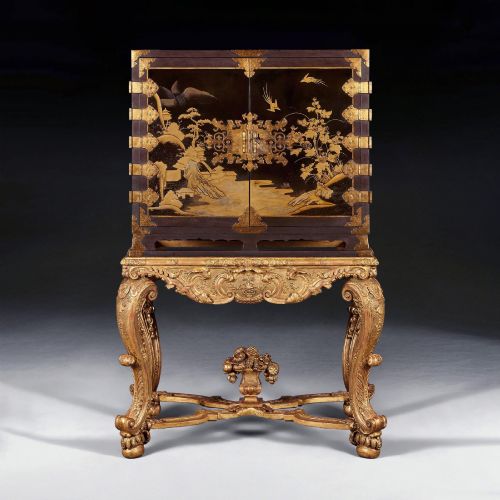
An antique japanned chest encompasses cabinets on stands, commodes, drawer units and storage boxes finished with simulated lacquer. These pieces span from the seventeenth century through the Georgian era to the early twentieth century, including Edwardian and later interpretations.
The most common forms on this page include cabinets raised on stands, chests of drawers, and smaller boxes or caddies. Makers drew inspiration from Chinoiserie, French Rococo Revival, William and Mary, and Regency styles, applying Asian motifs to traditional European furniture forms.
Surviving examples range from early black japanned bureau bookcases and medal cabinets to later pale cream chests and decorated cupboards. Each piece displays distinct regional interpretations of orientalism, utilising wood, metal, and painted finishes.
How they were made
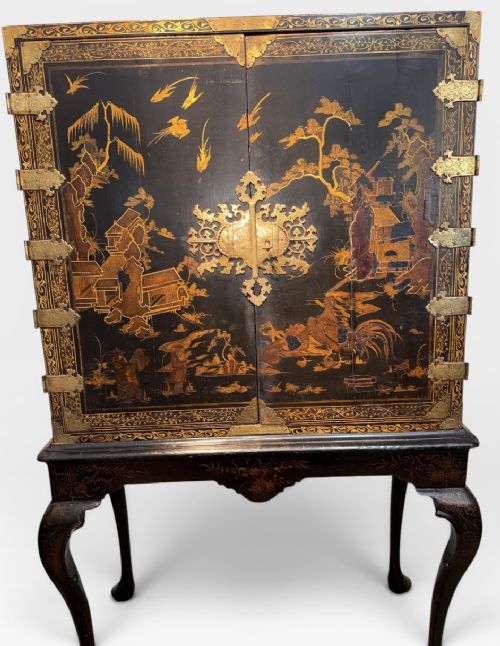
Craftsmen built these pieces from wood substrates, preparing the surfaces with multiple layers of ground before applying lacquer. Artisans built up relief details using gesso to create raised figures, pagodas, birds, and floral patterns.
Gilt, gold leaf, and engraved brass hardware completed the decoration, providing contrast against black, green, yellow, or pale cream lacquer grounds. Penwork and painted details added fine line work to tea caddies, boxes, and larger cabinets.
Early craftsmen occasionally added improbable European birds alongside traditional pagodas, creating whimsical hybrid landscapes on miniature cabinet doors.
What varies in quality
Quality rests in the depth of the lacquer surface and the crispness of the raised gesso work. Finer pieces exhibit delicate hand-painted detailing and subtle graduation in the gilding, whereas simpler items rely on broader, less detailed brushwork.
The sophistication of the hardware, such as engraved brass hinges and escutcheons, separates standard production from exceptional work. Cabinet construction, timber selection, and the integration of the stand also determine the standing of each piece.
The Antique Japanned Chest Glossary
- Japanning
- European imitation of East Asian lacquerwork, created by applying layers of varnish and resin followed by decorative painting and gilding. This technique was widely practiced in Britain and continental Europe during the seventeenth and eighteenth centuries.
- Cabinet on Stand
- A tall storage cabinet designed to sit upon a matching or associated support structure with legs. This form elevates the primary storage compartment to display decorative surfaces at eye level.
- Commode
- A low chest of drawers or cabinet developed in France and adopted across Europe during the eighteenth century. These pieces often feature bombé profiles or decorative painted finishes.
- Toleware
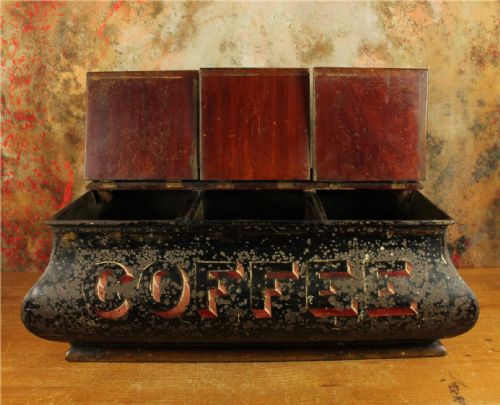
- Painted or japanned metalware, typically tin or iron, decorated with coloured enamels and gilt. Common items include spice boxes, tea caddies, and log bins.
Antique Japanned Chest: Frequently Asked Questions
What is japanning?
Japanning is a European imitation of East Asian lacquer work developed to satisfy a strong demand for oriental goods. Artisans applied successive coats of varnish and heat-cured them before adding painted and gilded designs.
Unlike true Asian lacquer utilising sap from the Toxicodendron vernicifluum tree, European japanning relied on shellac, resin, and oil-based varnishes. The technique allowed cabinetmakers to produce glossy, decorated surfaces on native timbers.
How do I care for lacquer furniture?
Keep japanned pieces away from direct sunlight, high humidity, and heat sources to prevent the lacquer from cracking or lifting. Dust gently with a dry, soft microfiber cloth without applying commercial polishes or cleaning sprays.
Maintain a stable indoor environment, as sudden temperature fluctuations stress the timber substrate beneath the lacquer layers. Handle brass fittings with care and avoid abrasive materials on the decorated surfaces.
How can I tell the period?
Dating relies on carcass construction, hardware types, and the underlying furniture style associated with specific reigns and centuries. Seventeenth and early eighteenth-century pieces often feature distinct stand designs and deep black grounds, while Edwardian and later twentieth-century items utilise paler palettes.
Examine the secondary woods inside drawers and the ageing of the gesso and lacquer layers. Tool marks on hinges and brassware also help narrow down the production era.
Where were these pieces used?
These cabinets, chests, and boxes furnished principal rooms such as drawing rooms, bedchambers, and reception spaces. Larger cabinets on stands and commodes served as statement pieces to display wealth and refined taste.
Smaller items like tea caddies, workboxes, and spice boxes sat on tables or desks in private parlours. Their decorative surfaces were intended to catch candlelight and impress visitors.