
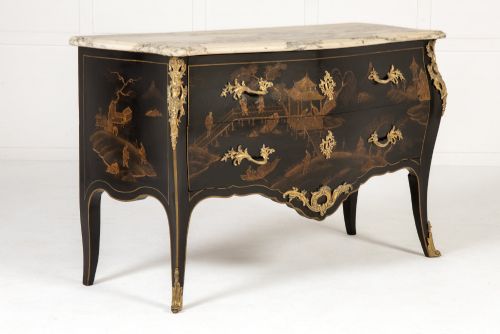


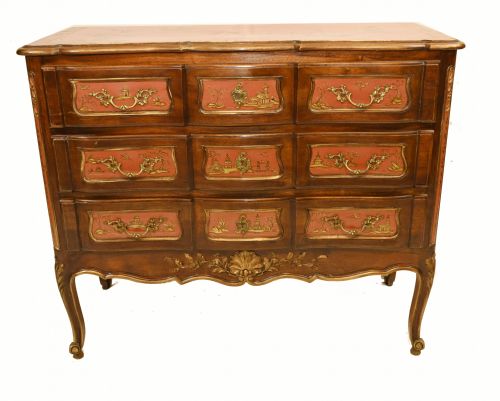
Chinoiserie Chest of Drawers
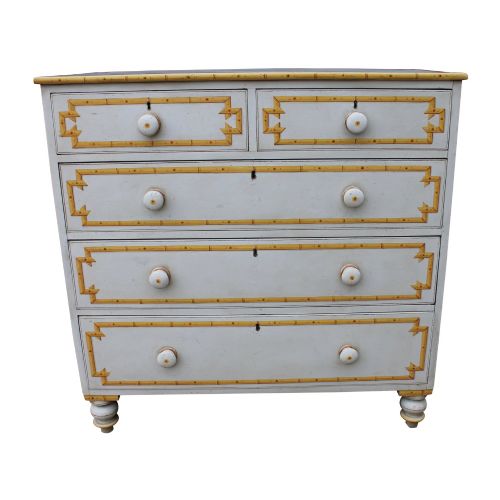
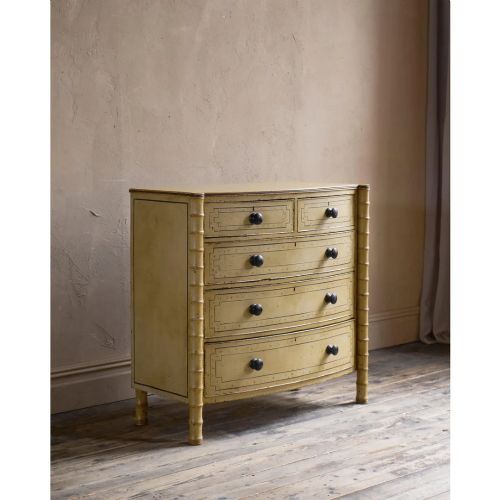
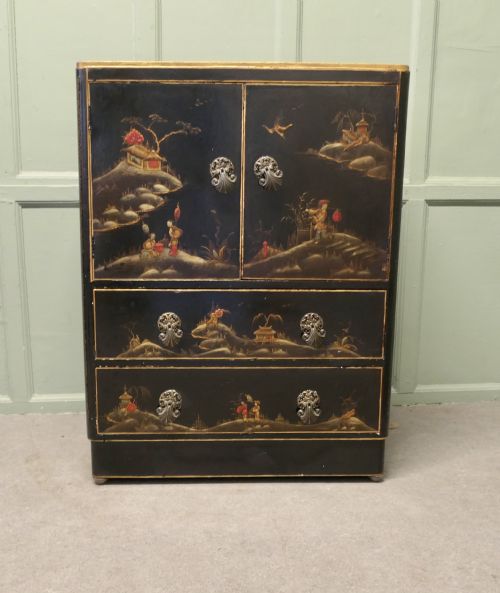
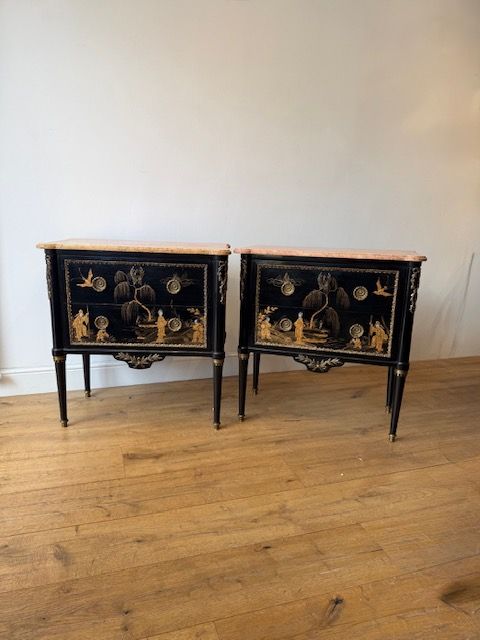
These chinoiserie chest of drawers pieces bring hand-painted decorative narratives and striking oriental lacquer into a room, offering both practical storage and bold visual presence.
Chinoiserie Chest of Drawers
A chinoiserie chest of drawers combines European furniture forms with decorative motifs inspired by East Asian art and craftsmanship. Buyers searching this phrase encounter examples ranging from 18th-century japanned pieces on stands to Edwardian and early 20th-century painted bedroom furniture.
The selection includes tallboys, commodes, chests on chests, and lowboys alongside standard drawer configurations. Materials vary from pine and walnut timber to finished lacquer, often complemented by brass hardware.
Styles span across periods including the 18th century, Regency, French Rococo Revival, Louis XVI Chinoiserie, and Edwardian eras. Pieces often display figures, landscapes, and floral motifs rendered in contrasting paint or gilt.
How they were made
Construction relies upon solid timber carcasses, including pine and walnut, built by cabinetmakers before the application of decorative surfaces. Drawers are integrated into chests, commodes, and cupboards using traditional joinery methods suited to each period.
Surfaces receive layers of paint, lacquer, or japanning to build up a smooth ground before intricate oriental scenes are applied by hand. Brass handles, escutcheons, and hinges are fitted to drawers and doors to complete the construction.
Listings feature periods spanning the 18th century, 19th century, Edwardian era, and the 1920s, utilising materials such as lacquer, brass, pine, timber, and walnut.
What varies in quality
The finesse and depth of the hand-painted or lacquered decoration dictate the visual success of the piece. Finer examples exhibit meticulous detail in the rendering of figures, pagodas, and botanical elements across the japanned surface.
The integrity of the underlying timber carcass and the proportional balance of the form distinguish standard bedroom furniture from exceptional decorative works. Original brass hardware and well-preserved surface patination further elevate the standing of a piece.
The Chinoiserie Chest of Drawers Glossary
- Chinoiserie
- European decorative style reflecting Chinese artistic influences, popular across various periods. It manifests through painted scenes of landscapes, figures, and flora on furniture surfaces.
- Japanning
- European imitation of Japanese and Chinese lacquerwork developed in the seventeenth and eighteenth centuries. The technique involves layering resin or paint and curing it before applying metallic decoration.
- Commode
- A low chest of drawers or cabinet developed in France during the seventeenth century. These pieces often feature decorative commode designs with shaped fronts and elaborate mounts.
- Lowboy
- A small table with drawers, typically used as a dressing table or side table. These compact items complement larger chests of drawers within bedroom suites.
- Tallboy
- A tall chest of drawers, often constructed as one chest stacked upon another. This form provides substantial vertical storage while maintaining a compact footprint on the floor.
Chinoiserie Chest of Drawers: Frequently Asked Questions
What periods do these chests come from?
The selection spans from the early 18th century through the 19th century and into the Edwardian period and the 1920s. Pieces reflect the specific decorative tastes of each era, ranging from early japanned work to later painted interpretations.
Buyers find both Georgian-era survivals and twentieth-century revivals on the market. Each period brings distinct characteristics in construction and decorative palette.
How do I care for lacquer surfaces?
Lacquer and japanned finishes require gentle maintenance to preserve the painted and gilt details. Keep them out of direct sunlight and away from extreme temperature fluctuations to prevent the surface from drying or cracking.
Dust gently with a soft, dry cloth rather than using chemical polishes or damp cloths. Proper environmental control ensures the painted scenes remain intact for years to come.
Where should I place a painted chest?
These striking pieces function effectively as focal points in bedrooms, hallways, or living rooms. Their decorative presence allows them to stand alone against plain walls or coordinate with other period furnishings.
Consider the lighting in the room to highlight the metallic details and raised lacquer work. Ensure the chosen spot protects the piece from excessive wear and direct heat sources.
Are all these pieces English?
While many examples originate from English workshops, the selection also includes North European and French pieces. Different regions developed their own interpretations of oriental decoration and furniture construction.
French pieces often align with Louis XVI or Rococo Revival styles, while English examples frequently employ japanned pine or walnut. Reviewing individual listings reveals the specific geographic origin of each item.