


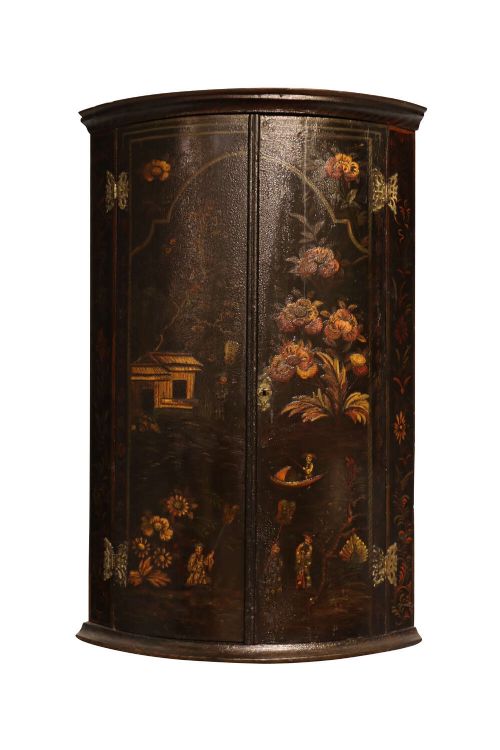

Japanned Lacquer Cabinet
A japanned lacquer cabinet brings striking Chinoiserie ornament and rich surface depth to a room.
Japanned Lacquer Cabinet
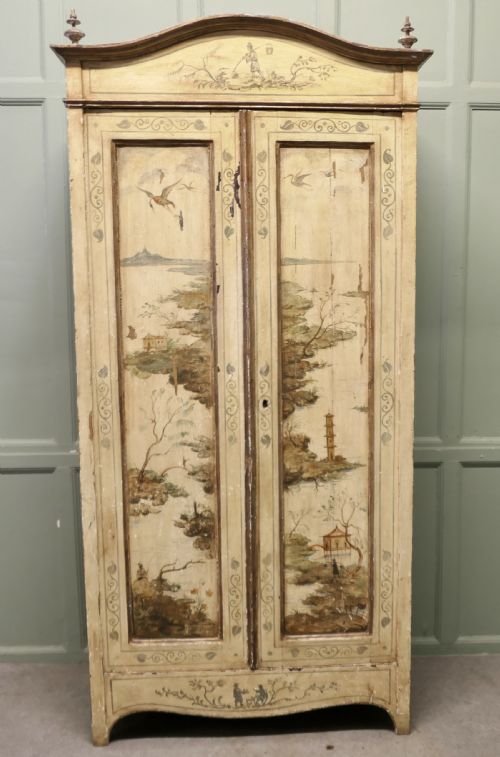
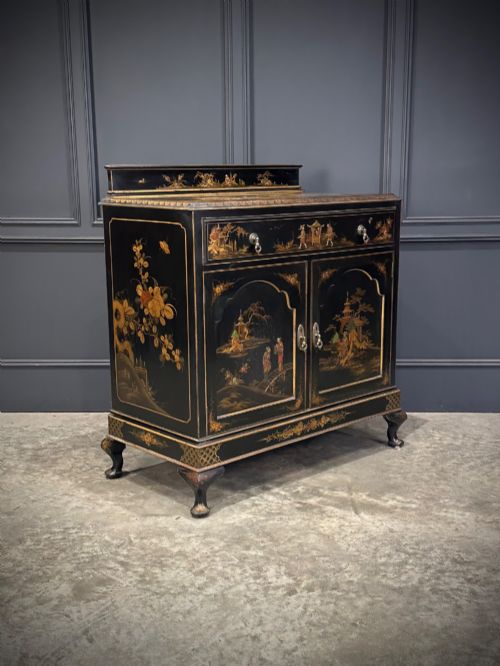
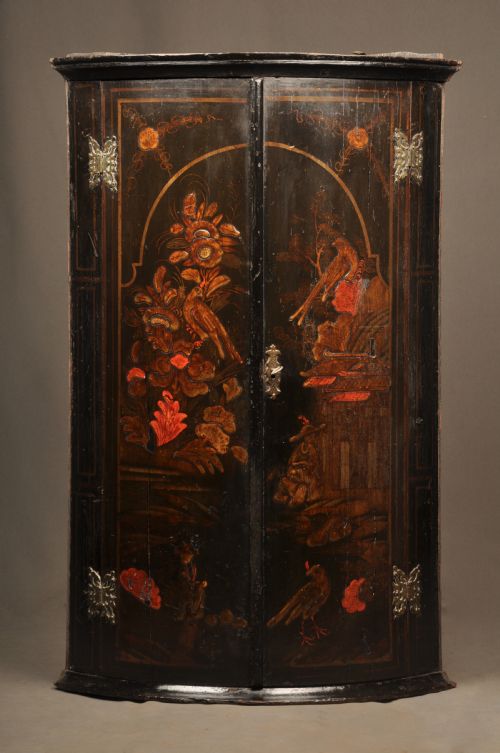
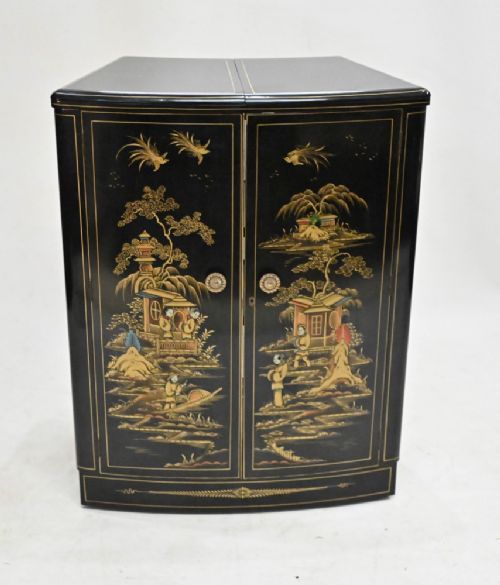
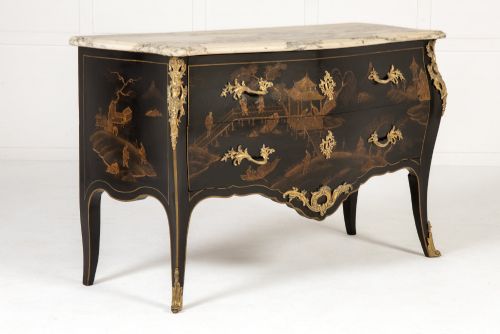
A japanned lacquer cabinet is a storage piece finished in European imitation of East Asian lacquerwork, frequently displaying raised figures, pavilions and floral motifs in gold and colour.
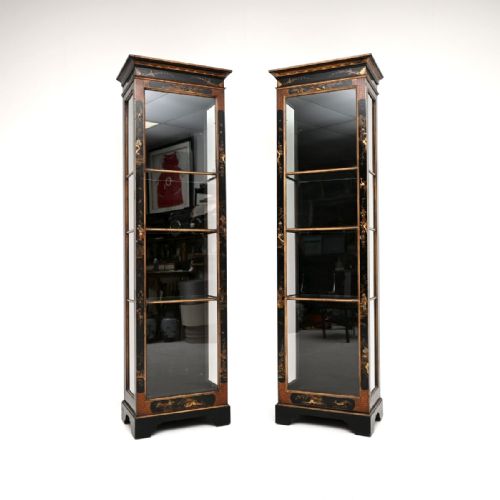
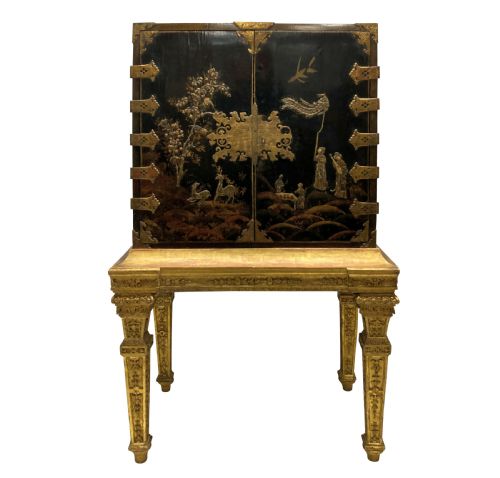
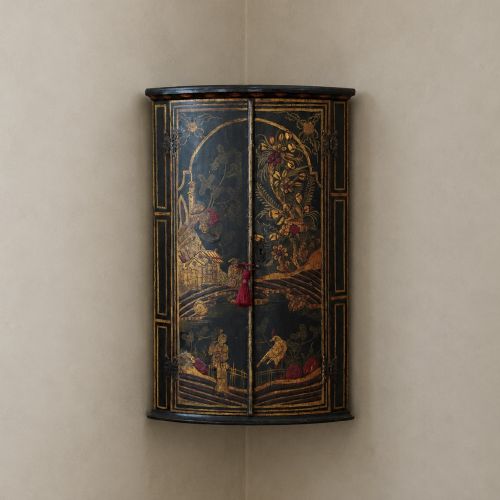
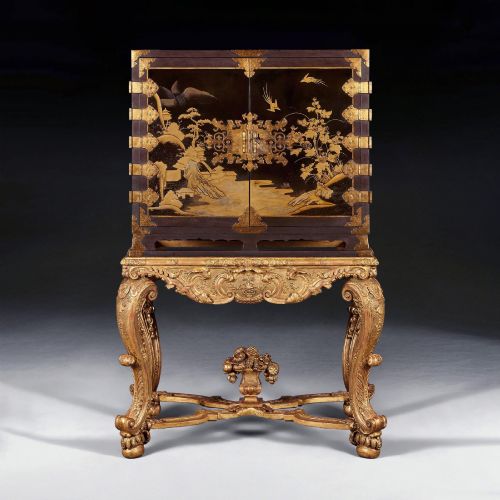
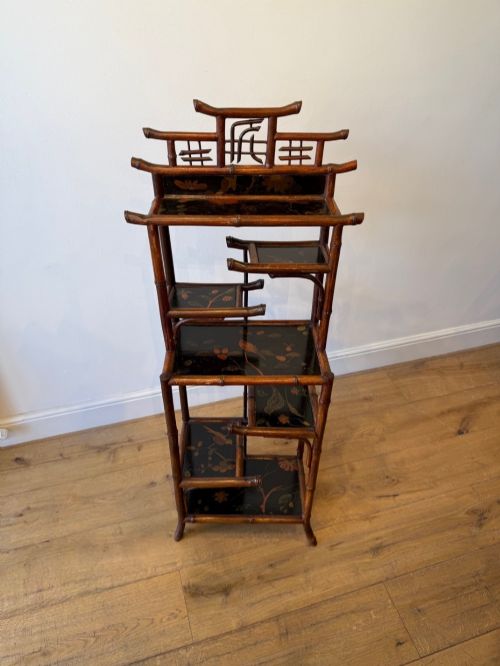
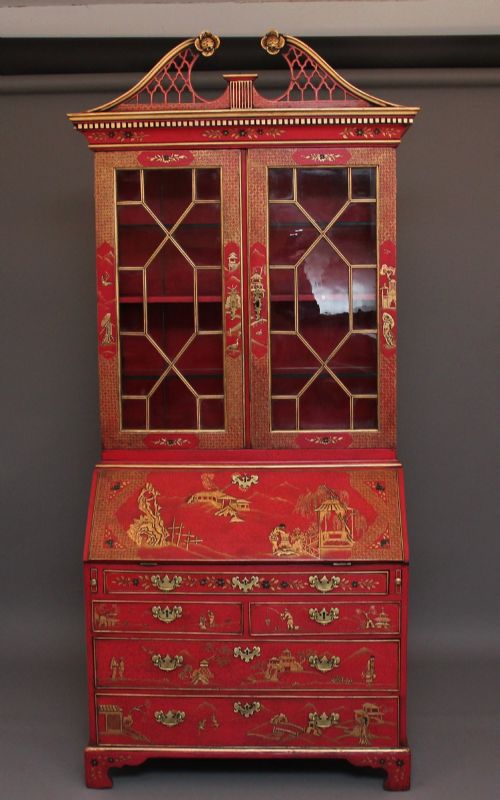
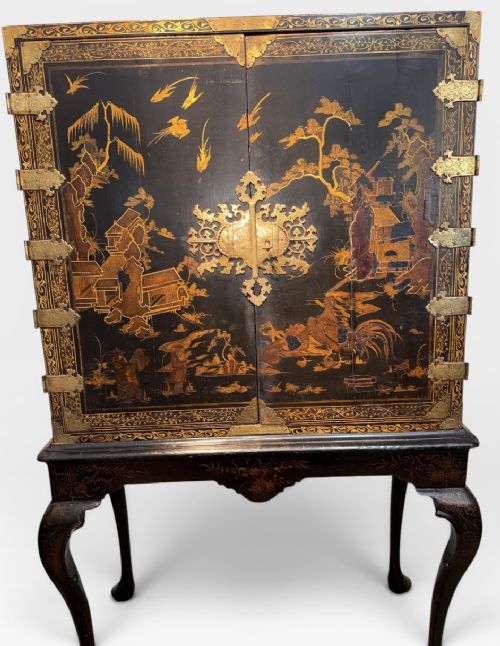
Buyers encountering this search phrase find forms ranging from 17th-century cabinets on stands and 18th-century bureau bookcases to 19th-century corner cupboards and 20th-century cocktail cabinets.
The aesthetic bridges several periods, appearing in William & Mary, Queen Anne, Georgian, Regency, Victorian, Edwardian and Art Deco interpretations.
How they were made
These pieces utilise wood and pine carcases built by joiners before layers of varnish and lacquer are applied to create a glossy ground.
Decorators built up surface relief using gesso beneath gold leaf, brass hardware and painted outdoor scenes depicting figures and landscapes.
Several cocktail cabinets on this page are specifically equipped for mixing drinks during the jazz age.
What varies in quality
Quality rests in the crispness of the raised gilt decoration and the depth of the lacquer surface, distinguishing skilled artisan work from simpler later painting.
The proportion between the cabinet body and its accompanying stand or base dictates the visual balance of the piece.
Maison Krieger·Vernon
The Japanned Lacquer Cabinet Glossary
- Japanning
- European imitation of Asian lacquer work utilising layers of varnish and raised metallic decoration. It gained popularity in the 17th and 18th centuries across furniture forms.
- Chinoiserie
- European artistic style reflecting Chinese motifs and motifs of East Asia. This aesthetic defines the pictorial scenes painted on these cabinets.
- Cabinet on stand
- A main storage carcase raised on a separate support frame or table base. This form highlights the decorative panels of early pieces.
- Bureau bookcase
- A writing desk with a sloping fall-front combined with shelving above. These functional pieces often feature fitted interior drawers behind the main flap.
Japanned Lacquer Cabinet: Frequently Asked Questions
What is a japanned lacquer cabinet?
A japanned lacquer cabinet is a storage furniture piece finished with European varnish techniques that imitate Asian lacquer. These pieces are typically adorned with Chinoiserie scenes of figures, birds and landscapes in gold and colour.
They appear across various periods from the seventeenth century through to the art deco era, taking forms such as corner cupboards, bureau bookcases and cabinets on stands.
How do I style a lacquer cabinet?
These cabinets serve as focal points in a room due to their glossy surfaces and pictorial detail. They work well placed against plain walls that allow the intricate gold and dark ground to stand out.
Many examples, particularly cocktail cabinets and side cabinets, function effectively in living spaces or dining rooms as both storage and display surfaces.
How do I identify the period?
Dating relies on the structural form of the cabinet carcase and the style of its stand or feet, ranging from carved giltwood regence bases to bamboo supports or art deco lines. The construction methods of the underlying wood and brass hardware provide further chronological clues.
Chinoiserie motifs also evolve across centuries, shifting from seventeenth-century raised gilt work to later nineteenth and twentieth-century interpretations.
Were these made in England?
While some pieces incorporate imported Japanese panels, many were produced in England and France by specialist workshops using European substrates like pine and oak. Craftsmen applied successive layers of varnish to mimic oriental lacquer.
English cabinet makers adapted these techniques for domestic tastes, creating corner cupboards, side cabinets and bureaux for grand interiors.