


Black Chinoiserie Sideboard
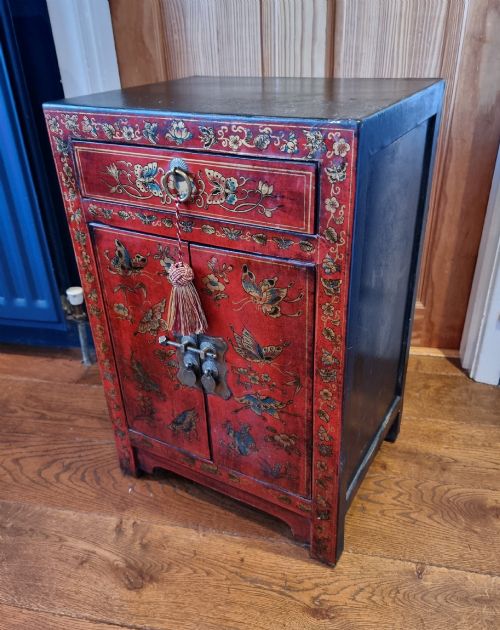
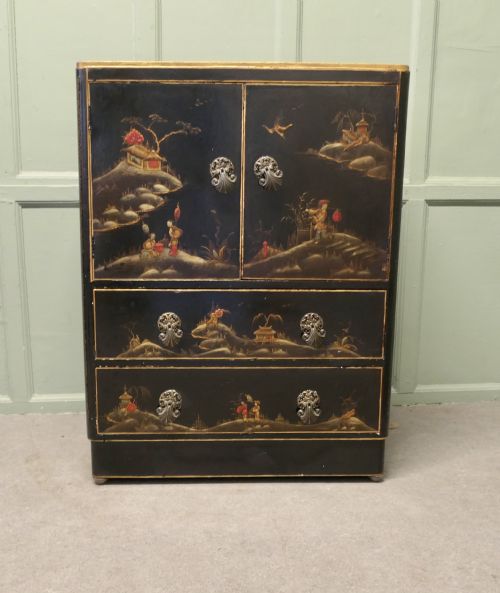
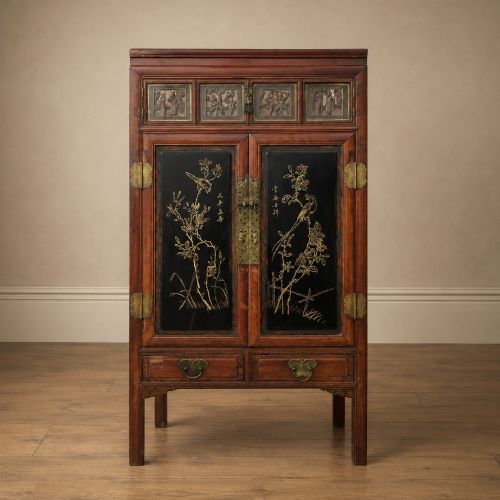
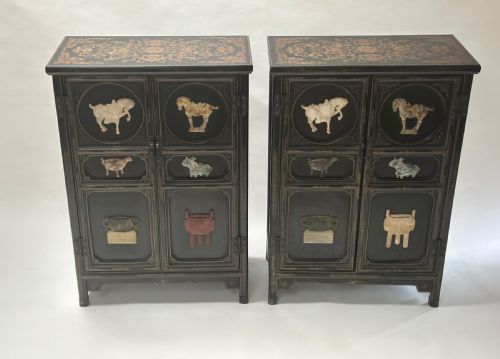
These black chinoiserie sideboards bring hand-painted narrative scenes and deep lacquered surfaces into a room, offering both bold decorative impact and practical storage.
Black Chinoiserie Sideboard
A black chinoiserie sideboard brings together oriental decorative motifs and European furniture forms across several periods. Buyers exploring this phrase encounter pieces ranging from early twentieth-century cupboards and side cabinets to nineteenth-century commodes and eighteenth-century console tables.
The aesthetic draws heavily on stylistic traditions including Chinese Qing Dynasty craftsmanship, French Rococo Revival, and Regency design. These items frequently manifest as cabinets, sideboards, or console tables decorated with birds, flowers, and figural scenes.
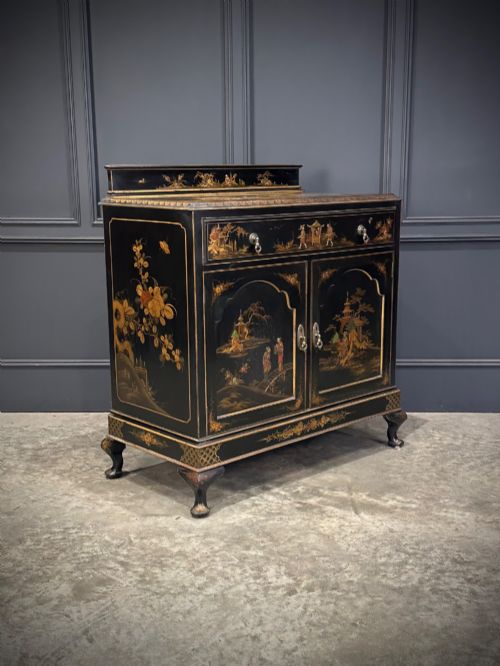
The version most commonly met on this page is the early twentieth-century lacquered cupboard or side cabinet finished in black with detailed decorative highlights. Examples also appear from the nineteenth century alongside occasional eighteenth-century console tables with marble tops.
Materials and construction
These items rely fundamentally on wood foundations coated in layers of lacquer to create a deep, lustrous ground. Artisans built up the surface before applying intricate painted and gilt decorations depicting traditional landscapes, birds, and botanical motifs.
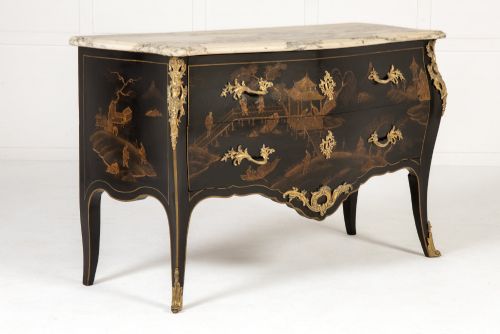
Metal elements play a functional and decorative role, with brass fixtures frequently securing doors, drawers, and stands. Certain configurations incorporate marble tops, particularly on console tables and commodes, adding weight and contrasting texture to the lacquered timber bodies.
Listings feature items spanning the eighteenth, nineteenth, and early twentieth centuries, incorporating materials such as brass, hardstone, and marble.
Assessing quality and craftsmanship
The depth of the lacquer finish and the complexity of the hand-painted details largely determine the distinction between standard and exceptional pieces. Finer examples display meticulous brushwork in gold and polychrome, creating layered perspectives within the depicted scenes.
The integration of the secondary materials, such as carved stands, fitted brass hardware, and inset marble slabs, dictates the overall architectural success of the item. Superior execution shows in the crispness of the carving and the stability of the timber substrate beneath the lacquer.
The Black Chinoiserie Sideboard Glossary
- Chinoiserie
- European decorative style reflecting Chinese artistic influences, popular from the seventeenth century onwards. It relies on whimsical interpretations of oriental landscapes, figures, and architecture.
- Japanning
- European imitation of East Asian lacquerwork involving layers of varnish and heat-cured finishes. Artisans often raised the painted designs in relief before gilding them.
- Commode
- Low cabinet or chest of drawers introduced from France during the eighteenth century. These pieces typically feature decorative hardware and prominent surface ornamentation.
- Chiffonier
- Compact sideboard or tall cabinet equipped with shelves or cupboards, developed during the Regency period. They provide enclosed storage alongside surface display space.
- Gilt
- Application of gold leaf or powdered gold onto a prepared surface to highlight carved details or painted motifs. This technique provides sharp contrast against dark lacquer grounds.
Black Chinoiserie Sideboard: Frequently Asked Questions
How do I style a black chinoiserie sideboard?
These striking pieces function well as focal points in dining rooms, hallways, or living spaces where their dark surfaces and painted details can stand out against neutral walls.
Keep surrounding decor relatively understated to allow the intricate artwork on the doors and panels to remain the primary visual feature of the room.
What is the difference between a cabinet and a commode?
Cabinets generally feature vertical doors enclosing shelving or storage space, whereas commodes are structured specifically around horizontal rows of drawers.
Both forms appear frequently within chinoiserie furniture traditions, adapted to suit various domestic storage needs across different centuries.
How should I care for lacquered wood furniture?
Protect the surface by avoiding direct sunlight and maintaining stable room humidity to prevent the timber substrate and lacquer layers from shifting.
Dust gently with a soft, dry cloth and avoid harsh chemical polishes that can dull the delicate gilt and painted decorations.
Are marble tops original to these tables?
Certain forms, particularly eighteenth-century console tables and specific commodes, were constructed specifically to carry heavy stone slabs.
Marble added both durability and a formal aesthetic, contrasting with the dark reflective qualities of the surrounding lacquered wood.