


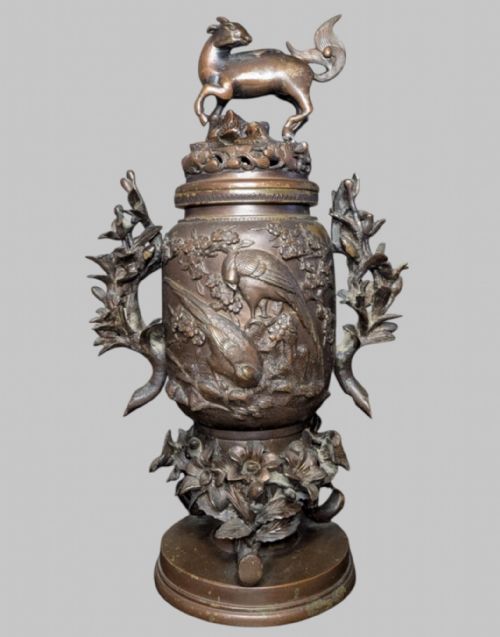


Antique Japanese Koro
An antique japanese koro brings centuries of incense-burning craft into the home, offering intricate metalwork and ceramic forms for display.
Antique Japanese Koro
An antique japanese koro is a traditional covered vessel designed for burning incense, taking forms from portable tripod burners to lidded urns and hanging boat shapes.
When searching for an antique japanese koro, buyers encounter pieces primarily originating from the Meiji period, alongside examples stretching into the Taisho and Edwardian eras.
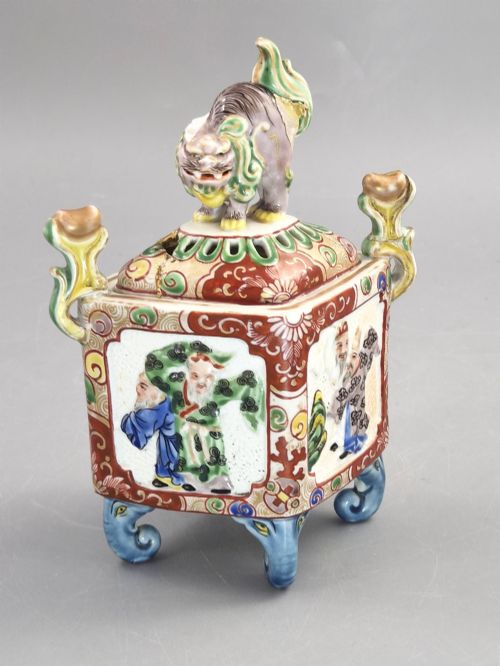
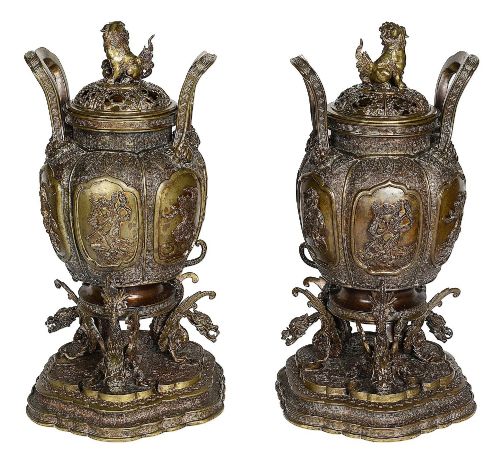
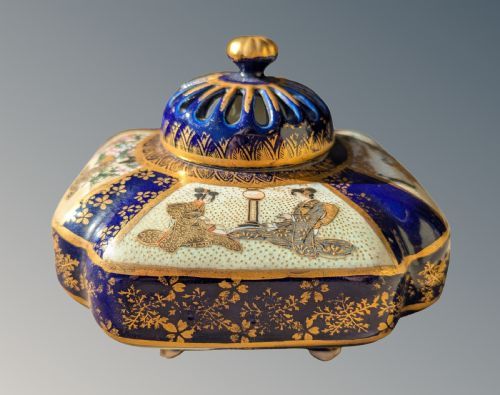
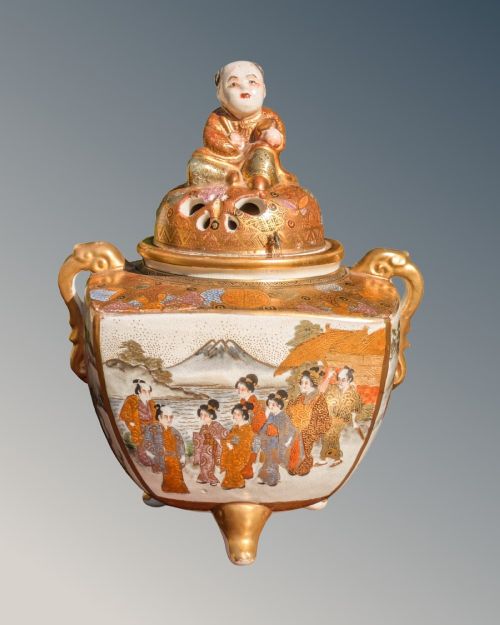
The objects appearing here range from earthenware satsuma and kutani porcelain incense burners to cast bronze vessels accented with gold leaf and silver.
How they were made
Potters shaped porcelain and earthenware bodies, adding hand-painted details in polychrome enamels and gilding alongside sculpted elements like dragon motifs and lion finials.
Metalworkers utilised bronze, sometimes combining gilt and silver, casting vessels with intricate surface patterns, reticulated lids, and figural feet shaped as elephant heads.
The listings here feature both ceramic forms in satsuma, kutani, and hirado porcelain, alongside cast bronze vessels adorned with cloisonne enamel.
What varies in quality
Quality rests in the precision of the modelling, seen in the sculptural definition of a dragon or a shi-shi lion finial rather than soft or flat casting.
Painted decoration shows divergence in skill, where fine brushwork on satsuma earthenware and kutani porcelain separates standard production from exceptional studio output.
Kinkozan·Kizan·Kotobuki do·Shizan
The Antique Japanese Koro Glossary
- Koro
- A Japanese incense burner, typically fitted with a pierced lid to release fragrance. These lidded vessels appear in ceramic and metal forms.
- Satsuma
- A type of Japanese earthenware featuring a crackle-glaze finish painted with polychrome enamels and gold. These pieces often depict figurative scenes.
- Meiji Period
- The era spanning from eighteen sixty-eight to nineteen twelve, noted for exceptional decorative arts produced for export and domestic use.
- Kutani
- A style of Japanese porcelain known for bold colour palettes and intricate overglaze enamelling. These works frequently incorporate reds, greens, and gold leaf.
- Shi-Shi
- A mythical guardian lion frequently modelled as a sculptural finial on vessel lids. The creature symbolises protection and strength.
Antique Japanese Koro: Frequently Asked Questions
What is an antique japanese koro used for?
These vessels were traditionally designed to burn aromatic incense during meditation, tea ceremonies, or quiet reflection within the home.
Today, collectors use them primarily as decorative objects of focal interest on mantelpieces, side tables, or cabinets.
How do I identify a Meiji period koro?
Meiji period pieces often display dense, meticulous decoration, vibrant enamel work, and distinct export signatures on the base. The materials frequently combine bronze, earthenware, or porcelain typical of late nineteenth-century workshops.
Stylistic cues include sculpted guardian lions, dragon finials, and intricate gilt detailing that defined the craftsmanship of that era.
Are bronze and ceramic koro cleaned differently?
Bronze vessels require gentle dusting and occasional maintenance with soft cloths to preserve the natural patina developed over decades. Harsh chemical polishes should be avoided to protect the original surface finish.
Ceramic examples in satsuma or kutani porcelain benefit from simple dry dusting, keeping moisture away from delicate overglaze enamels and gold leaf.
What is the difference between satsuma and kutani koro?
Satsuma vessels are formed from an earthenware body covered in a characteristic creamy, crackle-glaze that supports detailed enamel painting and gilding. They often feature figural or floral compositions.
Kutani pieces utilise a porcelain base decorated with bolder, vibrant overglaze pigments, frequently relying on deep reds and greens accented with gold leaf.