




Meiji Bronze Incense Burner
These Japanese bronze incense burners offer intricate metalwork and sculptural animal forms from the nineteenth century.
Meiji Bronze Incense Burner
A meiji bronze incense burner is a vessel designed to hold burning incense, originating from Japan during the nineteenth century. These objects take the form of lidded urns, censer bowls, and figurative sculptures such as temple lions, kirin, goats, and aubergines. The versions most commonly found here belong to the Meiji period, reflecting the decorative arts of that era alongside occasional pieces from the Edo period and Victorian times.
Makers shaped these vessels in various dimensions, ranging from compact desk items to monumental temple pieces. They often incorporate matching covers or finials, sometimes shaped as mythical beasts or natural elements. The listings include related forms such as vases and jardinières, but the core object remains the lidded censer or koro.
The aesthetic bridges traditional symbolism and decorative metalwork, utilising motifs like peonies, dragons, and animal figures. Collectors encounter these works through distinct periods including the nineteenth century, nineteen hundred, and eighteen eighty. The regional origin remains consistently Japanese, marked by specific stylistic traits of the Meiji era.
How they were made
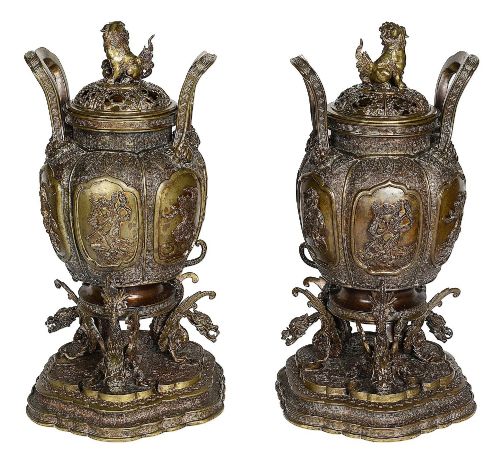
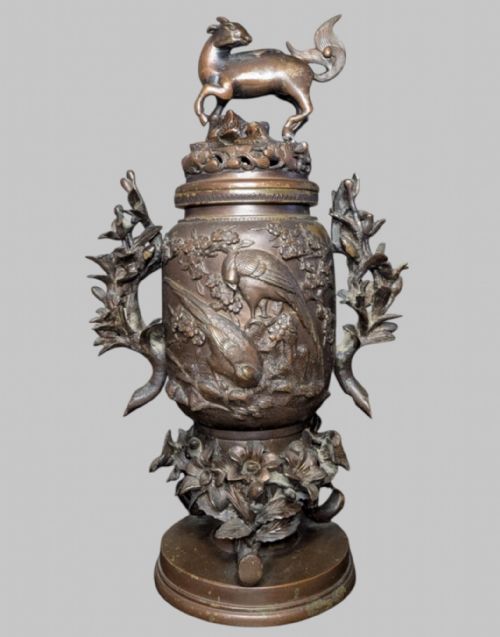
Artisans constructed these vessels primarily in bronze, copper, and gilt bronze, utilising casting techniques to form complex animal and sculptural shapes. The metal body served as the foundation for intricate surface work, including applied parcel-gilt details. This combination of cast metal and applied elements created textured finishes on pieces like temple lions and bird figures.
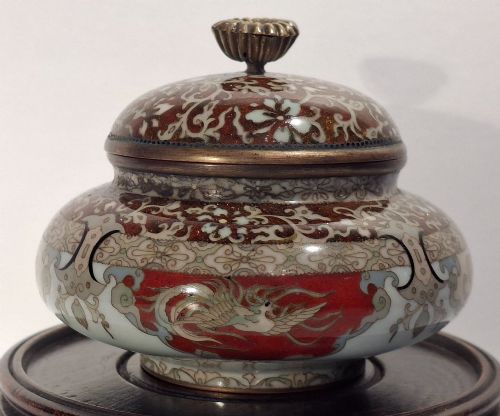
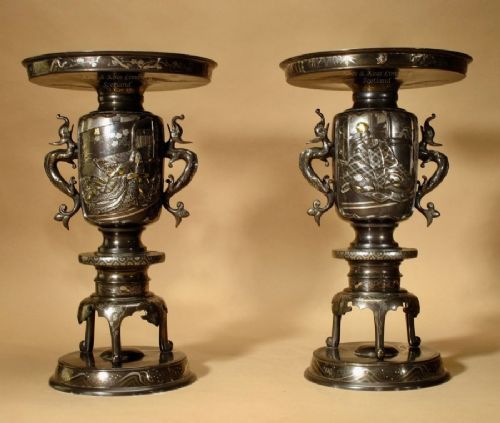
Makers embellished the bronze surfaces with gold inlay, silver inlay, and cloisonné enamel work. These techniques added contrasting colour and pattern to the metal body, particularly on hanging boat forms and censer bowls. Cord elements and earthenware occasionally appear as secondary materials within the construction of specific pieces.
Meiji Bronze Incense Burner Retail Price Guide 2026
Typical asking prices for meiji bronze incense burner among the pieces listed under this phrase on Sellingantiques today, from the lower quarter to the upper quarter. They describe what is for sale here now, not the wider market.
Several bronze incense burners take the surprising form of plump eggplants and tumbling temple lions.
What varies in quality
The inclusion of contrasting metalwork elevates the standing of a piece, particularly where gold inlay or silver inlay highlights the bronze surface. Artisans who achieved crisp definition in inlaid patterns and balanced proportions between the vessel and its cover produced the most accomplished examples. Signed works by notable makers carry distinct artistic weight compared to unsigned production pieces.
Kizan·Masahiko Katori·Daimei Noritoku
The Meiji Bronze Incense Burner Glossary
- Koro
- A Japanese incense burner, often fitted with a lid and resting on three or more feet. These vessels appear frequently in bronze and cloisonné enamel.
- Meiji Period
- The era in Japanese history lasting from eighteen sixty-eight to nineteen twelve, characterised by major artistic output in metalwork and decorative objects.
- Cloisonne Enamel
- A technique where enamel paste is applied within compartments created by soldered wire on a metal base, visible on specific censer designs.
- Shishi
- A mythical temple lion or dog used as a decorative motif and sculptural finial on incense burners.
- Kirin
- A mythical hooved beast from East Asian folklore, frequently depicted in bronze as part of a censer design.
Meiji Bronze Incense Burner: Frequently Asked Questions
How were these burners used?
These pieces served to burn aromatic incense in Japanese interiors, combining practical function with decorative sculpture.
Owners displayed them on tables or within rooms as ornaments when not actively burning incense.
How do I identify a Meiji period piece?
Meiji period items date from eighteen sixty-eight to nineteen twelve, often marked by detailed bronze casting and animal motifs.
Stylistic cues include naturalistic animal forms, mythical beasts, and precise metal inlay work.
What materials are used in these burners?
The primary material is bronze, frequently enhanced with gold inlay, silver inlay, or parcel-gilt accents.
Some examples also incorporate cloisonné enamel sections or earthenware bodies.