

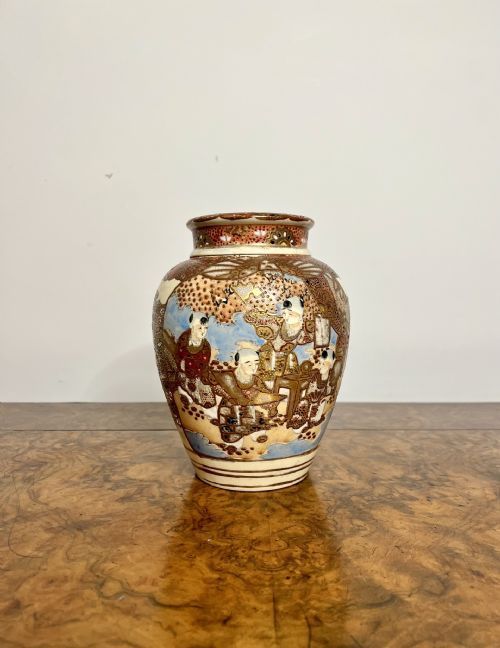
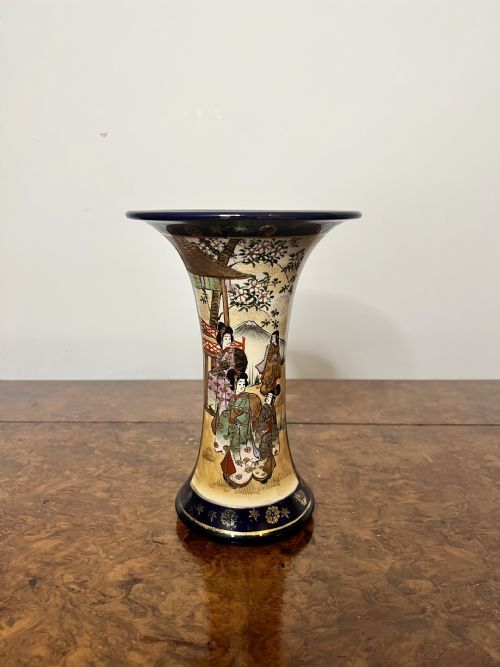


Antique Satsuma Vessel
An antique satsuma vessel brings intricate hand-painted narratives and rich gilding into a room, representing a high point of ceramic artistry.
Antique Satsuma Vessel
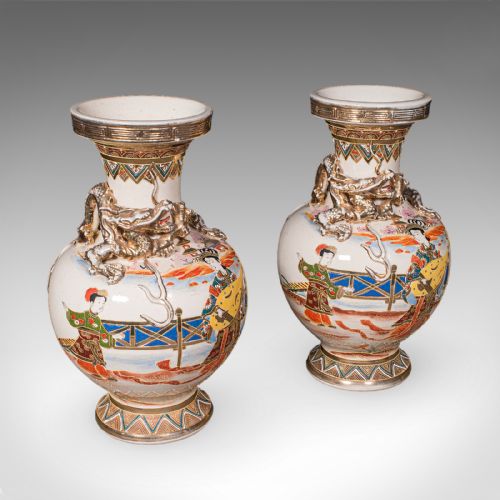
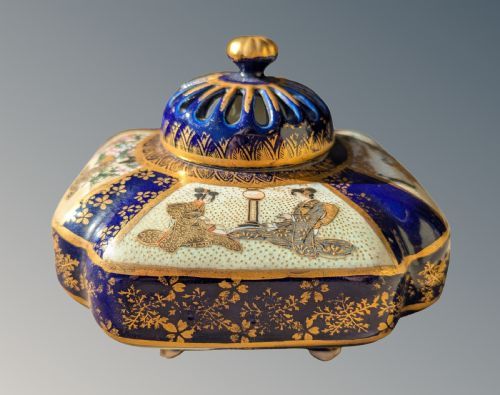
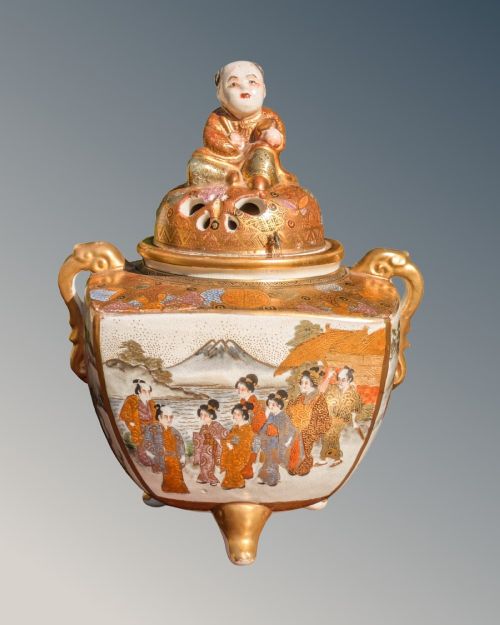
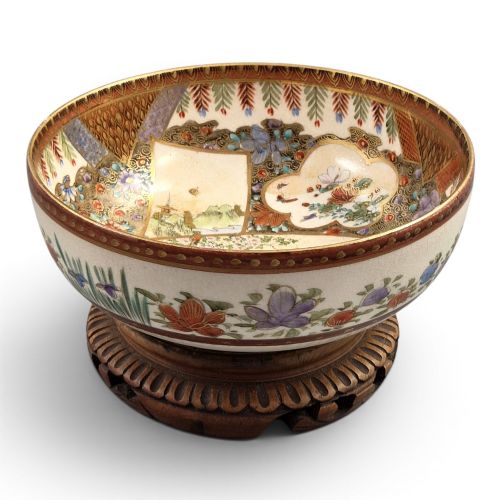
An antique satsuma vessel encompasses earthenware and porcelain forms such as vases, ginger jars, bowls, and incense burners known as koro. These pieces emerge predominantly from the Meiji period, alongside later Taisho and early Showa examples.
Makers shaped these items into baluster profiles, hexagonal shapes, garlic head vases, and footed burners. Many originate from Kyoto workshops, displaying cultural scenes with figures like Rakan and samurai.
The objects serve as decorative vessels and lidded jars that reflect traditional Japanese ceramic design traditions. Collectors encounter both miniature vessels and monumental bowls bearing detailed figural processions.
Materials and construction methods
Potters formed the bodies from earthenware and porcelain, applying fine enamel paints to create complex pictorial panels. Artisans utilised gold leaf and heavy gilding to highlight borders, figures, and floral motifs across the surface.
Techniques included moriage work, which built up raised enamel dots and lines to give texture to robes, dragons, and landscapes. Workshops incorporated bronze components or wooden elements where lids, handles, or stands completed the form.
Listings span the 19th Century through the Victorian era, Taisho period, and early Showa period, utilising porcelain, earthenware, enamel, and gold leaf.
What separates standard pieces from the finest examples
The precision of the brushwork dictates the quality, where meticulous detail in facial expressions, samurai armour, and thousands of individual flowerheads separates master output from standard production. The density and purity of the gold leaf application also signal superior studio execution.
Signature marks from renowned artists like Kinkozan, Hotoda, and Chosei elevate a piece, as do imperial or Shimazu family crests. The complexity of the vessel shape and the integration of raised moriage ornamentation define the upper tier.
Kinkozan·Kozan·Hotoda·Chosei·Kizan·Kotobuki do·Tokyo Taizan·Shozan·Ippo
The Antique Satsuma Vessel Glossary
- Koro
- A traditional incense burner featuring a pierced lid, often supported on feet and detailed with shishi lion handles.
- Moriage
- A decorative technique where slip or enamel is applied in raised dots or lines to create a tactile, three-dimensional surface.
- Shimazu Mon
- The heraldic crest of the Shimazu clan, frequently stamped or painted on satsuma ceramics originating from their domain.
- Shi-Shi
- A mythical guardian lion or dog depicted in ceramic sculpture on lids and handles to ward off evil.
- Baluster
- A vase shape with a rounded body that tapers toward a narrow neck and flares at the rim.
Antique Satsuma Vessel: Frequently Asked Questions
How do I identify a Meiji period piece?
Meiji period items typically display dense, intricate hand-painted enamels combined with extensive gilding over earthenware bodies. Many carry artist signatures from famous Kyoto workshops or studio marks underneath.
Look for traditional Japanese motifs such as samurai battles, arhats, and figural processions that characterise this era of production.
What is a koro used for?
A koro is an incense burner designed with a pierced lid to allow scented smoke to escape gracefully into a room. These vessels often feature three or more feet and decorative handles shaped like shishi lions.
In historic interiors, they served both a functional aromatic purpose and a high-status decorative role on display tables.
What do the Shimazu crests mean?
The Shimazu mon represents the crest of the powerful feudal clan that originally patronised the satsuma kilns in Satsuma Province. Finding this crest indicates a strong connection to traditional regional production and high-grade patronage.
These marks often appear in gold on the base alongside individual artist signatures.