





Antique Japanese Ceramic Bowl
An antique japanese ceramic bowl brings centuries of refined kiln tradition to a modern interior, offering a masterclass in glaze, pigment, and form.
Antique Japanese Ceramic Bowl
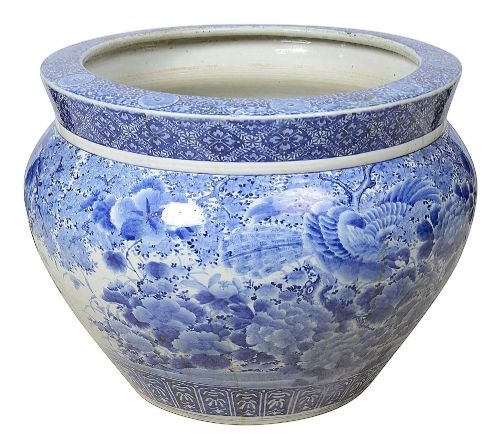
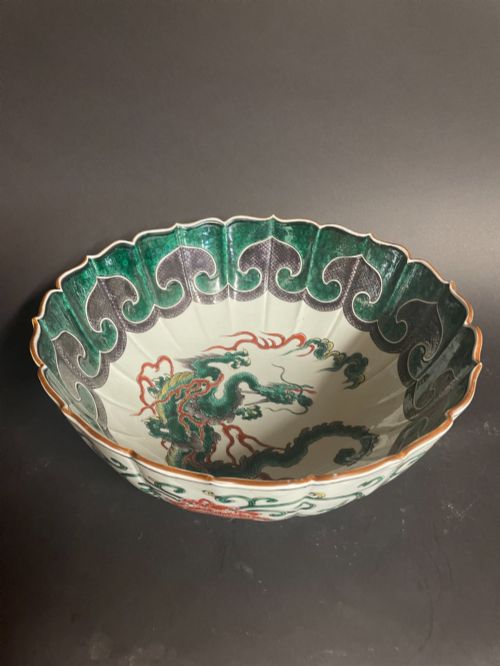
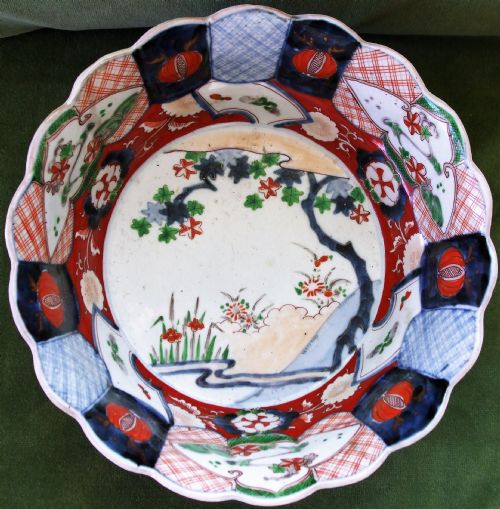
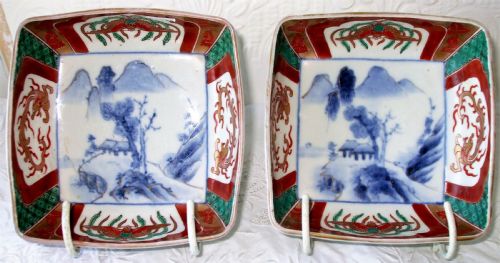
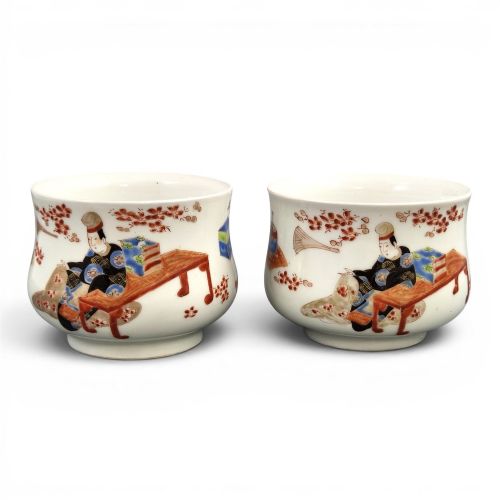
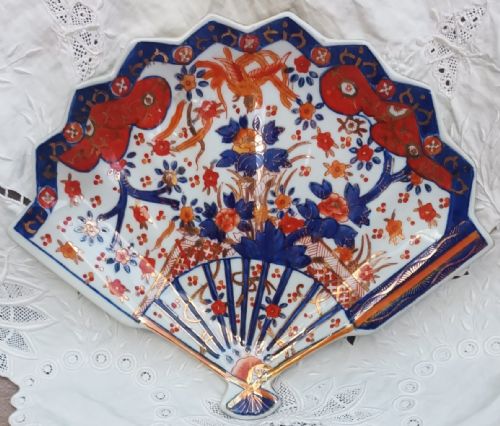
When you search for an antique japanese ceramic bowl, you encounter a diverse array of decorative vessels spanning the Edo, Meiji, and later periods. These forms range from deep scalloped display dishes and sugar bowls to expansive jardinieres and delicate tea cups.
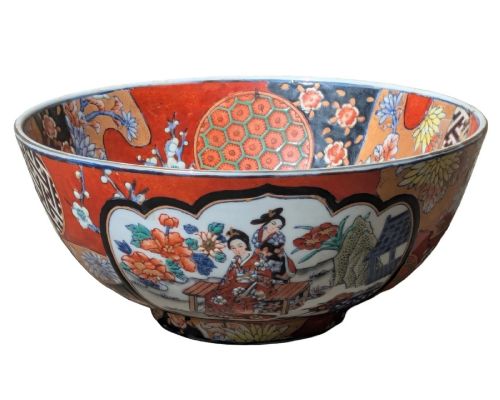
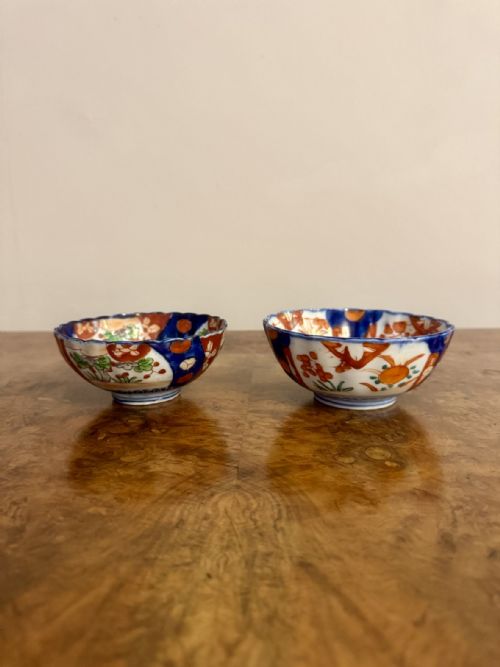
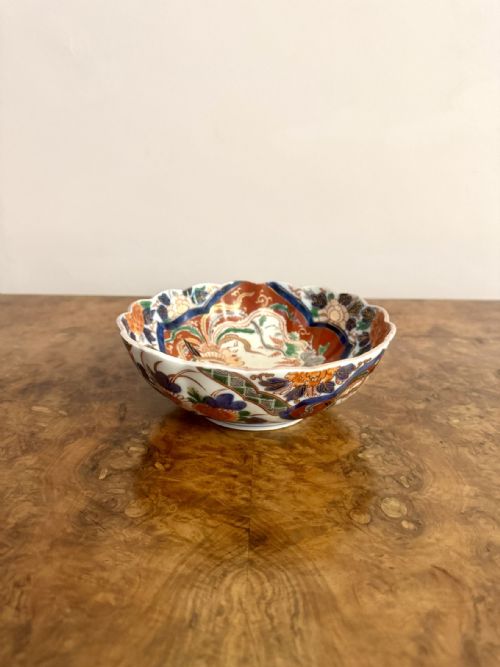
The version you are most likely to meet on this page is the Japanese Imari porcelain bowl, typically originating from the 19th century. These pieces frequently feature distinctive scalloped edges and rich cobalt underglaze combined with enamel and gold leaf detailing.
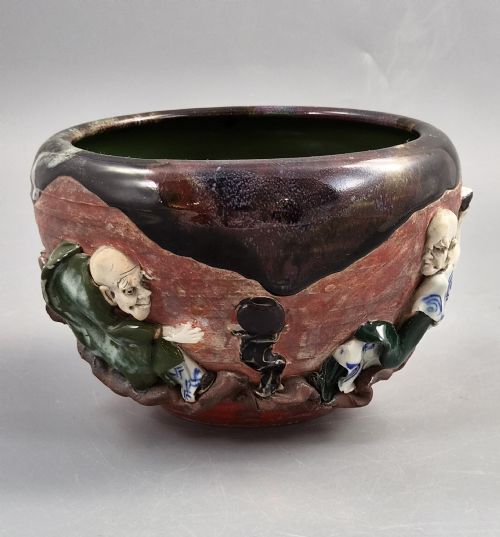
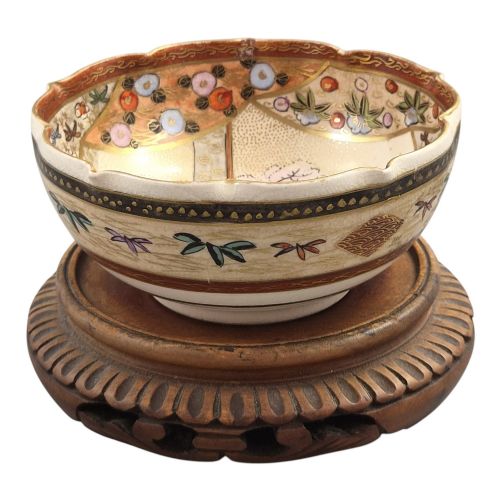
Alongside Imari wares, the selection includes Satsuma earthenware vessels painted with intricate floral motifs and figurative scenes. Makers from Kyoto and other notable centres produced these diverse objects for both domestic use and export.
Materials and construction
Potters utilised fine porcelain and earthenware as the foundational bodies for these vessels, shaping them by hand or on the wheel before initial firing. Cobalt underglaze was frequently applied directly to the raw clay to establish deep blue foundational patterns.
Following the primary kiln process, artisans added intricate enamel colours and gold leaf highlights to the surface. A subsequent low-temperature firing fused these vibrant decorative layers to the glaze, securing the detailed motifs.
Materials recorded across the inventory include porcelain, earthenware, enamel, gold leaf, and cobalt underglaze.
Evaluating the standard
The standard of a vessel rests upon the precision of its painting and the clarity of the underlying glaze. Master artists executed brushwork with immense control, rendering figures, cranes, and floral sprays with sharp definition rather than hurried repetition.
Excellence also reveals itself in the physical weight and balance of the porcelain or earthenware body. Superior examples demonstrate uniform thickness, careful finishing around the foot ring, and harmonious integration of gold leaf and enamel.
Inoue Ryōsai·Ginshōtei Gyokushi·Gyokkō·Kozan·Fukagawa·Kōko·Shizan·Ryuzan·Kinkozan·Nikko
The Antique Japanese Ceramic Bowl Glossary
- Imari
- A style of Japanese porcelain decorated in underglaze blue, iron red, and gold, originating from the town of Arita during the Edo period. These wares were heavily exported to Europe.
- Satsuma ware
- A type of Japanese earthenware originating from Satsuma province, characterised by a ivory-coloured, crackled glaze. Pieces are typically decorated with elaborate polychrome enamels and gilding.
- Edo period
- The historical epoch spanning from the early 17th century to the mid-19th century in Japan. Ceramics from this era are noted for their regional diversity and technical mastery.
- Meiji period
- The era lasting from 1868 to 1912, marked by the opening of Japan to Western trade. Ceramics produced during these decades often display highly intricate pictorial designs for international markets.
- Arita
- The town on the island of Kyushu that served as the cradle of Japanese porcelain production. Kilns here supplied the vast majority of exported Imari and blue and white wares.
Antique Japanese Ceramic Bowl: Frequently Asked Questions
How do I display an antique japanese ceramic bowl?
These vessels suit placement on sideboards, open shelving, or dedicated display stands where light can catch the enamel and gold leaf details. Deeper bowls and jardinieres can hold dried arrangements or simply stand alone as sculptural centrepieces.
Ensure the bowl rests on a stable surface away from heavy foot traffic to protect the rim and glaze. Using a padded ring or a custom wooden stand helps support irregular or rounded bases securely.
Were these bowls used in daily life?
Many bowls served specific functions within Japanese domestic culture, ranging from green tea preparation to holding brush washers or serving small delicacies. Over time, distinct forms evolved for both practical dining and refined ritual use.
Export pieces made during the later periods were primarily created for international display, reflecting the Victorian appetite for decorative ceramics.
How do I date an antique japanese ceramic bowl?
Dating relies on identifying stylistic markers, kiln marks, and the specific period materials recorded in the piece. Edo period items display restrained elegance, whereas Meiji pieces frequently showcase dense, ornate ornamentation.
Signatures, artist seals, and regional motifs provide further clues to chronological placement. Comparing the potting technique and glaze maturity helps narrow the era of manufacture.