
Antique Japanese Carving
These pieces of antique japanese carving bring organic animal forms, bronze vessels, and intricate hardwood cabinets directly from Meiji workshops into modern rooms.
Antique Japanese Carving
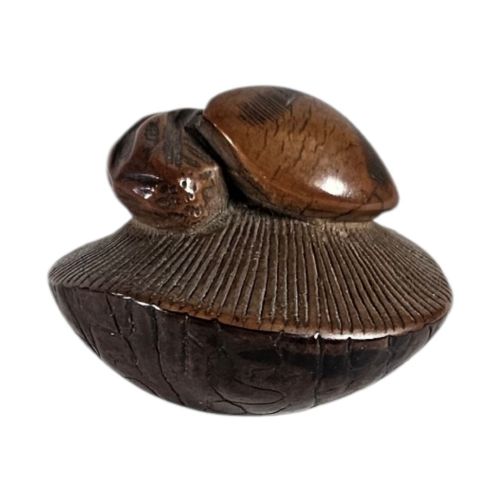
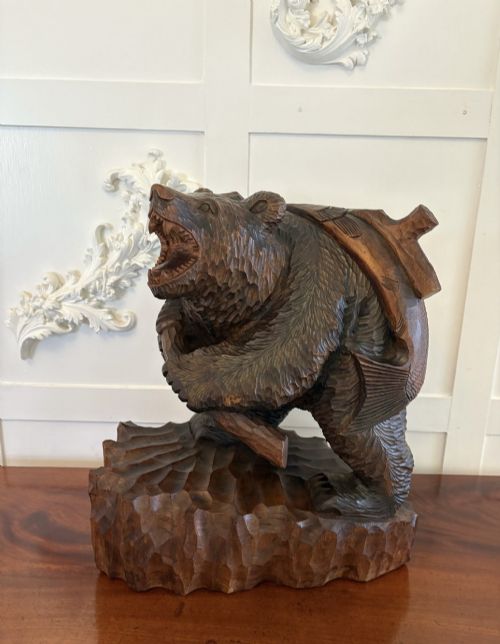
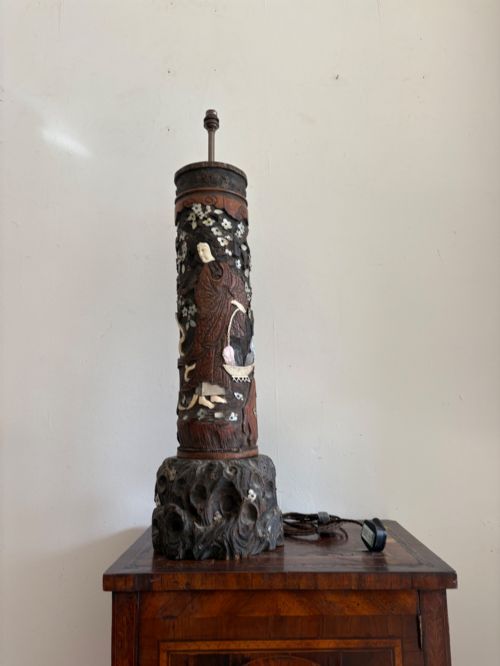
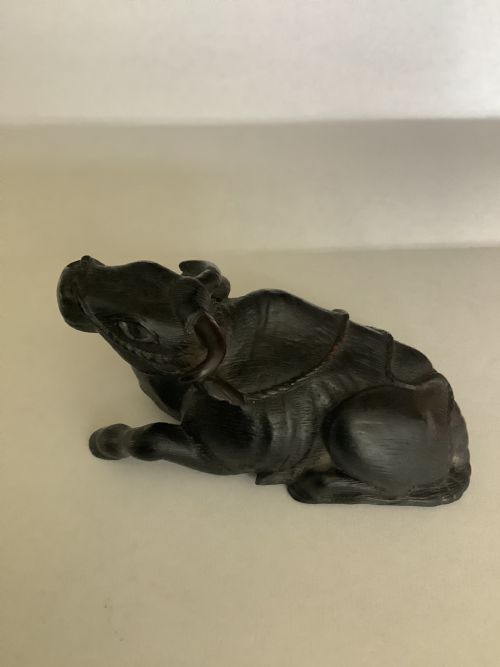
An antique japanese carving encompasses a wide range of objects from the nineteenth and early twentieth centuries, spanning utilitarian items to decorative sculptures. Buyers frequently encounter small hand-carved netsuke, wooden bears, and heavy bronze vases produced during the Meiji period.
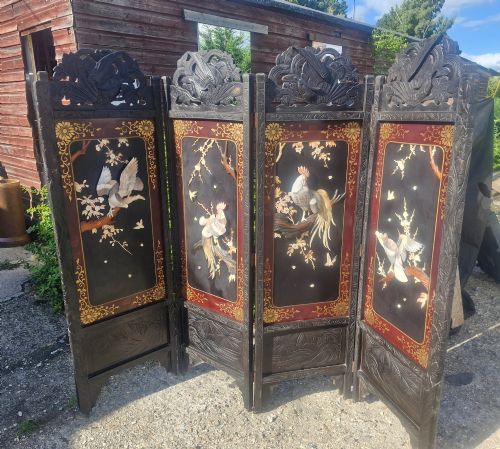
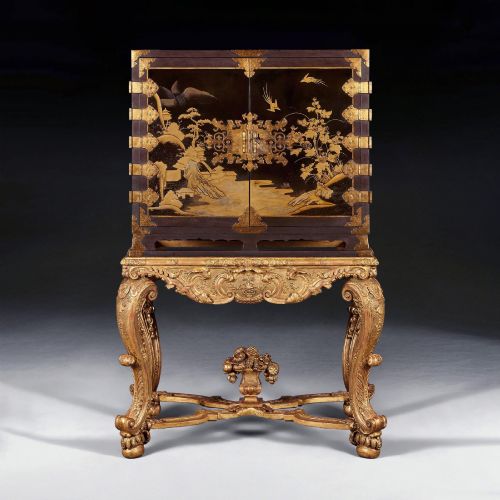
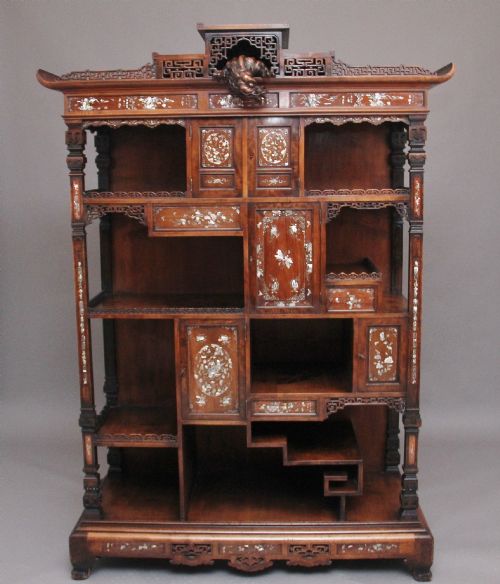
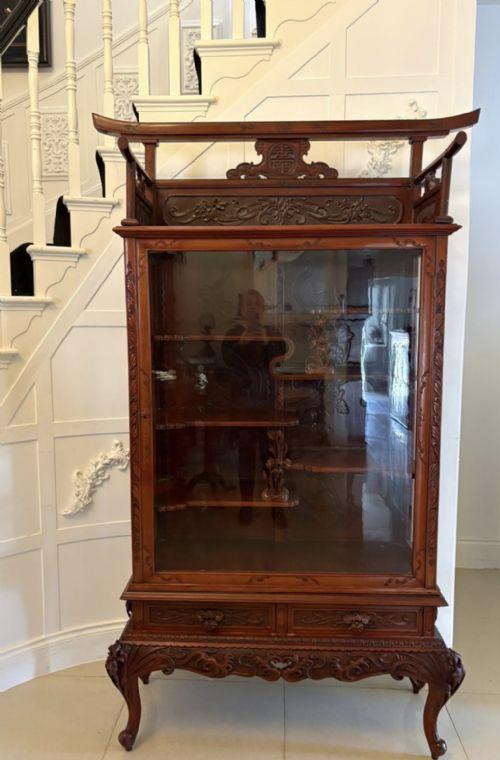
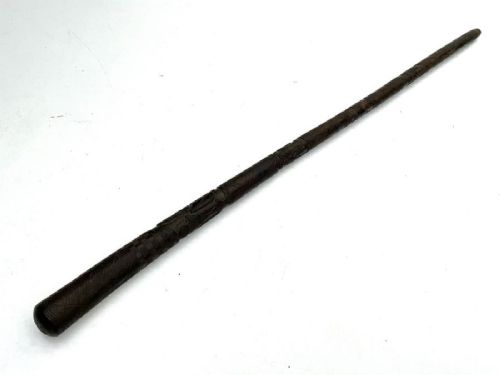
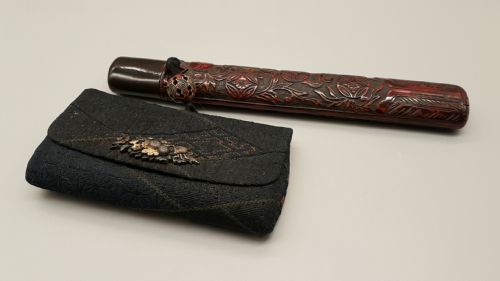
The selection here includes domestic furniture such as shodana cabinets, folding screens with bone figures, and occasional tables influenced by Anglo-Japanese design. Smaller items like brush pots, tobacco pouches, and stag horn handles appear alongside larger sculptural pieces in wood and bronze.
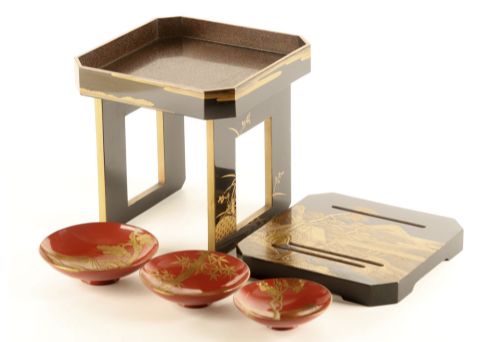
The origins stretch from traditional Japanese folk art to pieces created for Western export markets by firms like Liberty of London. Domestic items such as wooden hibachi and sake sets sit alongside specialised display furniture designed to showcase fine craftsmanship.
Materials and Techniques
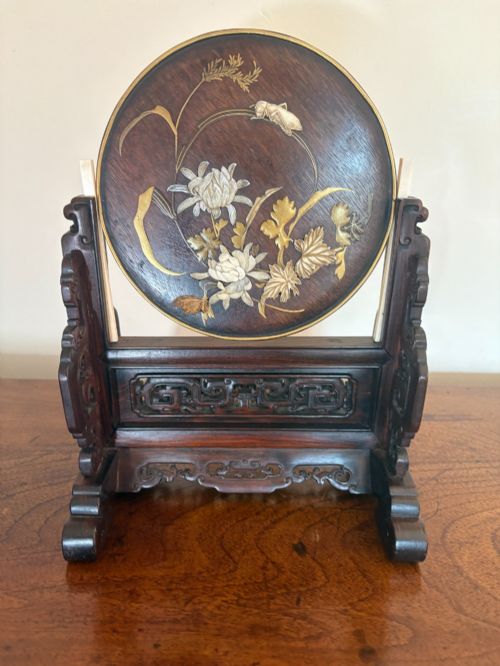
Artisans relied on native timbers such as boxwood, linden wood, and heavy hardwoods, often augmenting the natural grain with inlaid mother-of-pearl, bone, or stag antler. Bronze casting and red lacquer techniques required specialised foundry and coating skills passed down through generations.
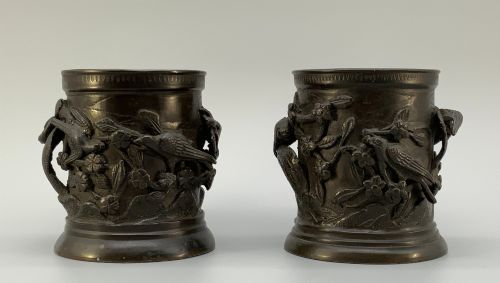
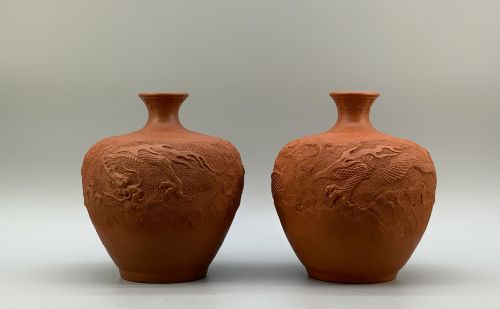
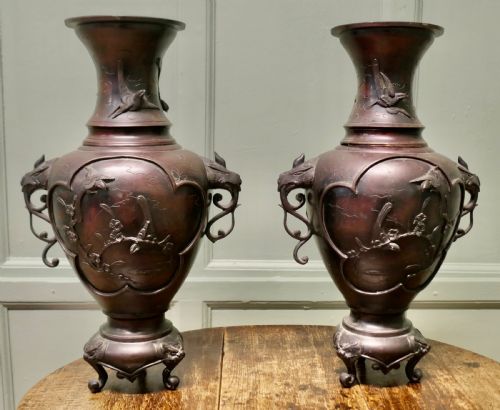
Surface decoration frequently combined deep relief carving with delicate metal inlay, gold and silver work, and Shibayama assemblage. Wood surfaces received detailed chisel work, while metal vessels utilised lost-wax casting methods to achieve textured depictions of dragons, birds, and blossom.
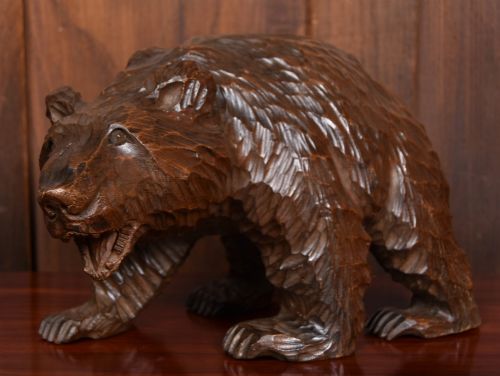
Carved wooden bears holding fish appear repeatedly across the nineteenth-century selections, bringing an unexpected charm to traditional folk art.
Assessing the Workmanship
The distinction between standard commercial output and superior work rests on the precision of the hand-carved details and the depth of the relief. Master carvers achieved anatomical accuracy in animal sculptures like bears and netsuke, whereas lesser examples show stiffness and generalized form.
Material selection and signature placement also separate the tiers of production, as artists who marked their pieces maintained rigorous standards in patination and joinery. Bronze vessels with crisp chasing and well-balanced patination demonstrate a higher grade of workshop execution than unrefined cast pieces.
Liberty of London·Gabriel-Frederic Viardot·Blyth and Son·Kashi Japanese Masters
The Antique Japanese Carving Glossary
- Netsuke
- A small carved toggle fastened to the end of a cord connecting a container to a kimono sash. These practical fasteners often depict animals or figures.
- Meiji Period
- The era in Japanese history spanning from 1868 to 1912, characterised by opening trade with the West and prolific decorative arts production.
- Shibayama
- A decorative technique involving inlay of mother-of-pearl, ivory, tortoiseshell, and metals into wood or lacquer bases.
- Hibachi
- A traditional Japanese heating device or brazier, frequently constructed from heavy wood with a metal-lined interior.
- Japonisme
- The influence of Japanese art and design on Western aesthetic movements during the late nineteenth century.
Antique Japanese Carving: Frequently Asked Questions
What is an antique Japanese netsuke used for?
These small carved toggles served a functional role in traditional Japanese dress by securing pouches and small boxes suspended from kimono sashes.
Collectors prize them today for their miniature sculptural quality and the intricate hand-carved details executed in boxwood, stag antler, or cherry amber.
How do I identify Meiji period bronze vases?
Meiji period bronze vases often feature high-relief motifs depicting dragons, birds, and blossoming branches, reflecting the artistic output of late nineteenth-century metalworkers.
They carry substantial weight and frequently display signature marks on the base alongside rich patination developed over decades of handling.
Where were Japanese folding screens displayed?
Large folding screens with deep carved bone figures functioned as room dividers or decorative wall backdrops within nineteenth and early twentieth-century interiors.
They introduced narrative scenes and textured relief work into both traditional Japanese homes and Western rooms influenced by Japonisme.
What is a Shodana cabinet?
A Shodana is an ornamental cabinet designed with asymmetrical shelves, small drawers, and compartments meant for displaying precious objects.
These pieces showcase advanced Japanese woodworking and joinery, utilising hardwoods and sometimes incorporating lacquer panels or inlaid metalwork.