





Antique Italian Fauteuil
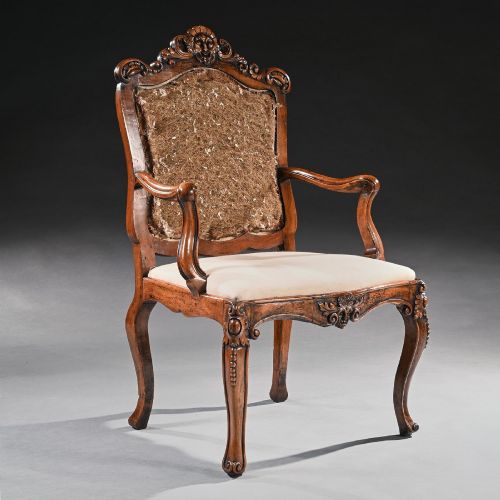
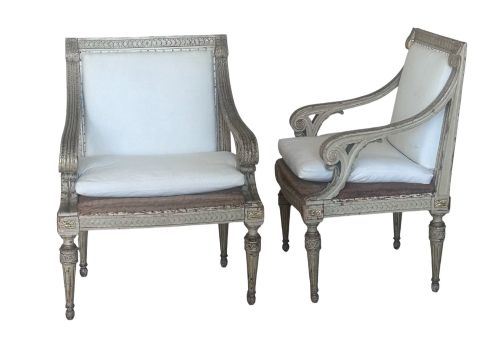
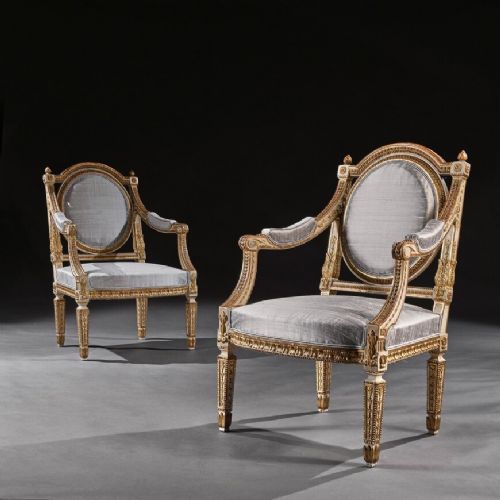
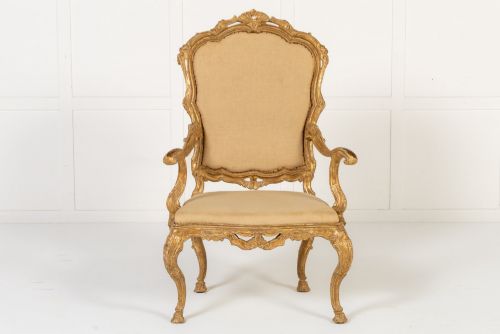
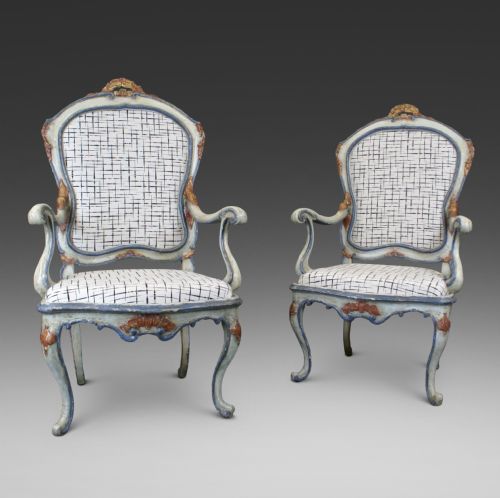
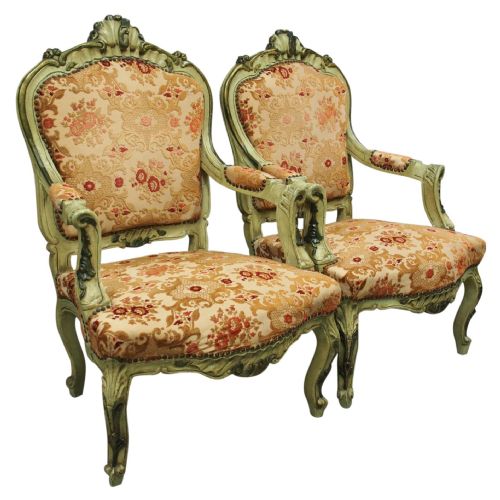
These antique italian fauteuil armchairs bring sculptural regional carving and grand scale to a room.
Antique Italian Fauteuil
An antique italian fauteuil is an open armchair combining upholstered comfort with exposed wooden framing, designed in Italy across the eighteenth, nineteenth, and early twentieth centuries. When searching for this phrase, collectors encounter grand seating spanning styles such as Italian Rococo, Neoclassical, Baroque Revival, and Barocchetto.
The pieces appearing on this page include walnut open armchairs alongside lavishly gilded and painted pairs. Makers across different regions employed distinctive regional vocabularies, from eighteenth century walnut frames with carved head rails to nineteenth century Piedmontese forms and Venetian Rococo creations.
How antique italian fauteuil armchairs were made
Carpenters shaped these armchairs from solid woods, primarily walnut, applying gesso preparations to create smooth surfaces for subsequent finishing. Artisans then executed intricate manual carving across the wooden frames, highlighting structural elements like head rails and arm supports.
Finishing techniques involved applying layers of silver leaf, gold leaf, or paint directly onto the gesso and wood. Artisans upholstered the seating using traditional textiles, including needlework fabrics secured to the open frames.
Listings span the eighteenth century, nineteenth century, and early twentieth century up to nineteen twenty, utilising walnut, gesso, silver leaf, and fabric.
What varies in quality
The distinction between standard and superior examples rests upon the depth, crispness, and ambition of the wood carving. Highly accomplished pieces exhibit deeply undercut foliage and dynamic asymmetry, particularly on Rococo and Barocchetto head rails.
Surface preparation and finishing execution dictate visual presence. Premium examples display nuanced application of silver leaf, gold leaf, or painted decoration over carefully smoothed gesso, whereas lesser pieces show mechanical uniformity.
The Antique Italian Fauteuil Glossary
- Fauteuil
- An open armchair featuring upholstered back and armrests with exposed wooden sides. This form originated in France but gained distinctive regional interpretations across Italy.
- Giltwood
- Wood coated with a thin layer of gold leaf over a prepared ground of gesso. This finish provided opulent reflection in candlelit interiors.
- Gesso
- A plaster mixture applied to wood surfaces to create a smooth base for gilding or painting. It allowed carvers to achieve sharp detail before applying metal leaf.
- Barocchetto
- The Italian variation of the Rococo style, characterised by playful asymmetry and lively ornamentation. This style appears frequently on eighteenth century seat furniture.
- Piedmontese
- Pertaining to the Piedmont region of northwestern Italy, known for distinct regional furniture designs. Pieces from this area display local cabinetmaking traditions.
Antique Italian Fauteuil: Frequently Asked Questions
What is an antique italian fauteuil?
An antique italian fauteuil is an open armchair produced in Italy featuring an exposed wooden frame and upholstered seat and back. These chairs date from the eighteenth century through to the early twentieth century.
They encompass regional styles including Venetian Rococo, Neoclassical, and Barocchetto. Each piece demonstrates traditional Italian woodworking and decorative techniques.
How do I use an antique fauteuil in a modern room?
These armchairs function effectively as accent seating in living rooms, studies, or bedrooms. Their sculptural wooden frames provide a strong visual focal point against plain walls.
Pairing a pair of gilded or walnut armchairs with contemporary upholstery creates a deliberate contrast of periods. Their open arms maintain a sense of space in smaller interiors.
What is the difference between Rococo and Neoclassical styles?
Italian Rococo and Barocchetto designs feature asymmetric curves, flowing organic lines, and exuberant carved ornamentation. These forms prioritise dynamic movement and decorative exuberance.
Neoclassical chairs introduce classical symmetry, straight tapering legs, and restrained architectural motifs inspired by antiquity. This later style reflects a turn towards archaeological proportion.
How do I identify eighteenth century pieces?
Eighteenth century examples display hand-carved construction details specific to early walnut and gessoed frames. They often feature distinct regional characteristics such as exaggerated head rails and open arm designs.
Later nineteenth and twentieth century pieces adopt historical revival styles, utilising similar materials while reflecting the manufacturing methods of their respective periods.