


Ornate Walnut Accent Chair
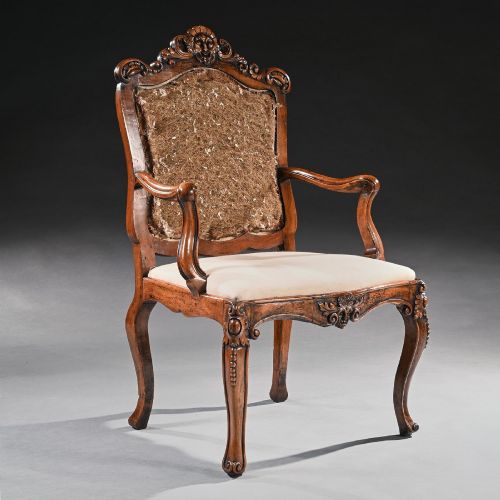
An ornate walnut accent chair brings heavy carving, rich timber and period presence into a modern room.
Ornate Walnut Accent Chair
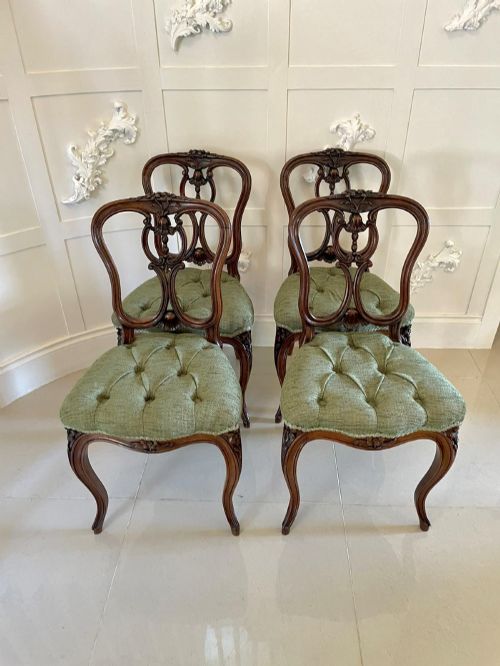
You are most likely to meet 19th-century armchairs and side chairs on this page, often bearing heavy carving, marquetry inlay or gilt highlights. Origins range from Italy and Switzerland to Flanders and France, reflecting distinct regional tastes in historicism.
The forms vary from high-backed hall chairs and sgabello chairs to musical chairs and substantial armchairs. Each type utilises the rich grain and deep colour of walnut to frame elaborate woodwork and diverse textile upholstery.
How they were made
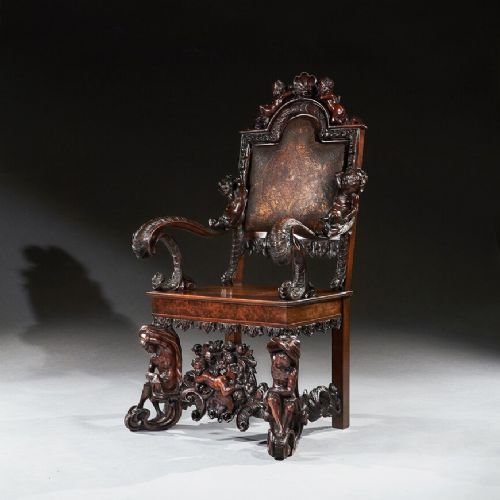
The framework relies on solid walnut, a dense timber chosen for its stability under deep relief carving. Makers exploited its dark grain to create contrast in carved cartouches, pierced head rails and sculptural supports.
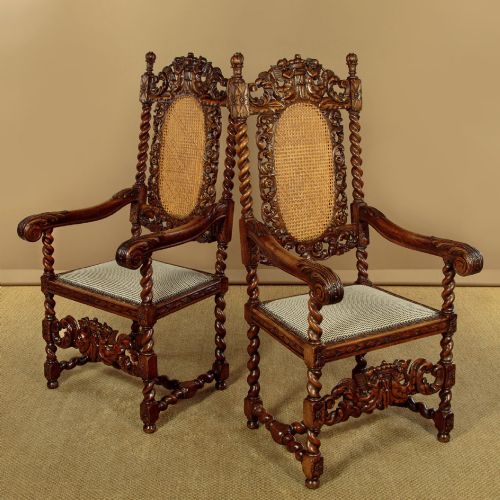
Decoration often extends beyond the timber through bone inlay, wood marquetry and gilding. Upholstery fabrics including velvet, leather and general textile treatments are fixed over the frames to complete the design.
Listings span the 18th century to 1900, featuring walnut combined with cane, velvet, leather and bone inlay.
What varies in quality
The ambition of the carving separates standard regional production from exhibition-grade work. Pieces associated with specific historical carvers or exceptional workshop standards display sharper undercutting and more intricate figural or floral motifs.
The integration of secondary materials like bone inlay and marquetry dictates the tier of the piece. Superior examples maintain crisp joinery and harmonious proportions beneath heavy ornamentation.
Andrea Brustolon
The Ornate Walnut Accent Chair Glossary
- Marquetry
- Decorative patterns formed by the insertion of pieces of wood into a veneer to form geometric or pictorial designs. This technique adds pictorial depth to walnut surfaces.
- Sgabello
- A light wooden chair with a narrow back and solid trestle supports instead of legs. It is typically associated with the Italian Renaissance.
- Cartouche
- An ovals or oblong frame with ornamental scrolls, often used to enclose carved details. It appears frequently on the crest rails of revival seating.
- Gilding
- The application of gold leaf or powder to a surface to give a thin coating of gold. This finish accentuates carved walnut mouldings.
- Head rail
- The horizontal top member of a chair back. On these pieces, it frequently carries extravagant carving.
Ornate Walnut Accent Chair: Frequently Asked Questions
Where should I place an ornate walnut accent chair?
These chairs suit hallways, drawing rooms or corners where their carving and dark timber can be appreciated without competing with daily seating.
They work well individually or in pairs to anchor a neglected space.
How do I identify the period of a walnut chair?
Look to the style indicators, such as Rococo revival scrolls or Renaissance architectural motifs, alongside the construction methods in the frame.
Dates range from the 18th century through to the 1900s, with nineteenth-century revivals being the most common.
What is the difference between an armchair and a side chair here?
Armchairs feature structural supports for the arms and generally offer a more commanding presence for primary placement.
Side chairs are armless, making them easier to tuck against walls or pair with a desk.
Can I use these chairs for daily seating?
While structurally sound, many of these pieces function primarily as decorative or accent items due to their historic frames and delicate upholstery.
Gentle use preserves the antique textiles and intricate carved woodwork.