


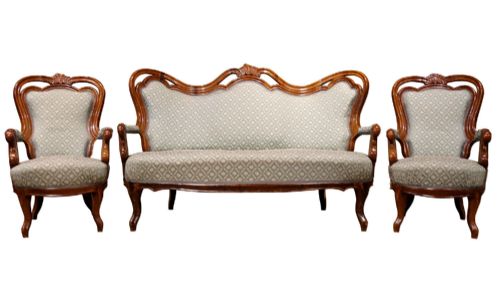
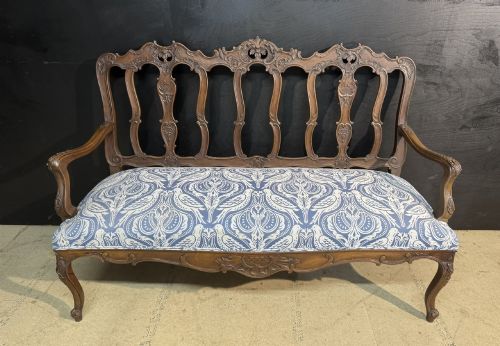
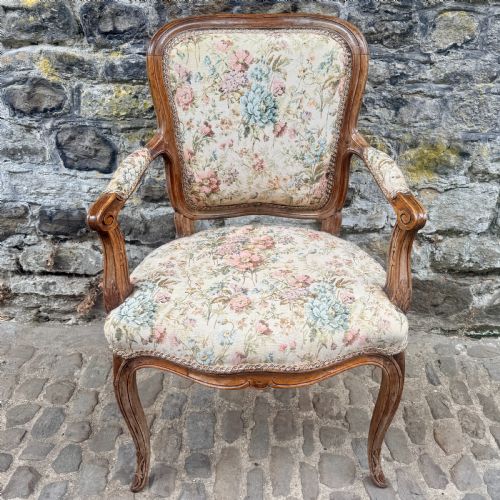
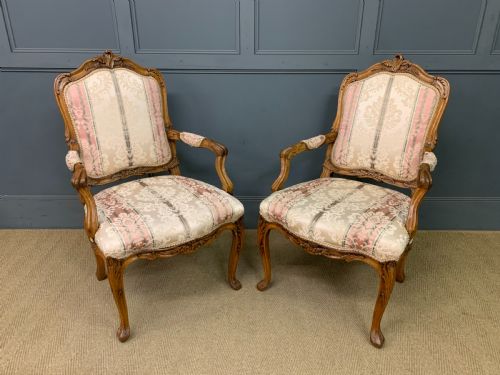
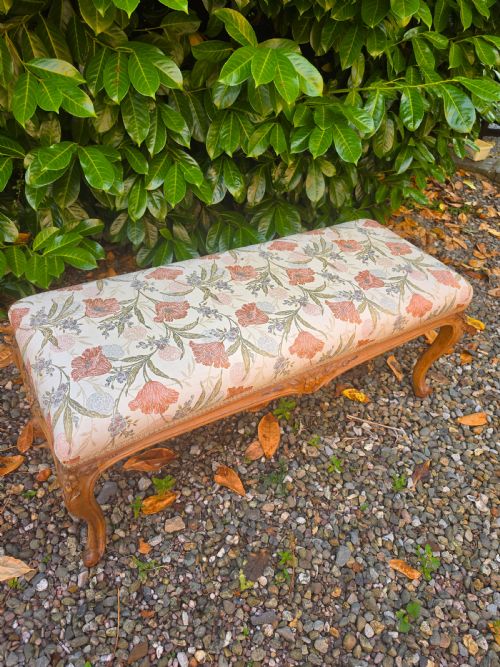
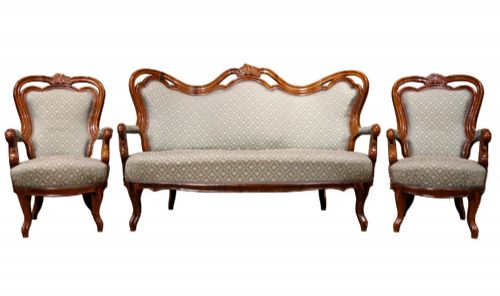
Rococo Carved Walnut Seat
A rococo carved walnut seat brings curvilinear exuberance and rich timber into a room, offering both sculptural presence and period comfort.
Rococo Carved Walnut Seat
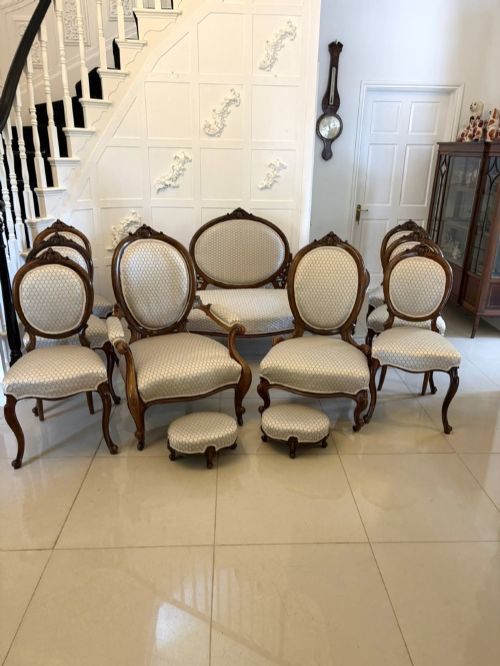
A rococo carved walnut seat encompasses an array of seating forms designed with exuberant asymmetrical curves, scrolling foliage, and cabriole legs. These pieces range from substantial salon sofas and multi-piece drawing room suites down to individual armchairs, nursing chairs, and dressing table stools.
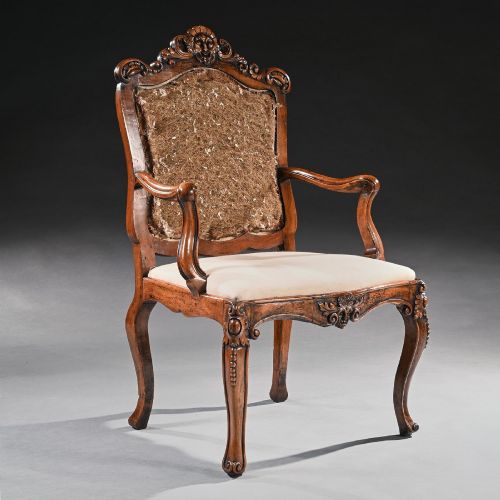
The versions most commonly met on this page belong to the Victorian revival of the nineteenth century, alongside eighteenth-century Continental pieces originating from Italy and France. Makers across these periods utilised the dense grain of walnut to execute deep, elaborate carvings along crest rails and apron mouldings.
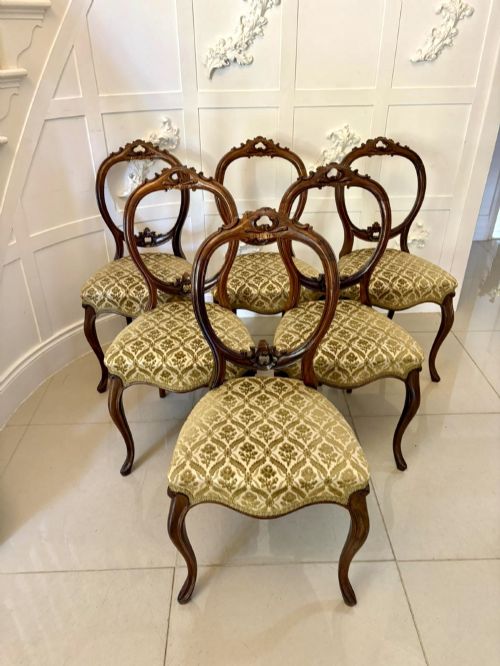
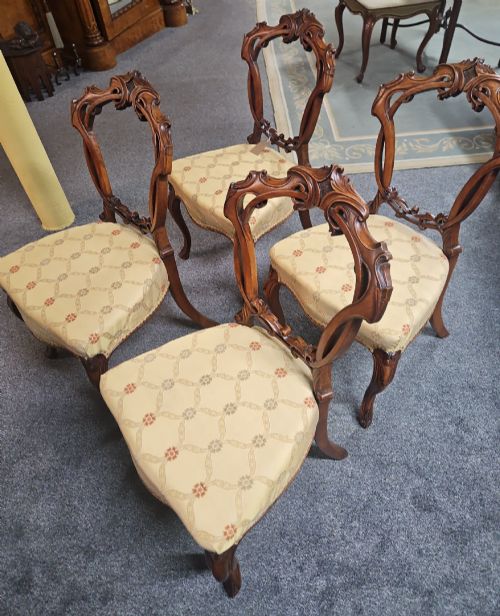
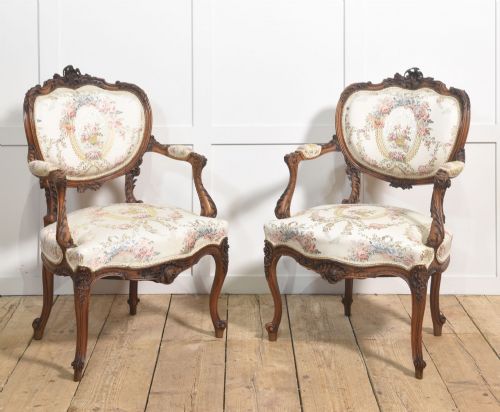
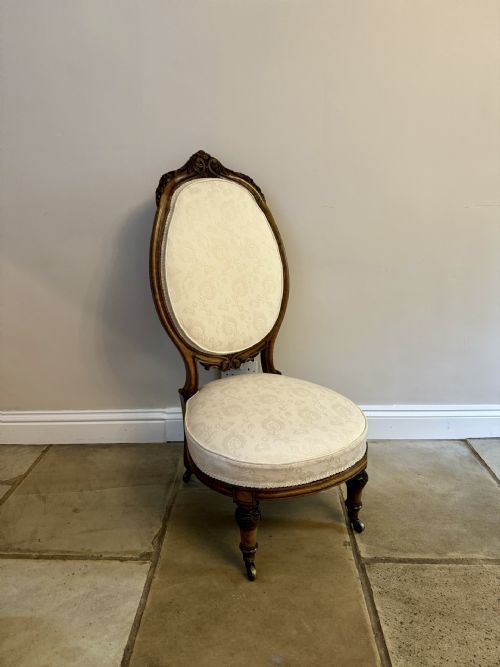
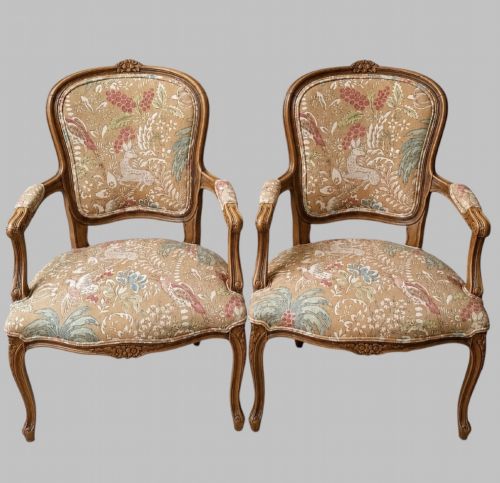
Buyers encounter diverse configurations, including open armchairs, spoon-back nursing chairs, high-back dining chairs, and low salon stools. Each form reflects the enduring appeal of Louis XV design idioms reinterpreted by nineteenth-century cabinet makers.
How they were made
Carpenters constructed these seats using solid walnut timbers selected for strength and grain pattern, allowing artisans to carve intricate scrolls and floral motifs directly into the structural frame. Frames frequently incorporate cabriole legs terminating in scroll or pad feet, joined securely with traditional mortise and tenon joints.
Upholstery techniques varied according to the period, utilising traditional stuffing materials secured over webbed bases and finished with decorative textiles. Surviving examples feature coverings ranging from modern silk and damask to period needlework and velvet, often secured with brass tacking.
Listings span the eighteenth, nineteenth, and twentieth centuries, uniting eighteenth-century Italian and French examples with nineteenth-century Victorian revivals.
What varies in quality
The standard of a rococo carved walnut seat depends largely on the crispness and depth of the timber carving. Superior examples display hand-chiselled detailing with sharp relief along the crest rails and cabriole legs, whereas lesser pieces feature softer, shallower moulding.
Structural integrity and timber selection also differentiate the range. Heavier scantlings of walnut, well-preserved frame joints, and balanced proportions elevate a piece above standard production seating.
The Rococo Carved Walnut Seat Glossary
- Cabriole leg
- A furniture leg that bends outward in a convex curve and tapers inward in a concave curve, mimicking an animal limb. This form is characteristic of rococo and revival seating designs.
- Fauteuil
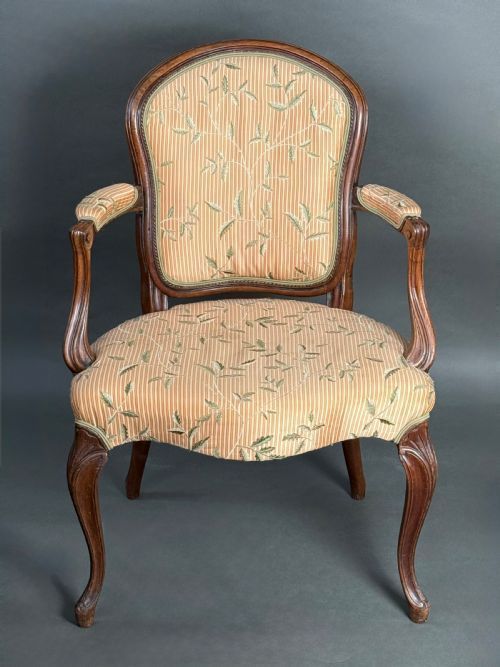
- An open-framed upholstered armchair with wooden arms, originating in France during the eighteenth century. These seats typically feature exposed carved walnut framing around the back and seat.
- Spoon-back
- A chair back shaped in a concave oval profile resembling the bowl of a spoon, designed to fit the human spine. This form appears frequently on Victorian nursing and salon chairs.
- Pierced splat
- The central vertical strip of a chair back that has been carved or cut through to create an openwork pattern. It lightened the visual weight of the timber framing.
Rococo Carved Walnut Seat: Frequently Asked Questions
How do I clean walnut wood frames?
Dust walnut frames regularly with a soft, dry cloth to prevent the accumulation of grit in carved recesses. Avoid silicone-based polishes, which build up over time and attract dust.
Apply a microcrystalline wax sparingly when the timber appears dry, buffing gently with a clean cloth to maintain the natural sheen of the walnut.
Are these seats comfortable for daily use?
Period seating offers varying levels of support depending on the original interior padding and springing. Many nineteenth-century examples feature sprung seats designed for parlour comfort.
Buyers intending frequent daily seating often check whether the internal webbing and upholstery have been professionally restored while retaining the original frame.
How do I distinguish eighteenth-century pieces from Victorian revivals?
Eighteenth-century pieces typically exhibit hand-cut joinery marks, lighter timber scantlings appropriate for the period of origin, and wear patterns consistent with age. Continental examples often display regional carving traits specific to Italian or French workshops.
Victorian revivals from the nineteenth century generally feature heavier timber construction, machine-assisted preparation combined with hand finishing, and distinct nineteenth-century upholstery foundations.
Can I mix these chairs with modern interiors?
The expressive carving and rich dark tones of walnut provide a striking contrast against contemporary neutral walls and minimalist furniture. Pairing a single rococo armchair with modern upholstery creates a focal point in a living space.
Dining chairs can be integrated around a simple timber or glass table to introduce textural depth and historical character to a room.