


Antique Ironstone Serving Dish
An antique ironstone serving dish brings robust utility and striking decoration to the table, combining heavy ceramic bodies with vibrant transfer-printed or hand-painted patterns.
Antique Ironstone Serving Dish
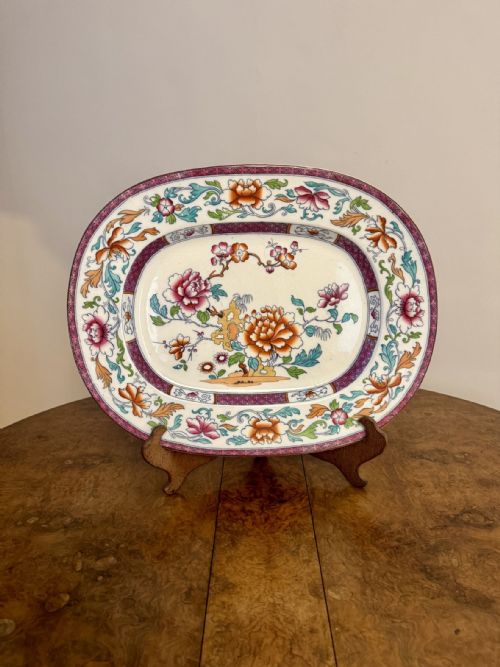
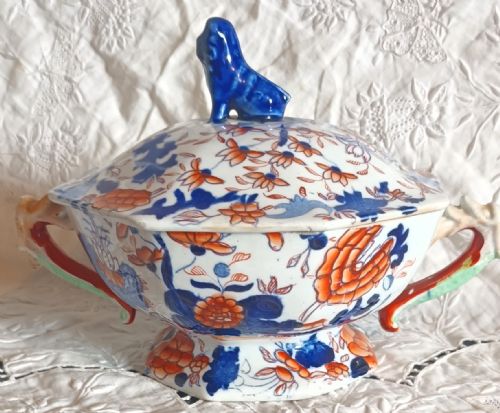
When searching for an antique ironstone serving dish, collectors encounter a diverse array of nineteenth-century forms designed for hearty dining. The selection spans large meat platters, lidded tureens, vegetable dishes, footed comports, and expansive chargers.
The pieces appearing on this page originate predominantly from the nineteenth century, encompassing Georgian, Regency, and Victorian eras. English potteries produced these sturdy items to withstand heavy daily use while maintaining a decorative presence on the dining table.
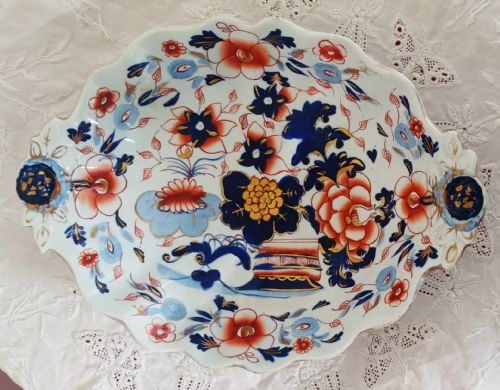
The most common formats on this page are substantial meat platters and lidded tureens, often decorated with intricate patterns. Buyers frequently find blue and white transfer prints alongside vibrant Chinoiserie and Imari designs.
Materials and production methods
Potters constructed these dishes using dense ironstone china or earthenware, a heavy ceramic body formulated for durability. This robust material provided a reliable canvas for thick, glossy glazes that protected the underlying body from staining.
Decoration relied heavily on blue and white transfer printing, which allowed workshops to apply detailed landscapes and floral motifs efficiently. Artisans also enhanced many pieces with hand-applied enamel colours, gilding, and gold leaf to create rich, multi-coloured patterns.
Listings feature nineteen-century ironstone in forms including meat platters, vegetable tureens, footed comports, and decorative chargers.
Judging quality in ironstone
Quality in an antique ironstone serving dish rests upon the crispness of the transfer print and the precision of the hand-painted enamels. Finer examples display sharp lines, vibrant colours, and careful alignment of decorative borders without blurring.
The weight, proportion, and potting skill of the ceramic body also determine the standing of a piece. Well-balanced forms with intact handles, matching covers, and smooth, even glazing represent the higher tier of nineteenth-century production.
Mason's Ironstone·Minton·Coalbrookdale
The Antique Ironstone Serving Dish Glossary
- Ironstone
- A heavy, durable type of ceramic or earthenware patented in the nineteenth century to imitate porcelain. It resists chipping far better than standard earthenware.
- Tureen
- A deep covered bowl designed for serving soup, vegetables, or sauces at the table. These vessels often include matching covers and ladles.
- Comport
- A footed bowl or dish elevated on a pedestal, used traditionally for serving fruit or dessert. They provide height and visual interest to a table arrangement.
- Transfer print
- A decoration technique where an engraved metal plate transfers a design onto tissue paper, which is then pressed onto the ceramic body before glazing. This method enabled complex repeating patterns like landscapes and florals.
- Chinoiserie
- A European artistic style reflecting Chinese motifs and imaginary oriental landscapes. It appears frequently on nineteenth-century ironstone in rich polychrome palettes.
Antique Ironstone Serving Dish: Frequently Asked Questions
What is ironstone china?
Ironstone is a dense, durable ceramic material patented in the nineteenth century as a tough alternative to porcelain. It combines feldspar, china stone, and clay to create a heavy body suitable for everyday dining.
Potters valued this robust substance for its ability to hold large glazes and rich decorations without warping during high-temperature firing.
How were serving dishes used?
These dishes held large joints of meat, vegetables, soup, or fruit during formal nineteenth-century meals. Lidded tureens kept food warm at the table, while platters managed heavy roasts and game.
Matching stands, strainers, and ladles accompanied many of the larger vessels to assist with draining juices and serving portions efficiently.
Can I use these dishes today?
Many collectors use antique ironstone for serving food during special dinners, as the material remains remarkably sturdy. Gentle hand washing helps protect the antique glazes, enamels, and any applied gilding from unnecessary wear.
When not in use, large platters and tureens look striking displayed on dresser shelves, sideboards, or kitchen walls.