



Antique Ironstone Jug
An antique ironstone jug brings robust nineteenth-century utility and vivid transfer-printed or hand-painted patterns to a shelf or table.
Antique Ironstone Jug
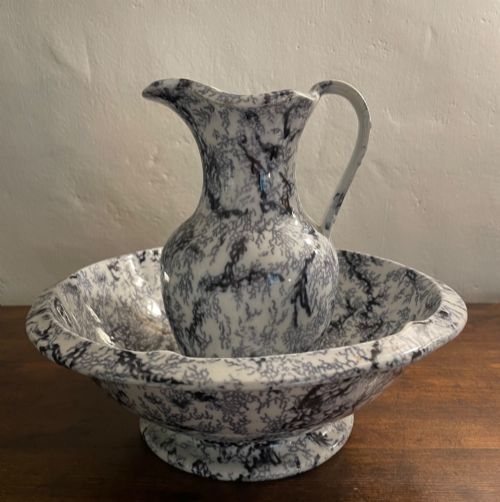
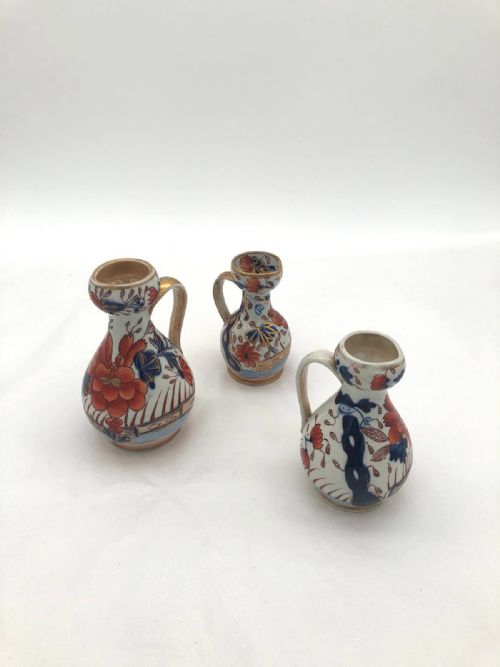
An antique ironstone jug is a heavy, durable ceramic vessel designed for domestic use during the nineteenth century, including Georgian and Victorian periods. These pieces range from small miniature jugs to large washbasin sets and footbath jugs.
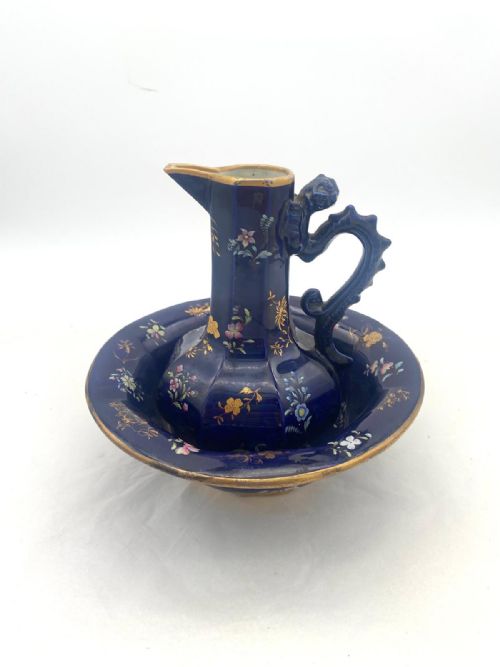
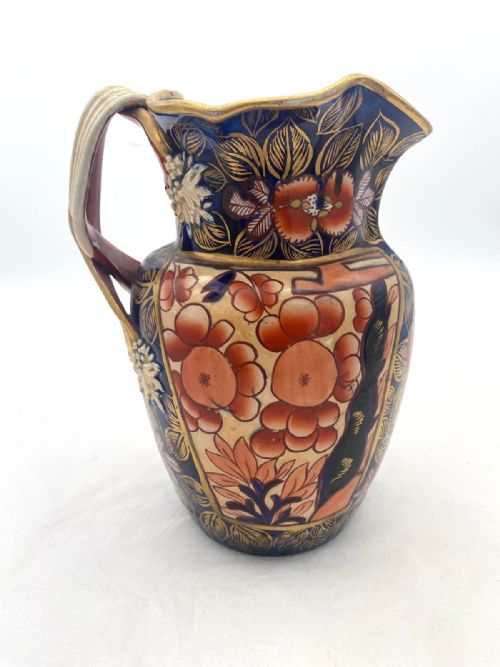
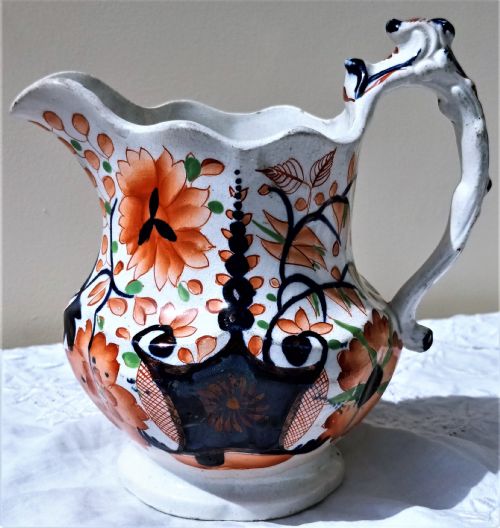
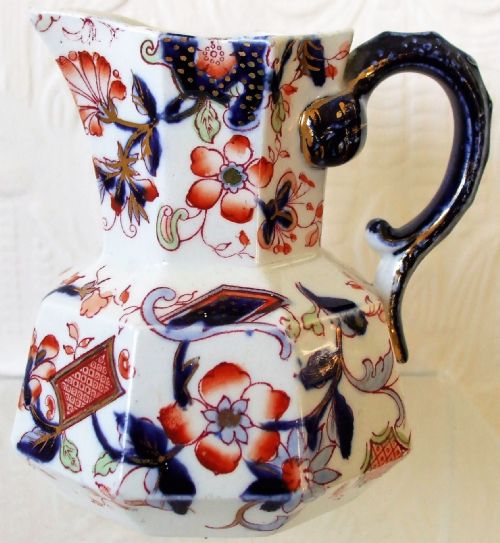
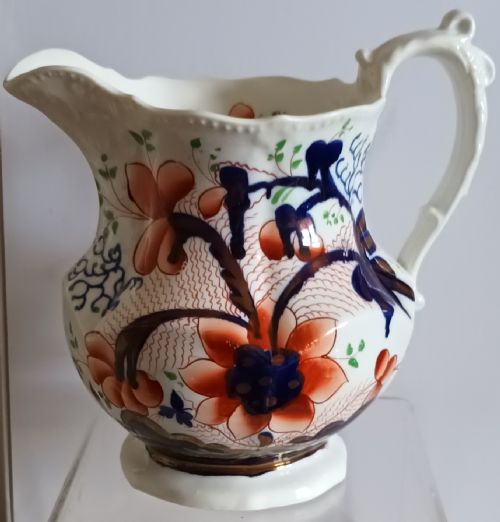
The most common forms on this page are octagonal or serpent-handled Hydra jugs decorated with oriental-inspired Chinoiserie, Japan, and Gaudy Welsh patterns. Many survive as single pieces, while others remain part of larger jug and basin sets.
Makers such as Mason's dominate the record, alongside Davenport, Livesley Powell & Co, and Keeling & Co, spanning production dates from around eighteen hundred into the early twentieth century.
Materials and manufacture
Makers produced these vessels using heavy earthenware ceramic known as ironstone, which was fired to create a dense, durable body far stronger than standard earthenware. Glazed ceramic surfaces provided a smooth finish capable of holding liquids securely.
Decoration relied on cobalt blue ground, enamel colours, and gold leaf highlights applied over or under the glaze. Hand-painted motifs often accompanied transfer-printed outlines, sometimes incorporating lustreware or intricate gilt details.
Elephant's foot patterns and grotesque handles remind us that nineteenth-century potters possessed a wonderfully eccentric sense of humour.
Assessing quality and craftsmanship
Quality in an antique ironstone jug rests on the crispness of the moulding, particularly on complex shapes like the octagonal body or the moulded serpent handle found on Hydra forms. Softer relief lines indicate worn moulds, whereas sharp edges show a master potter's early strike from the clay.
The precision of the hand-painted enamels and gold leaf application distinguishes standard utilitarian wares from top-tier display pieces. Rich cobalt blue grounds and neatly aligned Chinoiserie patterns signal superior workshop output.
Mason's·Davenport·Livesley Powell & Co·Keeling & Co
The Antique Ironstone Jug Glossary
- Ironstone
- A patented dense earthenware ceramic developed in the nineteenth century for durability. It resists chipping better than standard porcelain while retaining a heavy, solid feel.
- Hydra jug
- A distinctive vessel featuring a serpent-shaped handle and an octagonal or flared rim. This classical revival form became a staple of nineteenth-century production.
- Chinoiserie
- A decorative style employing European interpretations of Chinese and East Asian motifs. These designs often feature pagodas, fences, and exotic birds in vivid enamel colours.
- Flow blue
- A nineteenth-century transfer printing technique where cobalt blue bled slightly into the glaze during firing. This produced a soft, hazy outline valued for its depth.
- Gaudy Welsh
- A brightly coloured pottery style utilising cobalt blue, iron red, and copper lustre. It was produced in various English factories for domestic and export markets.
Antique Ironstone Jug: Frequently Asked Questions
How were these jugs used?
These vessels served practical functions in nineteenth-century households, ranging from pouring water at washstands to holding liquids at the dining table. Many larger examples belonged to matching basin sets used for personal hygiene before modern plumbing.
Smaller pieces functioned as milk jugs or decorative mantel ornaments. Their robust ceramic body made them suitable for daily domestic service.
How do I date an antique ironstone jug?
Dating relies on factory marks stamped to the base, stylistic clues such as the Regency or Victorian moulding, and the specific transfer-print patterns used. Early nineteenth-century pieces often feature octagonal shapes and cobalt blue Chinoiserie designs.
Later Victorian examples tend to introduce broader colour palettes, including lustreware and extensive gilt highlights. Comparing the ceramic weight and glaze characteristics against known manufacturer timelines helps narrow the decade.
Are these jugs waterproof?
Most pieces remain completely waterproof thanks to their dense ironstone body and impermeable glazed ceramic surface. They can hold fresh flowers or water safely without seeping.
Collector pieces with delicate overglaze enamel or gold leaf should be handled with care during washing. Warm water and mild soap protect the surface decoration from unnecessary wear.
What is a Hydra jug?
A Hydra jug is a specific ceramic form defined by a moulded serpent handle that rises to form part of the rim. This neoclassical shape was widely adopted by English potteries during the Georgian and Victorian eras.
They appear in various sizes, from miniature cabinet pieces to large serving vessels. Their distinctive silhouette makes them easily identifiable among nineteenth-century ceramics.