



Gaudy Welsh Pitcher
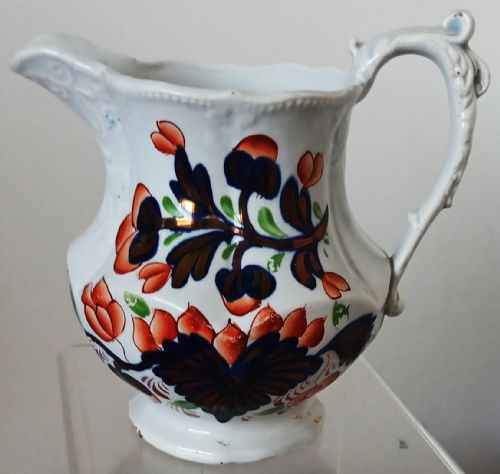
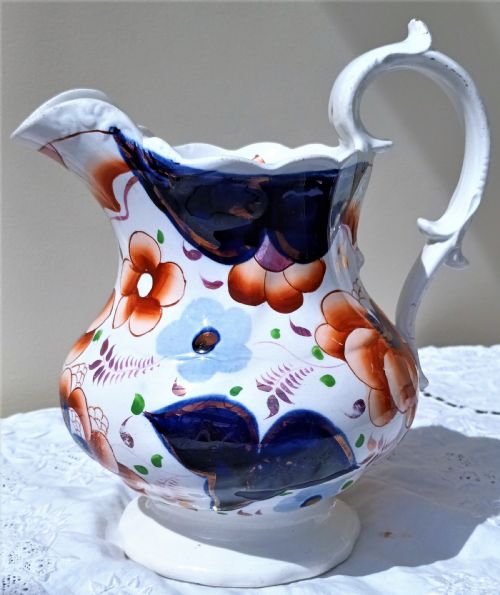
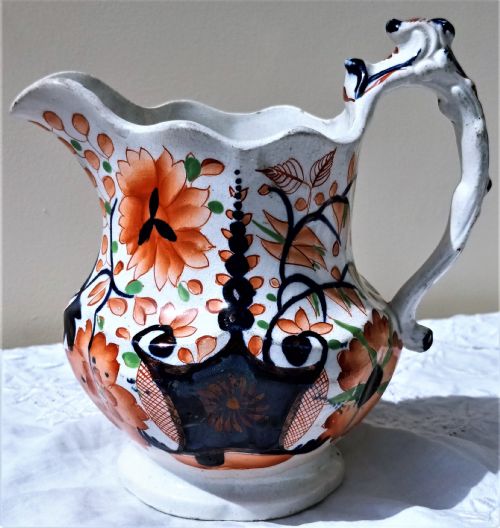
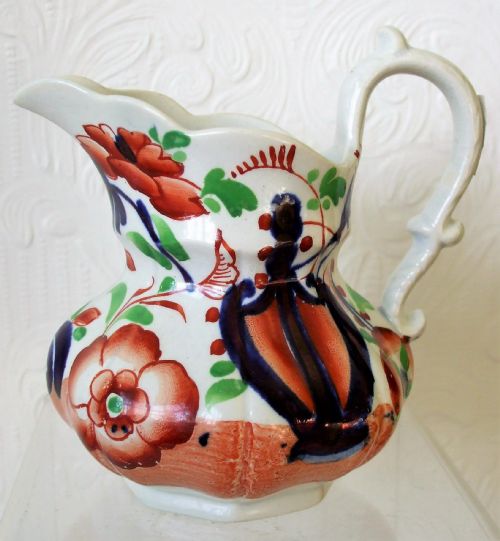
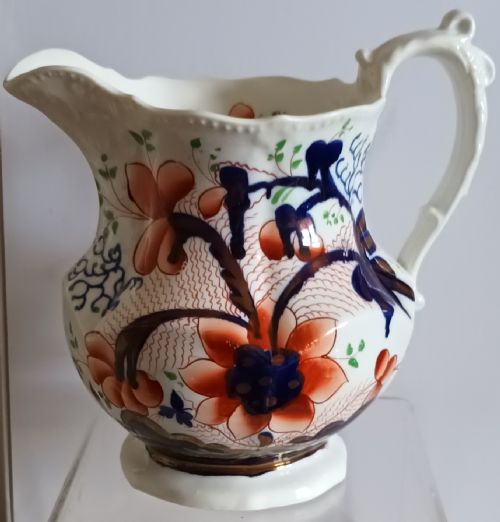
A gaudy welsh pitcher is a striking nineteenth-century ceramic vessel that brings bold colour and pattern to a traditional display.
Gaudy Welsh Pitcher
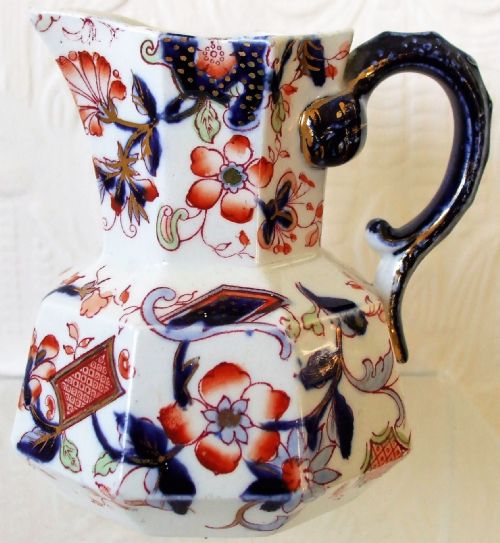
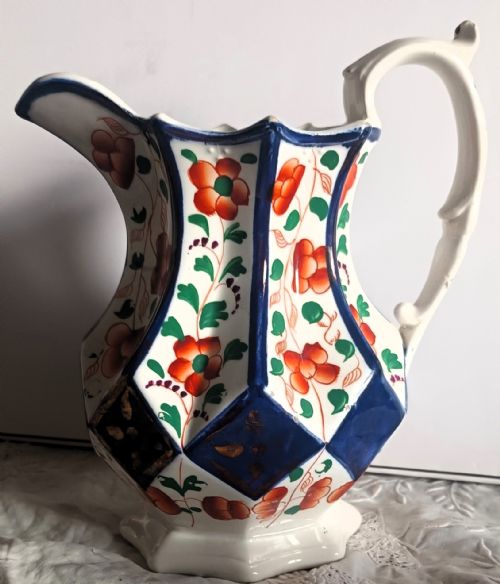
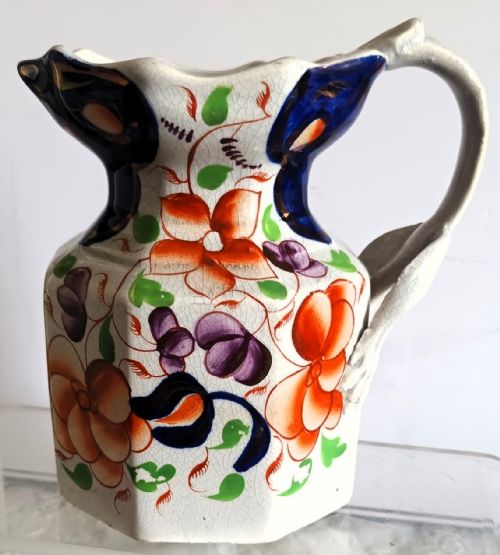
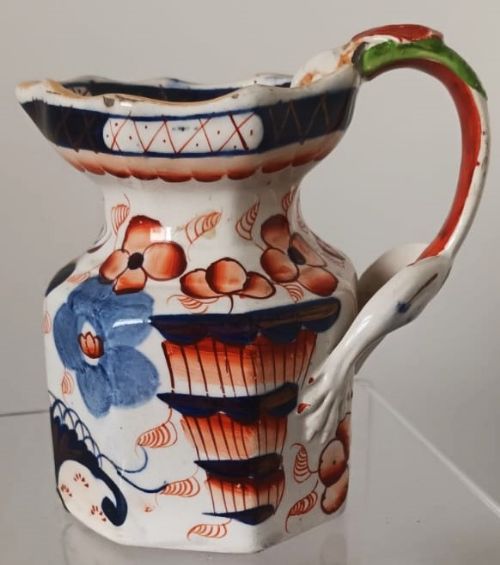
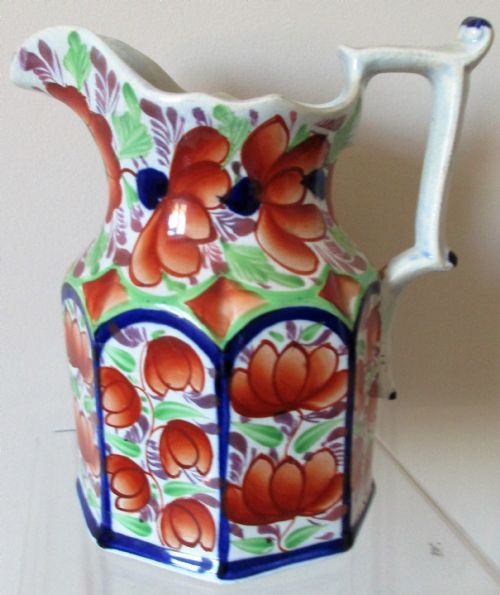
A gaudy welsh pitcher is typically encountered as an earthenware or ironstone vessel dating from the nineteenth century. These jugs take forms such as standard pitchers, pouch jugs and hydra shapes, reflecting the domestic pottery production of the period.
Most examples on this page belong to the Victorian era, alongside Georgian pieces. Collectors seek out specific named patterns like Bethesda, Grape, Drape, Pagoda, Harlech, Gower, Gwent, Conwy and Aberaeron.
These vessels serve primarily as decorative display items today, continuing a long tradition of British folk art ceramics. Their robust earthenware bodies and generous capacities suit traditional dresser displays.
Materials and construction methods
Makers shaped these pitchers from earthenware, ironstone, pottery and porcelain, applying a protective glaze over the ceramic body. The combination of sturdy clay bodies and smooth glazes ensured durability for everyday household use.
Decorators applied vibrant enamel colours and copper lustre highlights by hand over the glaze. This technique produced the characteristic intense palette that defines the style, often featuring cobalt blue, iron red and metallic copper.
Certain nineteenth-century potters gave their jugs pouch bellies just to hold an extra cup of tea.
Judging quality in nineteenth-century pottery
Quality rests in the precision of the hand-painted enamels and the crispness of transfer-printed pattern outlines. Pieces with densely applied copper lustre and well-registered colours stand apart from simpler executions.
The sophistication of the ceramic form itself influences desirability, particularly unusual shapes like pouch jugs or hydra profiles. Finer potting and well-balanced handles distinguish superior examples within any given pattern group.
Keeling And Co
The Gaudy Welsh Pitcher Glossary
- Gaudy Welsh
- A style of nineteenth-century British pottery featuring bright hand-painted enamels combined with copper lustre. It was largely produced for domestic use and export.
- Ironstone
- A type of durable semi-vitreous pottery patented in the nineteenth century. It provides a robust alternative to porcelain while maintaining a refined white surface.
- Copper Lustre
- A metallic glaze finish that creates a coppery sheen when fired. It is commonly used as a decorative border or accent in nineteenth-century ceramics.
- Earthenware
- Porous pottery fired at lower temperatures than stoneware or porcelain. It forms the standard body for the majority of these nineteenth-century jugs.
- Hydra Jug
- A pitcher featuring a specific moulded handle and rim profile reminiscent of classical vessels. This form appears across various nineteenth-century ceramic bodies.
Gaudy Welsh Pitcher: Frequently Asked Questions
What is a gaudy welsh pitcher?
A gaudy welsh pitcher is a nineteenth-century ceramic jug decorated with vibrant hand-painted enamels and copper lustre highlights. These vessels were produced in various traditional patterns for everyday use and display.
Most examples date from the Victorian period, though earlier Georgian pieces also exist. They remain popular with collectors for their bold folk art aesthetic.
How were these pitchers used?
These pitchers served practical functions in nineteenth-century households for holding liquids at the table or during washing. Their robust earthenware and ironstone bodies made them durable for daily domestic tasks.
Today, owners generally use them as decorative display pieces on dressers and shelves. Their bright patterns make them focal points in traditional interiors.
Are these pieces dishwasher safe?
These antique nineteenth-century ceramics require gentle hand washing in warm water without harsh detergents. The historic enamels and copper lustre finishes can easily degrade in modern dishwashers.
Proper care preserves the fragile overglaze decoration and prevents the ceramic body from absorbing moisture through microscopic crazing in the glaze.