
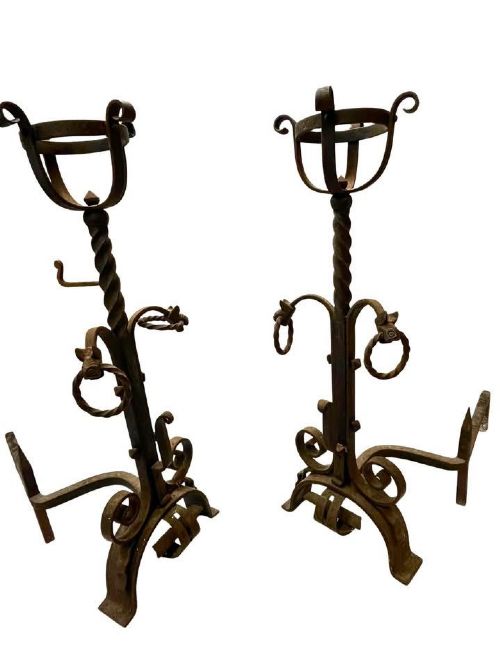


Antique Iron Fire Basket
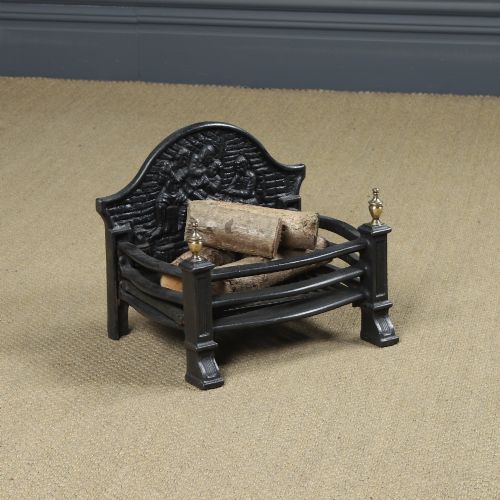
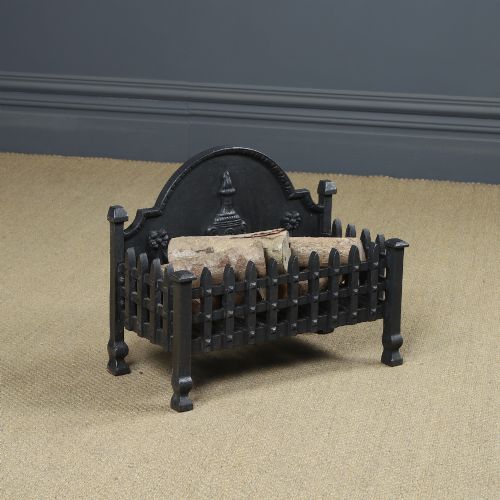
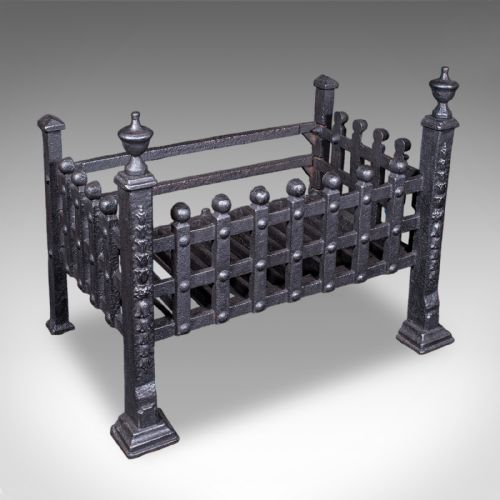
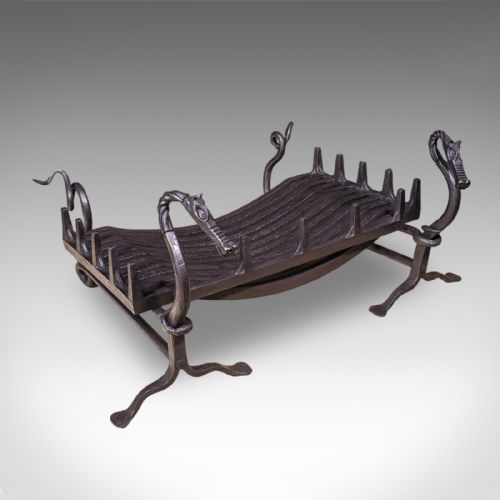
An antique iron fire basket brings weight and hearth-side warmth into a room, offering a traditional focal point built for open solid fuel fires.
Antique Iron Fire Basket
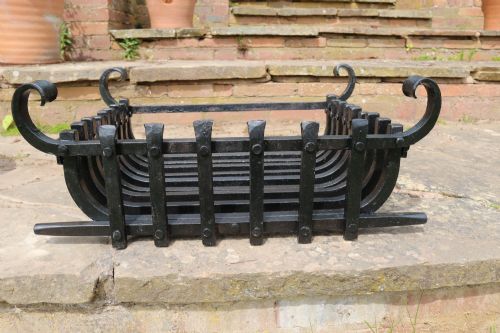
An antique iron fire basket is a hearth fixture designed to hold burning wood or coal safely above the hearth floor while allowing air circulation beneath the fuel. These pieces range from simple open grates to elaborate hearth sets complete with andirons, fire backs, and matching fenders.
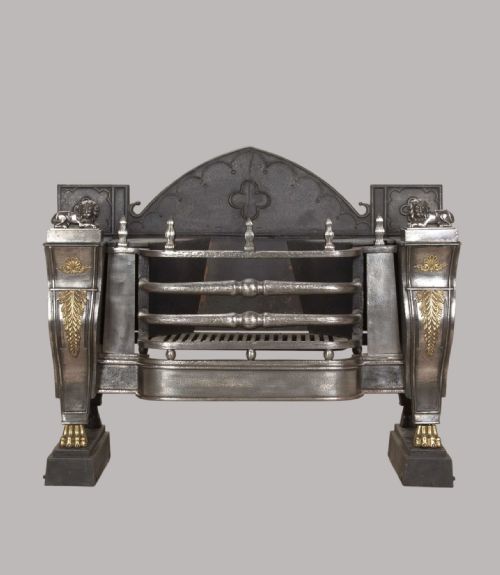
The versions most commonly found here date from the Georgian and Victorian eras, alongside Edwardian and early twentieth-century revivals. They appear in forms such as free-standing grates, hob grates, and inglenook baskets designed to anchor a period fireplace.
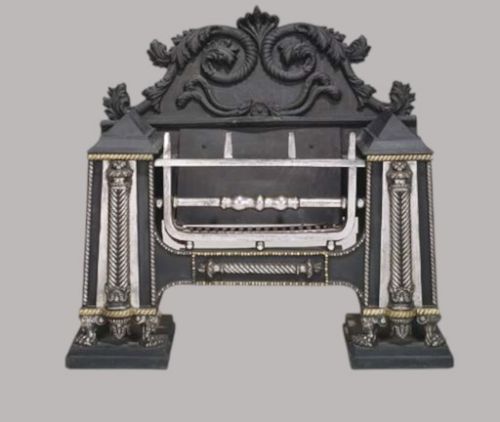
Makers and designers drew upon classical, Gothic, and Arts and Crafts vocabularies, producing everything from austere iron frames to decorative baskets incorporating brass detailing and regional motifs.
Materials and construction methods
Foundry work relied heavily on cast iron for structural grates and fire backs, allowing makers to achieve crisp decorative moulding and solid load-bearing strength. Wrought iron was hammered and forged separately for flexible bars, fire irons, and freestanding andiron legs.
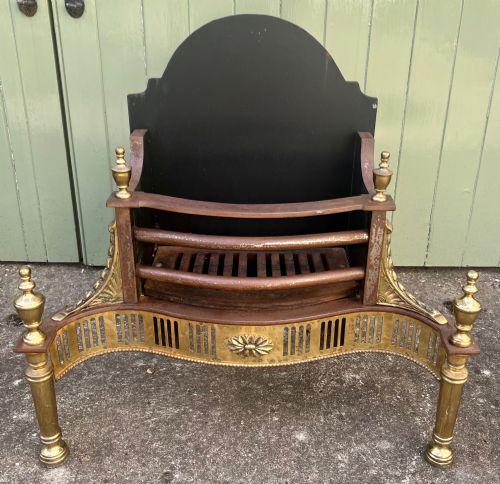
Brass elements frequently supplemented the iron framework, appearing as polished finials, decorative mounts, or gallery rails that added a contrasting metallic sheen against the dark cast metal. Firebrick occasionally lined the interior backs to retain and reflect heat into the room.
Some fireside sets include dedicated mulling andirons designed specifically to warm spiced drinks beside the hearth on cold winter evenings.
Distinguishing quality across the range
Quality rests upon the crispness of the casting and the structural integrity of the forged elements. Superior pieces display sharply defined motifs, balanced proportions, and heavy, thick gauge metal that withstands intense heat without warping.
Refined examples integrate complementary brass work cleanly into the iron frame, whereas simpler utility grates rely on straightforward, robust construction intended purely for functional hearth service.
The Antique Iron Fire Basket Glossary
- Fire basket
- A metal container raised on legs or andirons designed to hold wood logs or coal within an open fireplace. It allows ash to drop cleanly through the bottom bars.
- Andirons
- A pair of horizontal metal supports placed in a fireplace to hold burning logs above the hearth floor. They often feature decorative vertical fronts facing the room.
- Hob grate
- A type of fireplace grate featuring raised side shelves or hobs used for keeping kettles warm. This form became popular during the Georgian and Regency periods.
- Fire back
- A heavy iron plate placed against the rear wall of a fireplace. It protects the masonry from intense heat and radiates warmth back into the room.
- Register grate
- A fireplace grate equipped with a movable metal plate or flap to control the draught escaping up the chimney. They emerged during the late eighteenth and nineteenth centuries.
Antique Iron Fire Basket: Frequently Asked Questions
How do I install an antique fire basket?
Most antique iron fire baskets are free-standing units designed to sit directly within an existing fireplace opening or hearth. Ensure your chimney is inspected and swept before placing the basket inside for operational use.
Larger sets involving separate andirons and fire backs require careful positioning to balance the weight correctly against the back wall of the hearth.
Can I actually burn wood in these grates?
Many of these pieces are structurally robust enough for burning seasoned wood or coal, particularly heavy cast iron and wrought iron variants. You should check the internal bars and firebrick linings for stability before lighting any fire.
Lighter decorative revival pieces or those with delicate brass elements are sometimes better suited for decorative display or housing electric log effects.
How do I clean and maintain cast iron?
Regular maintenance involves brushing out ash and soot using a soft bristle brush once the metal has cooled completely. Avoid using water or harsh chemical cleaners which can cause rust to form on unprotected iron surfaces.
Applying a specialist grate polish or black lead paste periodically helps preserve the dark lustre of the cast iron and protects it from atmospheric moisture.
How do I tell a Georgian grate from a Victorian one?
Georgian and Regency grates typically exhibit restrained neoclassical or Adam style lines, featuring elegant proportions, bright brass detailing, and refined cast scrollwork. They often incorporate hob configurations designed for smaller formal parlours.
Victorian and later pieces tend to be heavier and more robust, frequently drawing on Gothic Revival or ornate Renaissance motifs with substantial andirons and large integrated fire backs.