


English Fireplace Basket
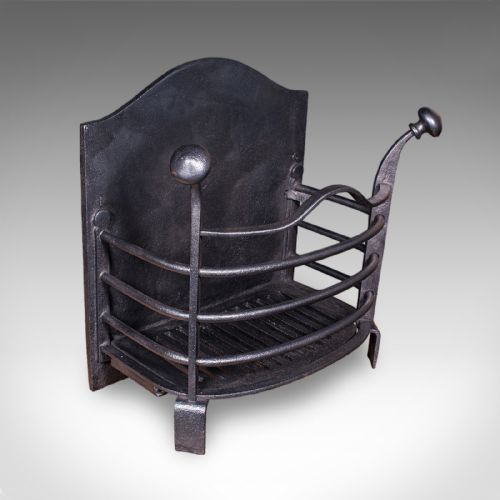
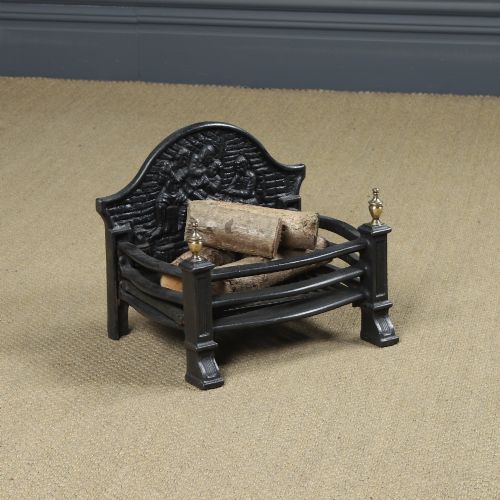
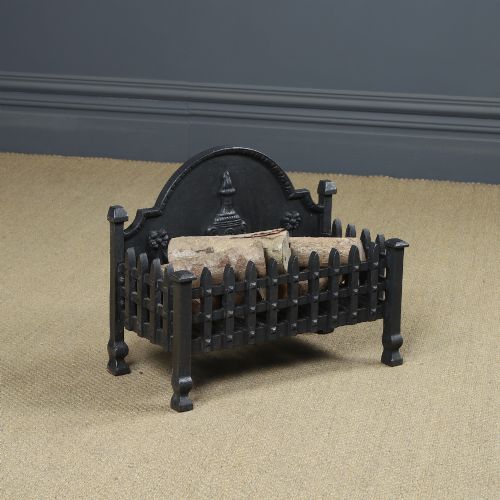
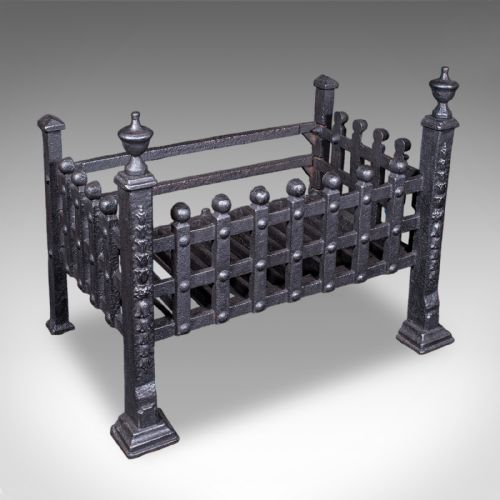
An english fireplace basket brings the warmth of cast iron and brass into the hearth, holding logs for open fires.
English Fireplace Basket
When searching for an english fireplace basket, buyers encounter open fire grates, log baskets, and hearth sets dating from the Georgian, Victorian, and Edwardian periods.
The selections span simple wrought iron grates alongside elaborate sets complete with andirons, coal scuttles, and inglenook fuel keepers.
Victorian and Edwardian iterations dominate the selection, often drawing on Gothic Revival, Neoclassical, and Regency styles.
Materials and Construction
Pieces are primarily cast iron or wrought iron, occasionally complemented by brass or copper accents and firebrick linings.
Foundries cast iron into decorative motifs, including dragon designs and Celtic crosses, while blacksmiths shaped wrought iron for structural durability.
The listings combine cast iron, wrought iron, brass, copper, and firebrick across Victorian, Edwardian, Georgian, and Regency periods.
Factors of Quality
Quality rests in the crispness of the cast iron detail and the structural integrity of the wrought iron framework.
Matched sets featuring original andirons or companion pieces hold greater design cohesion than isolated grates.
The English Fireplace Basket Glossary
- Fire Basket
- A metal container designed to hold burning wood or coal within an open hearth. These often stand upon andirons or legs.
- Andiron
- A horizontal support raised on legs, placed in pairs in a fireplace to hold logs. They frequently accompany a fire basket.
- Fire Grate
- The metal lattice framework supporting the fuel in a fireplace. It allows air to circulate underneath for combustion.
- Coal Scuttle
- A metal bucket or bin used for holding and carrying coal to the hearth. Examples in the evidence utilise brass or copper.
English Fireplace Basket: Frequently Asked Questions
What is an english fireplace basket?
An english fireplace basket is a metal hearth container used to hold logs or coal for an open fire. They range from simple cast iron grates to large sets with matching andirons.
These pieces originate from periods spanning the Georgian era through to the early twentieth century, incorporating styles like Gothic Revival and Neoclassical design.
How do I choose between iron and brass?
Iron baskets provide the heavy, functional structure needed directly in the hearth for burning fuel. Brass and copper elements tend to appear in decorative coal bins, scuttles, and polished fire furniture.
Selecting a material depends on whether the piece will serve for active fires or function primarily as a decorative hearth accessory.
Were these baskets used for wood or coal?
Many baskets accommodate wood logs, while smaller grates and scuttles relate specifically to burning coal. Firebrick linings inside some grates helped retain and direct heat.
Fuel choice often dictated the sizing and depth of the basket frame.
How do I date a fireplace basket?
Dating relies on stylistic clues, such as heavy Victorian casting, Edwardian decorative motifs, or Regency lines. Manufacturing techniques, like the transition from hand-wrought iron to mass-produced cast iron, also indicate the era.
Most surviving examples date from the Victorian and Edwardian periods, alongside later twentieth-century revivals of earlier styles.