
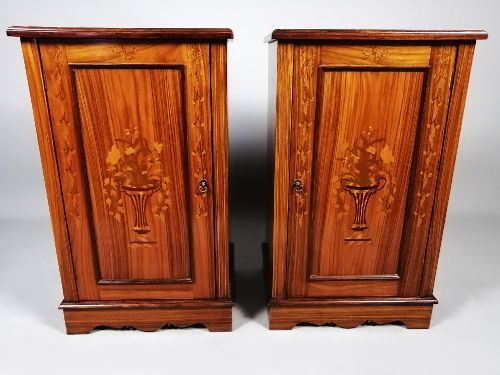
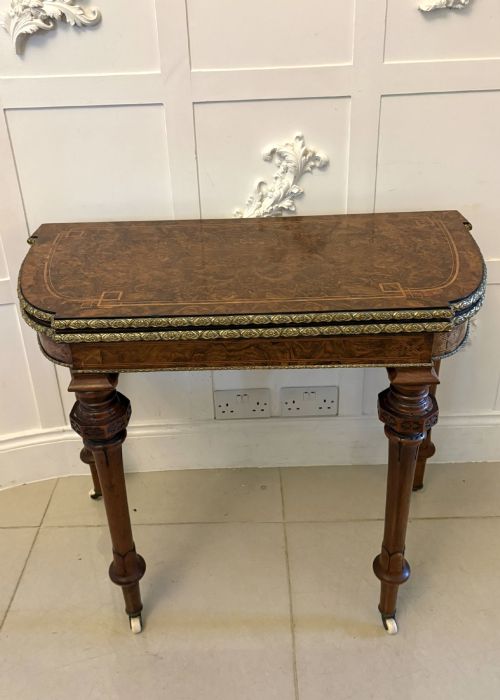
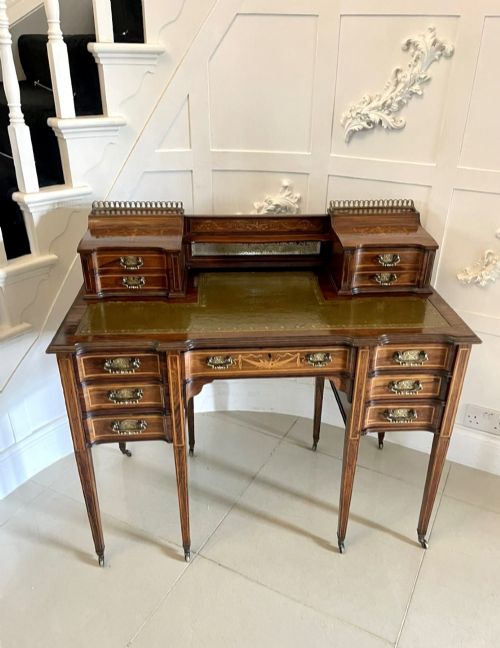
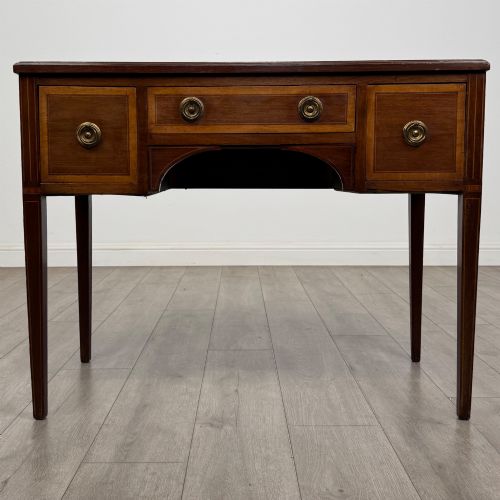
Antique Inlay Table
An antique inlay table brings surface geometry into a room through contrasting timbers, brass, or mother-of-pearl.
Antique Inlay Table
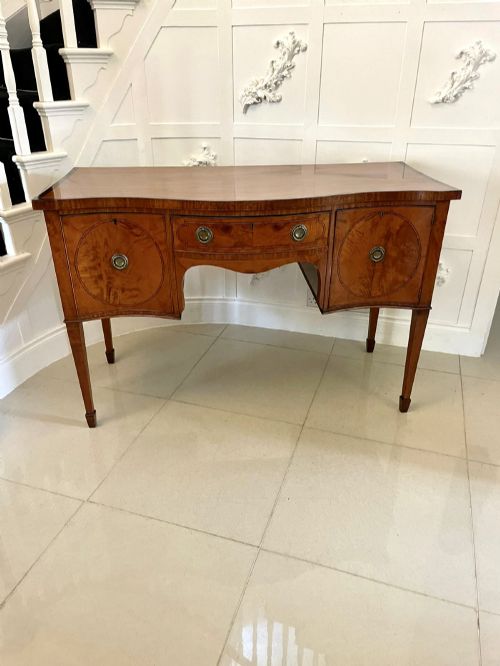
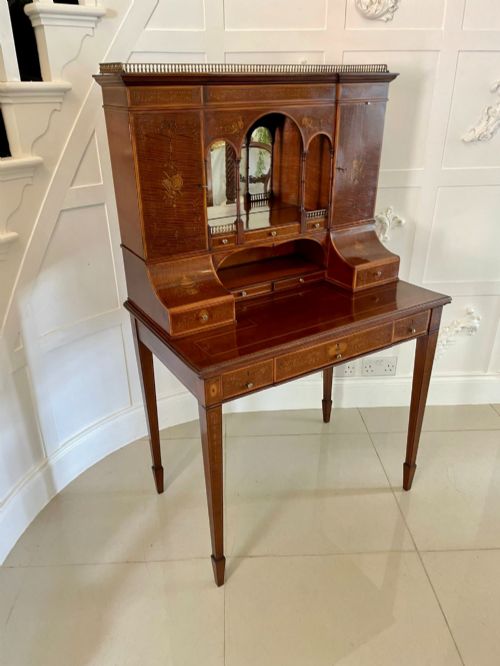
When you search for an antique inlay table, you encounter occasional pieces, writing desks, and folding card tables designed for parlour and drawing room use. The surviving examples span the Regency, Victorian, and Edwardian periods, drawing upon earlier Georgian forms and continental revival styles.
Mahogany, burr walnut, and rosewood serve as the primary timber bases for these surfaces, accented by satinwood, boxwood, and ebony. Side tables, console tables, and lamp tables appear frequently alongside specialist games and writing furniture.
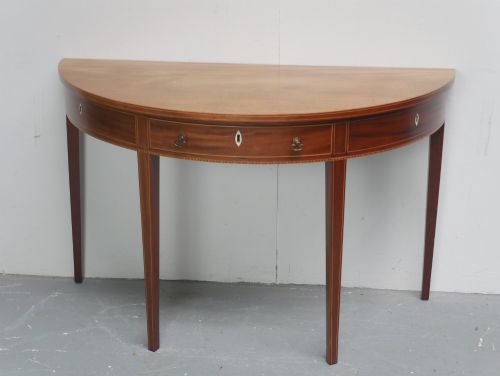
Makers ranged from large London workshops to regional cabinet makers, producing both freestanding centre tables and demi-lune pieces intended to sit against a wall.
Materials and Technique
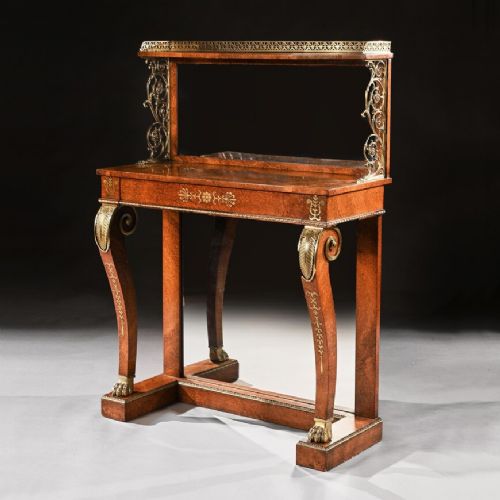
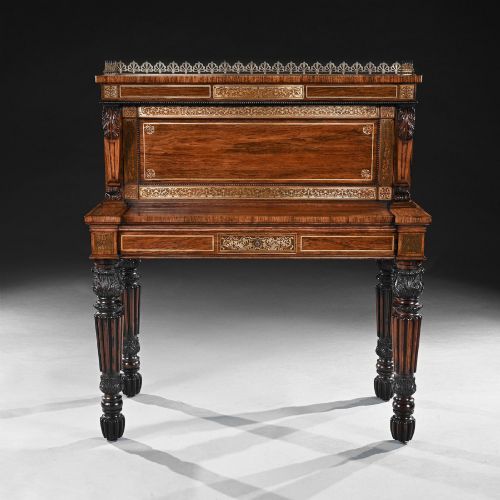
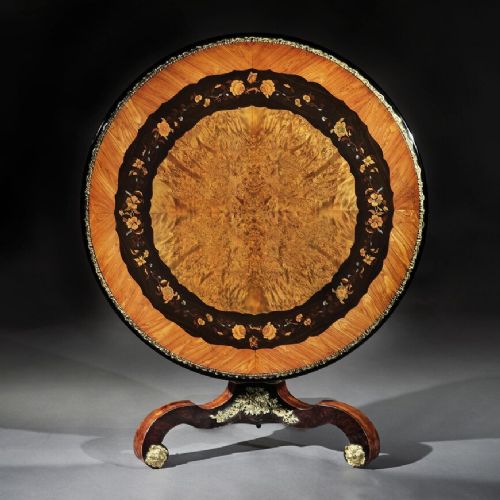
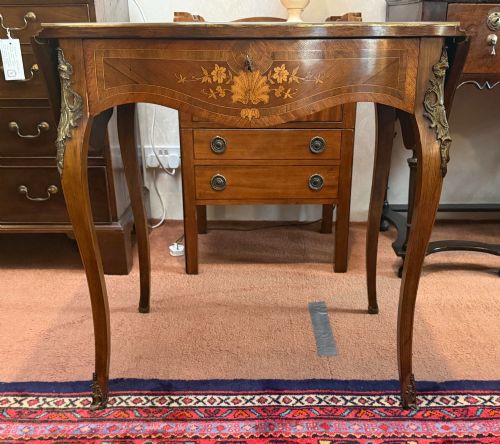
Cabinet makers set contrasting veneers into recesses carved directly into the primary timber ground, utilising boxwood, ebony, and satinwood to create geometric or floral motifs. Brass and ormolu mounts frequently edge the tops or reinforce the legs of finer Victorian and Regency examples.
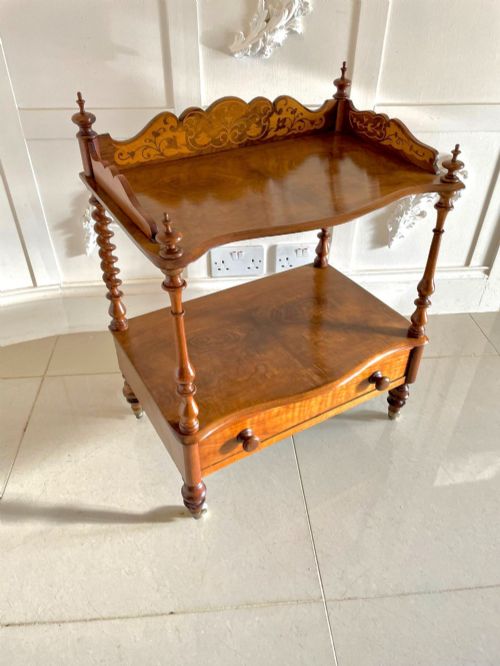
French polish finishes applied over mahogany, walnut, or rosewood build up a warm gloss that protects the delicate marquetry and parquetry work underneath. Carved details and turned supports complement the flat inlaid surfaces on card tables and writing desks.
Periods represented span from the 18th century through the Regency, Victorian, and Edwardian eras.
Distinctions in Quality
The sophistication of the timber selection and the precision of the veneer work dictate the standard of an antique inlay table. Subtle colour variation within the boxwood or fruitwood elements indicates deliberate shading, separating standard production from exceptional workshop output.
Structural integrity in the joints and the crispness of applied ormolu or brass stringing reveal the original maker's investment of time. Pieces attributed to documented workshops display meticulous attention to secondary timbers and hidden framing.
Maple and Co·Gillows Oxford Street Workshop·Edward Holmes Baldock·JAS Shoolbred·Trevor Page and Co·George Bullock
The Antique Inlay Table Glossary
- Marquetry
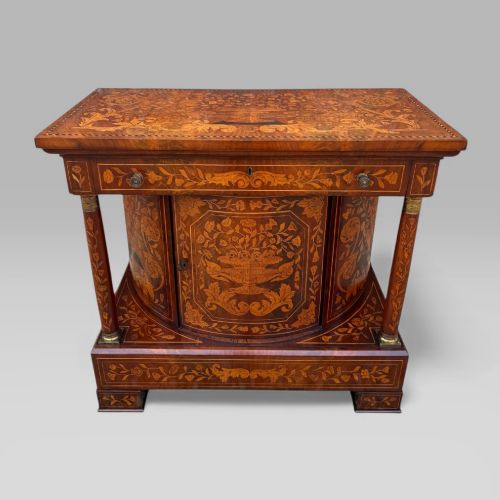
- Pictorial veneer work assembled from various woods, shells, or metals to form complex floral or scenic patterns. This technique covers the entire top surface of formal centre tables.
- Parquetry
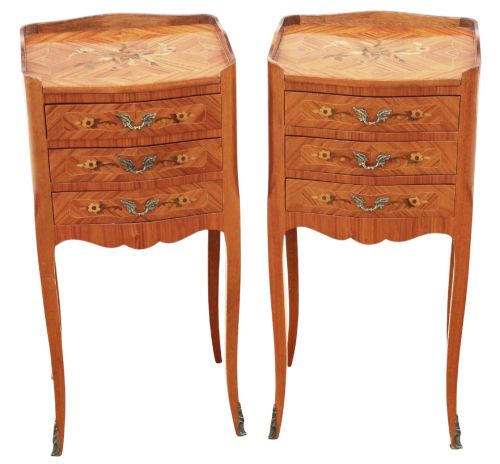
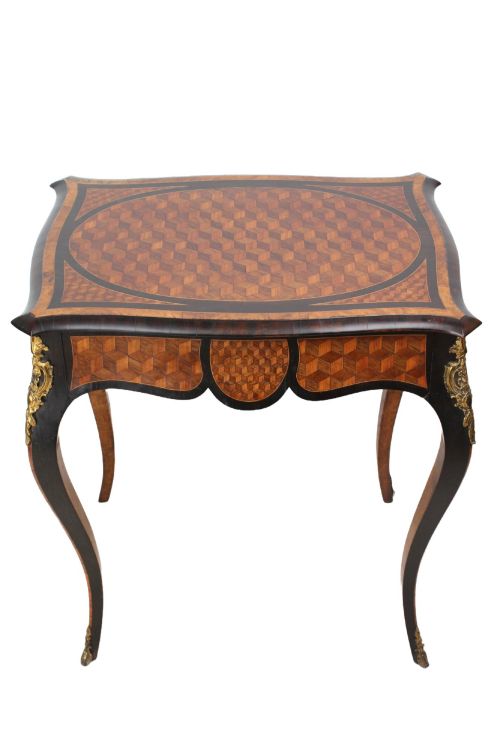
- Geometric mosaic veneer work arranged in repeating patterns such as cubes or chequers. It often appears on the tops of French revival games and side tables.
- Stringing
- Narrow inlaid lines of contrasting timber or metal set into the surface of furniture to define edges and borders. It characterises Sheraton and Regency cabinet work.
- Demi-lune
- A half-moon shape used for console and side tables designed to stand flat against a wall. Many folding card tables utilise this profile.
- Ormolu
- Gilded bronze mounts applied to the corners, legs, and aprons of high-status Victorian and French pieces. It protects vulnerable edges while adding decorative weight.
Antique Inlay Table: Frequently Asked Questions
What is an antique inlay table used for?
These tables served various domestic functions, from holding lamps and books to providing a stable surface for card games or correspondence. Writing desks incorporated drawers and fitted compartments, while Pembroke and drop-leaf versions offered flexible surface area.
Today, they function well as accent furniture in living spaces, hallways, or studies, maintaining their original utility while displaying decorative wood surfaces.
How do I identify the period of an inlay table?
Period identification relies upon a combination of timber choice, structural framing, and the style of the inlay motifs. Regency examples often feature bold brass stringing on dark mahogany or rosewood, while Victorian pieces frequently employ burr walnut with elaborate marquetry.
Edwardian furniture tends to feature lighter satinwood or mahogany grounds with delicate ribbon and urn motifs, reflecting a lighter revival aesthetic.
Where should I place an inlay table at home?
Place these tables out of direct sunlight to prevent the delicate fruitwood and satinwood veneers from fading or drying out. Side and lamp tables suit corners or beside seating, while demi-lune console tables fit well against hallway or living room walls.
Keeping them away from direct heat sources protects the old animal glues used beneath the veneer surface.
What is the difference between marquetry and parquetry?
Marquetry forms pictorial or curved compositions, such as floral sprays or figures, using multiple contrasting woods and sometimes shell or metal. It requires immense skill to cut and fit each organic shape together seamlessly.
Parquetry relies on strict geometric repetitions, such as cubes, chequers, or lozenges, creating a structured architectural pattern across the tabletop.