


Antique Inlaid Chest
An antique inlaid chest combines practical storage with precise cabinet-work, spanning centuries of timber traditions.
What these pieces are
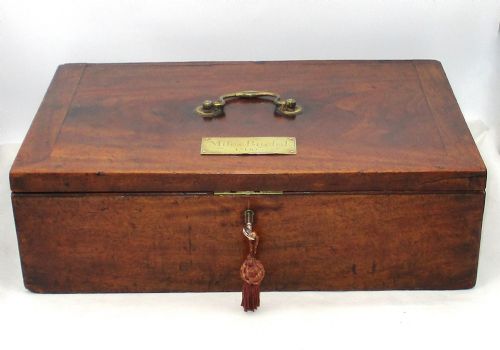
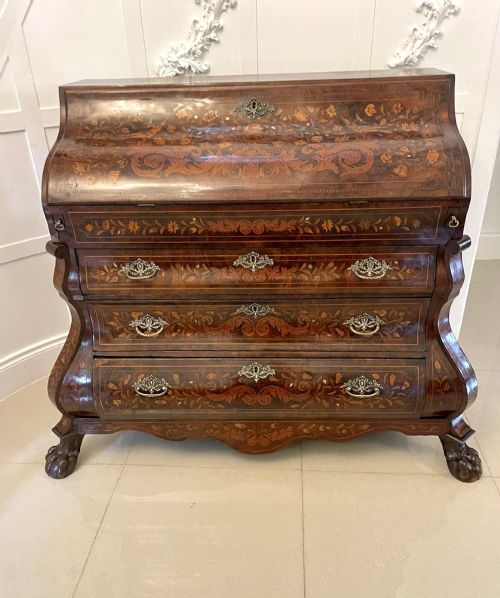
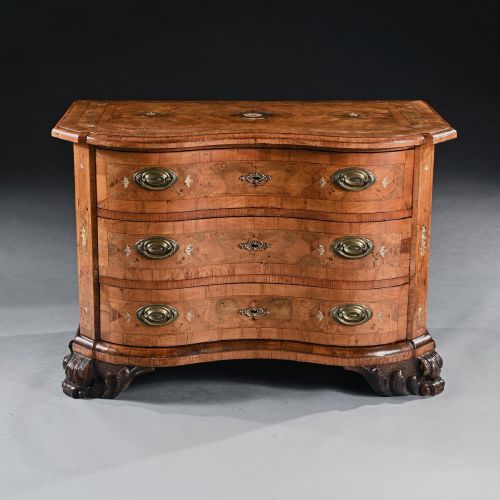
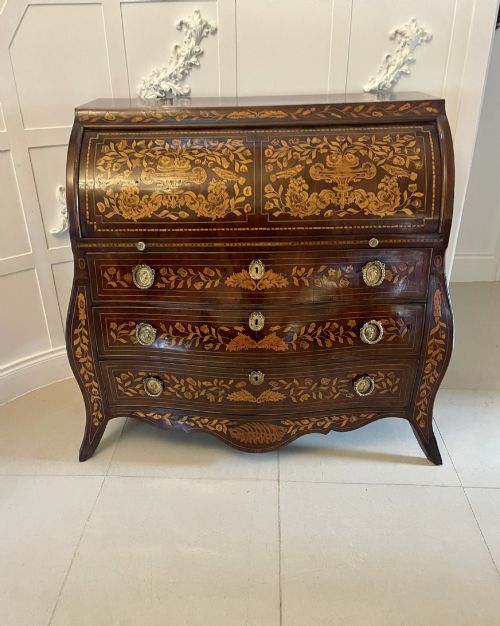
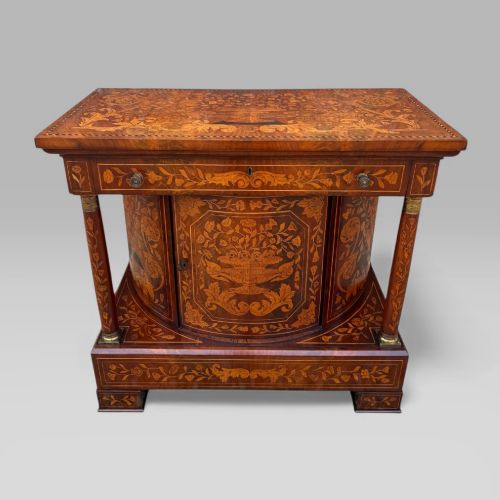
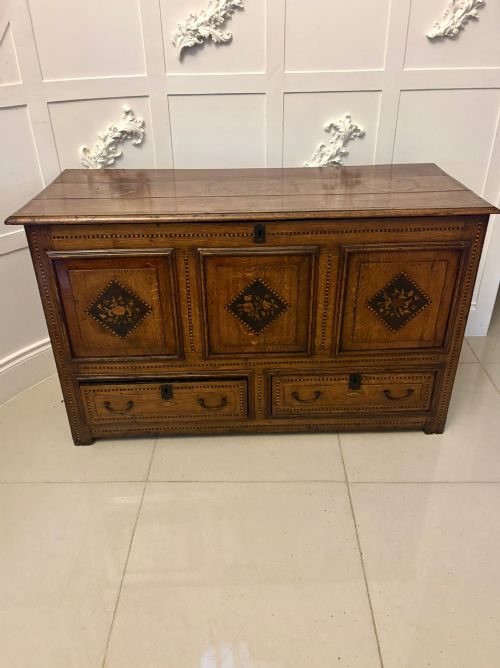
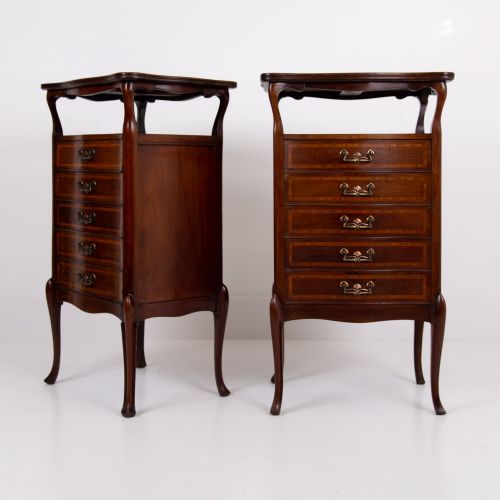
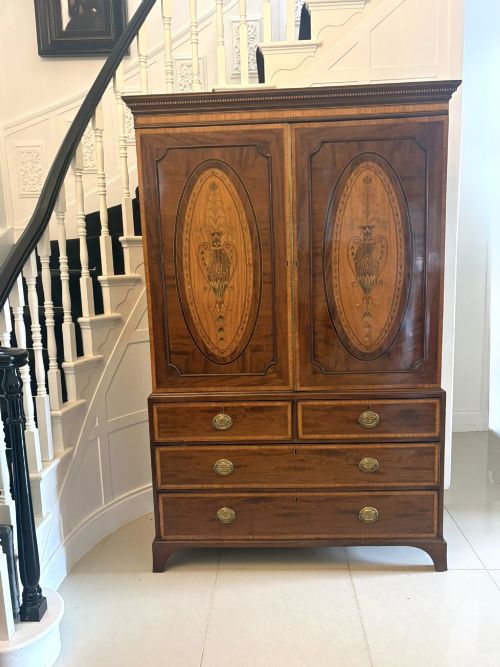
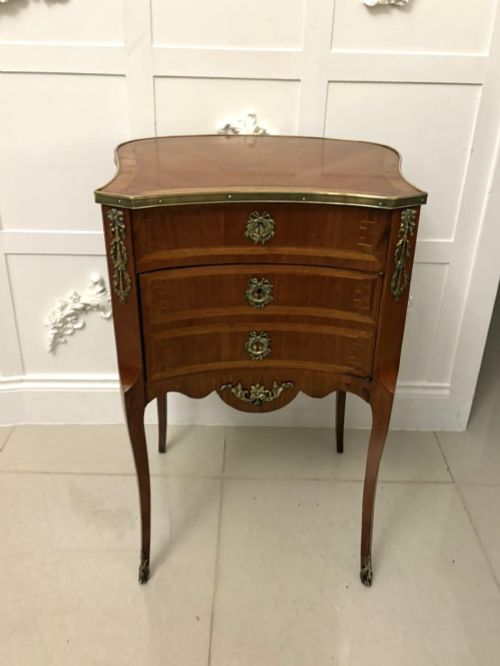
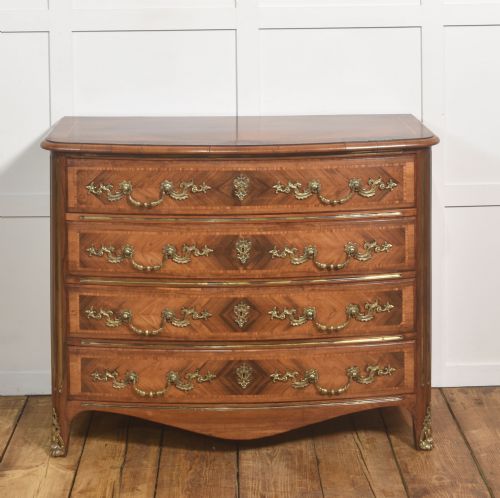
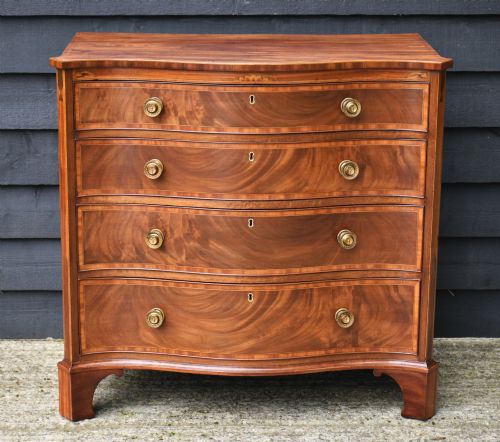
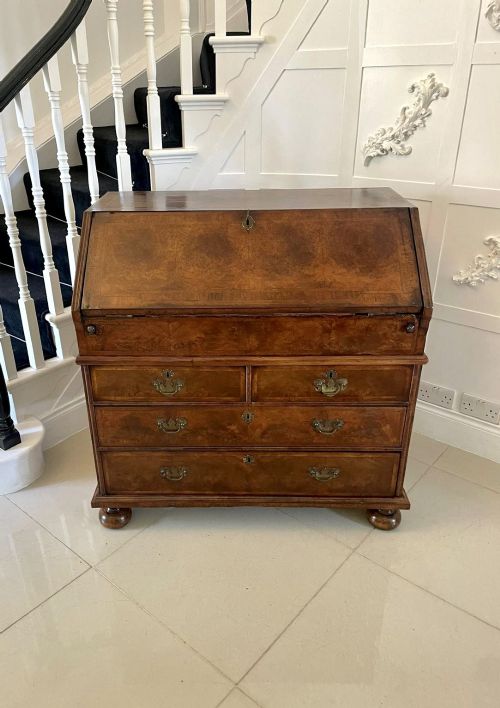
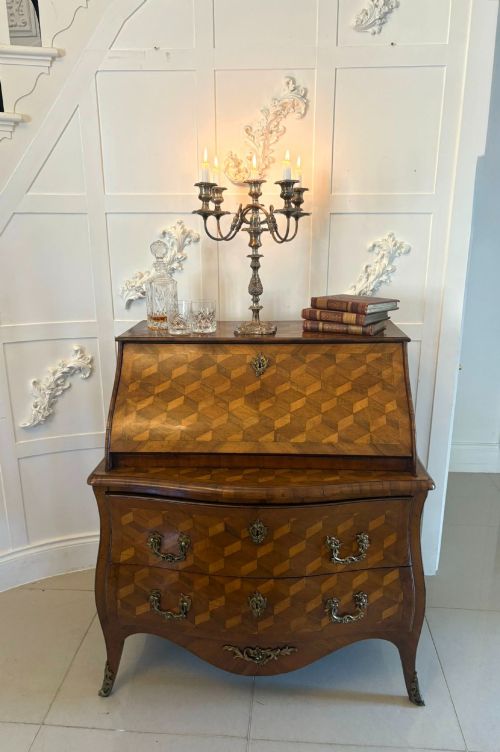
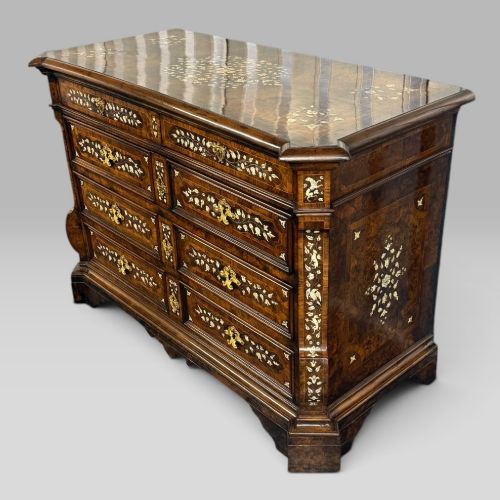
An antique inlaid chest spans multiple periods, ranging from sixteenth-century oak coffers to Victorian mahogany chests of drawers and tea caddies. Buyers examining this page encounter forms from domestic drawers to serpentine commodes and bedside cabinets.
The selection includes regional expressions such as Dutch walnut pieces, Tunbridge Ware rosewood items, and French kingwood marquetry furniture. Storage pieces serve functional purposes while displaying contrasting wood veneers and decorative motifs.
What varies in quality
The standard of execution lies in the precision of the surface decoration and the selection of figured timbers. Superior examples demonstrate seamless integration of contrasting veneers and balanced floral or geometric compositions.
Structural integrity and the preservation of original mounts, handles, and internal drawer construction distinguish finer historical specimens from later alterations.
Retail Price Guide 2026
Typical UK retail prices for inlaid chest, calculated from the Sellingantiques database of over a million retail prices indexed since 2003. This retail price guide relies exclusively on Sellingantiques data; no external sources or auction records are used, so the figures do not describe the wider market.
A tiny Tunbridge Ware box carries the patience of a maker who sliced thousands of microscopic wooden pixels.
Henry Hollamby
The Antique Inlaid Chest Glossary
- Marquetry
- The art of forming decorative patterns using thin slices of wood and other materials applied to a wooden structure. This technique creates pictorial or floral designs across drawer fronts and tops.
- Parquetry
- Geometric mosaic woodwork used for floors and furniture surfaces. It arranges small blocks or veneers into repeating patterns.
- Coffer
- A large wooden chest traditionally used for holding valuables or documents. Early examples feature robust construction and hinged lids.
- Serpentine
- A furniture design featuring a wave-like curved front with a convex centre and concave sides. This shape requires advanced woodworking skill.
- Tunbridge Ware
- Small wooden objects decorated with mosaic patterns made from tiny wood blocks of various natural colours. This technique originated in Kent.
Frequently Asked Questions
How do I date an antique inlaid chest?
Dating relies on timber selection, handle hardware, and construction methods. Earlier centuries utilise solid native woods, whereas later periods employ veneered mahogany and kingwood.
Examining drawer linings and internal joinery provides further clues to the manufacturing decade.
Where were these chests used in the home?
These items served bedrooms, hallways, and living spaces for storing clothing, linens, and valuables. Smaller forms functioned on tabletops or beside beds.
Larger chests of drawers remained central storage fixtures in domestic interiors.
What is the difference between marquetry and inlay?
Inlay involves inserting wood or metal into a recess carved directly into a solid timber surface. Marquetry covers the entire surface with a composed veneer picture.
Both techniques add visual depth to the piece.
How do I care for polished wood surfaces?
Maintain surfaces by keeping them away from direct heat sources and strong sunlight. Regular dusting with a soft cloth preserves the polish.
Occasional waxing protects the historical timber.