

Antique Inlaid Buffet Cabinet
An antique inlaid buffet cabinet brings together rich timber and delicate stringing, offering generous storage alongside formal grace for a dining room.
Antique Inlaid Buffet Cabinet
When searching for an antique inlaid buffet cabinet, buyers encounter substantial timber storage pieces designed to serve and display, spanning Georgian, Victorian, and Edwardian periods.
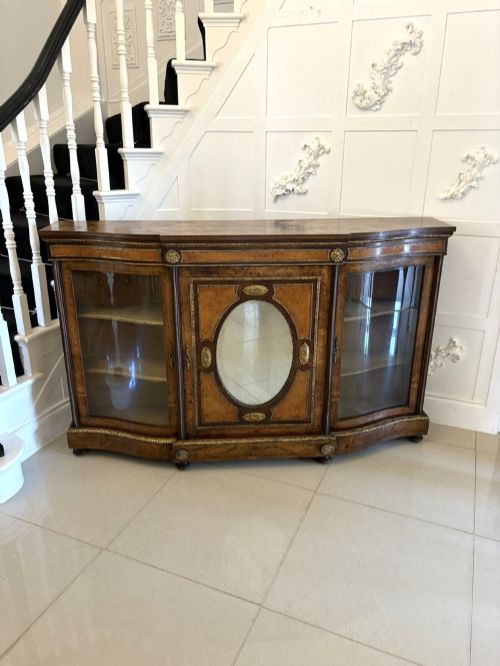
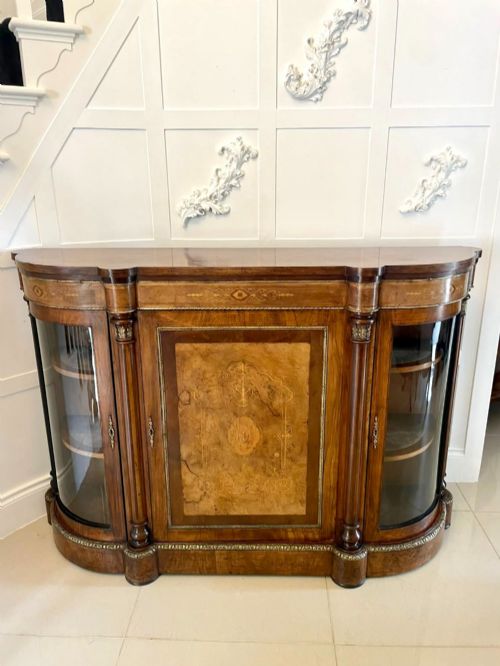
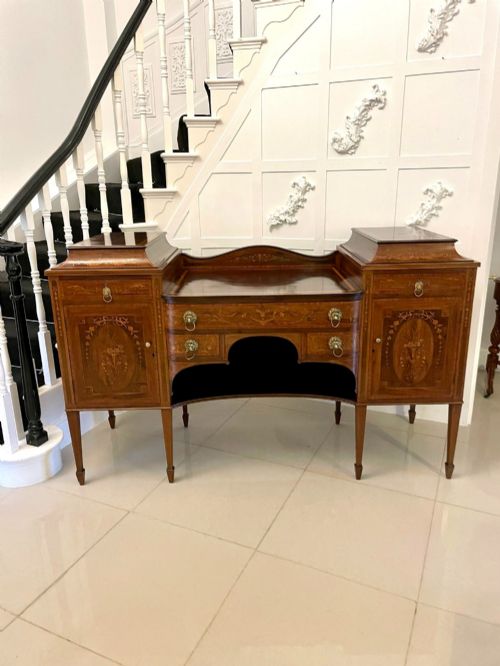
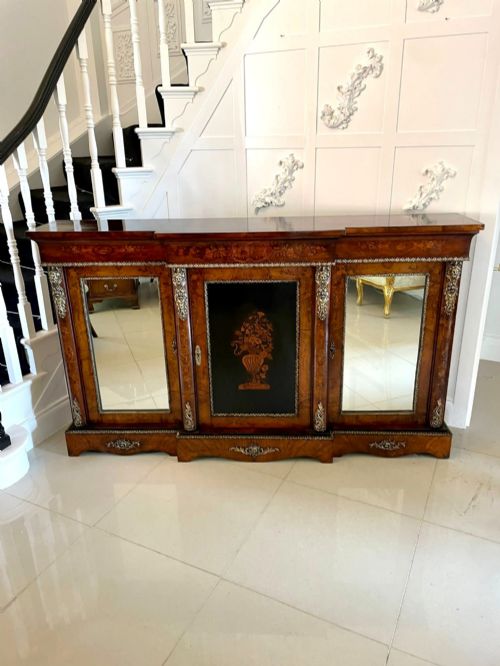
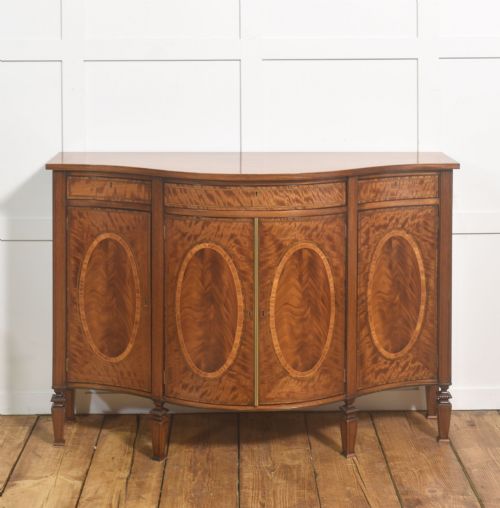
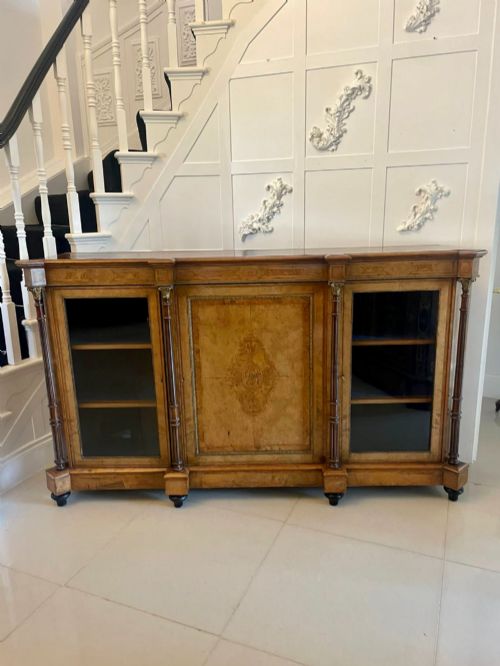
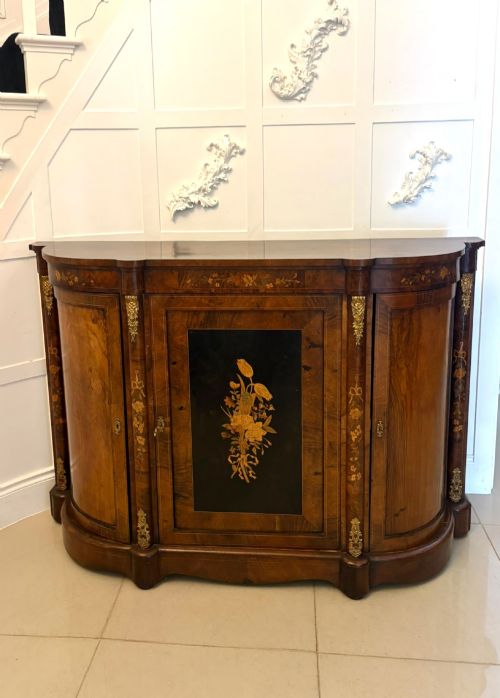
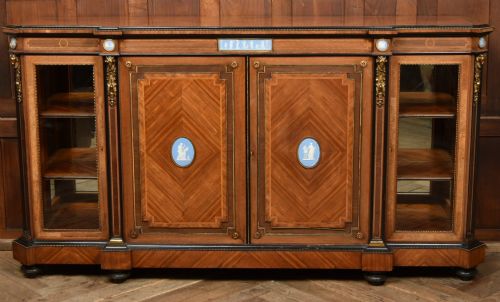
The version most commonly met on this page is the Victorian burr walnut credenza or sideboard, frequently decorated with floral marquetry and mounted in ormolu.
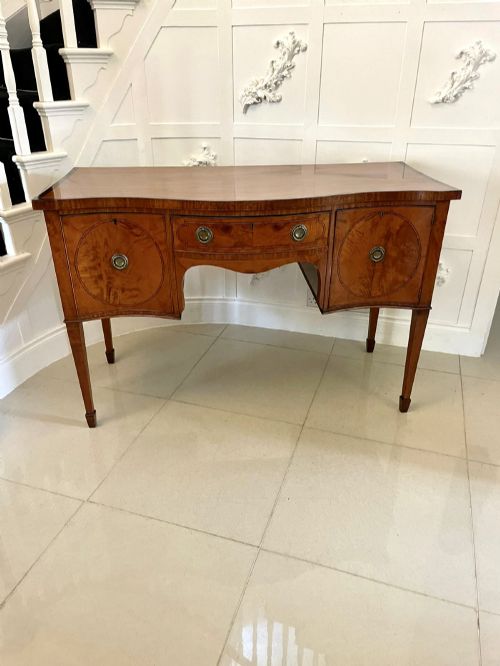
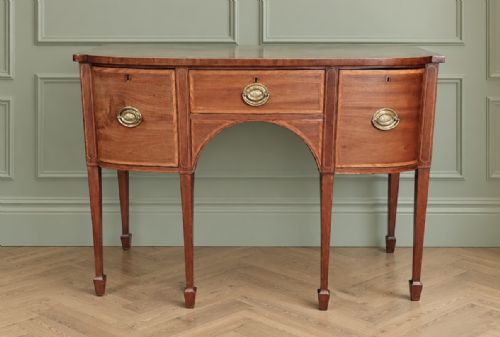
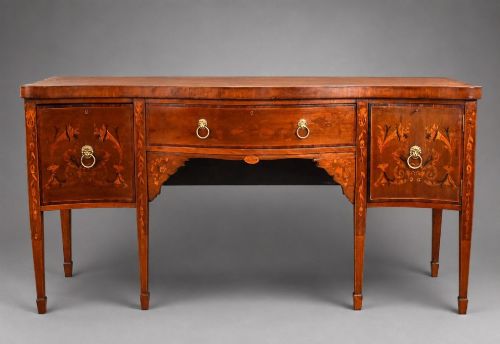
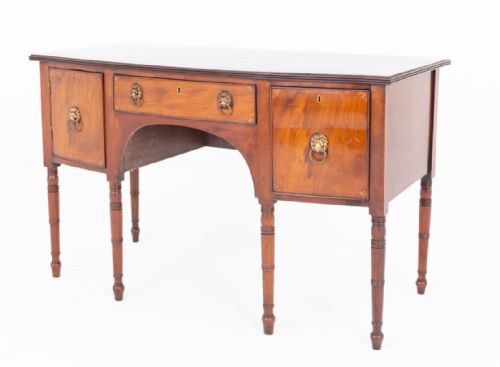
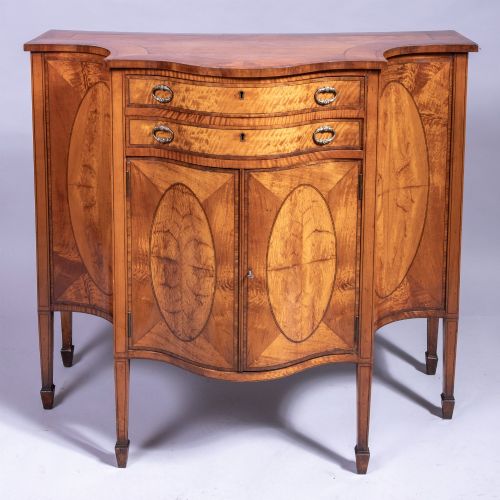
Other frequent forms include mahogany and satinwood sideboards featuring bow-fronts or serpentine shapes, alongside Georgian oak dresser bases and later Sheraton Revival interpretations.
Materials and construction methods
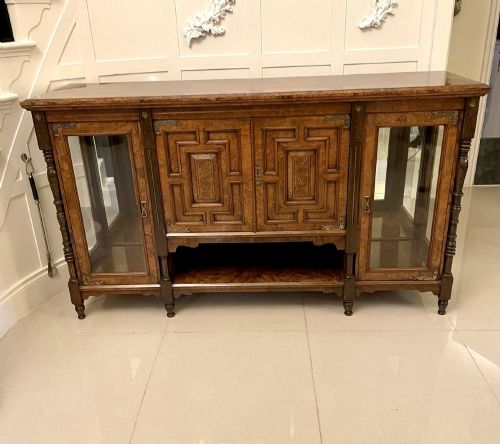
Cabinet makers utilised solid and veneered timbers, predominantly mahogany, burr walnut, and satinwood, applying contrasting boxwood and brass stringing to define panels and borders.
Marquetry techniques introduced intricate floral and geometric motifs using lighter woods set into darker grounds, while mounts in cast or ormolu brass highlighted doors and pedestals.
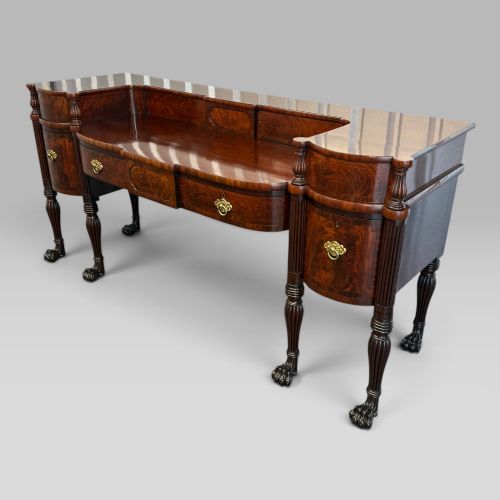
Lion paw feet occasionally anchor Regency mahogany sideboards, standing ready to hold the dining room floor.
Judging the standard of manufacture
The distinction between ordinary and exceptional pieces rests upon the precision of the marquetry and the choice of veneer, where matched burr walnut or figured flame mahogany displays deliberate planning by the cabinet maker.
Subtlety in the design of brass mounts, the crispness of inlaid stringing, and the harmony of proportion across serpentine or breakfront outlines separate standard production from exhibition pieces.
Hewetsons London·Shapland and Petter
The Antique Inlaid Buffet Cabinet Glossary
- Marquetry
- Decorative patterns formed by fitting together small pieces of veneer into timber grounds. This technique creates pictorial or floral designs across cabinet doors.
- Credenza
- A low cabinet, frequently enclosed by doors, originating as a serving table. Victorian examples often incorporate glass display sections alongside central cupboards.
- Serpentine
- A curved outline that bends outward in the centre and inward at the sides. This shape demands high skill from the carpenter to maintain structural alignment.
- Crossbanding
- A border of veneer laid with the grain running perpendicular to the central panel. It provides a neat visual frame to drawer fronts and tabletops.
- Ormolu
- Gilt-bronze mounts applied to furniture for decorative accent. These metal fittings add weight and richness to nineteenth-century walnut cabinets.
Antique Inlaid Buffet Cabinet: Frequently Asked Questions
Where should an antique inlaid buffet cabinet go?
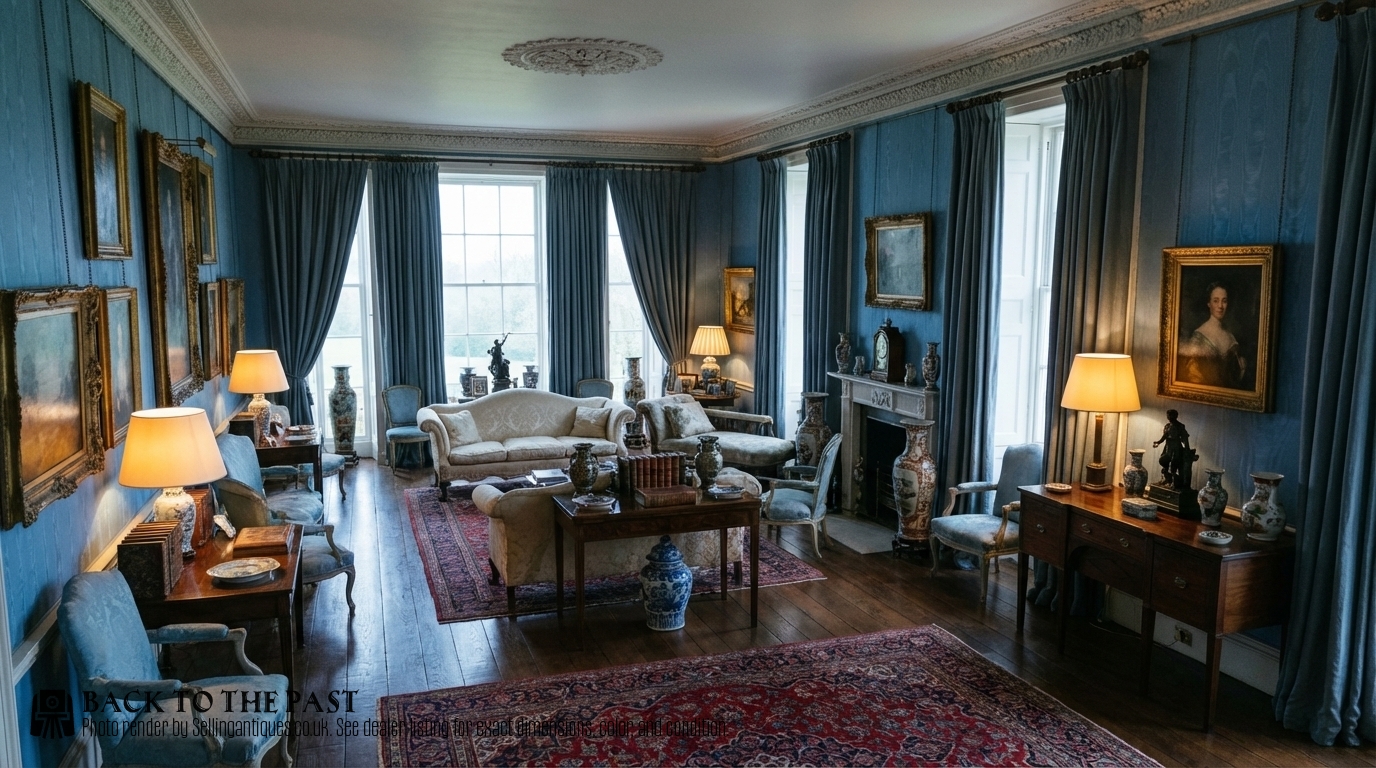
These large storage pieces suit formal dining rooms or spacious hallways where their length and timber grain can be fully appreciated.
Position them against interior walls away from direct sunlight to protect delicate satinwood and burr walnut veneers from fading.
How do I clean an inlaid buffet cabinet?
Dust surfaces regularly with a soft, dry cloth to prevent dirt from settling into the fine grain of the marquetry and stringing.
Apply a quality beeswax periodically to nourish the wood, avoiding modern silicone sprays that damage antique polish.
What is the difference between a sideboard and a credenza?
Sideboards were traditionally designed for dining rooms to hold silver, linen, and serving dishes during meals.
Credenzas often feature more decorative ormolu mounts and glass panels, leaning towards display alongside enclosed storage.
How do I recognise Sheraton Revival pieces?
Sheraton Revival furniture dates primarily to the late nineteenth and early twentieth centuries, copying the lighter neoclassical lines of the late eighteenth century.
Look for satinwood finishes, tapered legs, and delicate floral inlay rather than the heavier dark timbers of earlier decades.