


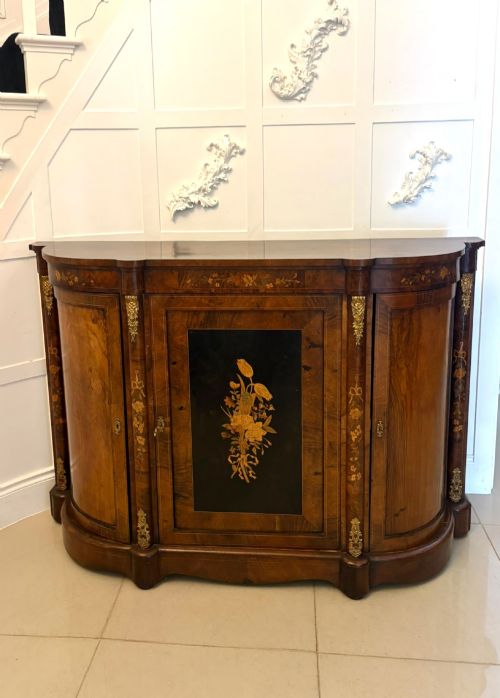
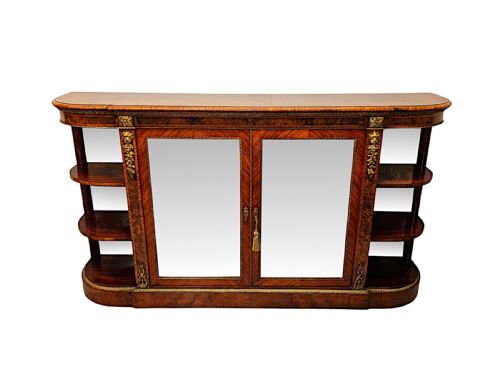
Marquetry Display Sideboard
These marquetry display sideboards combine timber veneers and metal mounts to form large showpieces for Victorian and Edwardian rooms.

Marquetry Display Sideboard
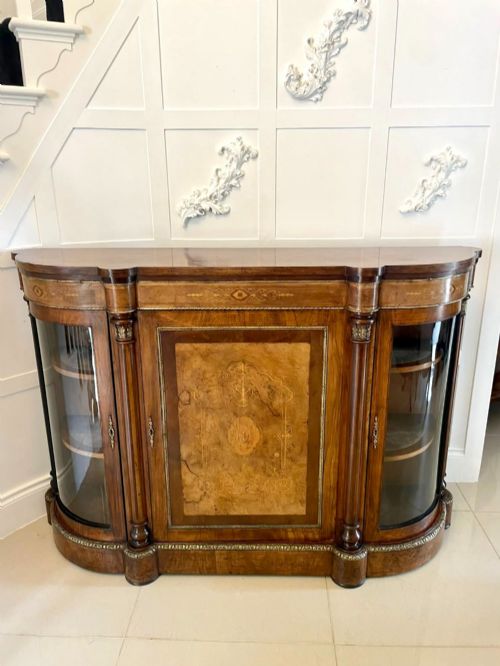
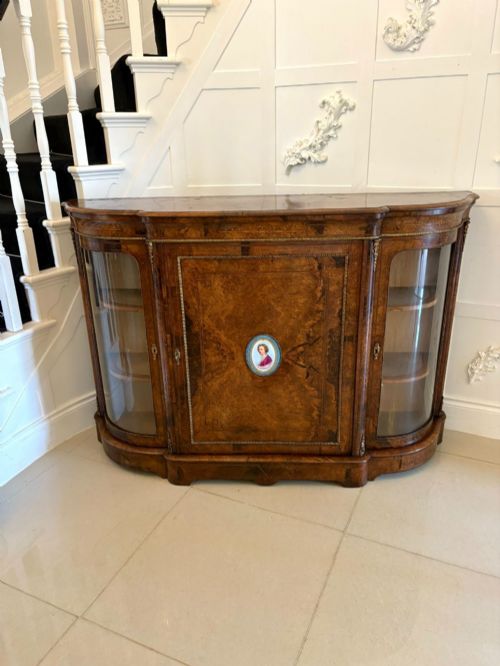
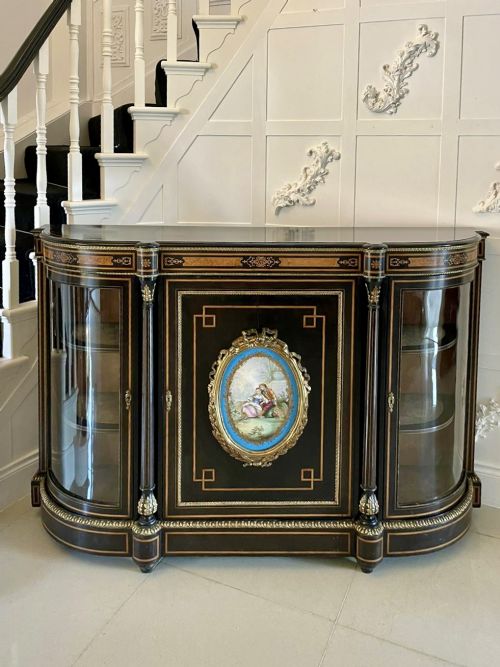
A marquetry display sideboard is a substantial timber cabinet designed to exhibit porcelain and decorative objects behind glass doors while providing enclosed storage space beneath or at the sides. These pieces belong predominantly to the Victorian period, appearing alongside Edwardian and nineteenth-century variations.
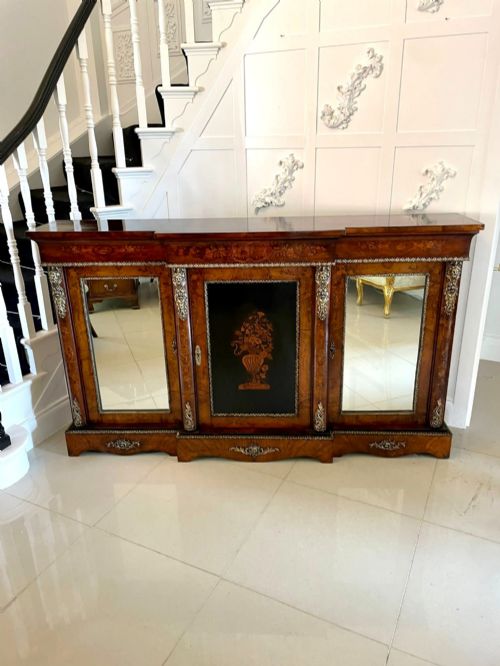
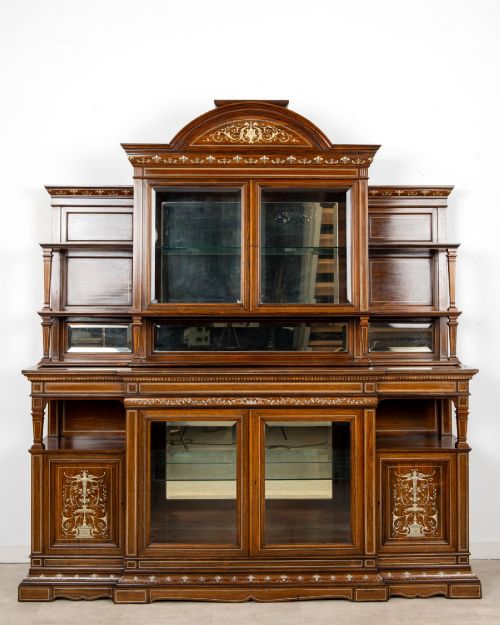
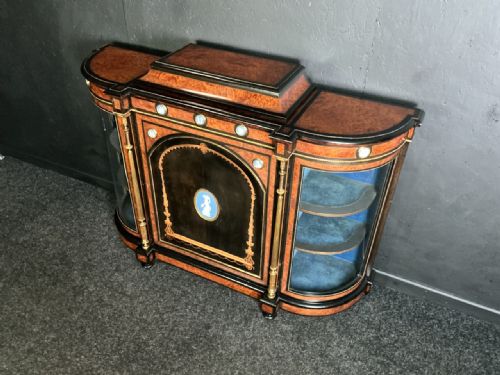
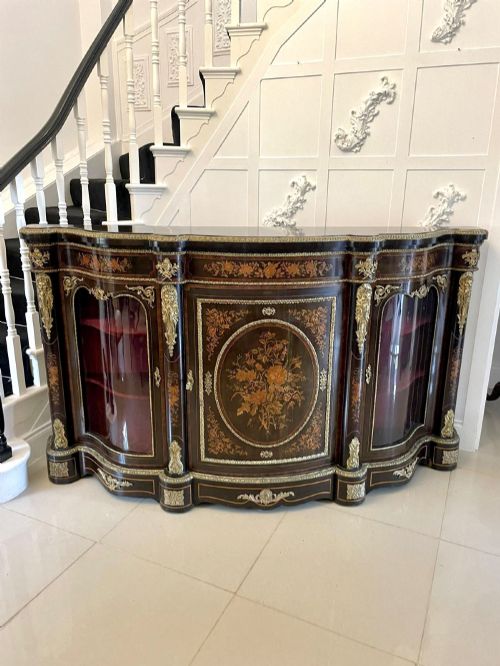
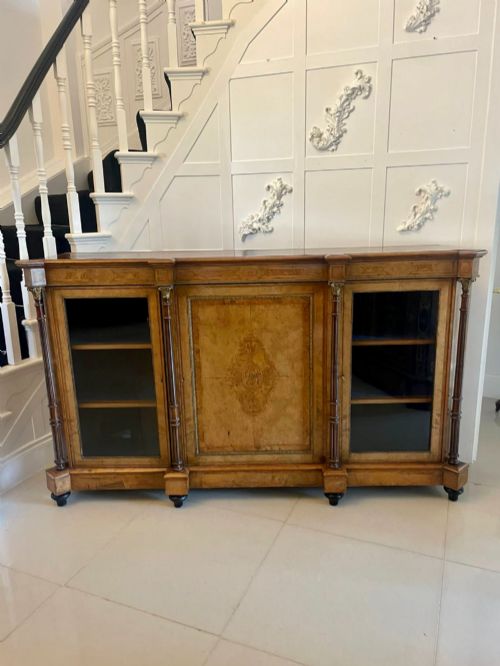
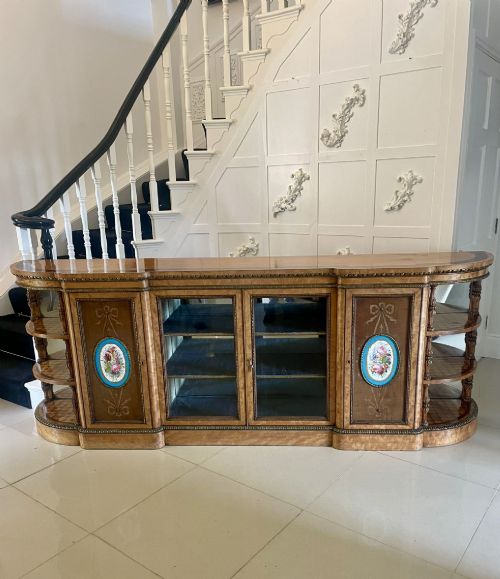
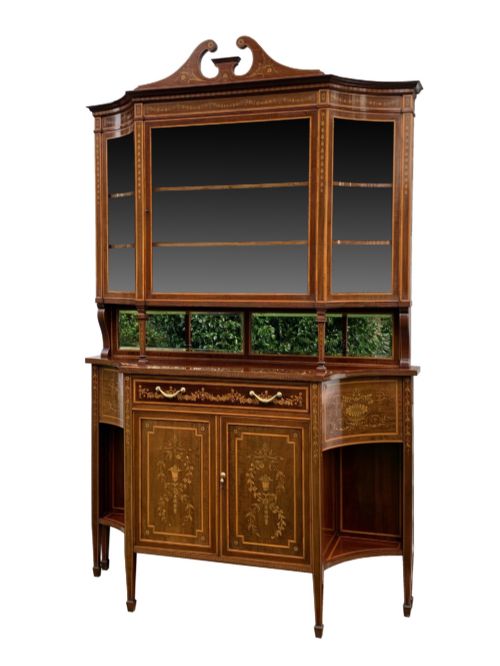
The form encompasses credenzas, pier cabinets, and breakfront bookcases featuring central glazed display sections flanked by cupboards. Makers utilised serpentine shapes and flat fronts alike, incorporating intricate wood inlays and gilded metal mounts into the architecture.
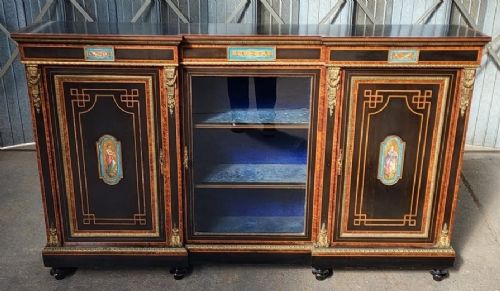
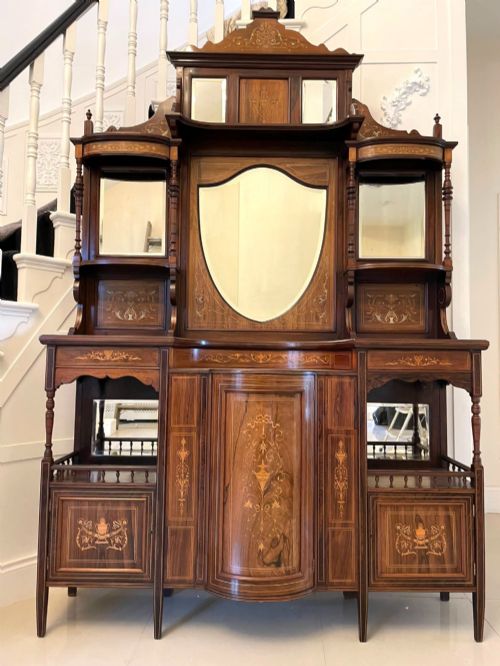
Buyers encounter walnut, rosewood, and ebonised carcasses adorned with floral or geometric marquetry patterns. These furniture items served as focal points in formal reception rooms, combining display utility with elaborate decorative presence.
How they were made
Carcasses are built from secondary timbers such as mahogany or pine, faced with burr walnut, rosewood, satinwood, or amboyna veneers. Cabinetmakers cut contrasting woods like boxwood to create detailed floral marquetry and stringing patterns across the doors and panels.
Cast ormolu mounts frame the glazed doors and highlight the corners, feet, and friezes of the cabinetry. Glass panels are fitted into wooden frames, often supported by internal timber shelving within the display sections.
Listings feature eighteenth-century Dutch pieces alongside Victorian and Edwardian examples.
What varies in quality
The standard of execution rests in the precision of the marquetry cutting and the choice of veneer figures, where highly burr walnut or figured satinwood commands greater attention. Finer examples display meticulous symmetry in the timber grain and seamless integration of the brass or ormolu mounts.
Structural heft and the complexity of the timber carcass shape determine the calibre of the piece, with serpentine fronts and four-door configurations requiring advanced cabinetmaking skill. The depth of hand-chasing on metal mounts and the inclusion of painted porcelain plaques further separate standard production from exhibition-grade specimens.
Collinson and Lock·Edwards and Roberts·Gillows·August Ungethüm·Maison Gagneau·James Hicks·Shapland and Petter
The Marquetry Display Sideboard Glossary
- Marquetry
- A technique where pieces of contrasting veneer are assembled to form pictorial or geometric patterns on a timber background. This ornament covers the main display doors and panels.
- Credenza
- A low cabinet featuring cupboards and central glass doors, commonly used for display and storage. The form developed significantly during the nineteenth century.
- Ormolu
- Gilded bronze metalwork used for mounts, feet, and decorative framing on furniture. It provides metallic contrast against dark woods like rosewood and ebonised timber.
- Burr walnut
- Timber sliced from walnut tree growths, producing an intricate swirling grain pattern. It forms the primary veneered surface on many nineteenth-century cabinets.
- Pier cabinet
- A narrow display cabinet designed to fit wall spaces between windows. These pieces often incorporate glass doors and inlaid timber surfaces.
Marquetry Display Sideboard: Frequently Asked Questions
Where should I place a marquetry display sideboard?
These cabinets suit large dining rooms, drawing rooms, or wide hallways where their length and reflective glass doors can be appreciated.
Position them away from direct sunlight and heat sources to protect the delicate wood veneers and historic polish.
How do I clean the wood and ormolu mounts?
Dust the surfaces regularly with a soft, dry cloth to prevent dirt accumulation in the intricate marquetry recesses.
Avoid liquid polishes and commercial cleaners, which can damage aged French polish and discolour the metal mounts.
How do I date these cabinets?
Examine the secondary timbers inside the drawers and carcass, alongside the style of the marquetry and metal mounts.
Cabinets from the mid-nineteenth century often feature rich burr walnut and heavy ormolu, while later Edwardian examples lean towards satinwood and lighter inlaid motifs.
Can the internal shelves be adjusted?
Most period cabinets feature fixed wooden shelves or simple resting battens rather than modern adjustable metal tracks.
Items placed inside should be measured beforehand to ensure they fit the historic shelf spacing.