
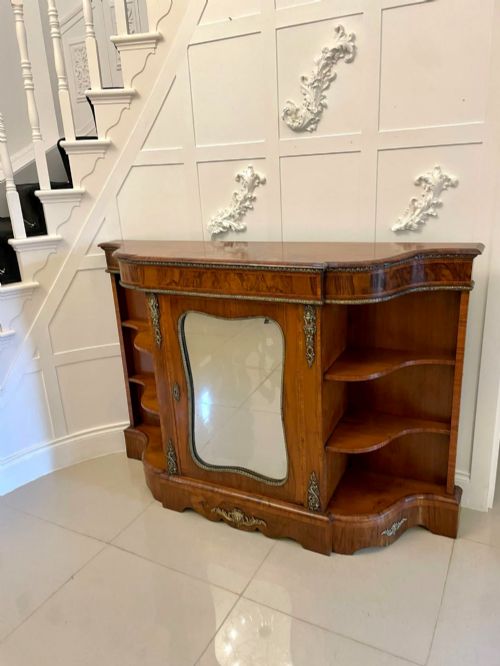
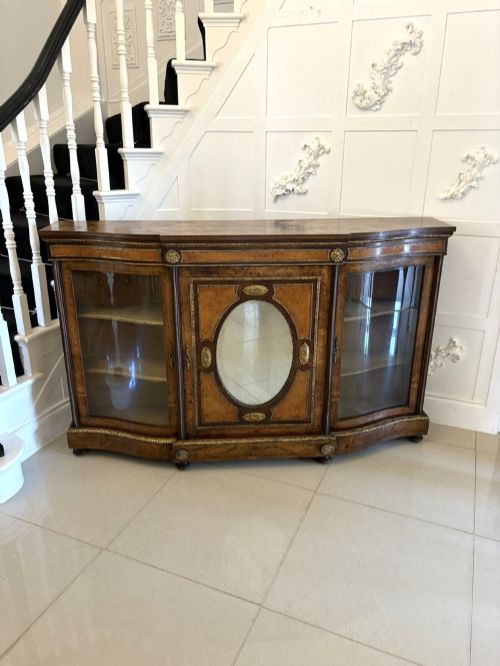
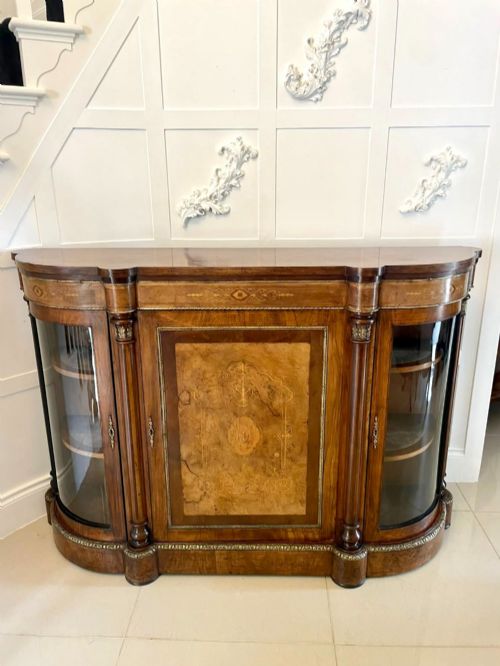
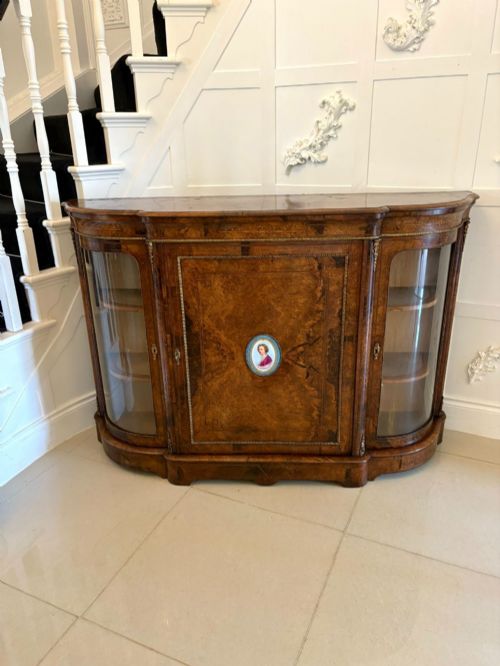


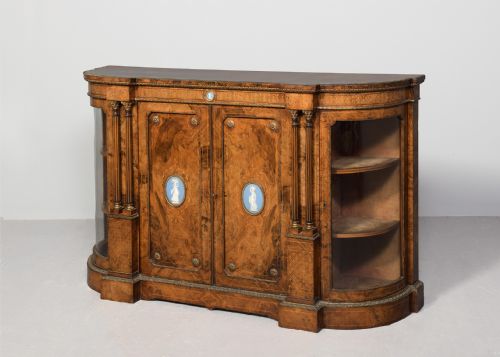

Curved Display Sideboard
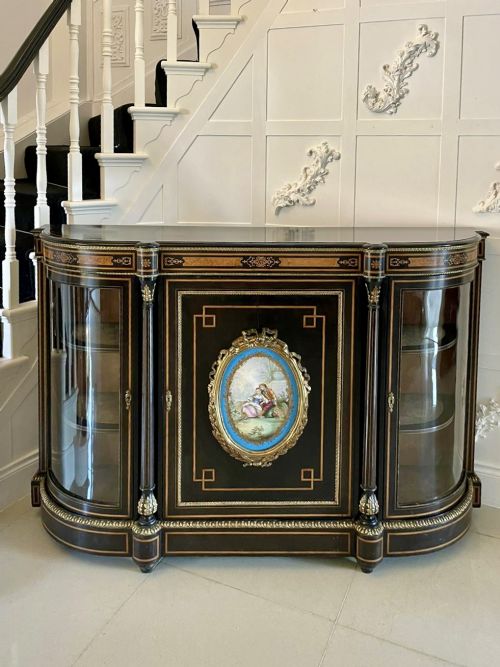
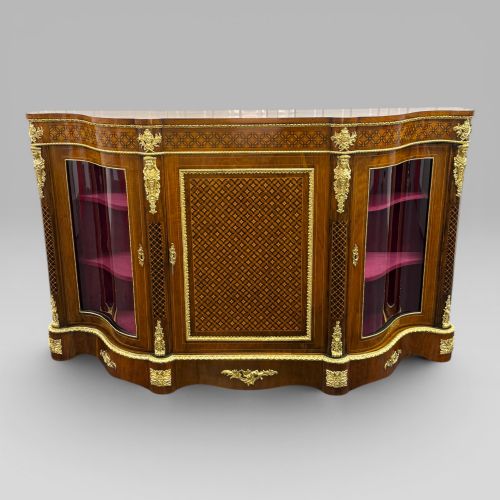
These curved display sideboard options unite walnut, ormolu and glass to anchor a formal interior.

Curved Display Sideboard
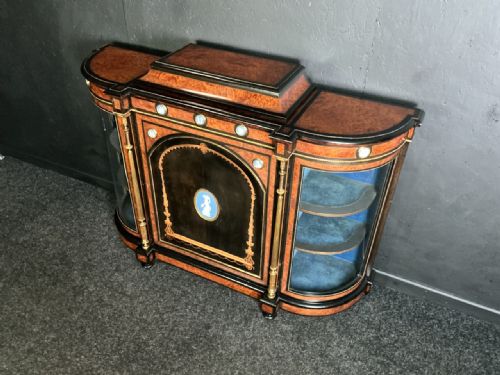
A curved display sideboard brings together cabinet work and glazed storage, frequently appearing on this page as a Victorian or nineteenth century credenza. These forms bridge the gap between a traditional sideboard and a display cabinet, designed to showcase porcelain and decorative objects behind glass.
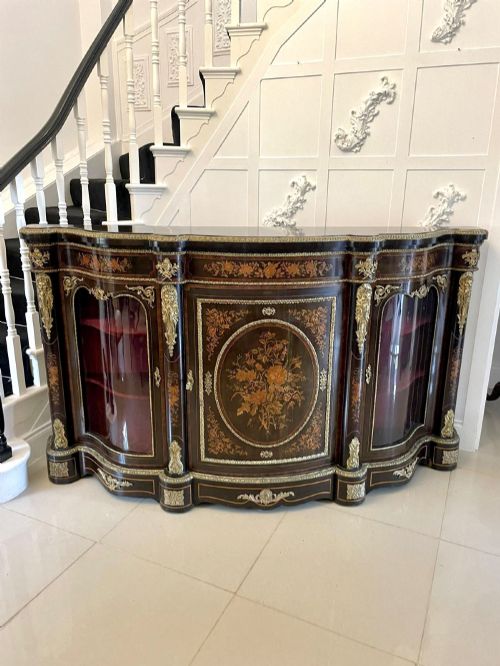
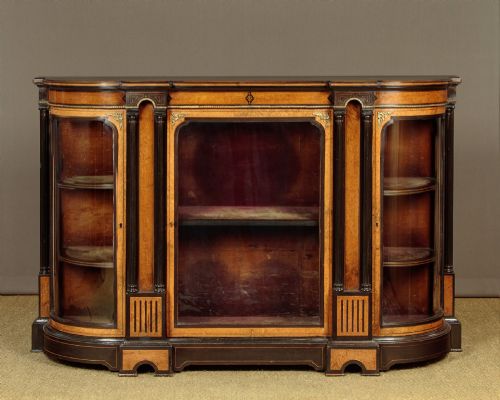
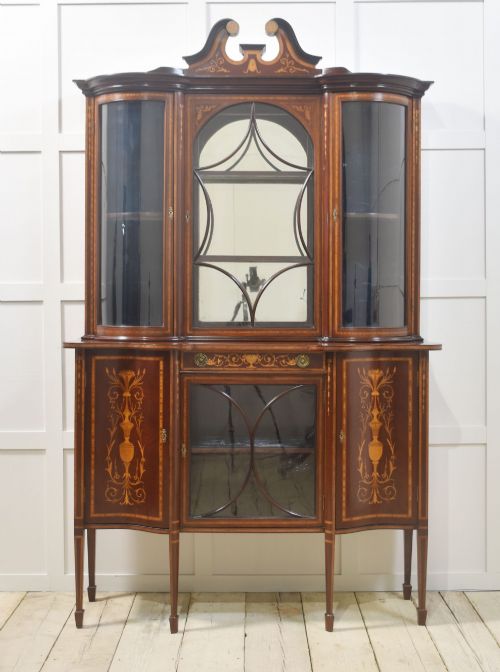
The prevailing examples take shape through serpentine fronts, bowed glass doors and flanking side cupboards. Makers constructed these pieces primarily during the Victorian and Napoleon III periods, often drawing on French Revival and Aesthetic Movement sensibilities.
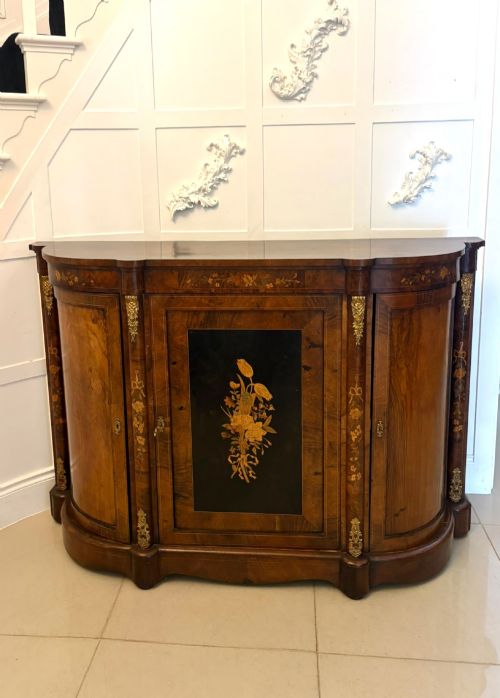
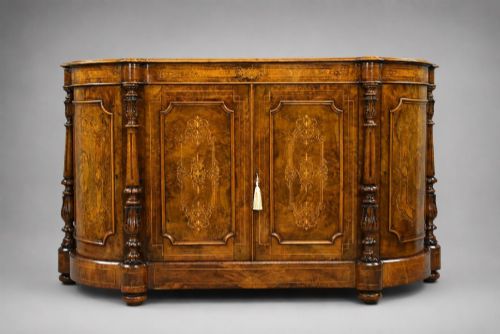
Buyers encounter walnut, ebonised wood and amboyna structures finished with marquetry inlay and ormolu mounts. The underlying geometry relies on curved timber frames that soften the rigidity of a dining room or drawing room wall.
Materials and construction methods
Craftsmen built the carcase using solid timbers such as walnut or mahogany, then applied burr walnut, amboyna or satinwood veneers to create complex grain patterns. Boxwood and floral marquetry were meticulously cut and inlaid into the primary surfaces by hand.
Ormolu mounts cast in bronze and gilt were fitted to corners, borders and central friezes to accentuate the curves. Curved glass panels were glazed into door frames alongside porcelain plaques to complete the display function.
The listings span from eighteen fifty to nineteen thirty, with Victorian burr walnut and ebonised wood forming the majority of the material evidence.
Judging the quality of execution
The distinction between tiers rests upon the precision of the marquetry and the crispness of the gilt bronze mounts. Finer pieces demonstrate seamless veneer matching across bowed surfaces without lifting or shrinkage.
Subtlety of internal fitted shelving, depth of carving and the weight of the ormolu separate standard cabinet work from exhibition grade examples. The integration of the curved glass doors with the timber rebate reveals the joiner's hand.
Maison Gagneau·James Hicks
The Curved Display Sideboard Glossary
- Credenza
- A low cabinet or sideboard designed for display and storage, typically featuring a central glazed door flanked by side cupboards. This form dominates the current selection.
- Ormolu
- Gilt bronze mounts applied to furniture for decorative accent. These metal elements frame panels and highlight structural curves.
- Marquetry
- Decorative veneer patterns formed by fitting together small pieces of wood, boxwood and other tinted materials. Floral motifs are common on these surfaces.
- Serpentine
- A furniture front characterised by a wavy line with a convex centre flanked by concave curves. This contour defines the display sideboards on this page.
Curved Display Sideboard: Frequently Asked Questions
What is a curved display sideboard used for?
These cabinets served in nineteenth-century drawing rooms and formal dining spaces to store porcelain, silver and glassware. The glass panels allowed owners to display prized possessions while keeping them protected from dust.
Today, they function similarly in modern interiors as statement storage pieces that break up flat wall lines. Their surface tops also provide space for lamps, clocks or decorative arrangements.
How do I date a Victorian credenza?
Dating relies on examining the secondary timbers, construction methods and prevailing decorative styles recorded in the listings. Pieces from the mid nineteenth century often exhibit dense burr walnut veneers paired with hand-cut marquetry and heavy ormolu mounts.
Later Victorian examples tend towards ebonised finishes and Aesthetic Movement lines. Comparing the hardware, hinges and interior linings helps narrow the decade of manufacture.
Are these pieces English or French?
The listings encompass both English Victorian workshops and French Napoleon III cabinets. French pieces frequently utilise Boulle work, amboyna or exotic marquetry alongside pronounced ormolu mounts.
English makers adopted similar motifs during the Sheraton Revival and Aesthetic Movement. The underlying craftsmanship and timber choice usually point clearly to the country of origin.
How do I care for burr walnut veneer?
Burr walnut requires stable indoor humidity levels away from direct sunlight and heat sources to prevent timber movement and veneer cracking. Regular dusting with a soft, dry cloth maintains the polished finish without chemical buildup.
Periodic application of appropriate wax polish preserves the depth of the grain. Avoid placing heavy or damp objects directly onto the polished wooden top.