
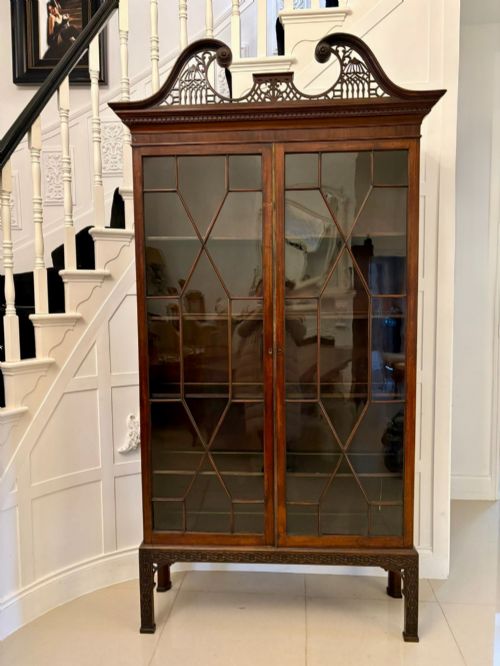
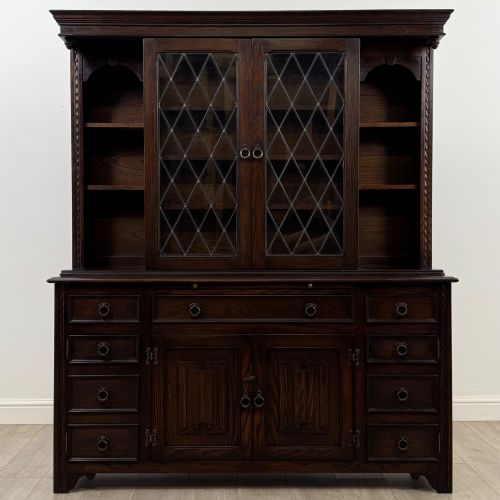
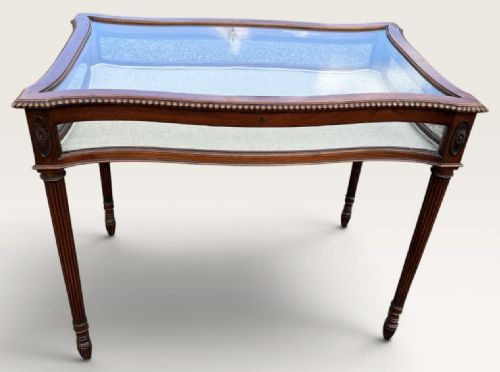
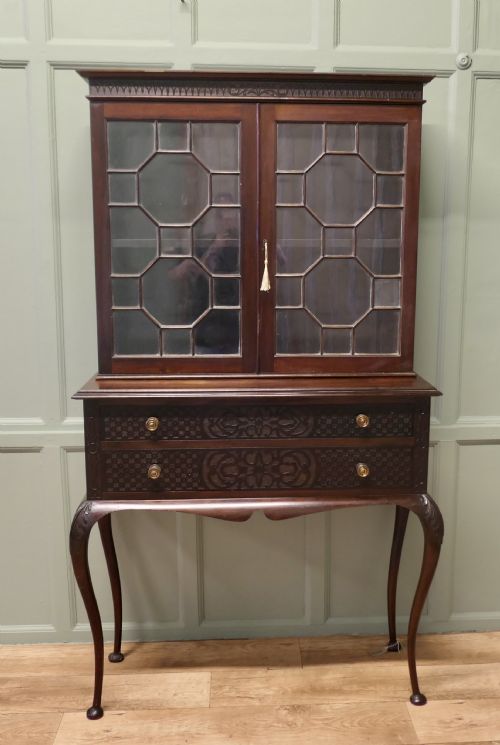

Carved Glazed Display Cabinet
A carved glazed display cabinet holds and protects prized possessions while bringing warmth and structure to a room.
Carved Glazed Display Cabinet
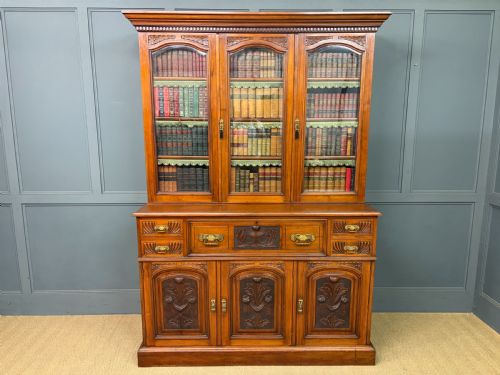
When you search for a carved glazed display cabinet, you are looking at tall storage furniture designed to show collections behind glass doors while keeping them dust-free. These pieces combine wooden shelving, glazed panelling and carved decorative woodwork to frame books, ceramics and curiosities.
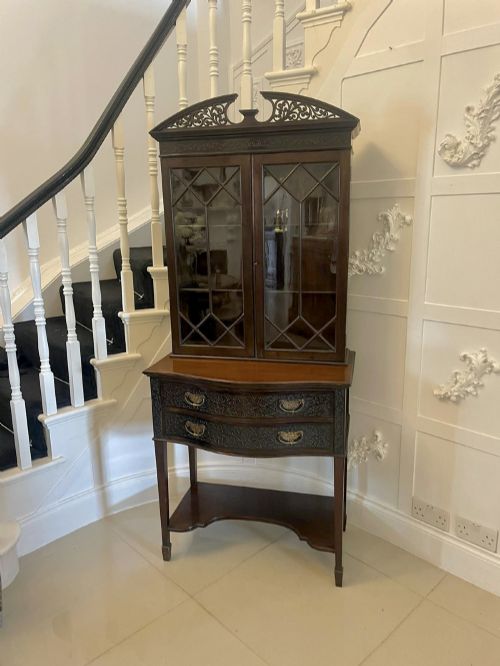
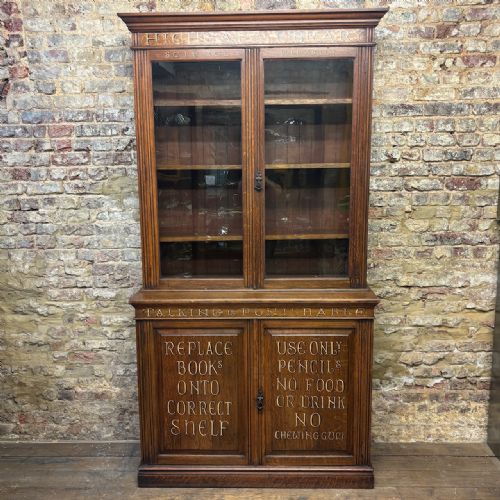
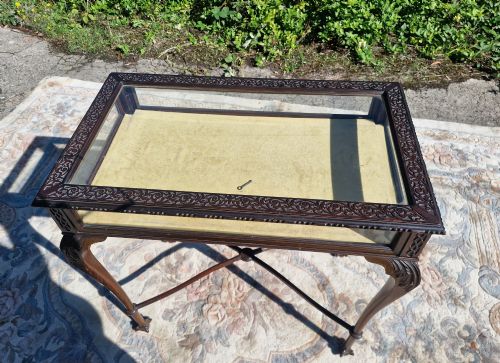
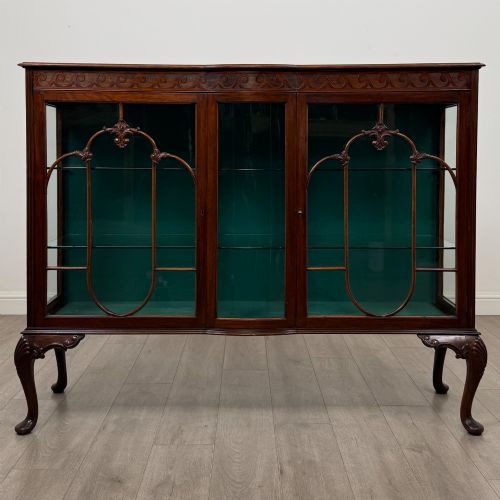
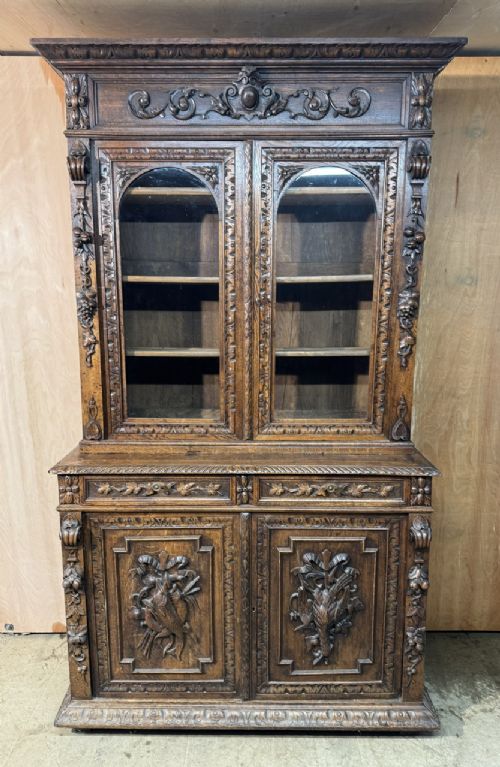
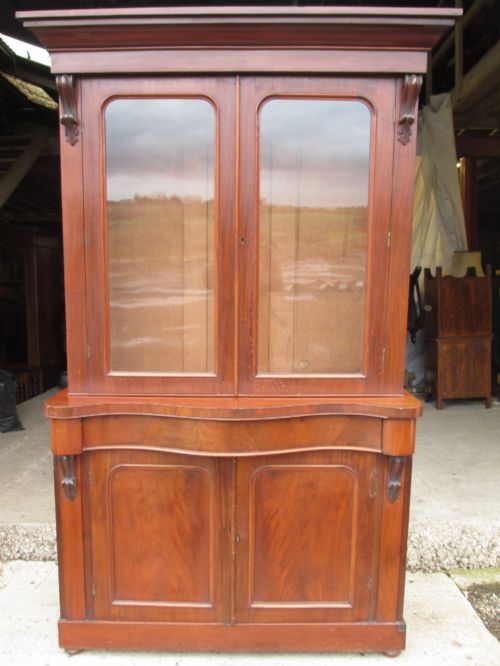
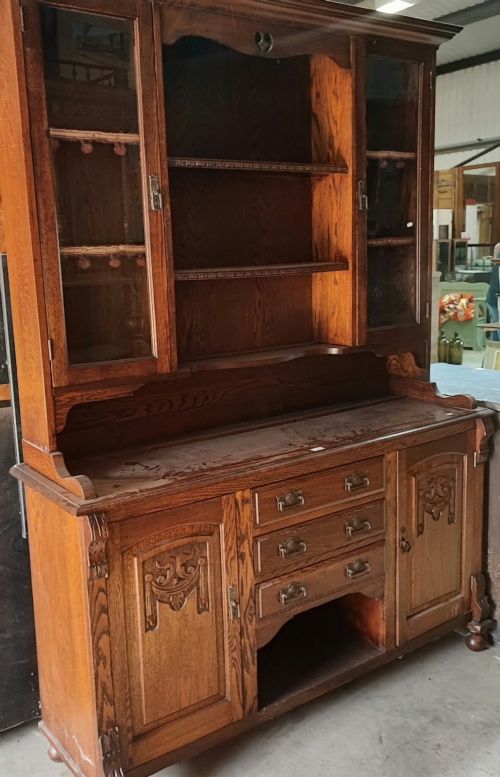
The versions you are most likely to meet on this page span the Victorian and Edwardian periods, alongside a good number of earlier Georgian and Regency examples. They appear as slim corner cabinets, large oak library bookcases, serpentine bijouterie tables and double-door vitrines.
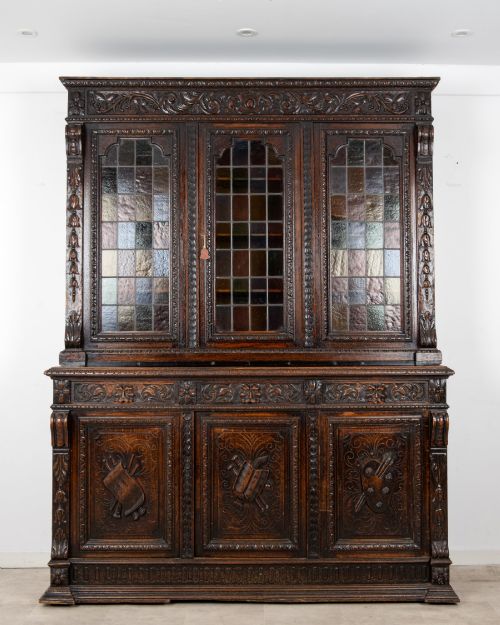
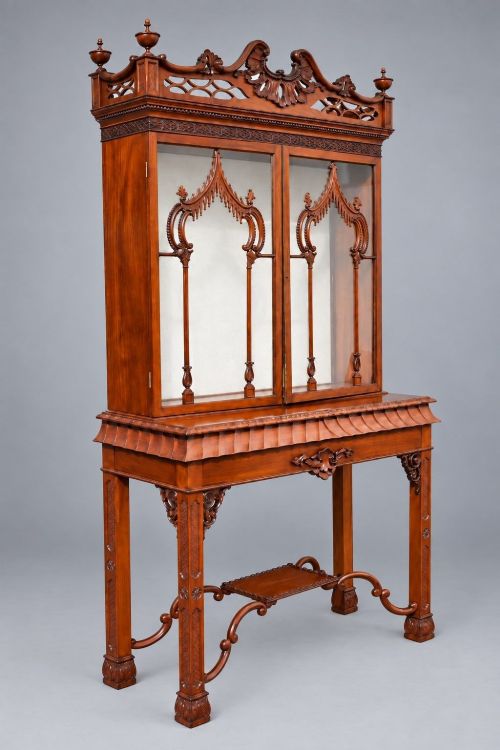
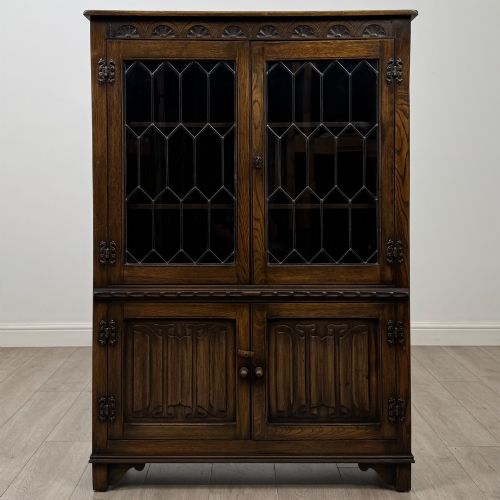
Makers drew on diverse revival styles, from Jacobean and Queen Anne to Chinese Chippendale and Arts & Crafts. This variety means a cabinet can range from a heavy, carved oak hunting piece to a delicate mahogany display table with astragal glazing.
Materials and Construction
Cabinet makers relied principally on timber like mahogany, oak and walnut for the structural carcase and exterior framing. These woods were chosen for their grain and strength, often polished or stained to highlight natural figures such as tiger oak or burr walnut.
Glass panes are secured within the doors using wooden bars or lead cames, sometimes shaped in intricate astragal or geometric patterns. Carved ornamentation, linenfold panels and applied mouldings were worked directly into the timber by hand to define the style.
The listings include pieces spanning from the 18th century through to the Edwardian era, constructed in mahogany, oak, walnut and rosewood.
Judging Quality and Execution
The difference between an ordinary cabinet and a superior one lies in the crispness of the hand-carved details and the selection of timber veneers. Finely figured mahogany or burr walnut shows deliberate matching across the doors and drawer fronts, rather than random grain placement.
Construction methods reveal the standard of workshop execution, seen in tight joints, solid brass or iron hardware and the weight of the glass. Well-made glazed doors hang true without sagging, and internal shelving adjusts cleanly within finished interiors.
Maple & Co.
The Carved Glazed Display Cabinet Glossary
- Astragal
- Moulding used to hold panes of glass within a sash, often forming a grid of geometric or curved shapes across cabinet doors.
- Bijouterie table
- A glass-topped display table designed for small valuables, medals and jewellery, raised on slender legs.
- Vitrine
- A glass-fronted cabinet or display case specifically intended for porcelain, glassware and decorative objects.
- Linenfold
- A style of woodcarving that imitates folded linen, frequently seen on panels of oak cabinets from revival periods.
- Bombé
- A swelling, outward-curved shape characteristic of certain continental European furniture forms.
Carved Glazed Display Cabinet: Frequently Asked Questions
How do I clean the glass safely?
Use a soft microfibre cloth and a mild glass cleaner sprayed onto the cloth rather than directly onto the wood. This prevents moisture from damaging antique polishes and carved surfaces.
Take care around lead cames and old putty, as historic glass can be delicate and loose within its frame.
Can I adjust the internal shelving?
Many period cabinets feature fixed wooden shelving or traditional rack-and-pinion supports rather than modern metal tracks. Altering shelf heights often requires professional joinery work.
Check the internal depth before purchase to ensure your books or display items will fit comfortably behind the glazed doors.
Where should I place a display cabinet?
Position the cabinet away from direct sunlight and radiators to protect dry timbers from warping and fading veneers. Solid floors help tall, heavy pieces stand level without straining the joints.
Ensure there is adequate clearance for doors to swing open fully without striking nearby walls or furniture.
How do I tell Edwardian from Victorian?
Victorian cabinets generally feature heavier timber sections, darker finishes and denser carved ornament such as foliage and scrolls. Edwardian pieces often display lighter oak or mahogany construction with simpler lines and brighter polishes.
Revival styles overlap between these eras, so hardware and construction details help clarify the date.