



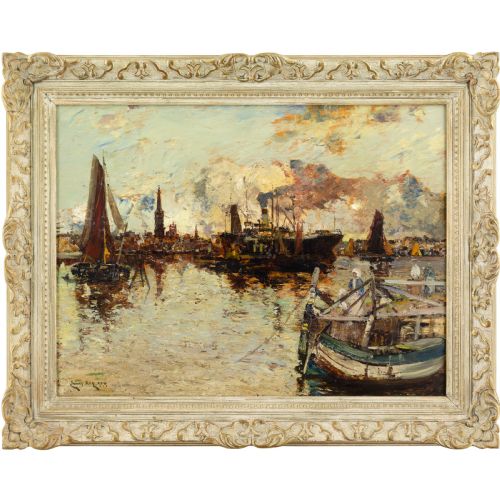
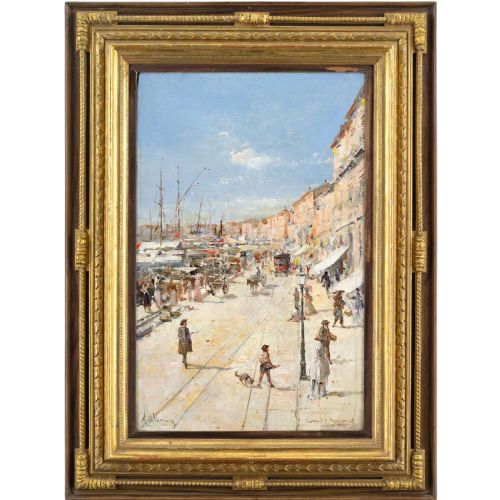
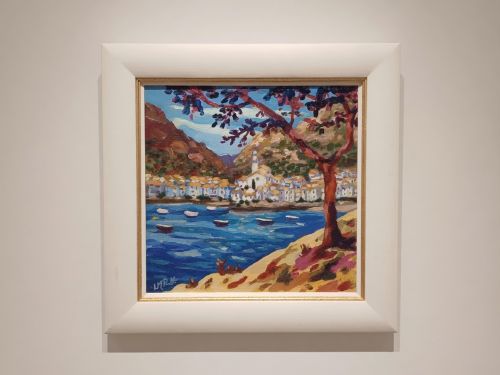
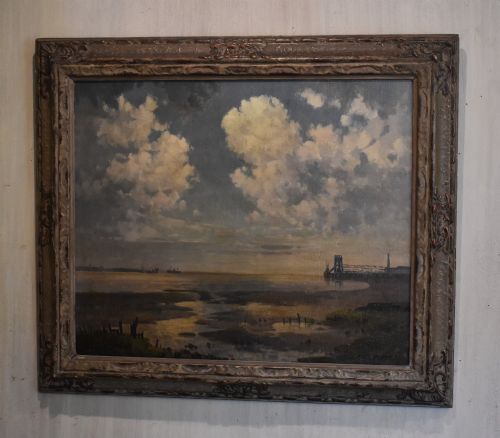
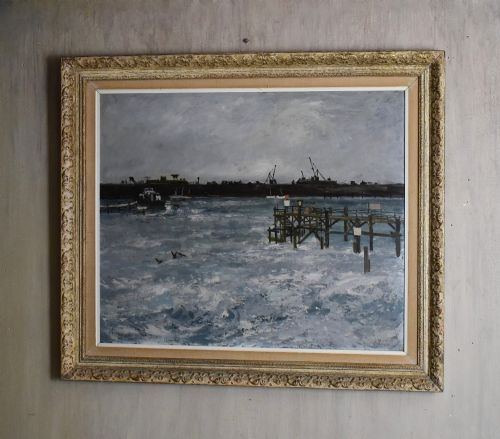
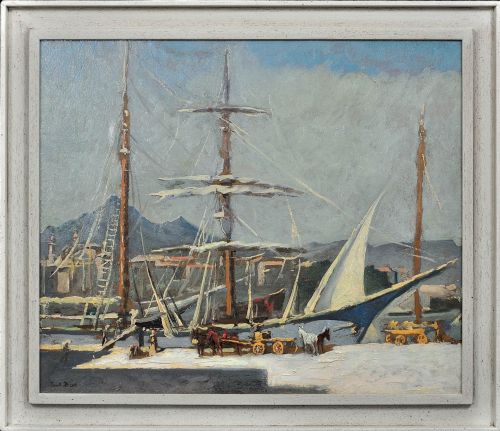
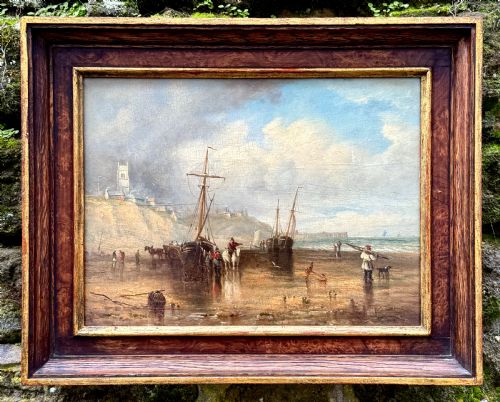
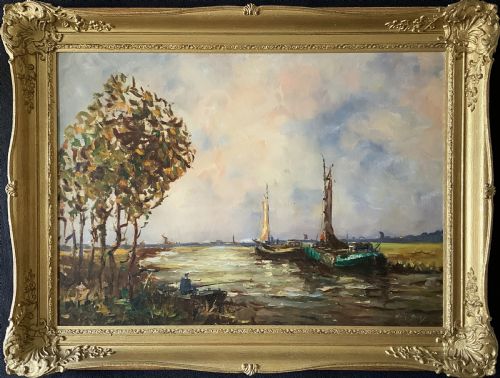
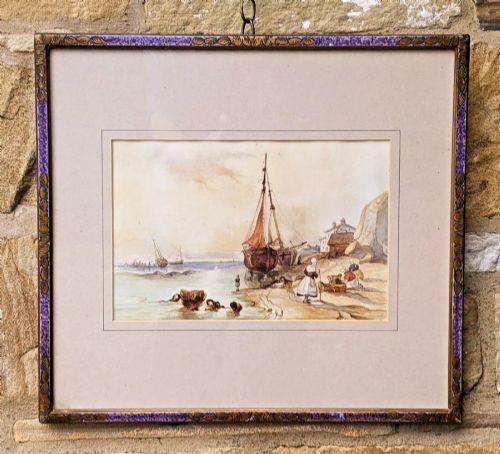
Antique Harbour Wall Artwork
These antique harbour wall artwork pieces capture maritime life through oil, watercolour, and print, bringing historical coastal atmosphere directly into your interior.
Antique Harbour Wall Artwork
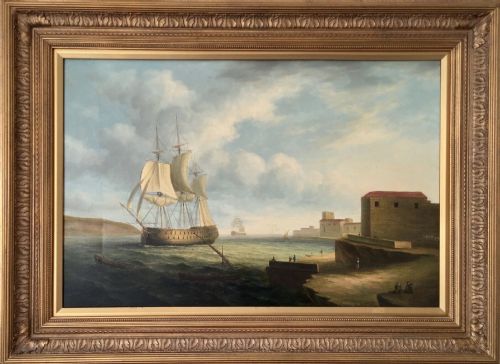
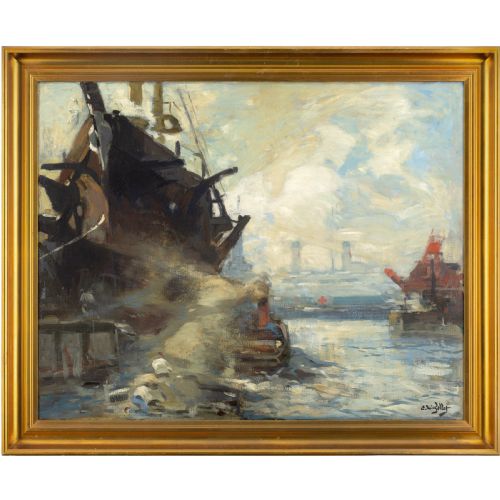
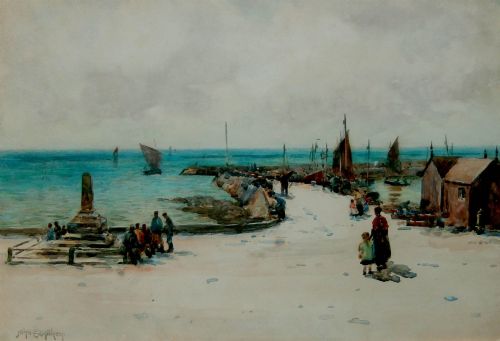
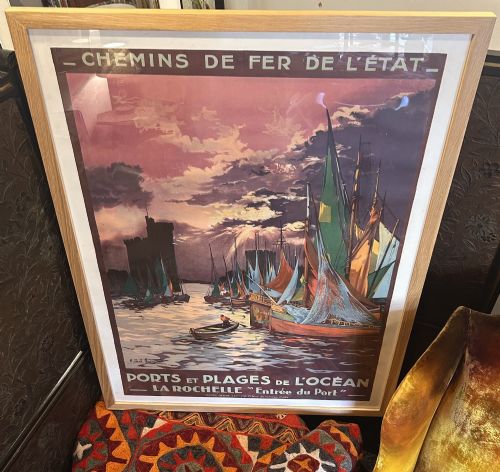
When you search for antique harbour wall artwork, you are looking at maritime paintings, watercolours, and engravings depicting ports, wharves, and coastal settlements. These pieces record bustling commercial docks, quiet fishing havens, and tidal estuaries from past centuries.
You are most likely to meet 19th-century and early 20th-century works on this page, spanning Victorian watercolours to Post-Impressionist oils. Common subjects include Cornish fishing ports like St Ives, European canalscapes, and naval anchorages framed in wood.
The selection ranges from detailed topographical watercolours to expressive oil paintings on canvas and panel. Each format offers a distinct window into historical maritime activity and coastal architecture.
Paints, Papers, and Canvases
These works rely primarily on oil paint applied to canvas or wood panels, alongside delicate watercolours rendered on paper. Artists utilised these mediums to capture changing light conditions on water and stone harbour walls.
Framed artwork in this category often combines traditional oil and watercolour techniques with protective glass and gilt wooden frames. The physical support ranges from heavy woven canvas to sturdy paper sheets mounted securely behind glass.
Listings feature works spanning the 19th century to the mid-20th century, executed in oil and watercolour on canvas, paper, and wood.
Brushwork and Atmospheric Depth
Quality in these maritime works rests upon the artist's handling of light, water movement, and atmospheric perspective. Superior pieces demonstrate confident brushwork that brings texture to stone walls and restless motion to the sea.
The sophistication of the composition and the accurate rendering of shipping vessels distinguish finer examples from standard topographical records. Balanced proportions and a harmonious palette elevate certain paintings into notable works of British and European fine art.
James Hardy·Eugène-Louis Gillot·Edward Mills·John E. Aitken·William Banks Fortescue·James Kay RSW·Augusto Alberici·Thomas Creswick·Willem Bos·William Matthison·Thomas Hodgson Liddell·George F Pennington·Alfred George Morgan·Charles William Wyllie·Paul Delvaux·Edward Matthew Elliott·Richard Harry Carter·Jean-Baptiste Olive·William Lee Hankey·Thomas Bush Hardy·T.S. Wallis·James Webb·Owen Bowen·Samuel Owen·Jan van Couver
The Antique Harbour Wall Artwork Glossary
- Watercolour
- A painting method where fine pigment is suspended in a water-based, translucent solution applied to paper.
- Oil on Canvas
- A traditional technique using pigments bound in a drying oil, spread across a stretched woven fabric support.
- Impressionism
- An art style focused on accurate depiction of light and its shifting qualities, often featuring visible brushstrokes.
- Gilt
- A thin layer of gold leaf or gold paint applied to wooden frames to provide an ornate metallic finish.
- Panel
- A solid flat piece of wood used as a rigid painting surface instead of stretched canvas.
Antique Harbour Wall Artwork: Frequently Asked Questions
What periods do these harbour artworks come from?
The selection includes pieces created during the Victorian era, the Edwardian period, and the mid-twentieth century. Many date from the nineteenth century up through the nineteen-sixties.
These dates reflect traditional painting styles ranging from detailed maritime scenes to early modernist and impressionist interpretations of coastal towns.
How should I frame and hang an antique watercolour?
Watercolours require framing behind glass with acid-free mounts to protect the paper from ultraviolet light and humidity. Keeping them away from direct sunlight preserves the original pigments.
Display these framed works on interior walls with stable ambient temperatures to prevent warping of the paper and the wooden frame.
What is the difference between an oil painting and a watercolour?
Oil paintings utilise slow-drying pigments suspended in oil on canvas or wood panels, allowing for rich textures and deep colour layering. Watercolours employ translucent water-based paints on paper, creating lighter and more luminous effects.
Both mediums were widely used to depict maritime subjects, though oils generally provide greater durability and a heavier surface texture.
Where were most of these coastal scenes painted?
Artists painted these scenes across British fishing ports such as St Ives, Whitby, and London docks, alongside European locations in France, Italy, and the Netherlands. Coastal areas with active shipping and historic stone walls drew frequent attention.
These locations served as primary subjects for painters seeking dynamic combinations of architecture, water, and maritime vessels.