






Coastal Landscape Picture
A coastal landscape picture captures the shifting light and maritime atmosphere of shorelines through the mediums of oil and watercolour.
Coastal Landscape Picture
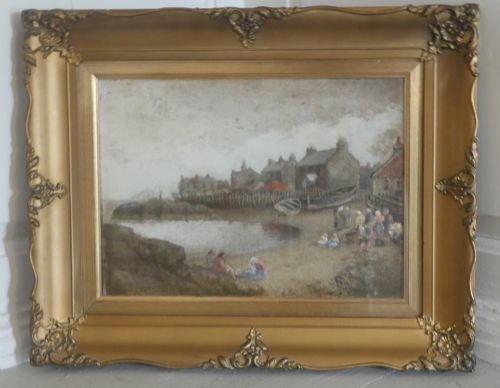
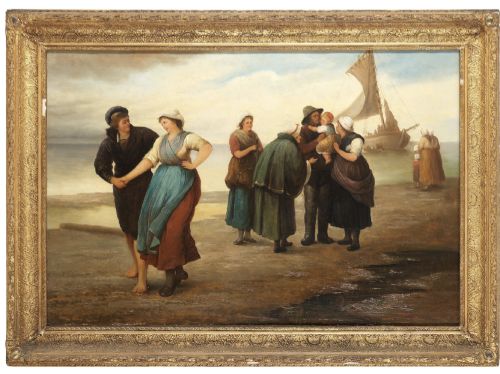
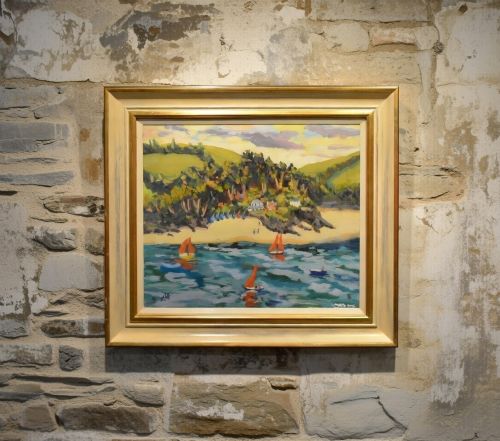
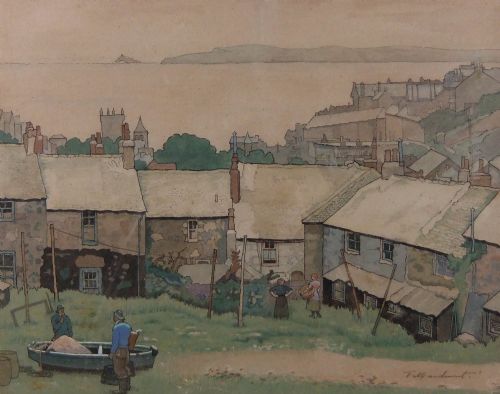
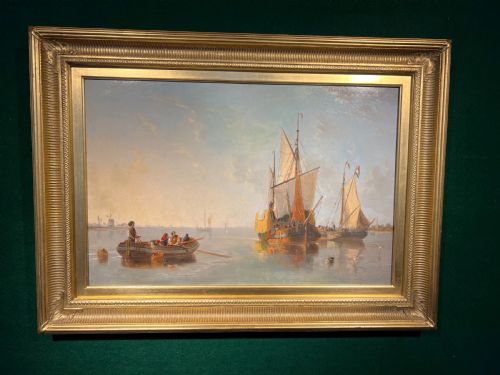
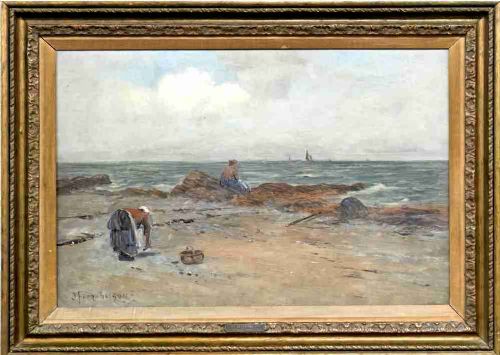
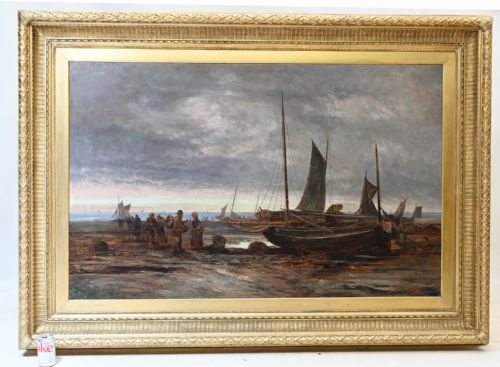
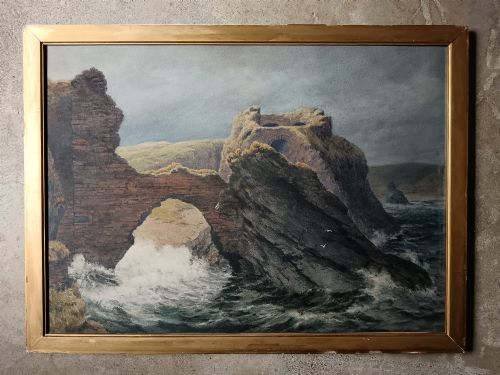
A coastal landscape picture brings shores, harbours, and maritime views into interior spaces through paintings created across the nineteenth and twentieth centuries. These works range from small watercolours executed on paper to large oil paintings on canvas depicting specific locations like Whitby, Staithes, and the Norfolk coast.
The selection here encompasses British and European scenes, extending from early nineteenth-century watercolours to mid-twentieth-century oil paintings. Viewers encounter harbour scenes, shipping vessels, and tidal estuaries recorded by artists working within regional traditions such as the Scottish school or British Impressionism.
The predominant forms are framed watercolours and oil paintings, often housed in period gilt wood frames. Subjects frequently focus on everyday coastal life, from fishing dockyards and oyster pickers to quiet bays and coastal cliffs.
How they were made
Artists applied oil paint to canvas or board, and watercolour pigment to paper, utilising traditional painterly techniques to render light and atmosphere on coastal waters. Oils allowed for rich, textured applications, seen in works with heavy paint layers or textured prints, while watercolours relied on washes of transparent pigment to capture luminous skies and sea views.
Works are frequently mounted behind glass in the case of watercolours, or stretched across wooden frames for canvas pieces. Many retain their period gilt wood frames, constructed from wood and finished with gesso and gilding to complement the artwork.
Listings feature works created between the early nineteenth century and the mid-twentieth century.
What varies in quality
Quality in a coastal landscape picture rests upon the artist's handling of light, atmosphere, and spatial depth within the composition. Stronger works demonstrate a confident command of medium, whether through fluid watercolour washes or decisive oil brushwork that conveys the movement of the sea and sky.
Provenance and the survival of the original period frame also influence the character of a piece. Signed works by documented artists or those retaining well-preserved gilt wood frames offer a higher degree of historical integrity.
Kenneth Cozens·Edward Mills·Thomas Maidment·John Wilson Carmichael·Joseph Farquharson·Erich Mercker·Lucy Pratt·John Moxon·William Frederick Settle·Alfred George Morgan·John Bedloe Goddard·Gyrth Russell·William Lee Hankey·Gustave De Bréanski·Sir Thomas Newenham Dean·Arthur Tucker·William Tuck·Eugene Joseph Verboeckhoven·Fred Waugh·John McDougal·James Watson·T.S. Wallis·William Raymond Dommersen·James Webb·Robert Buchan Nisbet
The Coastal Landscape Picture Glossary
- Watercolour
- A painting method where pigment is suspended in a water-based solution and applied to paper. This medium is valued for its transparency and luminous quality in depicting marine atmospheres.
- Oil on Canvas
- A technique utilising pigments bound in drying oil applied to a woven fabric stretched across a wooden frame. This combination allows for deep colour saturation and visible brush texture.
- Gilt Wood
- Wood that has been coated with a thin layer of gold leaf or metallic powder. These frames are frequently found on nineteenth-century and Edwardian paintings.
- Provenance
- The documented history of ownership or creation of an artwork. It establishes the authenticity and origin of a painting.
Coastal Landscape Picture: Frequently Asked Questions
What periods do these coastal paintings date from?
The listings span the nineteenth and twentieth centuries, including Victorian, Edwardian, and mid-century works.
Artists during these periods recorded maritime scenes using traditional oil and watercolour techniques.
How should I hang a framed watercolour?
Watercolours on paper require protection from direct sunlight to prevent the pigments from fading over time.
Displaying them on interior walls away from bright windows ensures the paper and pigments remain stable.
Are these paintings signed by the artists?
Many of the works feature signatures or inscriptions by the original makers, often noting the specific location depicted.
Signatures provide direct attribution to artists working within British and European regional schools.
What materials were used to frame these works?
Frames are frequently constructed from wood, with many period examples finished in gilt or gold leaf.
These surrounds complement the maritime subject matter and help date the overall presentation of the piece.