


Edwardian Coastal Seascape Artwork
Edwardian coastal seascape artwork captures maritime life, fishing ports, and open waters through the specific lens of late nineteenth and early twentieth century artists.
Edwardian Coastal Seascape Artwork
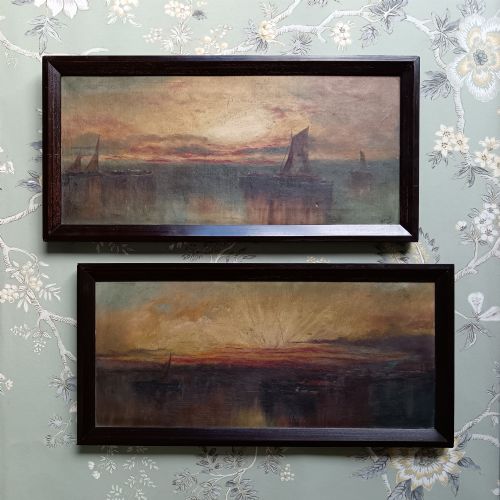
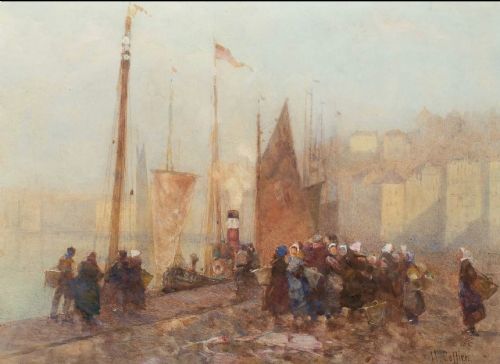
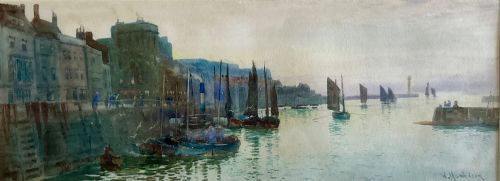
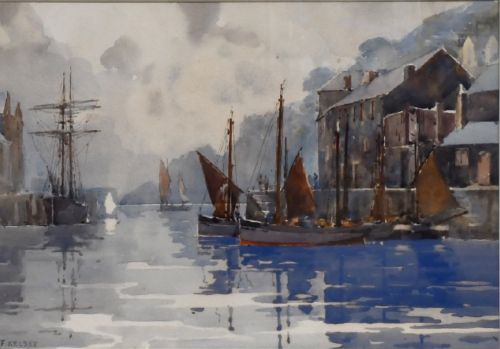
Edwardian coastal seascape artwork encompasses paintings and watercolours depicting harbours, fishing boats, and shorelines along British and European coasts. Buyers searching for edwardian coastal seascape artwork typically encounter framed works ranging from quiet beach scenes to dramatic depictions of trawling luggers in choppy seas. The pieces often record specific locations such as Whitby, St Ives, Polperro, and various bays in Cornwall and Devon.
The material record spans the Victorian era through the Edwardian period and into the early twentieth century, incorporating years from eighteen sixty up to nineteen thirty. Oil paintings on canvas and board appear alongside detailed watercolours on paper, frequently housed within period wooden frames under glass where appropriate. Most works originate from British artists working in realist, impressionist, and maritime art traditions.
Materials and Technique
Painters of this period utilised oil paint on canvas or board to build rich textures for turbulent seas and dramatic skies, or applied watercolour pigment onto paper for luminous atmospheric effects. Artists mixed traditional binders and pigments, employing brushwork that varied from tight academic realism to looser impressionistic strokes.
Framing typically involved moulded wood, sometimes gilded or painted, protecting the paper watercolours behind glass or leaving oil canvases open to the air. Support materials included stretched canvas over wooden stretchers and heavy watercolour paper suited to washes and pigment buildup.
The listings span the Victorian, Edwardian, and early twentieth-century periods, running from eighteen sixty through nineteen thirty.
Distinctions in Quality
Quality in these coastal works rests upon the artist's command of light, atmosphere, and maritime architecture, separating routine topographical records from dynamic compositions with convincing movement in water and sail. A stronger piece demonstrates confident handling of paint or watercolour to convey salt spray, shifting cloud cover, and the specific weight of fishing vessels.
Provenance and documentation also contribute to distinction, particularly when a painting bears a clear signature, date, or inscription identifying a recognised coastal location and a known painter from the period.
Hector Caffieri·William Matthison·Charles Napier Hemy·Richard Harry Carter·Pieter Cornelis Dommersen·Stanley Leader·Fred Waugh·John Bell·James Webb·Ernest F Hill·Frederick Stuart Richardson·E Tucker·Percy Brooke·William Kay Blacklock·John McDougal·Frank Wood·Julian Drummond·H Hadfield Cubley·Harry Wanless·Edward T Jones·Edmund Gouldsmith·Edwin Bagshaw·John D Walker·Bertram Priestman·Rowland H Hill
The Edwardian Coastal Seascape Artwork Glossary
- Watercolour
- A painting method in which the paints are made of pigments suspended in a water-based solution. This medium yields transparent washes particularly common in depictions of coastal light and sea mist.
- Oil on Canvas
- A traditional painting medium utilising pigments mixed with a drying oil applied to a woven fabric support. This combination permits deep colour saturation and varied surface textures suited to stormy marine scenes.
- Trawling Lugger
- A type of fishing boat featuring lug sails, frequently recorded in maritime paintings of the period. These vessels formed the backbone of working fleets operating along the British coast.
- British Impressionism
- An art movement focusing on light, everyday subjects, and loose brushwork adapted by painters working outdoors near the shore. Artists in this tradition prioritized atmospheric effects over rigid academic detail.
Edwardian Coastal Seascape Artwork: Frequently Asked Questions
What subjects appear most often in these coastal artworks?
The works frequently show working fishing boats, harbour entrances, sandy beaches, and rugged cliffs around British coastal towns like Whitby and St Ives. Artists recorded daily maritime activities including fleets returning to port and seaweed gatherers on the shore.
Scenes range from calm morning departures to dramatic open sea views with choppy waves and moody skies.
How should I care for a period watercolour painting?
Watercolour on paper requires protection from direct sunlight to prevent fading of the pigments and yellowing of the paper support. Displaying the artwork away from high humidity sources helps maintain the condition of both the paper and the original frame.
Keeping the piece behind appropriate glass and mounting materials shields the surface from airborne dust and moisture.
How do I identify the date of an Edwardian maritime painting?
Many works carry artist signatures, dates, or inscribed locations written on the front or verso of the canvas or paper. Stylistic elements such as the rigging of the vessels, clothing styles of figures on the beach, and framing methods also provide clues to the period.
Comparative study of the recorded active dates of painters from the nineteenth and early twentieth centuries helps narrow down the timeframe.
Where were these coastal scenes typically painted?
Artists gravitated towards active fishing ports and scenic coastal stretches, particularly in Cornwall, Devon, Yorkshire, and Sussex. Locations such as Whitby, Polperro, and St Ives served as major hubs for artists who set up easels outdoors.
Some painters also travelled to European coastal locations or depicted Venetian waters, though British fishing ports dominate this group.