
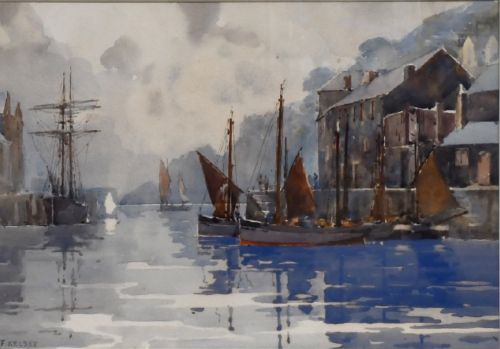
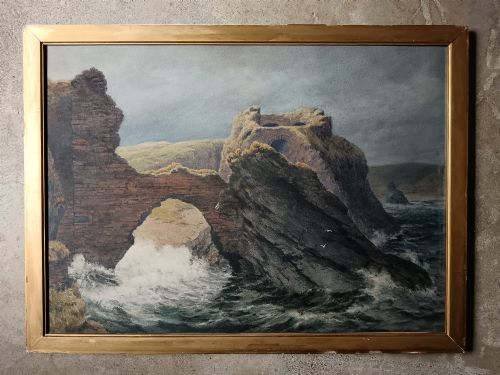


Grey Seascape Watercolour Painting
When you search for a grey seascape watercolour painting, you are looking at marine works executed on paper that capture coastal light and maritime movement.
Grey Seascape Watercolour Painting
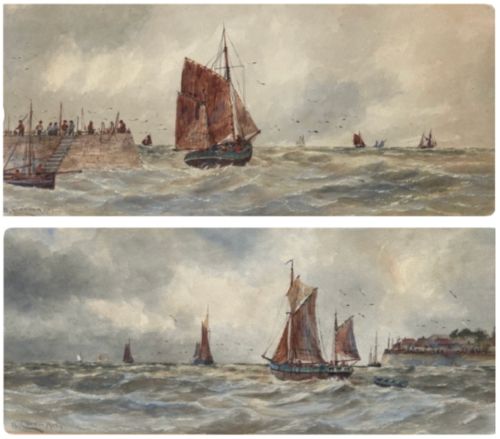
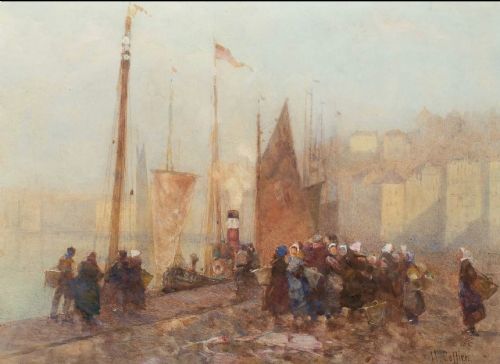
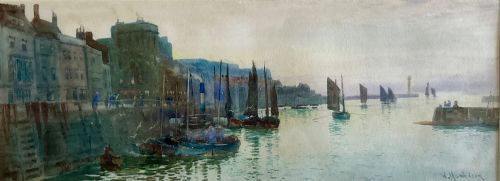
A grey seascape watercolour painting focuses on coastal views, harbours, and shipping scenes rendered in restrained, overcast palettes. These works capture maritime life around British and European shores, from busy Yorkshire fishing ports to quiet estuaries.
The pieces on this page span the nineteenth and twentieth centuries, predominantly drawing from Victorian and Edwardian traditions. You will encounter framed artwork ranging from intimate coastal sketches to large harbour paintings executed by named marine artists.
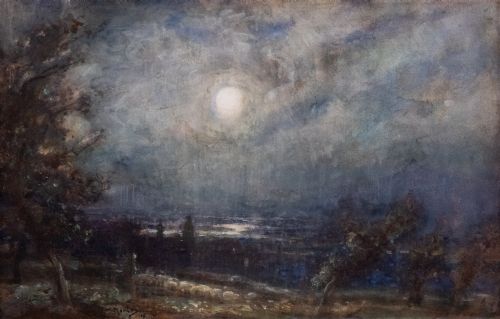
Subject matter often includes fishing cobles, steam and sail vessels, coastal architecture, and stormy seas. The aesthetic relies heavily on atmospheric grey tones, capturing mist, choppy waters, and maritime weather.
How They Were Made
Artists painted primarily with watercolour pigment on paper, frequently incorporating ink for definition and structural detail. The fluid nature of watercolour allowed painters to capture transparent washes of grey sky and rolling sea.
Pigments were applied to heavy paper stocks, sometimes framed behind glass with wooden mouldings to protect the delicate medium from moisture and fading.
Object forms span framed artwork, wall art, and fine art paintings depicting coastal architecture and shipping.
What Varies in Quality
Quality rests in the artist's handling of atmospheric perspective and tone, where subtle shifts in grey pigment convey distance, light, and movement on the water. A stronger work commands attention through confident brushwork and precise compositional balance.
The condition of the paper and the retention of pigment vitality dictate the enduring strength of the painting. Works that have avoided excessive fading retain a crispness in the maritime details and shipping rigging.
Thomas William Morley·Thomas Bush Hardy·Ernest Dade·Charles William Adderton·Vincenzo D Esposito
The Grey Seascape Watercolour Painting Glossary
- Coble
- An open traditional fishing boat with a flat bottom, commonly seen in North East England maritime watercolours. These vessels were designed for launching from sandy beaches.
- Wash
- A thin, transparent layer of diluted watercolour pigment applied across the paper to create skies or water. Skilled application prevents harsh edges in grey coastal atmospheres.
- Monogram
- A set of initials used by an artist to sign a painting rather than a full signature. This is frequently encountered on period works from the nineteenth century.
- Mount
- The cardboard border placed inside the frame around the watercolour painting. It provides a visual spacer between the artwork and the glass.
Grey Seascape Watercolour Painting: Frequently Asked Questions
What subjects appear in these watercolours?
These paintings typically feature coastal scenes, fishing boats, harbours, and shipping vessels operating in British and European waters. Common motifs include stormy seas, piers, and coastal towns.
The compositions focus on maritime activity, recording specific ports and coastal landmarks using muted, atmospheric tones.
How should I frame a watercolour painting?
Watercolours require protection behind glass to prevent atmospheric damage and fading from light exposure. A proper mount should keep the paper surface from touching the glass directly.
Using acid-free backing materials ensures the paper remains stable over decades of display in domestic interiors.
How do I date a nineteenth century seascape?
Dating relies on stylistic clues, artist signatures, clothing on figures, and the types of vessels depicted in the harbour. Victorian maritime works often feature detailed rigging on sailing ships and specific architectural styles.
Inscribed titles or framing labels on the reverse frequently provide additional provenance and precise dates.
Why are grey tones common in marine art?
Grey palettes reflect the overcast skies and misty conditions typical of northern European and British coastal waters. Artists utilised these restrained tones to create mood and atmosphere.
Subtle variations in grey pigment allowed painters to delineate between heavy clouds, spray, and choppy seas.