


Victorian Sailing Ship Picture
A victorian sailing ship picture captures maritime history on canvas and paper, bringing the drama of nineteenth-century seas directly onto your wall.
Victorian Sailing Ship Picture
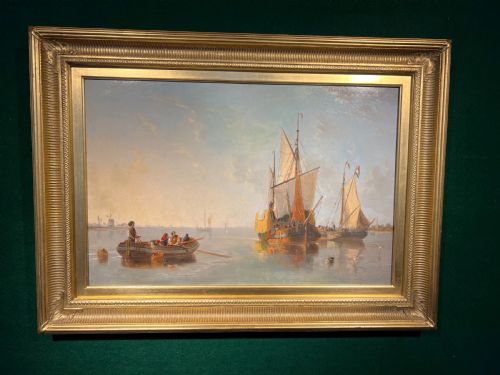
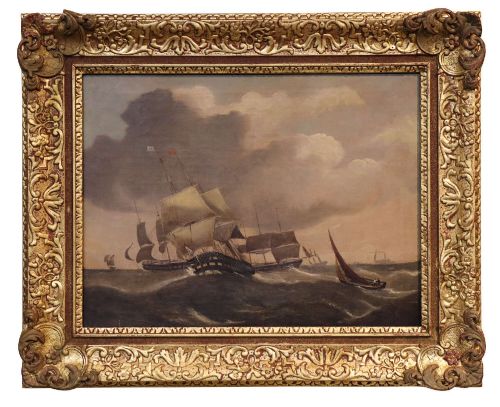
A victorian sailing ship picture portrays maritime scenes from the nineteenth century, ranging from calm coastal waters to heavy seas. These works capture clippers, barques, and yachts navigating British and international waters.
The watercolours and oil paintings on this page frequently emerge from the period between eighteen-sixty and nineteen-ten. Framed presentations in gilt wood, oak, or hand-enamelled polychrome frames appear widely across the collection.
Most pieces document specific vessels such as the Mary Wylie or depict scenes off Scarborough, Portsmouth, and Devonport. Painters recorded both working commercial shipping and leisure craft with precise nautical detail.
Materials and Techniques
Artists painted these works primarily in oil on canvas or watercolour on paper, capturing maritime movement with fluid brushwork. Canvas surfaces allowed for rich oil impasto in heavy seas, while paper suited detailed watercolour washes.
Frames utilise wood, gilt wood, and gold leaf, often housing glass to protect fragile watercolours. Hand-enamelled polychrome frames also appear, matching the decorative standards of the nineteenth century.
Victorian Sailing Ship Picture Retail Price Guide 2026
Typical asking prices for victorian sailing ship picture among the pieces listed under this phrase on Sellingantiques today, from the lower quarter to the upper quarter. They describe what is for sale here now, not the wider market.
The listings combine nineteenth-century watercolours and oil paintings on canvas, framed in wood, gilt wood, and gold leaf.
Assessing Quality
Quality rests upon the artist's command of maritime rigging, hull structure, and atmospheric conditions on the water. Skilled hands render the weight of a ship and the movement of choppy water with authority.
The preservation of the original paint layer and the character of the period frame contribute significantly to the standing of each piece. Surviving watercolours with strong, unfaded pigments represent the better tier of works.
John Wilson Carmichael·William Frederick Settle·Thomas Bush Hardy·Ebeneezer Colls·William Langley·Samuel John Milton Brown·Frederick William Booty·John James Wilson·J Syer·James Hardy
The Victorian Sailing Ship Picture Glossary
- Barque
- A sailing ship with three or more masts having the fore- and main-masts square-rigged and the mizzen-mast fore-and-aft rigged. This rig appeared frequently in nineteenth-century commercial shipping.
- Clippers
- Fast sailing ships designed with multiple masts and square sails for rapid transport of cargo and passengers. Artists favoured them for their dramatic lines.
- Gilt wood
- Wood carved and coated with gold leaf or metallic gilt paint to create a bright decorative frame. These frames defined Victorian presentation standards.
- Lithograph
- A print produced by printing from a flat stone or metal plate treated to repel ink except where required. Several pieces utilise this graphic method.
Victorian Sailing Ship Picture: Frequently Asked Questions
How do I date a sailing ship painting?
Examine the costume of any figures depicted, the style of the frame, and the signature or biographical dates of the artist. Nineteenth-century maritime art often bears inscriptions detailing the ship name or location.
Paper stock, watermark evidence, and backing boards can also offer clues to the decade of creation. Comparing the vessel type to known nineteenth-century ship designs narrows the timeframe further.
Where should I hang a marine watercolour?
Hang watercolours away from direct sunlight to prevent the pigments and paper from fading over time. Consistent indoor humidity protects both the paper support and the antique frame.
Keep them at eye level in rooms with stable temperatures, avoiding damp exterior walls. Proper placement ensures the nineteenth-century materials remain stable for decades.
What is the difference between oil and watercolour marine art?
Oil paintings use pigment suspended in drying oil on stretched canvas, offering rich texture and deep colour saturation. Watercolours use water-soluble pigments on paper, creating translucent washes of light and air.
Oils generally hang without glass protection, whereas watercolours require framing behind glass to shield the paper. Both mediums recorded the same nineteenth-century shipping lanes with distinct visual qualities.
How do I identify the ship in a painting?
Look for painted inscriptions on the canvas or paper, which frequently record the vessel's name such as Mary Wylie or Mary Brack. Shipping registers from the nineteenth century can match the vessel name to its rig and tonnage.
Background landmarks like lighthouses or specific ports such as Portsmouth or Devonport also identify the operational waters. Local historical archives often hold records of ships tied to these ports.