

Antique Half Moon Console
These antique half moon console tables bring curved elegance and practical surface space to traditional hallways and living rooms.
What these pieces are
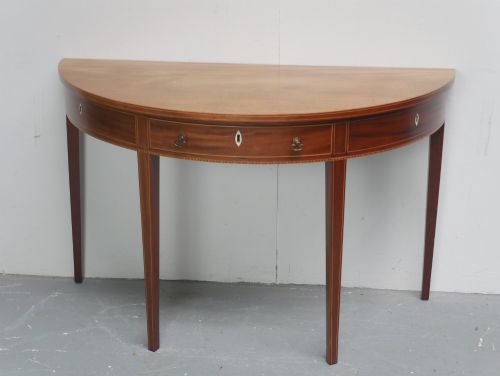
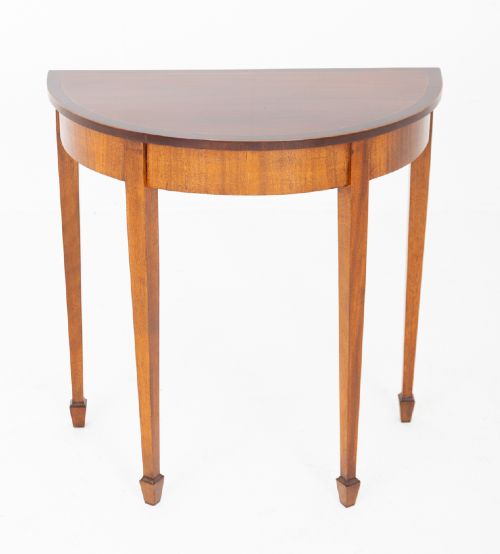
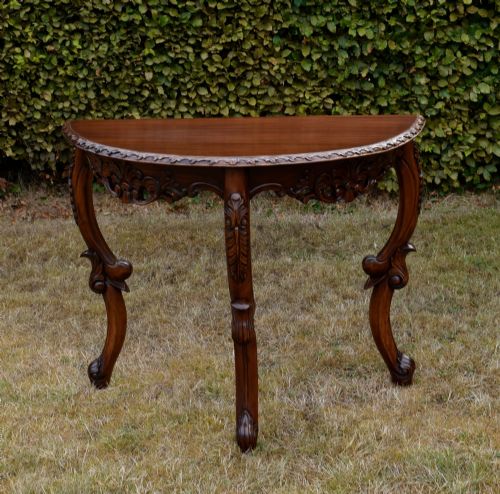
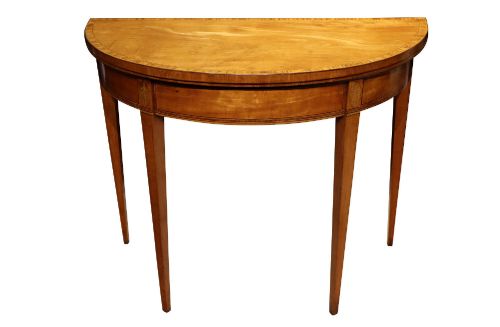
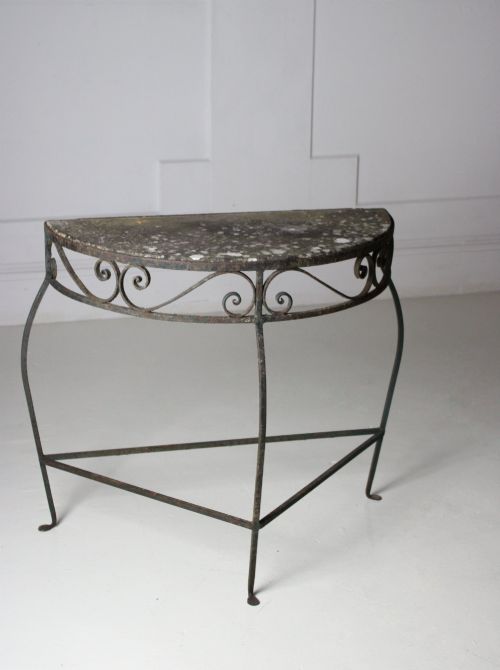
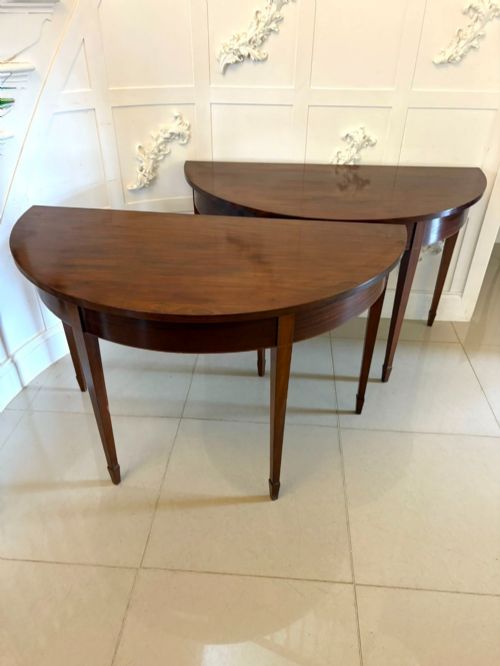
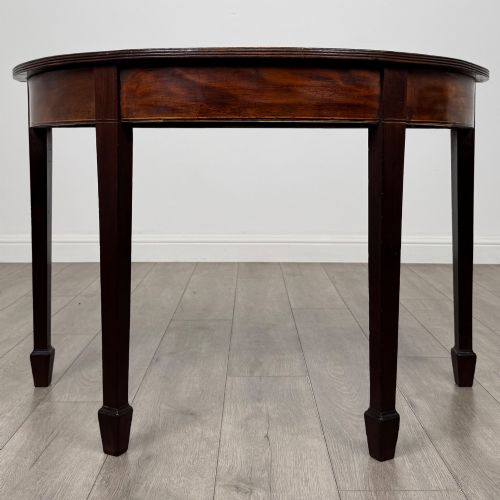
An antique half moon console table offers a distinctive semicircular profile designed to sit flush against a wall in hallways or principal rooms. The selection includes examples spanning the eighteenth and nineteenth centuries, alongside a twentieth-century interpretation.
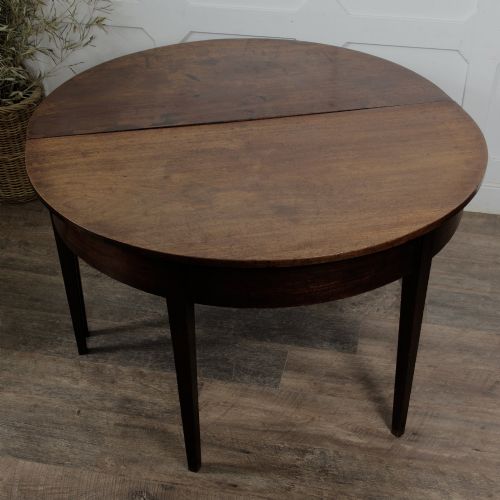
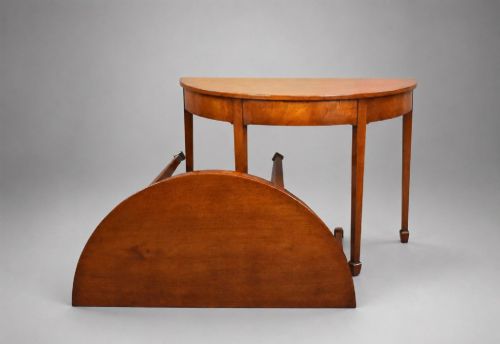
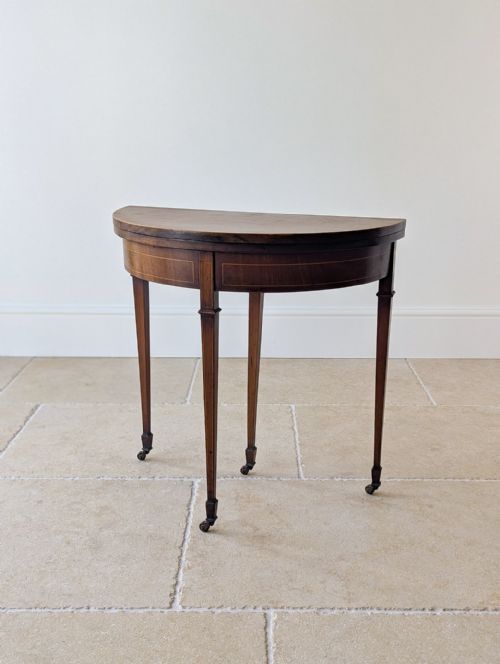
Makers produced these console tables in various forms, including dedicated side tables, games tables, and card tables featuring folding tops. The recorded styles encompass Georgian, George III, Regency, Louis XVI style, and Jacobean Revival pieces.
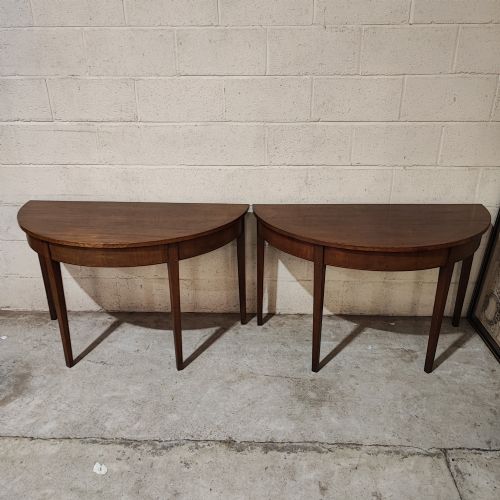
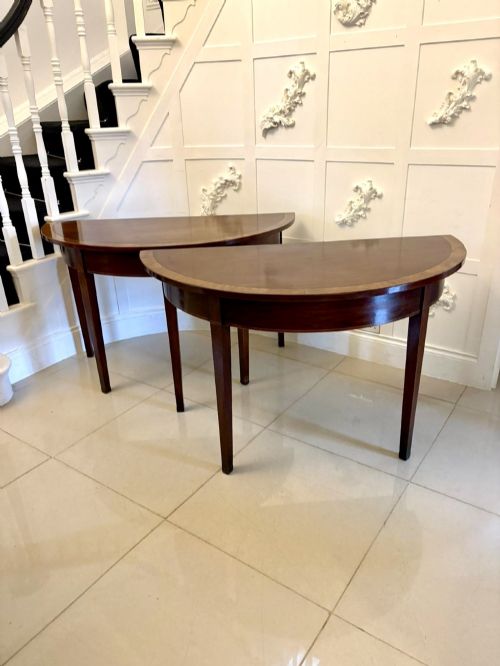
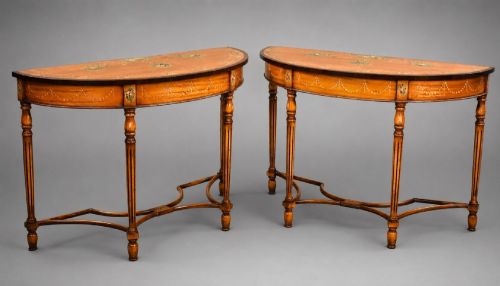
The layout frequently incorporates matching pairs or single statement furniture items intended for display or utility. These items provide surface areas for lighting, decorative objects, or card playing depending on the internal mechanism.
How they were made
Cabinetmakers utilised timber frameworks constructed from mahogany, oak, rosewood, and satinwood, applying specific wood selection to achieve varied grain patterns. Structural integrity relied on traditional joinery techniques suited to curved frames and folding leaves.
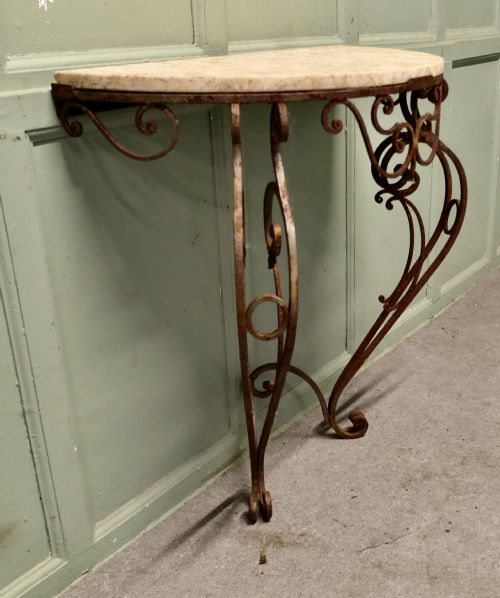
Surface decoration frequently involved intricate boxwood inlay, marquetry inlay, and painted details to enhance the visual depth of the timber. Selected luxury variations incorporated fitted marble tops requiring precise stone-cutting and edge-profiling skills.
Retail Price Guide 2026
Typical UK retail prices for half moon console, calculated from the Sellingantiques database of over a million retail prices indexed since 2003. This retail price guide relies exclusively on Sellingantiques data; no external sources or auction records are used, so the figures do not describe the wider market.
A folding card table reveals hidden wells once used to store heavy eighteenth-century coins safely out of sight during disputes.
What varies in quality
The standard of timber selection and the precision of the inlay work distinguish finer examples from simpler provincial productions. Expert execution of marquetry and boxwood details demonstrates the maker's proficiency and the status of the original commission.
Structural complexity, such as functioning card table mechanisms and well-fitted marble slabs, elevates the sophistication of the design. The integration of secondary woods and the preservation of original surface patination indicate careful historical maintenance.
The Antique Half Moon Console Glossary
- Demi-lune
- A French term meaning half-moon, describing furniture built with a semicircular flat back and curved front edge. This shape suited smaller reception rooms and narrow hallways in period properties.
- Marquetry
- The art of applying pieces of veneer to a structure to form decorative patterns and pictorial designs. Cabinetmakers used various coloured woods to achieve tonal contrast.
- Console table
- A table fixed to a wall or freestanding with a flat top supported by front legs, traditionally designed for display purposes. The semi-circular variant fits snugly against flat wall surfaces.
- Satinwood
- A durable tropical hardwood with a lustrous yellowish grain utilised for high-end eighteenth and nineteenth-century cabinetmaking. It served as a contrasting veneer for inlay work.
- Games table
- A multipurpose furniture piece featuring a folding or rotating top that opens to reveal a playing surface for cards. These often included hidden compartments for counters and accessories.
Frequently Asked Questions
Where should I place a half moon console?
These tables suit narrow entrance halls, landings, or living rooms where floor space is limited. Their flat backs allow them to sit securely against walls without blocking walkways.
Pronounced semicircular shapes make them effective focal points beneath mirrors or artworks. Game table variants can stand open in the centre of a room when entertaining guests.
What is the difference between a side table and a games table?
A side table provides a fixed surface intended strictly for display and decorative arrangement. It lacks internal hinges, folding leaves, or storage cavities.
Games tables incorporate hinged tops that unfold to double the surface area, often revealing lined playing surfaces. This dual functionality distinguished formal entertaining furniture from standard hall tables.
How do I care for antique wood surfaces?
Maintain stable indoor humidity levels to prevent timber warping and veneer separation. Avoid placing furniture in direct sunlight to protect natural wood colours and inlaid details.
Apply traditional wax polishes sparingly and buff with a soft cloth to preserve the historical finish. Avoid silicone-based sprays that can penetrate the grain and damage old polishes.