
Antique Green Cabinet
An antique green cabinet brings character and colour to a room, offering practical storage through painted or natural green-toned timber surfaces.
Antique Green Cabinet
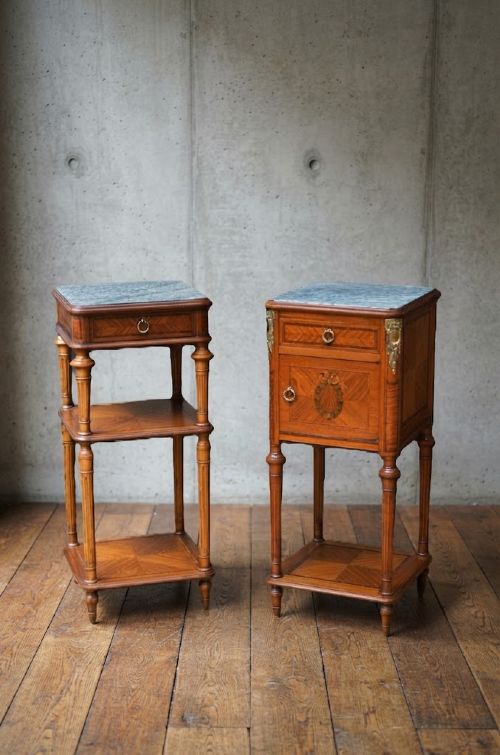
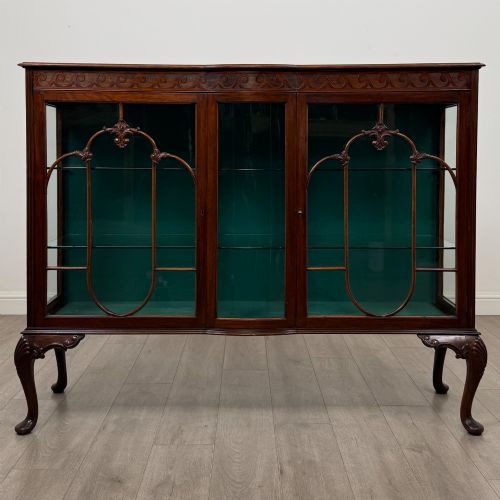
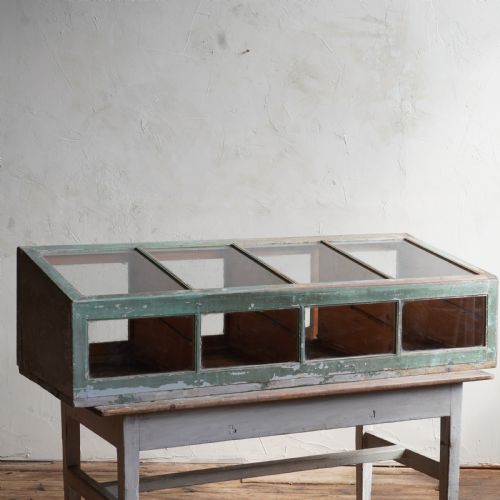
An antique green cabinet encompasses various storage forms, ranging from corner cupboards and bedside chests to display units and larger sideboards. The selection spans multiple eras, including the eighteenth and nineteenth centuries, alongside Edwardian and later periods.
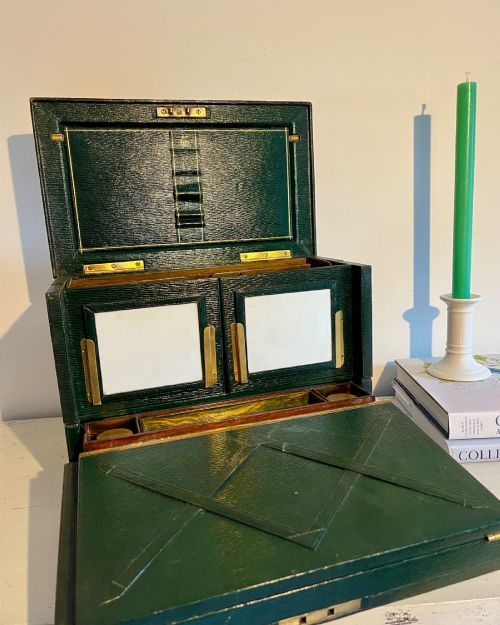
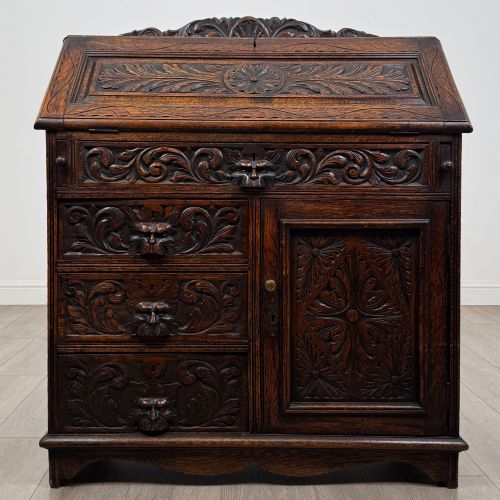
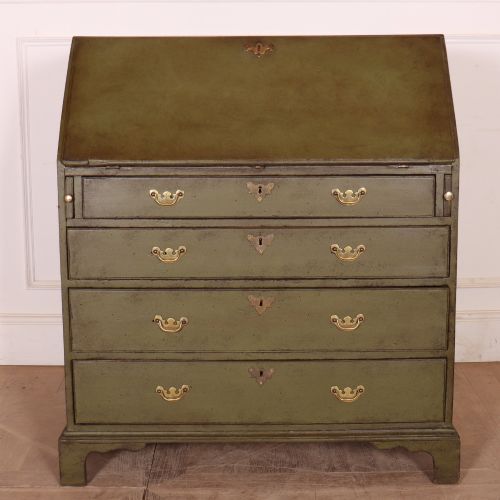
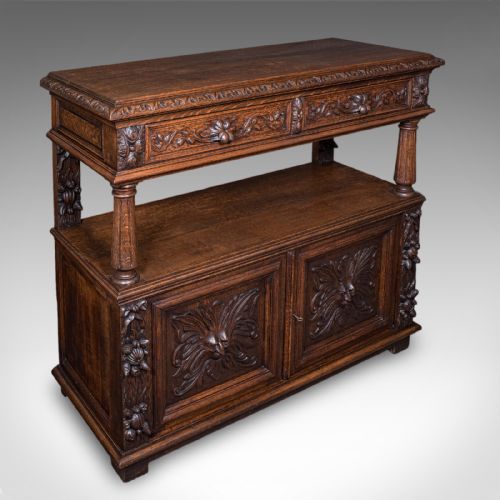
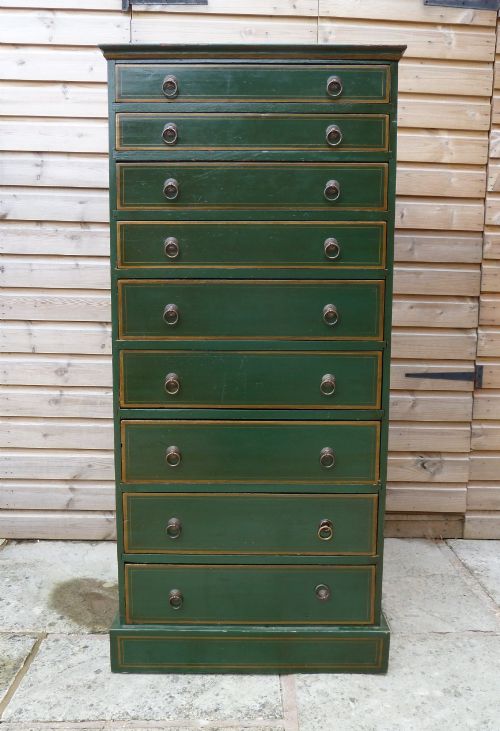
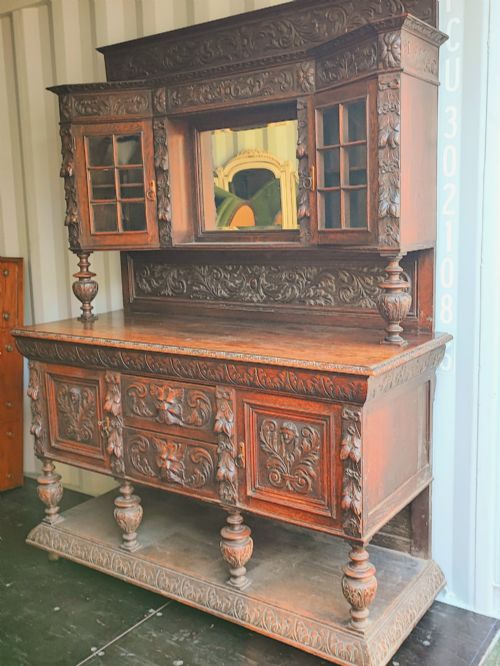
Buyers will encounter items finished in painted wood, paint, or specific regional styles like English Country and French Provincial. Some examples incorporate natural green tones through specific motifs, such as carved Green Man oak designs.
The category frequently overlaps with related storage forms like painted pine office chests, corner cupboards, and vitrines. Each piece reflects the functional requirements of its original domestic or commercial setting.
How they were made
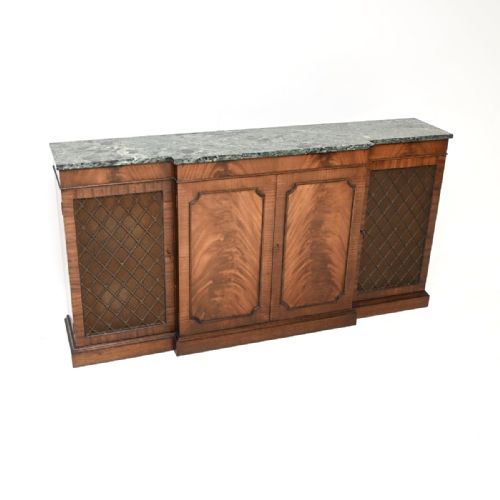
Construction relies heavily on traditional timber frames using oak, mahogany, pine, walnut, and satinwood, often enhanced with brass hardware, glass panels, and marble tops. Painted finishes utilise layered pigments applied to pine and hardwood surfaces.
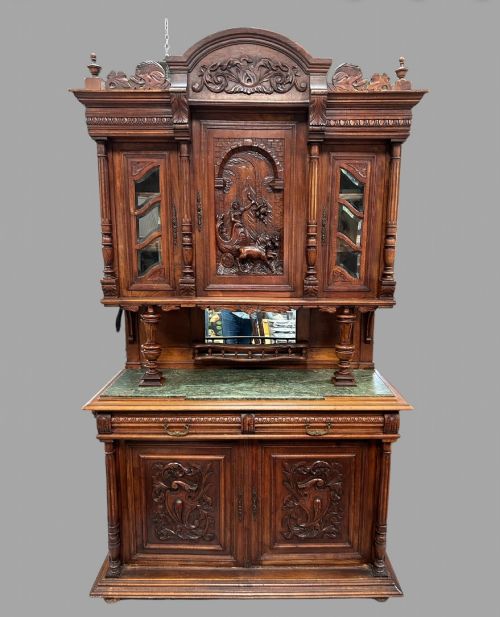
Joinery techniques range from hand-carved decorative elements, seen in Victorian Green Man motifs and Gothic revival sideboards, to simpler dovetailed joints in provincial bedside chests and utility cupboards.
What varies in quality
Quality rests on the integrity of the timber framework, the preservation of original painted surfaces, and the subtlety of carved details. Pieces with intact, period-correct paintwork and minimal later intervention stand apart from heavily restored alternatives.
Hardware preservation, such as original brass handles, locks, and hinges, significantly elevates a piece. The crispness of hand-carved ornamentation, particularly on oak and walnut surfaces, distinguishes standard utility items from finer workshop output.
Shapland and Petter·Mercier Frères·F. Whitfield and Co.
The Antique Green Cabinet Glossary
- Corner Cupboard
- A specialised storage piece designed to fit neatly into the ninety-degree angle of a room. These items often feature painted wood finishes and single doors.
- Display Cabinet
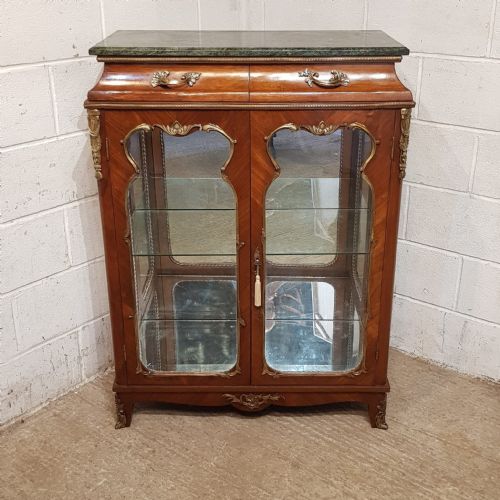
- A glazed storage unit intended for showcasing porcelain, glassware, or decorative objects. They utilise glass panels set into timber frames of mahogany or walnut.
- Green Man
- A sculptural architectural ornament depicting a human face entwined with foliage and vines. This motif appears frequently on nineteenth-century carved oak furniture.
- Sideboard
- A long dining room or hallway cabinet designed for serving food and storing tableware. Examples in this category often incorporate heavy timber construction and drawers.
- Vitrine
- A glass-fronted display cabinet, frequently mounted with gilt metal or fine wood veneers. These pieces emerged strongly during the late nineteenth and early twentieth centuries.
Antique Green Cabinet: Frequently Asked Questions
How do I date an antique green cabinet?
Dating relies on examining the timber species, construction methods, and hardware used in the carcase and drawers. Secondary woods, dovetailing techniques, and the composition of any painted finishes provide clear indicators of period origin.
Style descriptors such as Victorian, Edwardian, or Georgian further narrow the timeline. Comparing the specific joinery to known period exemplars helps establish the exact era of manufacture.
Is the green paint on these cabinets original?
Paint analysis often reveals whether a surface coating is contemporaneous with the initial construction or applied during a later decorative campaign. Original painted finishes exhibit natural wear patterns and craquelure consistent with age.
Restored or later-applied paint usually shows uniform texture without the underlying patina accumulated over decades of use. Inspecting concealed surfaces helps verify the history of the finish.
Where should I place an antique green cabinet?
These cabinets function effectively in living rooms, hallways, and bedrooms depending on their scale and primary form. Corner cupboards maximise unused wall angles, while bedside chests and small display units suit private quarters.
Placing wooden furniture away from direct heat sources and strong sunlight protects both the structural timber and any delicate painted or polished surfaces from undue stress.
What is a Green Man carving?
A Green Man is a decorative motif showing a face emerging from or made of leaves, branches, and vines. It symbolises rebirth and appears prominently on nineteenth-century carved oak furniture.
This sculptural detail is most commonly encountered on heavy sideboards, display cabinets, and architectural storage pieces from the Victorian era.