






Edwardian Night Table
An edwardian night table brings compact utility and refined timber craftsmanship directly beside the bed.
Edwardian Night Table
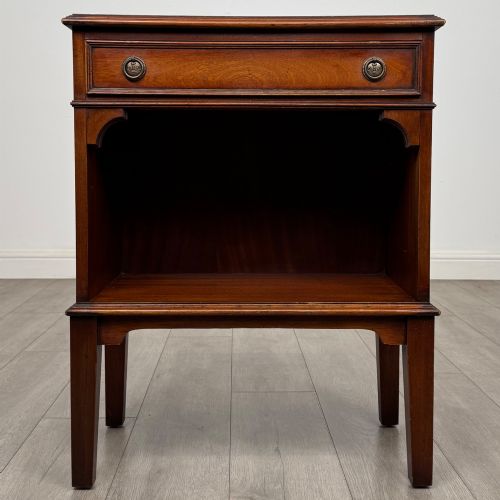
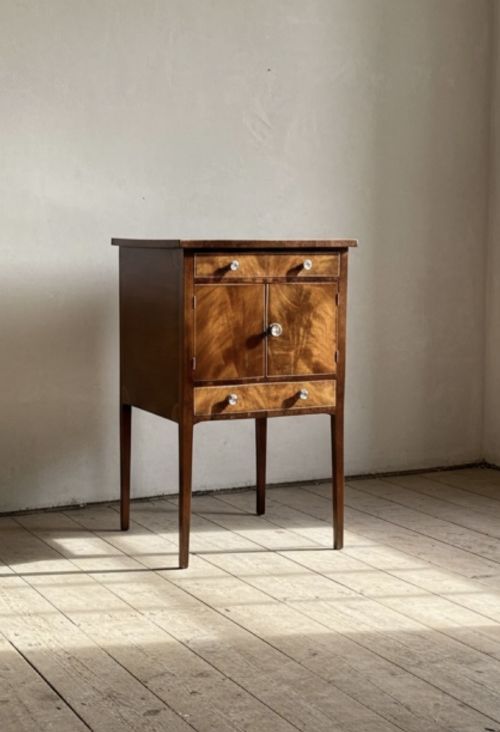
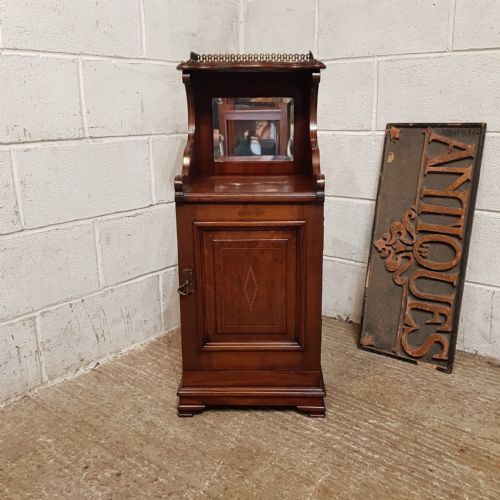
The edwardian night table category encompasses bedside cabinets, pot cupboards, and open night stands produced across the late nineteenth and early twentieth centuries. Pieces range from simple oak and walnut models to inlaid mahogany and satinwood designs styled after earlier periods. Buyers most frequently encounter enclosed bedside cabinets featuring a single door above a small compartment or drawer.
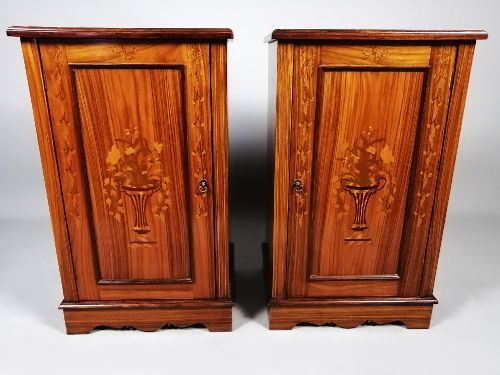
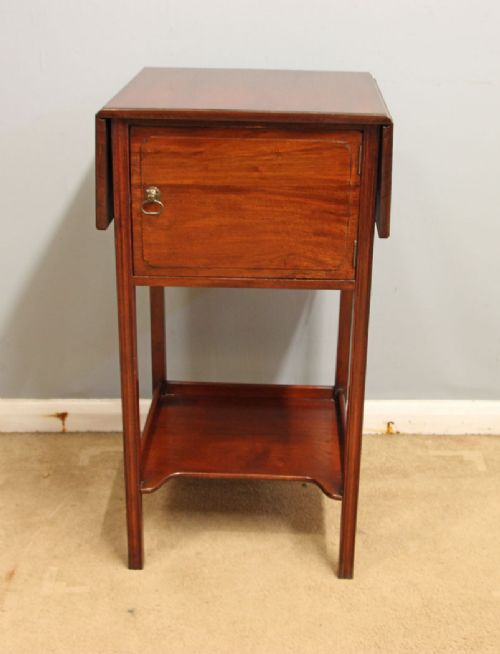
Makers adapted traditional forms to suit contemporary bedrooms, creating matching pairs and occasional tables with tapered legs or tray tops. Variations include French marble-topped cabinets and Sheraton Revival pieces decorated with delicate marquetry and stringing. The selection balances practical bedside storage with the architectural aesthetic of the period.
How they were made
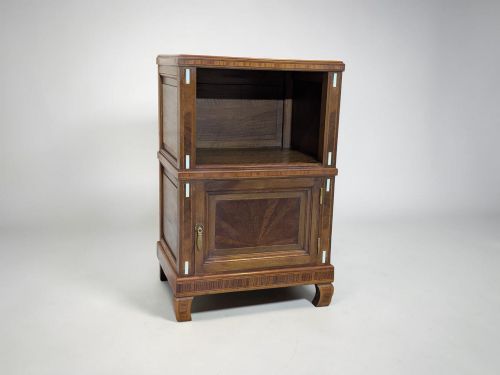
Cabinetmakers relied primarily on solid mahogany, walnut, and oak for structural integrity, frequently applying figured veneers and contrasting satinwood inlays to decorative surfaces. Brass handles, hinges, and occasional gallery rails added functional metallic detail to the wooden frames. French examples often incorporated inset marble tops for durability and surface hygiene.
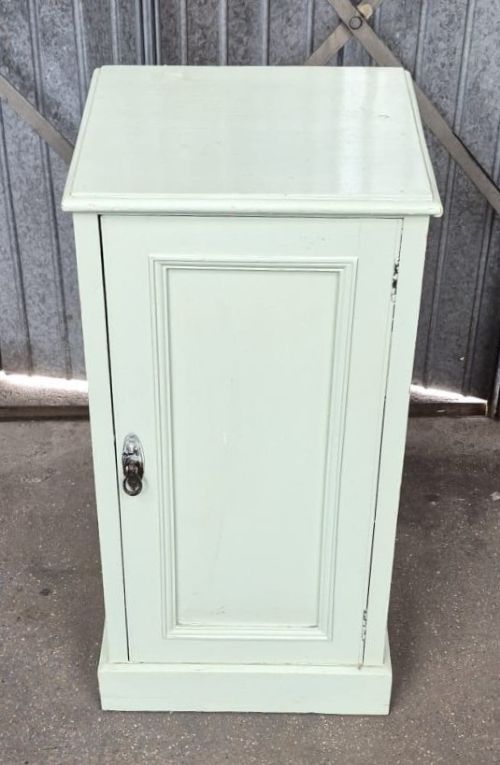
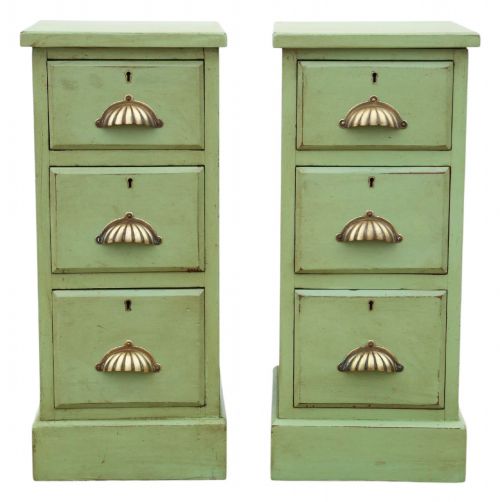
Construction techniques combined traditional joinery with period styling revivals, utilising turned legs, tapered supports, and precise marquetry panels. Painted finishes appeared on later variations, applying muted tones to simpler softwood or hardwood carcases. Each method reflected the domestic requirements and stylistic preferences of the era.
Listings feature mahogany, oak, and walnut woods, alongside marble and brass elements across Edwardian and Victorian periods.
What varies in quality
The choice of timber and veneer grading establishes the primary visual hierarchy among these bedside pieces. Dense burr walnut, finely figured mahogany, and intricate satinwood inlay indicate a higher standard of cabinet-making than plain, utility-focused timbers. Matching pairs demand superior initial material selection and consistency in execution.
Edwards and Roberts
The Edwardian Night Table Glossary
- Pot cupboard
- A small bedside cabinet originally designed to house a chamber pot behind a single door. These enclosed pieces kept bedroom necessities discreetly stored.
- Marquetry
- Decorative patterns formed by fitting together thin veneers of various coloured woods. Craftsmen applied these intricate designs to drawer fronts and cabinet tops.
- Sheraton Revival
- A late nineteenth and early twentieth century design movement that reinterpreted the lighter, neoclassical furniture styles of Thomas Sheraton. Pieces typically feature satinwood, inlaid banding, and tapered legs.
- Tray-top
- A tabletop edged with a raised wooden gallery or rim designed to prevent items from rolling off. This feature appears frequently on refined bedside tables and small cabinets.
- Chamberstick
- A portable handheld candlestick fitted with a shallow pan to catch dripping wax. Silver and brass examples complemented the metal hardware found on nearby bedroom furniture.
Edwardian Night Table: Frequently Asked Questions
What is an edwardian night table?
An edwardian night table is a small bedside cabinet or stand produced during the early twentieth century to hold nighttime necessities. These pieces often feature enclosed cupboards, drawers, or open shelves.
Craftsmen built them primarily in mahogany, walnut, and oak, frequently incorporating decorative inlays or painted finishes to match contemporary bedroom interiors.
How do I spot a reproduction?
Examining the timber movement, interior secondary woods, and construction joints helps reveal the age of a bedside cabinet. Period pieces display genuine wear patterns and traditional hand-cut joinery consistent with early twentieth-century workshop practices.
Hardware fixtures, screw types, and veneer thickness also provide reliable indicators of manufacturing period and authenticity.
How do I care for antique wood?
Maintaining these wooden surfaces involves keeping them away from direct heat sources and sudden humidity changes to prevent timber splitting. Regular dusting with a soft cloth preserves the polished finish.
Applying traditional wax polish occasionally nourishes the timber and enhances the natural grain without building up heavy chemical residue.