
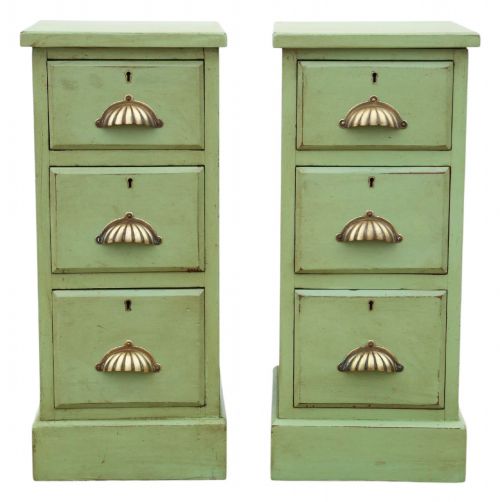
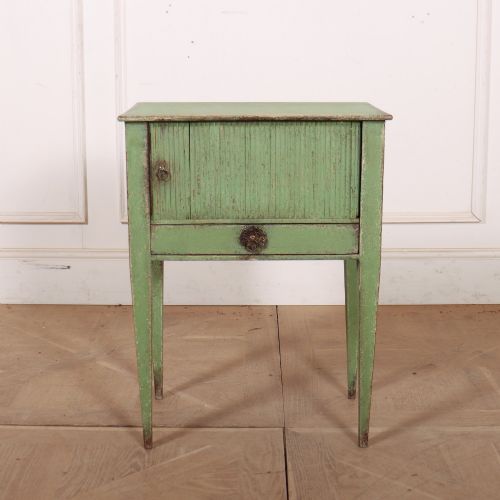
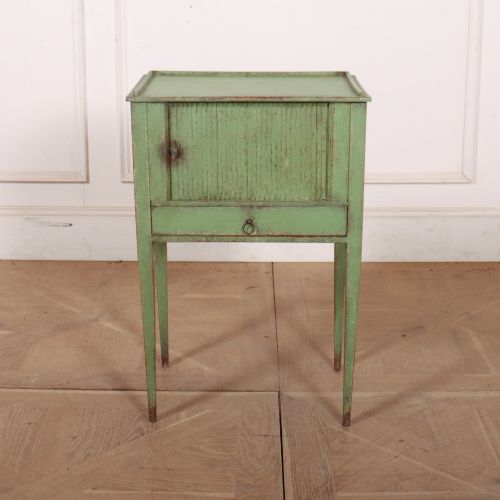
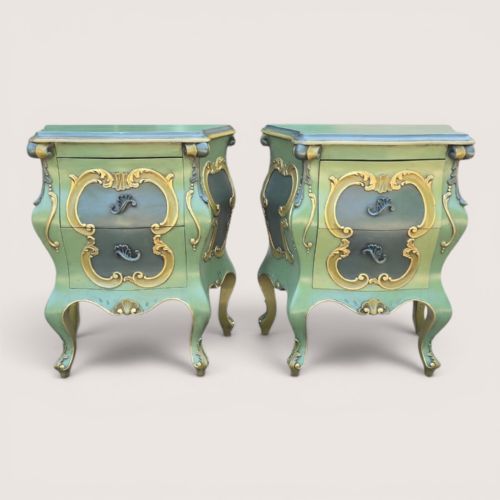


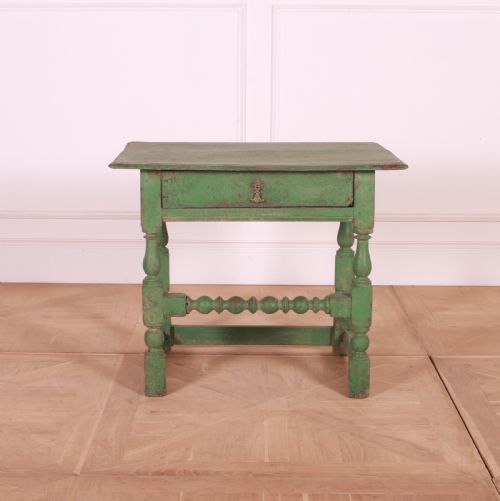

Green Painted Nightstand
A green painted nightstand brings useful surface space and muted colour to a bedroom, combining practical bedside storage with traditional decorative charm.
Green Painted Nightstand
A green painted nightstand comprises bedside tables, bedside chests, and small side cabinets finished in various shades of green paint. These items provide functional storage beside a bed while introducing distinct period character through their painted surfaces.
The selection here encompasses several regional styles and eras, ranging from 18th century English and Dutch provincial designs to Edwardian country pieces and later revivals. Buyers will encounter pairs of bedside chests alongside single lamp tables and small cupboards.
Origins stretch across English, Dutch, French, and Italian traditions, utilising forms like side tables and single-door cupboards. Each piece reflects the domestic storage needs of its respective period.
How they were made
Construction relies heavily on traditional timber framing using pine, oak, and softwood, often shaped into chests, lamp tables, and small cupboards. Joinery methods reflect the period of origin, from 18th-century cabinet making to later provincial carpentry.
Surfaces are prepared with paint layers, sometimes complemented by gilt moulding or brass hardware details. The application of green paint defines the aesthetic of these bedside pieces, varying from distressed finishes to traditional painted coats.
Some provincial cupboards manage to look surprisingly dignified despite wearing coats of green paint that have weathered centuries of household use.
What varies in quality
Quality rests in the integrity of the timber construction and the authenticity of the painted surface. Pieces retaining their original or early painted finish command greater interest from collectors than later repainted examples.
Proportion and decorative detail also differentiate the pieces, with finer items displaying balanced proportions, well-executed mouldings, and complementary brass hardware rather than heavy or clumsy construction.
Melissa White
The Green Painted Nightstand Glossary
- Bedside chest
- A small chest of drawers designed to stand beside a bed for personal storage. These typically feature two or more small drawers.
- Lamp table
- A compact occasional table originally intended for holding a small lamp. They function effectively as open bedside surfaces.
- Gilt moulding
- Decorative wooden or plaster trimming finished with gold leaf or metallic paint. This technique highlights structural edges on revival and continental pieces.
- Provincial
- Denoting furniture made in regional areas outside major capital cities. These pieces often display simpler, robust construction methods.
Green Painted Nightstand: Frequently Asked Questions
What is a green painted nightstand?
A green painted nightstand is a small bedside table, chest, or cabinet finished with a green painted surface. These pieces serve as functional bedroom storage while adding decorative colour.
They appear in various historic styles, from 18th-century English country designs to continental provincial models.
How do I use one in a bedroom?
These pieces fit alongside a bed to hold lamps, books, and small personal items. Their enclosed cupboards or drawers keep nighttime essentials neatly tucked away.
Pairs work well flanking a bed, while single tables suit tighter spaces or alternative corners.
How do I date a painted nightstand?
Dating relies on examining the underlying timber construction, joinery methods, and hardware. Wood types like pine and oak offer clues regarding the period of manufacture.
The characteristics of the paint layer also help determine whether a finish is original or applied during a later period.
Are these pieces English or continental?
The selection includes items from multiple regions, encompassing English country workshops as well as Dutch, French, and Italian provincial makers. Each region employed distinct forms and decorative treatments.
Examining the structural style and regional characteristics reveals the likely geographic origin of an individual piece.