

Antique Gothic Table
An antique gothic table brings architectural lines, deep timber carving and period conviction into domestic rooms through nineteenth-century design.
Antique Gothic Table
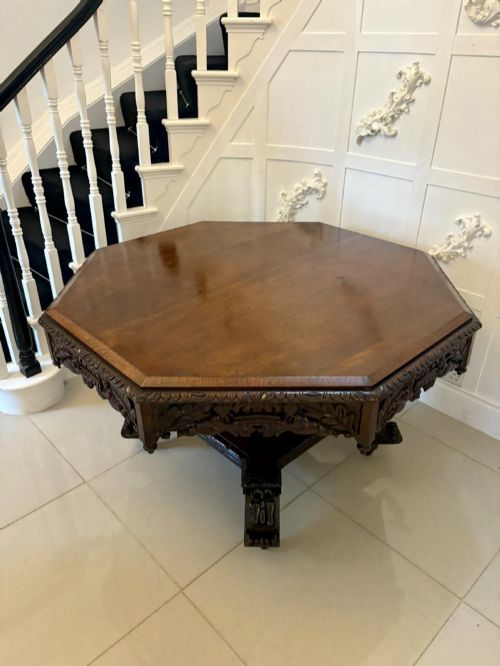
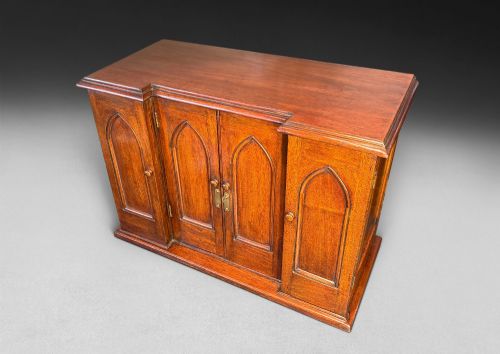
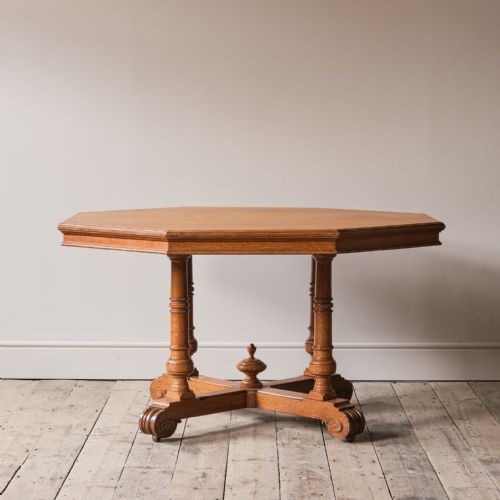
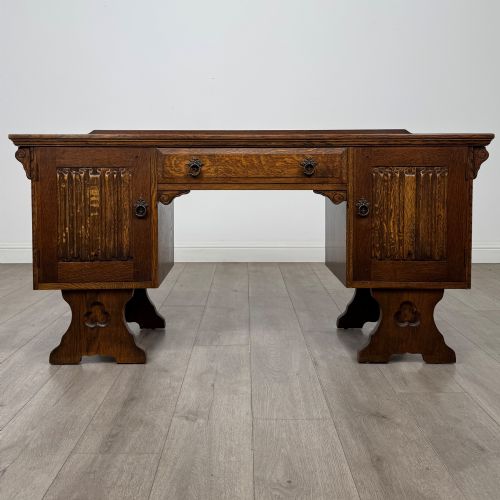
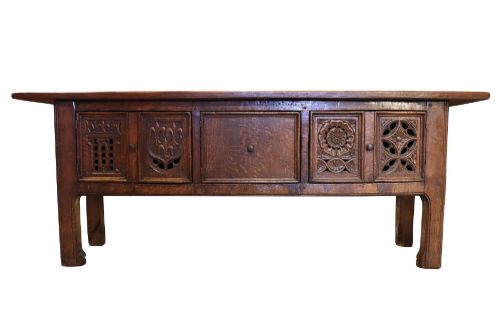
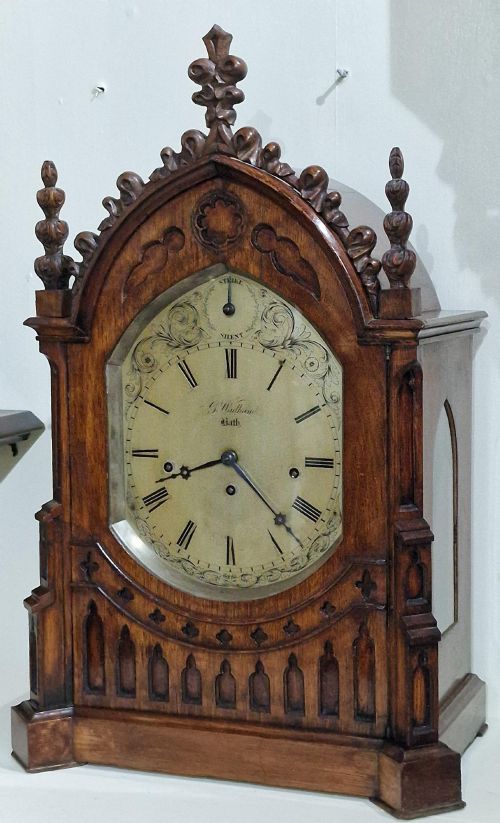
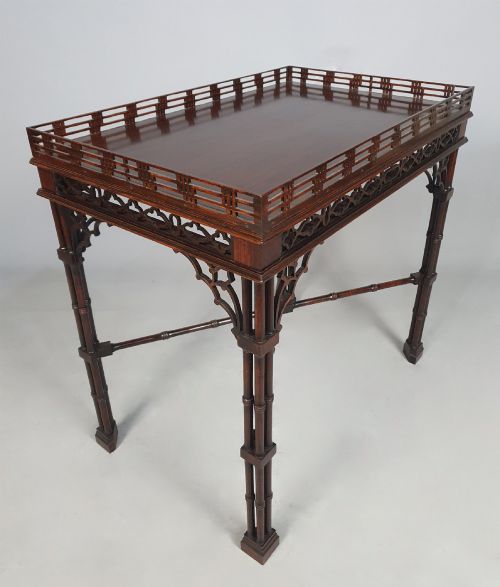
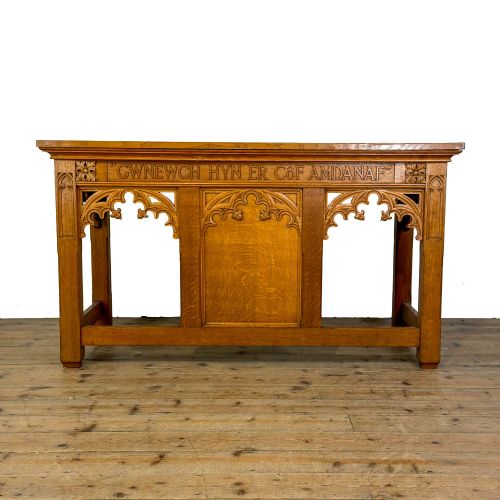
The search for an antique gothic table directs attention toward robust nineteenth-century oak furniture influenced by medieval architectural vocabulary, appearing predominantly as side tables, hall tables, centre tables and occasional pieces.
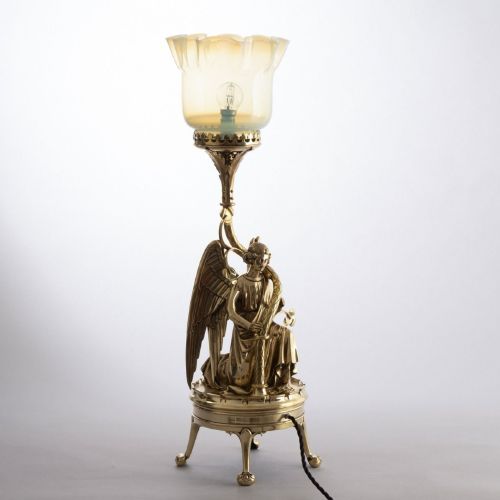
Victorian workshops and provincial cabinetmakers produced these works across the decades from eighteen-eighty onward, drawing upon Gothic Revival, Arts and Crafts and ecclesiastical styles.
Buyers commonly encounter sturdy oak side tables and octagonal occasional pieces alongside larger library and refectory formats intended for formal reception spaces.
Materials and Construction
Solid oak serves as the primary medium, joined with pegged mortise and tenon construction to withstand heavy daily use.
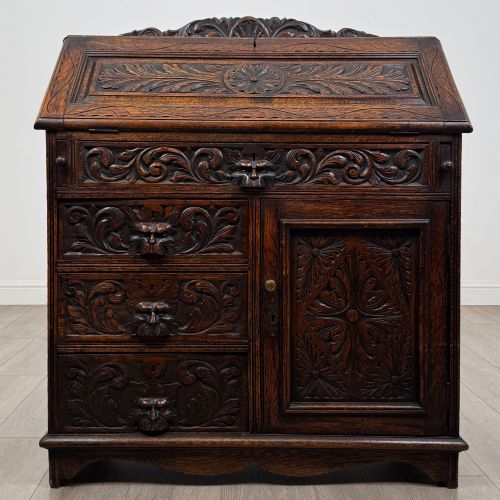
Carvers utilised chip carving, linenfold panels and green man motifs to decorate surfaces, while secondary woods such as pitch pine and mahogany occasionally appear in specific regional pieces.
A watchful green man peers from the timber frieze, guarding the correspondence tucked inside the drawer.
Assessing Craftsmanship
Quality rests upon the depth and crispness of the timber carving, distinguishing hurried production from deliberate hand-tooled execution.
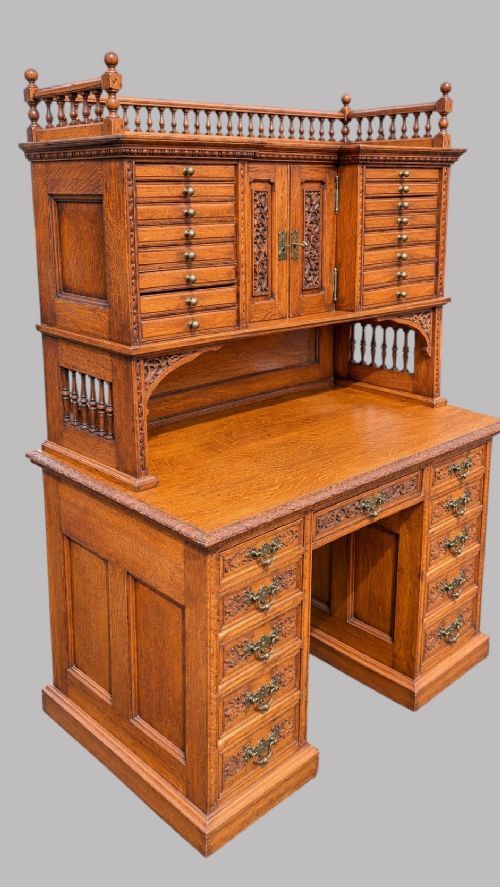
Proportion and structural integrity separate standard utility items from ambitious cabinetwork built with select quartersawn oak and balanced architectural details.
George Wadham·Arthur Simpson of Kendal·Christopher Dresser·Baillie Scott
The Antique Gothic Table Glossary
- Gothic Revival
- An architectural and decorative movement reviving medieval structural forms, pointed arches and heavy ornament during the nineteenth century. This style heavily influenced domestic furniture design.
- Linenfold
- A style of wood carving imitating folded parchment or linen, frequently seen on panels of cupboards and tables. It originated in the late medieval period and returned in nineteenth-century revival pieces.
- Green Man
- A sculptural motif representing a human face entwined with foliage, leaves or vines, symbolising rebirth. Victorian carvers favoured this detail on oak furniture.
- Refectory Table
- A long dining table traditionally used in monastic dining halls, adopted by nineteenth-century makers for domestic dining spaces. They typically feature strong stretchers and thick timber tops.
- Quarter-sawn Oak
- Timber cut radially from the growth rings, producing distinctive medullary ray flecks and superior dimensional stability. Cabinetmakers chose this cut for high-grade furniture.
Antique Gothic Table: Frequently Asked Questions
Where should I place an antique gothic table at home?
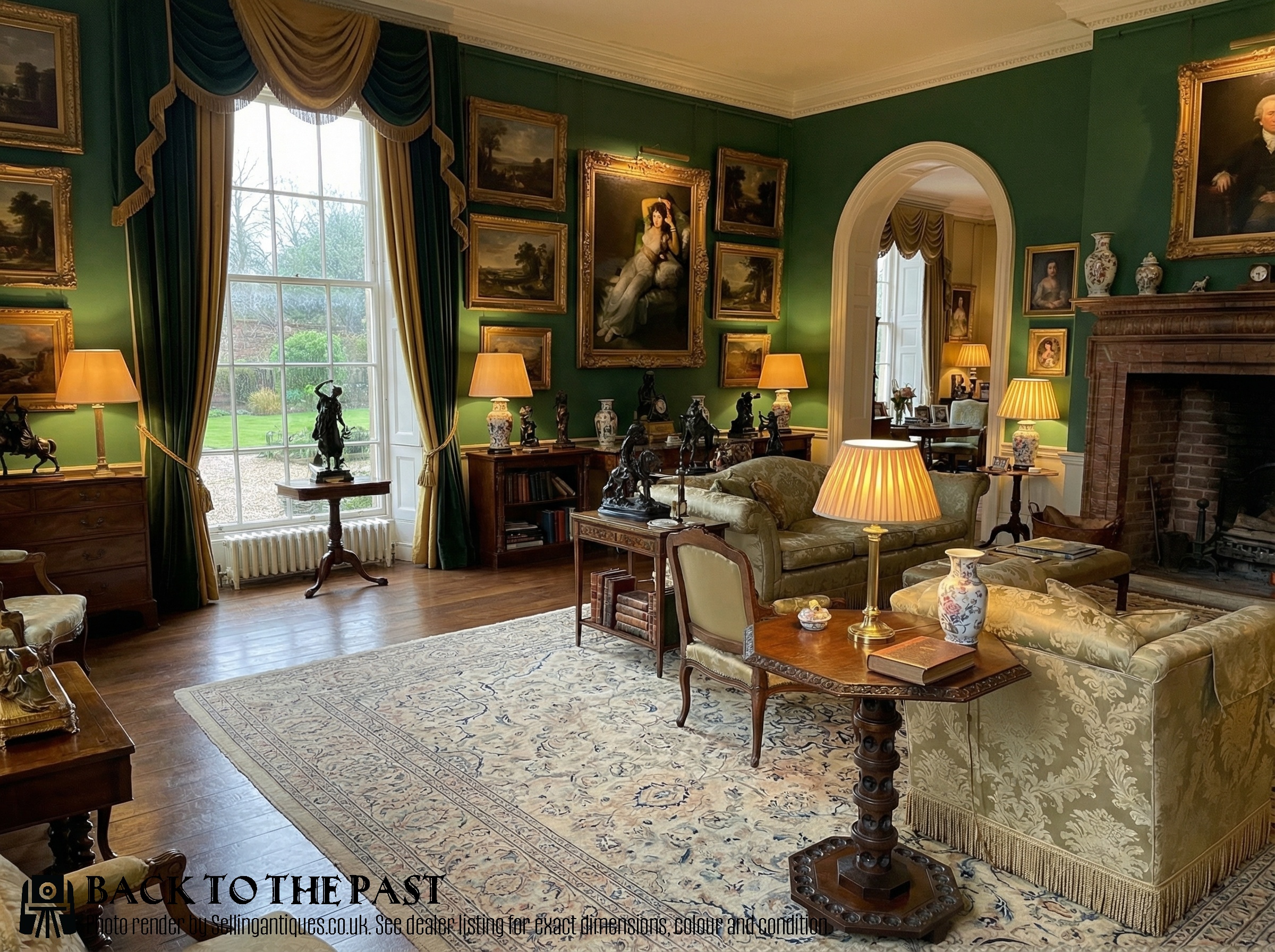
These pieces suit entrance halls, living rooms or dining spaces where their architectural presence can anchor the room. Pair them with simple walls to let the timber grain and carving stand out.
Smaller side tables and octagonal occasional pieces fit easily beside seating, while larger refectory or centre tables function effectively as standalone statement furniture.
How do I identify a Victorian Gothic Revival table?
Look for characteristic medieval motifs such as pointed arches, quatrefoils, heavy chamfered edges and deep oak carving. The nineteenth-century dates on these items align with the revival of ecclesiastical design.
Construction details like pegged joints and quartersawn oak further confirm the nineteenth-century origins of the piece.
Are these tables suitable for daily use?
Solid oak construction and pegged joinery make these tables exceptionally durable and practical for everyday living. They handle normal household activities well without requiring delicate treatment.
Maintaining the wood with appropriate wax helps protect the surface while preserving the historic finish.
What is the difference between a hall table and a centre table?
Hall tables typically feature a shallow depth designed to sit flush against a wall in narrow spaces. Centre tables are finished on all sides to stand freely in the middle of a room.
Both forms utilise the same Gothic Revival vocabulary but serve entirely different spatial layouts.