


Gothic Accent Table
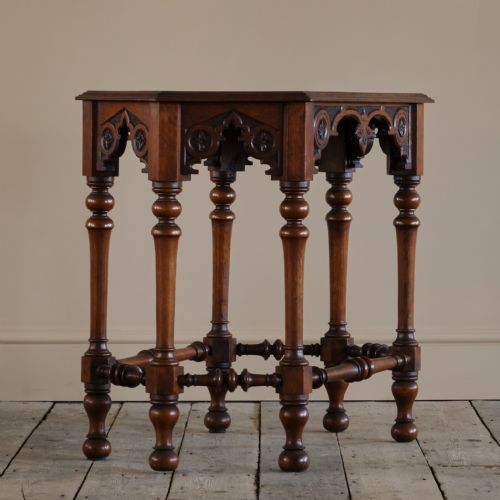
A gothic accent table brings medieval verticality and solemn architectural carved detail directly into a domestic room.
Gothic Accent Table
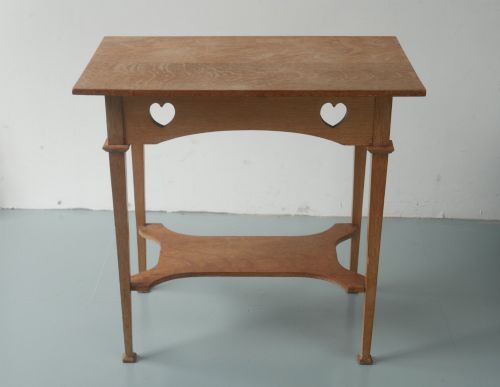
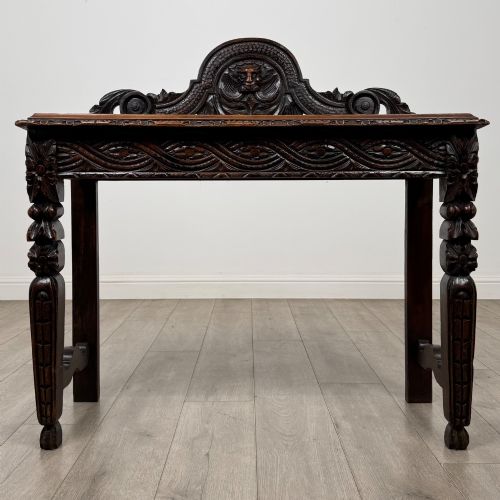
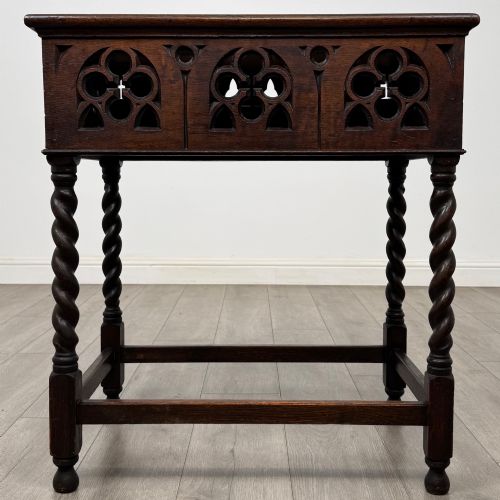
A gothic accent table combines structural heft with pointed arches, trefoils, and deep timber carving rooted in nineteenth-century revivals. These small occasional, side, and centre forms serve as functional display surfaces while introducing distinct ecclesiastical or medieval motifs into domestic spaces.
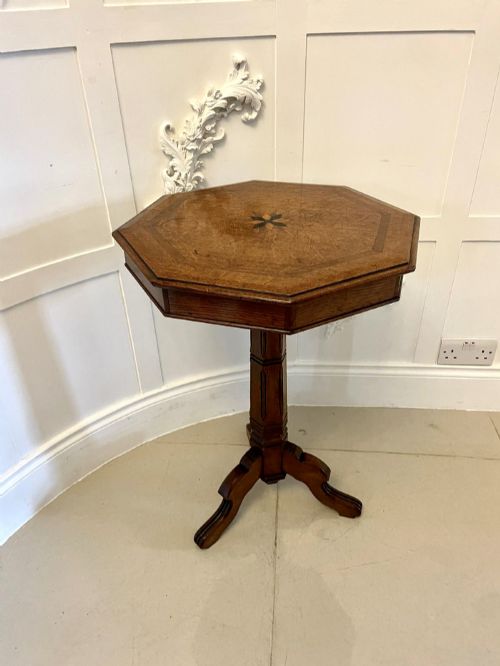
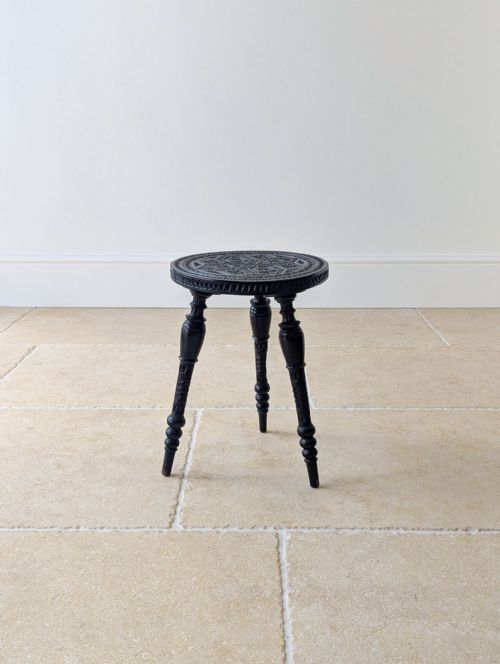
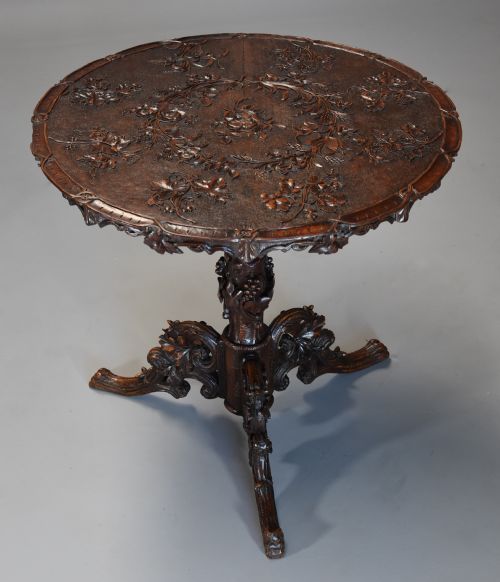
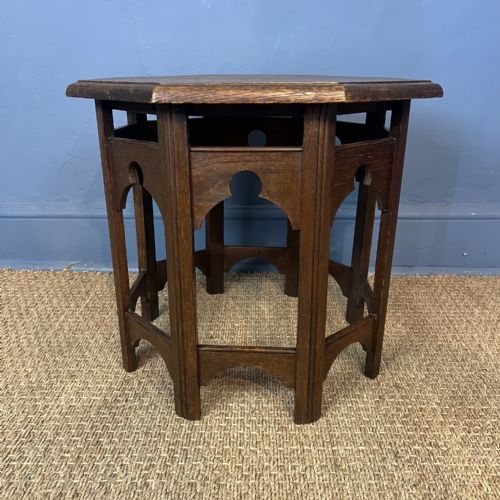
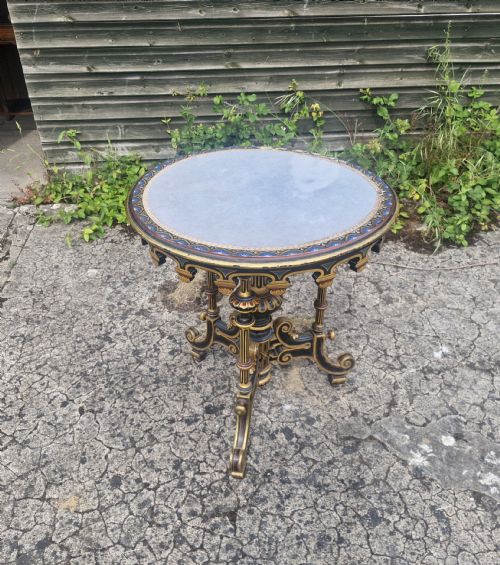
Oak dominates the selection, appearing alongside ebonised hardwood, mahogany, and walnut in forms ranging from simple octagonal tops to tripod stands and two-tier designs. Victorian makers drew heavily on Gothic Reform and Aesthetic Movement ideals to shape these heavy, dark-toned occasional pieces.
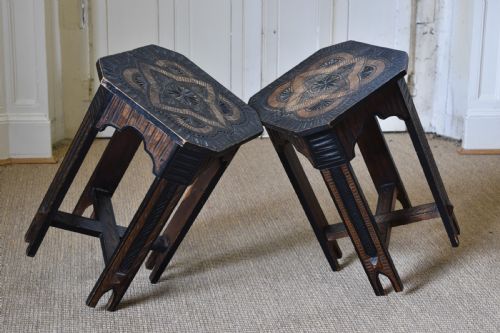
Buyers encounter side tables, centre tables, and occasional tables dating from the mid nineteenth century through to the early twentieth century. Many pieces feature chip carving or geometric tracery that echoes stone window work translated into solid wood.
How they were made
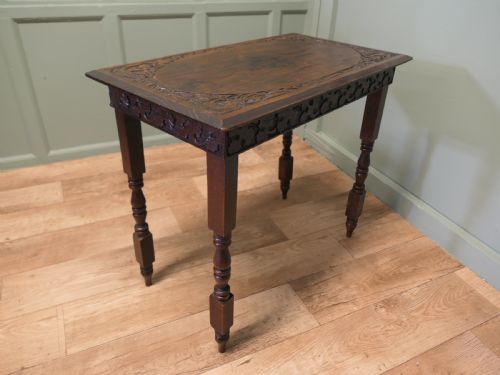
Carpenters relied on solid oak and mahogany, often employing chip carving and deep relief work to create angular panels and trefoil cut-outs. Selected examples utilise ebonised hardwood or painted finishes to emulate older monastic furniture.
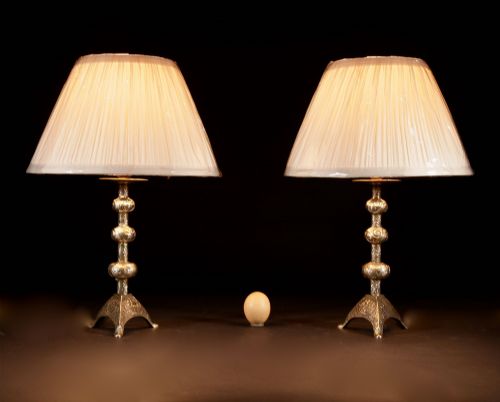
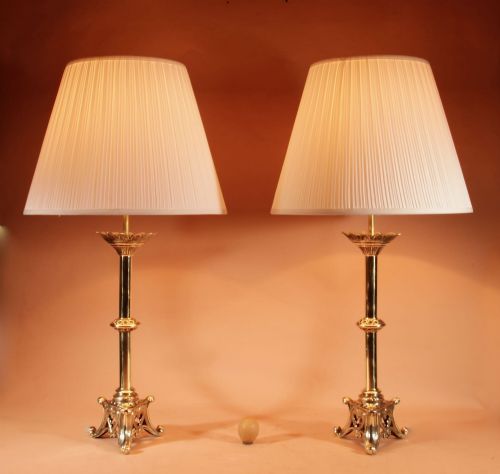
Brass elements appear on supporting table lamps and structural fittings, cast with Romanesque or early gothic patterns. Joinery prioritises stability to support heavy tops and dense architectural carving.
Listings feature oak, mahogany, and ebonised hardwood across various side, centre, and occasional tables.
What varies in quality
The depth and crispness of the timber carving dictate the visual weight of the piece, separating standard production from exceptional examples. Sharp lines in trefoils and crisply faceted chip carving show the maker's control over dense grain.
Proportion and timber selection drive the character of the piece, with honey oak, figured mahogany, and limed finishes offering distinct tactile presence. The integration of structural elements like tripod bases or octagonal tops reveals the underlying design ambition.
Baillie Scott
The Gothic Accent Table Glossary
- Gothic Revival
- An architectural and decorative style popular in the nineteenth century that revived medieval forms, pointed arches, and heavy timber construction. This movement shaped much of the domestic furniture seen in this category.
- Chip carving
- A form of relief carving where small triangles or chips are removed from a flat surface to create geometric patterns. It appears frequently on nineteenth-century occasional tables and panels.
- Trefoil
- A graphic ornament composed of three overlapping rings or lobes, resembling a clover leaf. It is a defining motif in gothic architecture and furniture tracery.
- Centre table
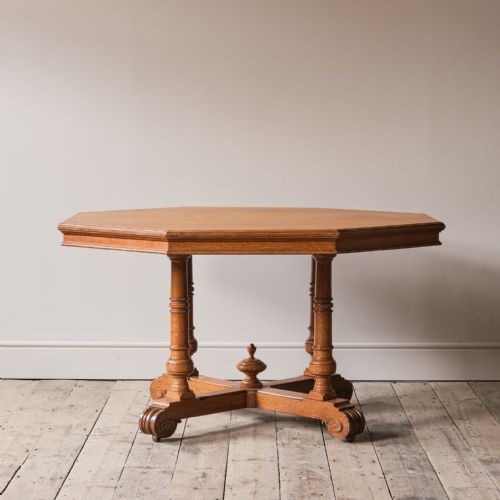
- A freestanding table designed to be viewed from all sides, placed in the middle of a room rather than against a wall. These often feature octagonal or round tops.
- Prie-Dieu
- A devotional desk designed for kneeling and prayer, incorporating sloping ledges and enclosed storage compartments. In domestic contexts, they display similar architectural carvings to side tables.
Gothic Accent Table: Frequently Asked Questions
Where should I place a gothic accent table?
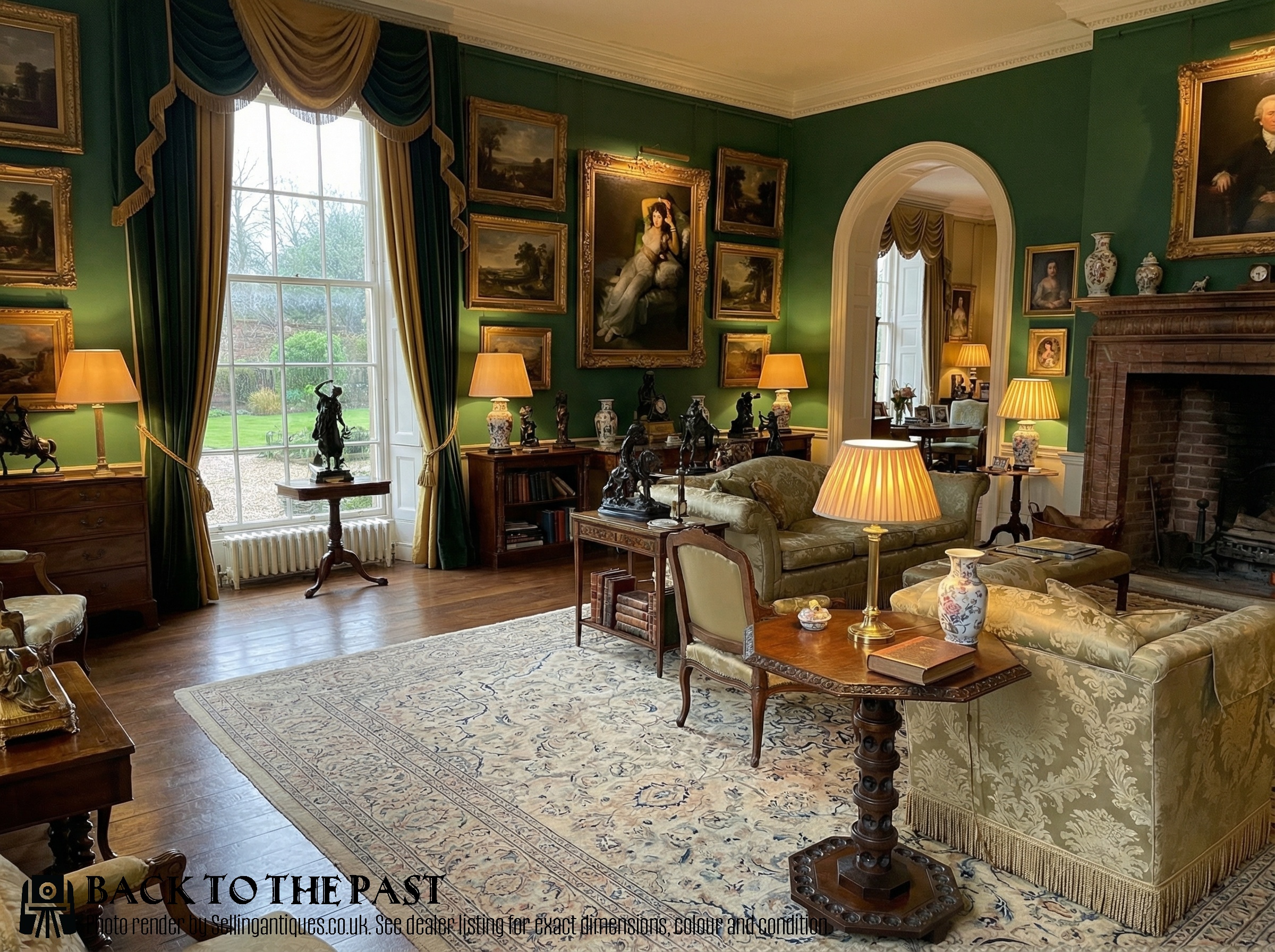
These pieces suit entrance halls, libraries, or corners where a dark timber surface contrasts with plain walls. Their architectural presence anchors a room without demanding a large footprint.
Pair them with simple seating or place them beside a reading chair to hold books and small lamps. Avoid crowding them with too many objects so the carved details remain visible.
How do I care for nineteenth-century oak furniture?
Keep wooden surfaces away from direct heat sources and strong sunlight to prevent the timber from splitting or fading. Regular dusting with a dry, soft cloth maintains the finish.
Apply a microcrystalline wax sparingly if the wood appears dry, buffing gently to preserve the natural sheen of the grain. Avoid silicone-based sprays that build up residue over time.
What is the difference between a side table and a centre table?
Side tables are generally smaller and designed to sit flush against a wall or beside a piece of seating. Centre tables feature finished detailing on all sides and stand independently in an open space.
Both forms utilise similar gothic motifs, but centre tables often command more visual weight through larger octagonal or round tops.
How can I tell a Victorian gothic table from later revivals?
Victorian pieces from the mid to late nineteenth century typically feature heavier oak construction, deep hand-carved tracery, and dark patination. Edwardian and later examples often display lighter timber tones and simpler geometric cuts.
Examine the underside and joints for signs of period manufacturing techniques, such as hand-cut screws or traditional peg joinery.