


Gothic Revival Wine Table
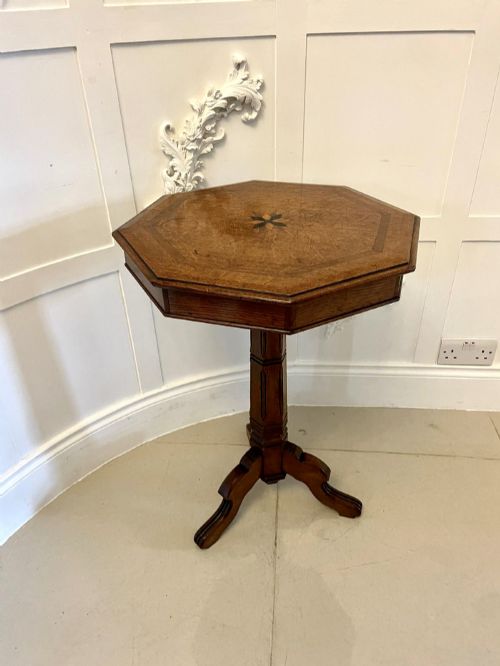
These gothic revival wine table pieces bring architectural drama and rich timber character into a room.
Gothic Revival Wine Table
When someone searches for a gothic revival wine table, they look for small occasional surfaces and champagne coolers carrying pointed arches, heavy moulding, and medieval motifs. The selection leans heavily towards nineteenth century pieces, drawing on Victorian Gothic and French influences to shape small tripod supports and octagonal tops.
Buyers most frequently meet oak and mahogany examples on this page, often featuring carved clover leaf designs or tripod bases suited to intimate spaces. These compact forms served as functional side tables and wine coolers in period drawing rooms and parlours.
The style bridges domestic utility with dramatic architectural ornamentation, pulling visual weight from ecclesiastical stone carving into domestic woodwork. Every piece carries the distinctive structural seriousness of the nineteenth century aesthetic.
How they were made
Joiners and cabinet makers utilised solid oak and mahogany to build these tripod side tables and occasional surfaces, shaping dense timbers by hand. Carved details on clover leaf tops and pedestals relied on traditional chiselling techniques passed down through Victorian workshops.
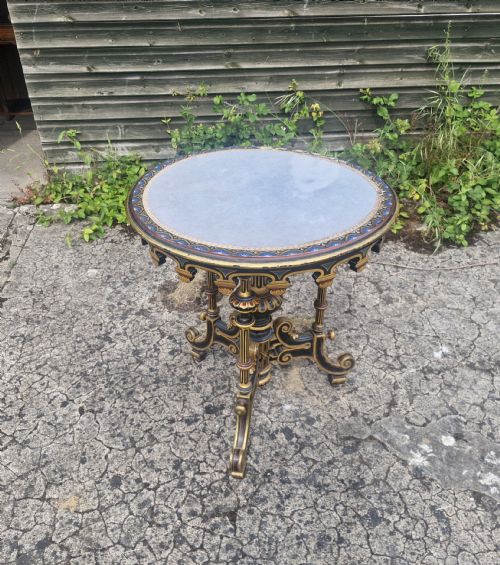
Selected pieces incorporate marble insets or painted finishes alongside carved woodwork, introducing contrasting textures to the heavy timber frames. These construction methods ensured the small tables could support heavy glassware and winecoolers without losing stability.
Listings feature nineteenth century oak and mahogany examples alongside Italian and French regional pieces from the 1860s and 1880s.
What varies in quality
The depth and crispness of the timber carving separate standard production pieces from finer examples of nineteenth century craftsmanship. Sharp undercuts in oak foliage and well-defined mouldings show the hand of a skilled carver rather than mechanical replication.
Proportion and structural integrity define the higher tier of these occasional tables, particularly where tripod legs meet the central column. Superior weight distribution and tight joinery ensure the small surfaces remain steady through centuries of use.
The Gothic Revival Wine Table Glossary
- Tripod base
- A three-legged support system common on nineteenth century occasional tables. This configuration keeps the small surface stable on uneven floorboards.
- Clover leaf table
- A small occasional table featuring a top shaped like a three-lobed clover. This form appears frequently in nineteenth century Gothic revival furniture.
- Occasional table
- A small, movable piece designed for specific, intermittent domestic tasks. These surfaces served tea, held drinks, or supported lamps in Victorian parlours.
- Champagne or wine cooler table
- A specialised vessel holder built into a sturdy wooden frame. It allowed hosts to keep bottles chilled near seating areas during social gatherings.
Gothic Revival Wine Table: Frequently Asked Questions
What is a gothic revival wine table?
A small nineteenth century surface built with architectural medieval motifs, pointed arches, and sturdy timber frames. These pieces functioned as side tables or wine holders in Victorian rooms.
They combine practical domestic utility with the dramatic decorative style of the Gothic revival movement.
What woods were used?
Oak and mahogany dominate the construction of these nineteenth century occasional tables. Cabinet makers chose these dense hardwoods to support heavy carved details and daily use.
Some examples also incorporate painted finishes, marble tops, or gilt highlights to enhance the visual drama.
How were they used?
Victorian households placed these compact surfaces beside seating to hold drinks, lamps, or specialised barware. Certain examples functioned specifically as wine or champagne coolers during gatherings.
Their portable tripod design allowed servants to move them easily around the drawing room.
How do I identify the period?
Look for nineteenth century construction characteristics, such as solid mahogany or oak timbers, hand-carved Gothic tracery, and tripod base configurations. The presence of Victorian stylistic influences points directly to the 1860s and 1880s.
Examinations of the joinery and timber patina confirm the age of these occasional pieces.
Where do they fit today?
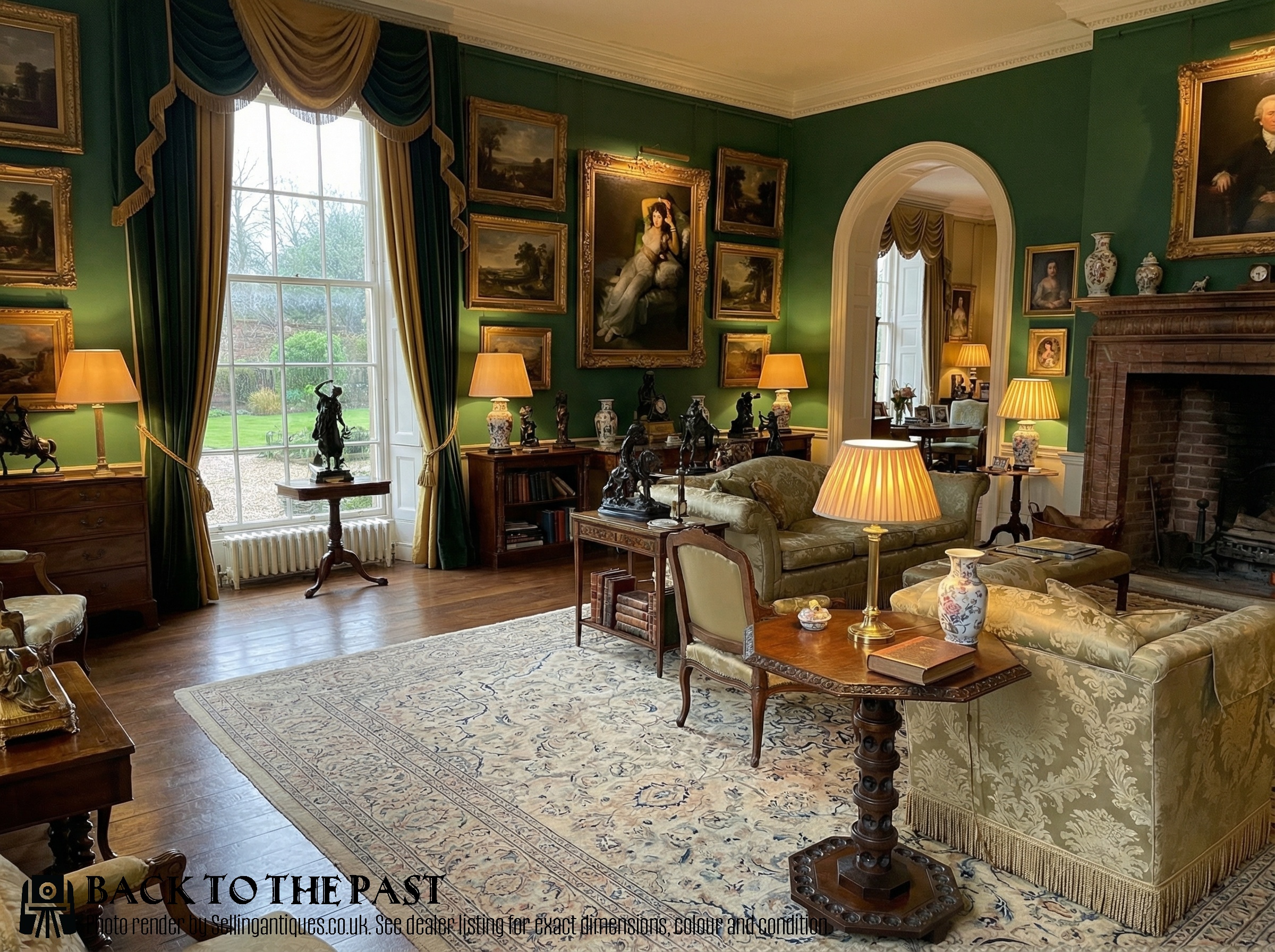
These small surfaces suit corners, beside armchairs, or as display stands for decorative objects. Their dark timbers and carved details anchor lighter modern interior schemes.
They bring historical character to living rooms without dominating the floor space.