
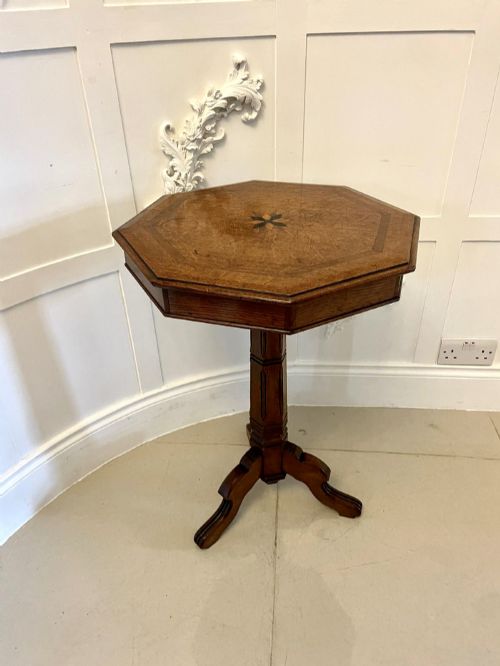
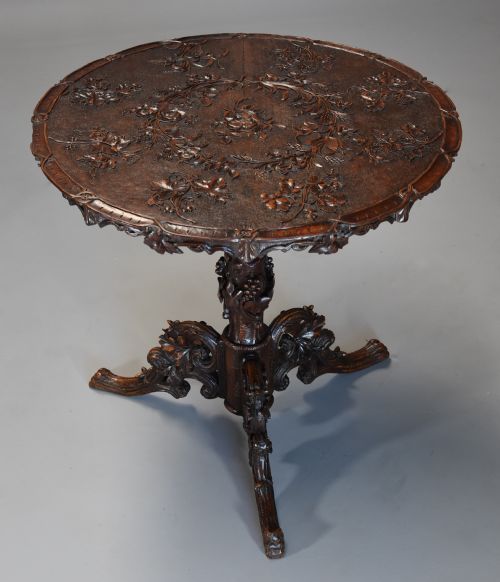
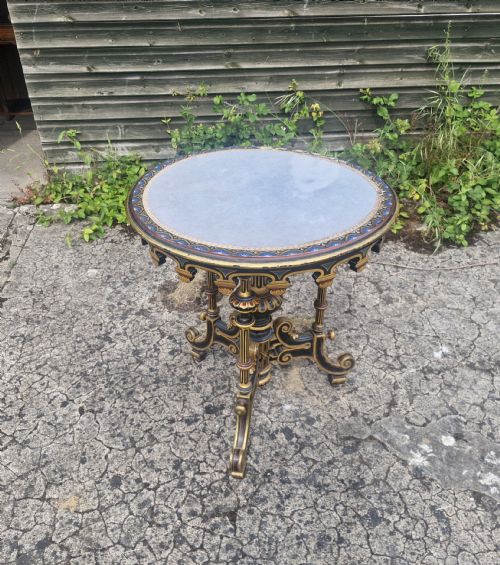


Victorian Gothic Wine Table
These victorian gothic wine table pieces bring heavy architectural timber and dark carved detail straight into a room.
Victorian Gothic Wine Table
A victorian gothic wine table draws upon nineteenth-century revival styles, merging sturdy timber frames with ecclesiastical or medieval ornament. When searching for a victorian gothic wine table, buyers encounter occasional, centre, and tripod formats produced during the Victorian era.
The pieces listed on this page span the mid to late nineteenth century, predominantly featuring oak and mahogany alongside linden wood and marble. Many examples demonstrate specific design influences such as Gothic Revival and Black Forest carving.
Construction and materials
Carpenters utilised dense hardwoods like oak and mahogany to build the robust frames required for these tables. Turning, joinery, and heavy carpentry formed the structural backbone of each piece.
Carving and surface decoration defined the aesthetic, ranging from profuse linden wood foliage to geometric clover leaf patterns and inlaid details. Some surfaces received paint, gilt, or marble inserts to create contrast against the dark timber.
Some tables include carved zodiac signs and tarot imagery for Victorian evening entertainment.
Assessing quality and execution
The depth and sharpness of the carving separate standard production from superior craftsmanship, particularly in heavily ornamented linden wood or oak examples. Crisp execution of Gothic motifs and foliage indicates a more skilled hand at the bench.
Material selection also dictates the hierarchy, with dense, well-figured mahogany and quarter-sawn oak holding greater presence than simpler painted or plain timber surfaces. Integrated stone elements, such as marble tops, elevate the structural ambition of the table.
The Victorian Gothic Wine Table Glossary
- Gothic Revival
- An architectural and decorative style popular in the nineteenth century that revived medieval forms, pointed arches, and heavy timber construction. This movement heavily influenced the ornamentation found on nineteenth-century tables.
- Tripod Side Table
- A small support table raised on three legs, commonly utilised beside seating or in corners. The form allows for a compact footprint while maintaining stability on timber floors.
- Linden Wood
- A pale, fine-grained timber favored by nineteenth-century carvers for its even texture and suitability for deep, intricate relief work. It often received dark stains or finishes to resemble heavier oak.
- Occasional Table
- A versatile, small-scale table designed for specific tasks rather than permanent placement in a room. These pieces could be moved easily to serve as a wine surface or parlor stand.
- Centre Table
- A freestanding table finished on all sides, intended to sit in the middle of a room rather than against a wall. Such pieces often display detailed carving or inlay visible from every angle.
Victorian Gothic Wine Table: Frequently Asked Questions
Where did they place these tables?
These tables typically sat in parlours, libraries, or drawing rooms of nineteenth-century homes.
Owners utilised them to hold drinks, books, or decorative objects within comfortable reach of seating areas.
How do I identify the period?
Look closely at the timber choice, construction methods, and characteristic ornament like pointed arches or heavy turning.
Nineteenth-century makers combined revival aesthetics with dense hardwoods typical of Victorian cabinet making.
Are these tables sturdy enough for daily use?
The heavy oak and mahogany frames provide substantial structural integrity for normal placement.
Careful handling of antique joints and delicate carved edges ensures the pieces remain functional.
What maintenance do the wooden surfaces need?
Regular dusting with a dry cloth keeps the carved crevices free of buildup without harming the finish.
Applying occasional appropriate wax preserves the moisture and sheen of historic hardwoods.