



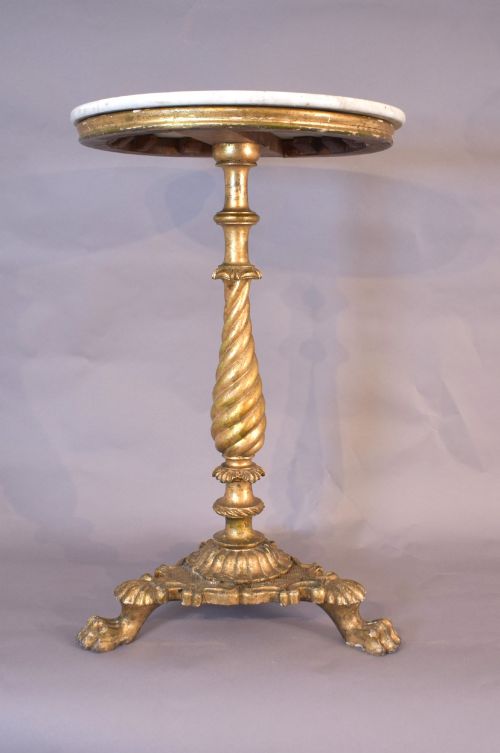
Antique Gold Candle Stands
Antique gold candle stands bring warm, metallic lustre and formal symmetry to a room, ranging from simple brass stems to elaborate gilt bronze candelabra.
Antique Gold Candle Stands
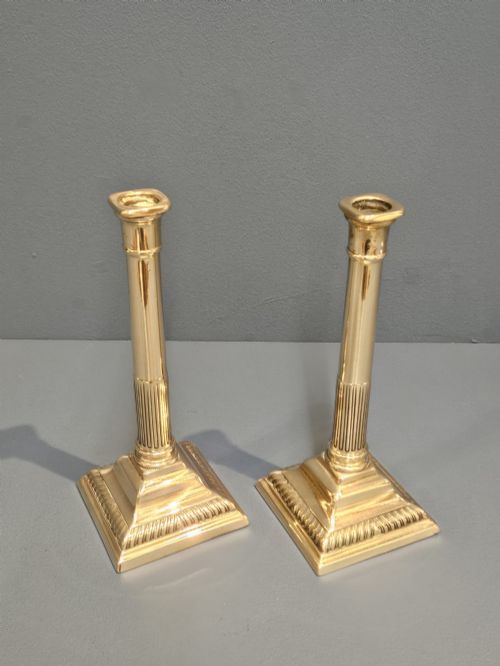
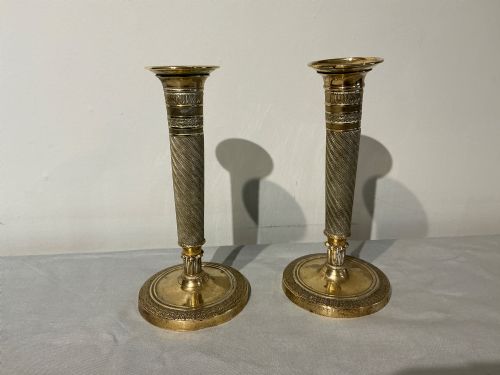
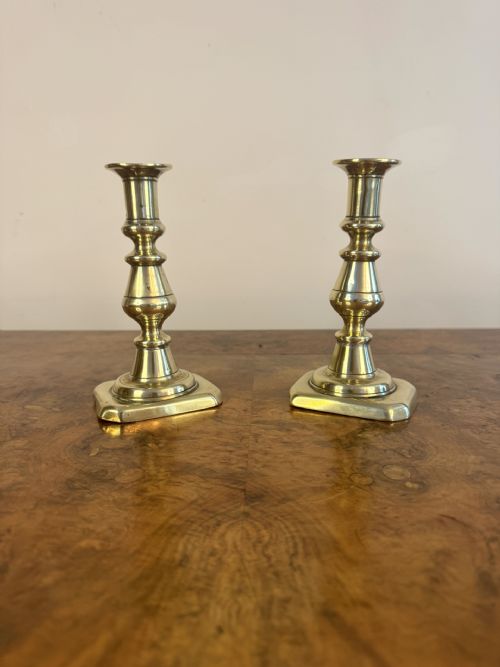
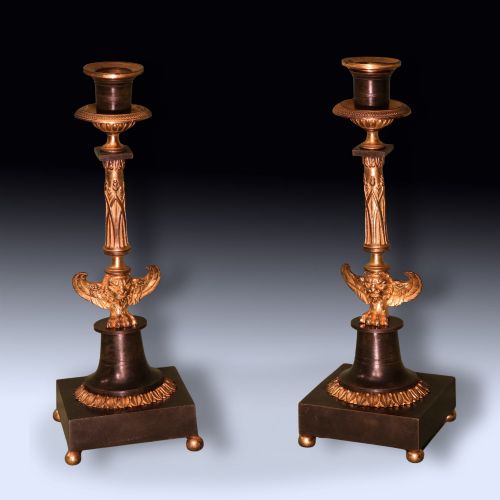
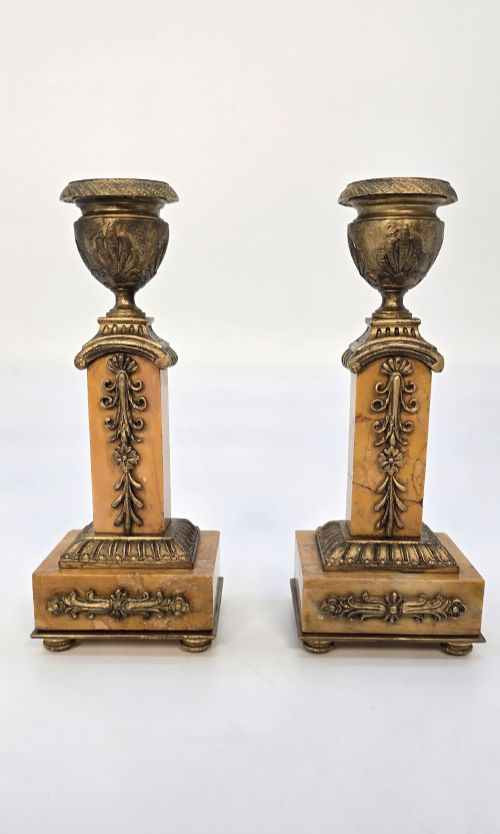
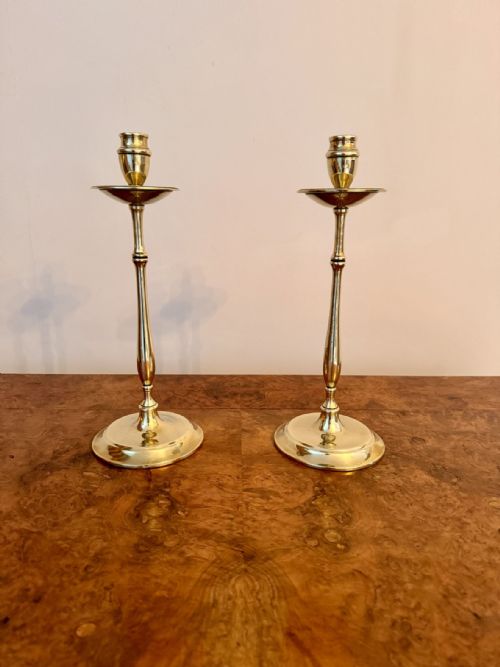
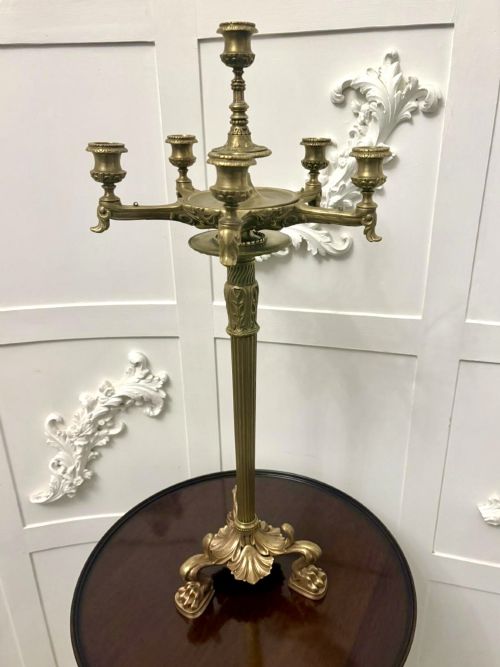
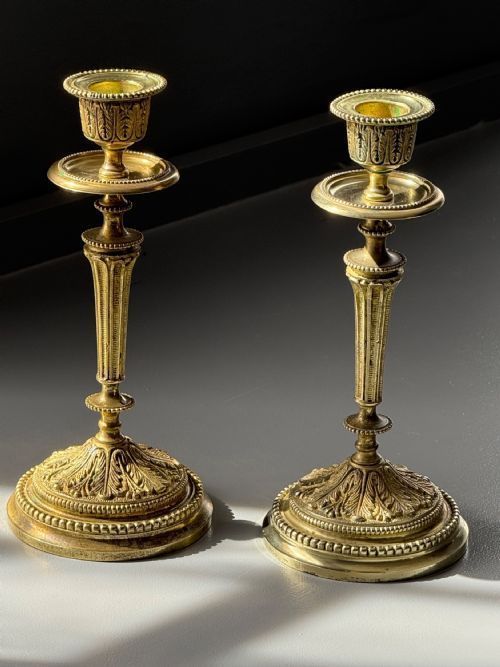
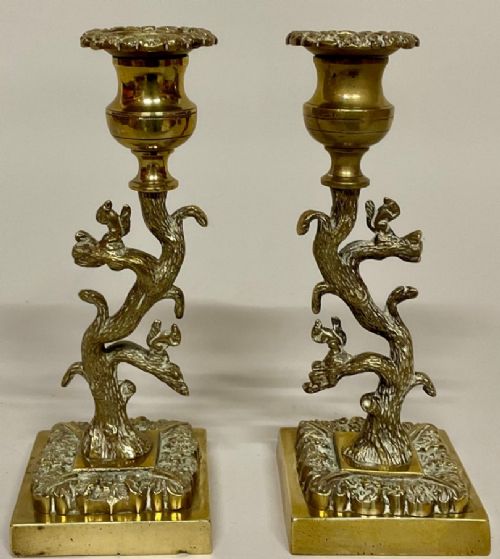
The objects most frequently met on this page are domestic brass candlesticks from the Georgian and Victorian eras, alongside French gilt bronze and ormolu pieces in Louis XVI or Empire designs. Makers incorporated figural elements, architectural columns, and naturalistic forms like trees and foliage into the metalwork.
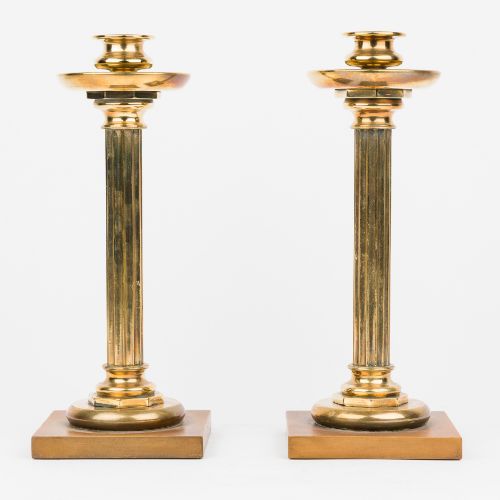
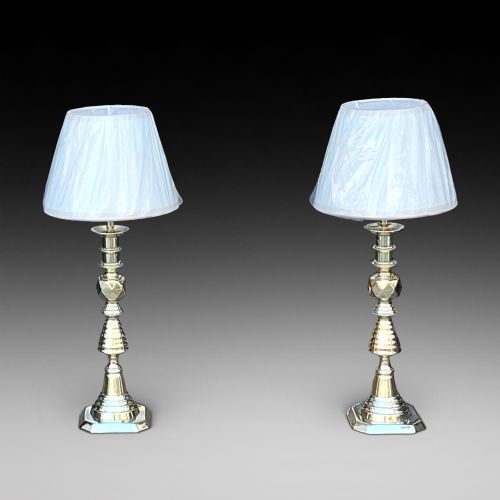
Beyond standard single-light sticks, buyers encounter taller church pieces, articulated designs, and occasional pairs featuring side ejectors or adjustable shades. While the primary metal is brass, many pieces achieve their golden appearance through surface treatments such as fire gilding, ormolu application, and gold leaf.
How they were made
Foundry workers cast brass and bronze components using sand casting or lost-wax techniques, often producing stems in separate sections before joining them with threaded rods or seamed joints. Artisans then turned brass on lathes to sharpen profiles and clean up cast surfaces.
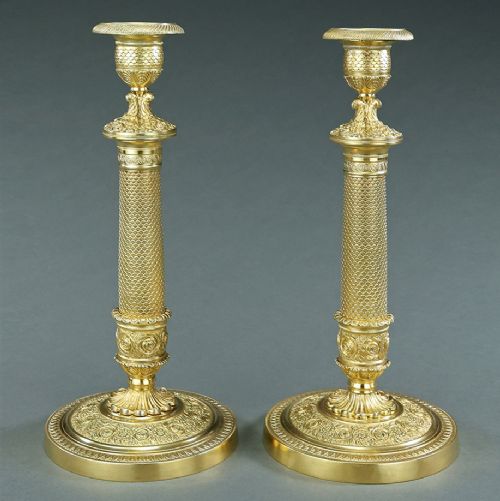
Gilding was achieved by applying mercury-based ormolu to bronze, creating a durable golden layer through heat amalgamation, or by laying fine gold leaf over gesso and wood. Final detailing involved hand-chasing the cast metal with punches and gravers to define hair, drapery, and ornamental motifs.
Antique Gold Candle Stands Retail Price Guide 2026
Typical asking prices for gold candle stands among the pieces listed under this phrase on Sellingantiques today, from the lower quarter to the upper quarter. They describe what is for sale here now, not the wider market.
Listings feature brass, gilt bronze, and ormolu pieces spanning the eighteenth century to the early twentieth century.
What varies in quality
The richness and durability of the golden surface finish set tiers of execution apart, distinguishing fire-gilt ormolu with a deep, warm glow from thinner or later electroplated applications that lack dimensional contrast. Heavier gauge metal and substantial weight in the base indicate a superior standard of manufacture.
Pierre Philippe Thomire·Rabiat·Ridgway
The Antique Gold Candle Stands Glossary
- Ormolu
- Gilded bronze, where a mixture of gold and mercury is applied to a bronze base and heated to drive off the mercury. This technique creates a rich golden finish characteristic of French Empire and Louis XVI pieces.
- Pricket
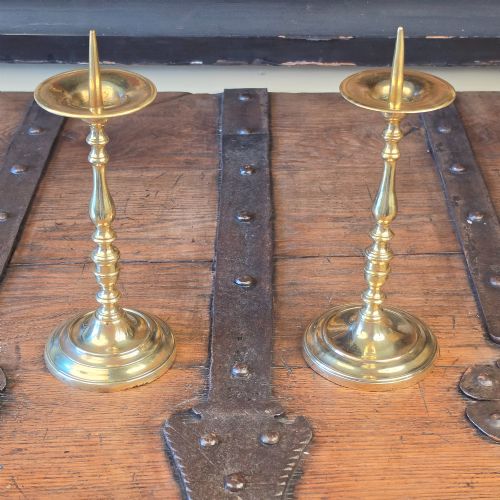
- A sharp metal spike set in the centre of a drip pan to secure a candle, commonly found on church candlesticks and seventeenth-century style altar pieces. It pierces the base of the candle rather than sliding into a socket.
- Campana
- A vase-shaped candle sconce resembling an inverted bell, frequently seen on Regency and French Empire candlesticks. The flared rim catches dripping wax.
- Ejector
- A concealed internal mechanism operated by a side lever that pushes the candle stump up and out of the socket. This practical nineteenth-century device made clearing spent wax easier.
Antique Gold Candle Stands: Frequently Asked Questions
What is the difference between a candlestick and a candelabra?
A candlestick is designed to hold a single candle in an upright socket, usually featuring a base, a stem, and a sconce. These pieces form symmetrical pairs for mantelpieces or side tables.
A candelabra branches out from a central stem to support multiple candles simultaneously, offering a more formal and luminous display. They often incorporate detachable arms and elaborate sculptural motifs.
How can I tell a Georgian brass candlestick from a Victorian one?
Georgian brass candlesticks, particularly those from the mid-eighteenth century, often feature multi-faceted cast bases, scalloped edges, and substantial weight resulting from multi-part construction. Their proportions tend toward restrained elegance.
Victorian pieces frequently display heavier ornamentation, including figural casts, applied decoration, and machine-threaded components. They often utilise side ejectors or adjustable mechanisms suited to nineteenth-century domestic habits.
Can I use real candles in antique candle stands?
Traditional metal candlesticks safely hold standard wax tapers provided the base is wide and stable. Ensure the candle fits snugly in the sconce without leaning.
Take care to extinguish candles before the flame reaches the metal rim or decorative elements. For delicate gilt bronze or ormolu pieces, LED alternatives prevent accidental wax drips on vulnerable surfaces.