

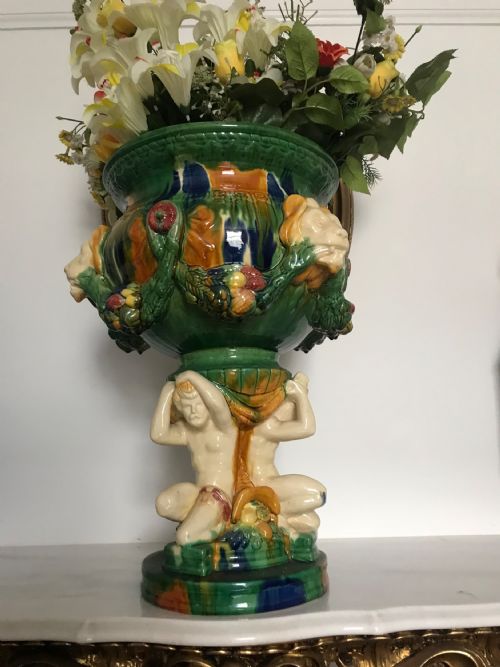


Antique Glazed Jardiniere
An antique glazed jardiniere brings sculptural plant housing indoors, offering rich ceramic colour and historic British or continental design.
Antique Glazed Jardiniere
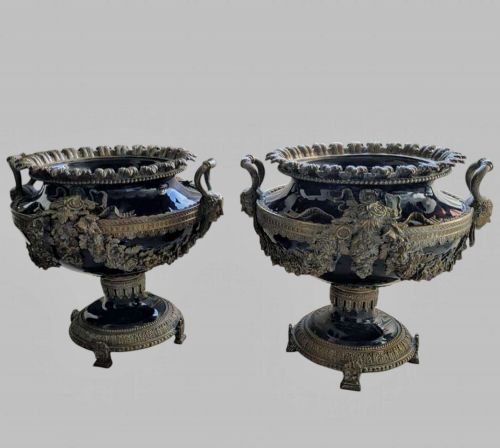
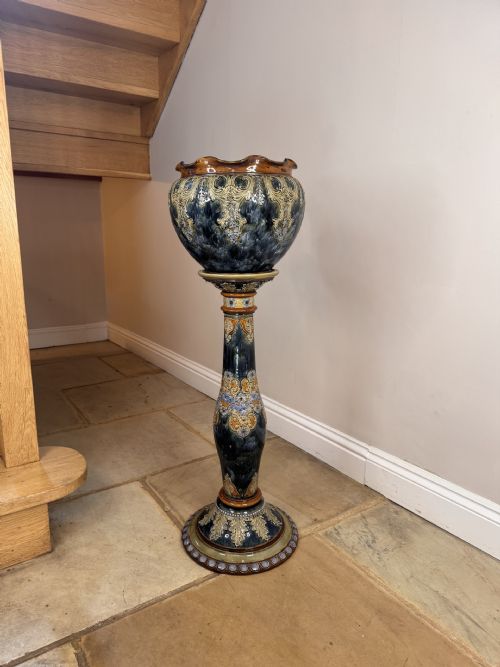
When you search for an antique glazed jardiniere, you encounter robust plant containers designed to hold potted greenery inside the home. These vessels range from compact Victorian table pieces to massive floor-standing arrangements with matching pedestals.
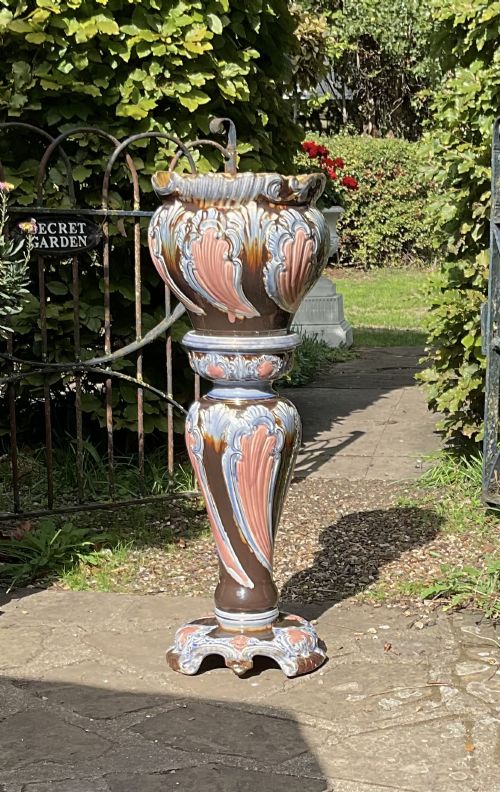
The selections here span the nineteenth century and the Edwardian era, taking the form of earthenware, stoneware, and terracotta planters. You will frequently meet Majolica wares, Doulton productions, and Art Pottery creations from British potteries alongside continental examples.
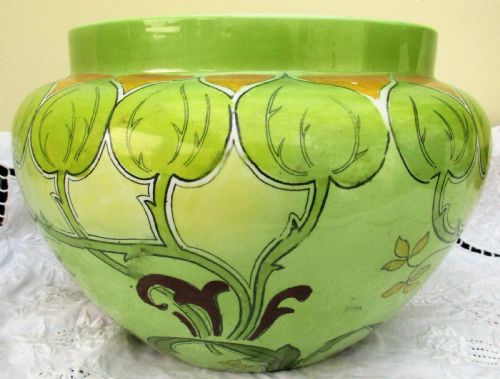
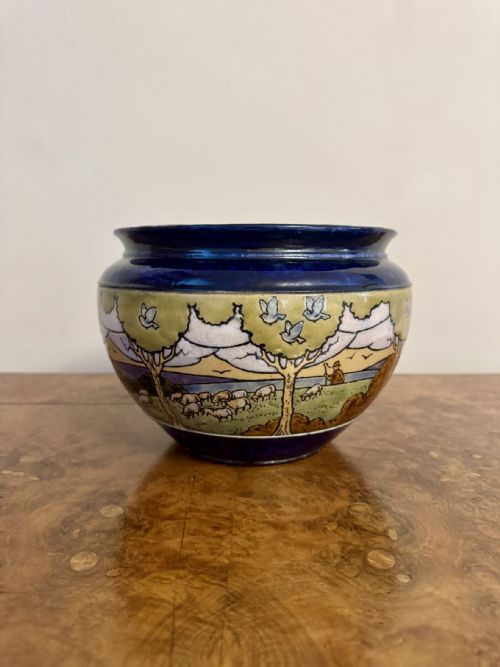
Beyond standard tabletop pots, forms extend to multi-handled vessels, bough pots, and compound stands featuring figural bases. These pieces reflect diverse stylistic movements including Victorian Naturalism, Art Nouveau, and Arts and Crafts designs.
How they were made
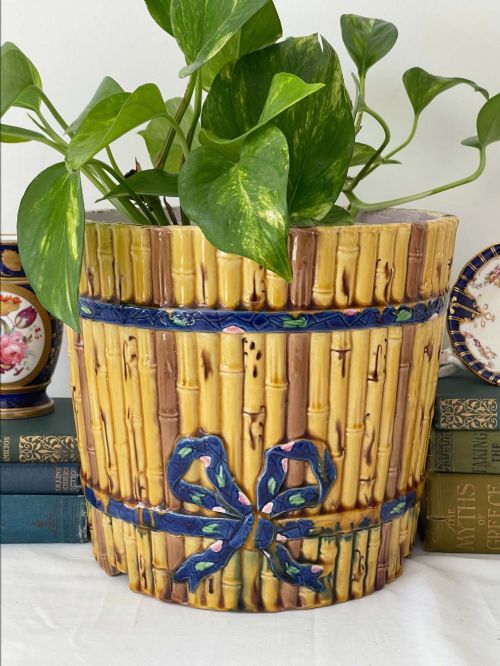
Potters shaped these bodies primarily from earthenware, stoneware, and terracotta using throwing, moulding, and casting techniques. Complex items often combined thrown vessel bodies with hand-modelled relief decoration such as bamboo stems, ferns, and animal motifs.
Surface finishes rely heavily on rich glazes, ranging from high-gloss Majolica lead glazes to mottled stoneware salt glazes and lustre effects. Some specific designs incorporated supplementary decorative elements like gold leaf accents to highlight moulded details.
Antique Glazed Jardiniere Retail Price Guide 2026
Typical asking prices for glazed jardiniere among the pieces listed under this phrase on Sellingantiques today, from the lower quarter to the upper quarter. They describe what is for sale here now, not the wider market.
Listings feature ceramics spanning the eighteenth to the twentieth centuries, utilising earthenware, stoneware, and terracotta materials across Victorian and Art Nouveau styles.
What varies in quality
Quality rests significantly in the crispness of the moulding and the depth of the glaze application. Stronger pieces display sharply defined botanical or figurative reliefs beneath even, luminous vitreous coats without pooling or dull spots.
The presence of artist signatures, specific factory marks, and matched pedestals elevates certain pieces above standard production wares. The sophistication of the design - moving from basic utilitarian pots to complex works by recognised art potteries - defines the upper tier of the range.
Minton·Doulton Lambeth·W.A. Adderley·Burmantofts Art Pottery·Doulton Burslem·Clement Massier·Royal Worcester·Julius Dressler·George Jones·Linthorpe Pottery·Royal Doulton·Woodlesford Art Pottery
The Antique Glazed Jardiniere Glossary
- Jardiniere
- A large ornamental pot or container for plants or flowers. They sit directly on surfaces or upon matching floor pedestals.
- Majolica
- A type of earthenware coated with an opaque tin glaze and painted with metallic oxide colours. It produces vibrant greens, blues, and purples with high gloss.
- Salt glaze
- A ceramic glaze made by throwing common salt into the kiln during high-temperature firing. This creates a textured, pitted surface resembling orange peel.
- Slaterware
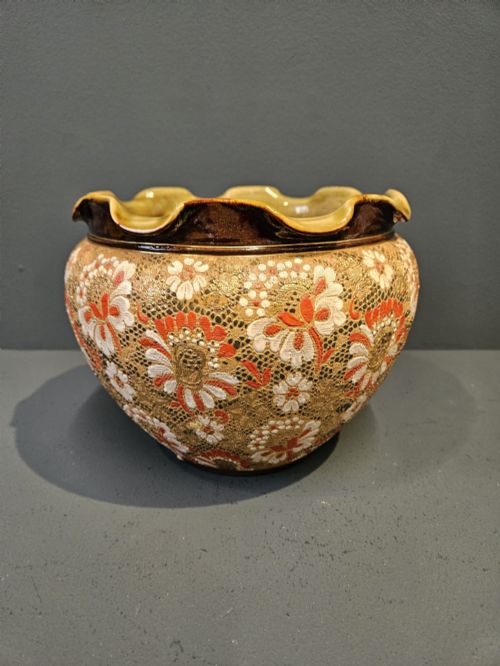
- A specialised Doulton ceramic technique featuring textured body surfaces resembling slate, often highlighted with bronze and gold detailing.
- Faience
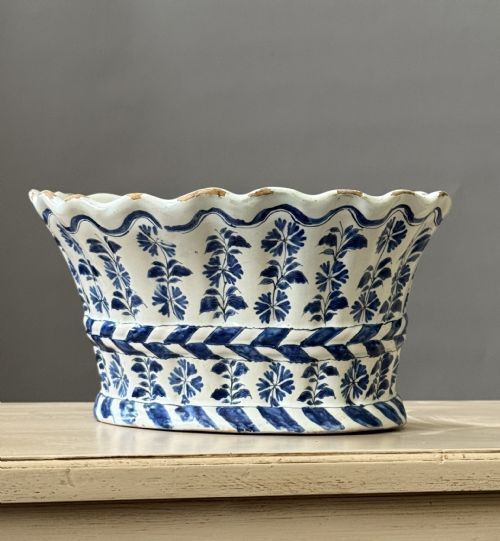
- Tinned earthenware or glazed pottery produced in the manner of French tin-glazed ceramics. It typically exhibits rich painted ornamentation.
- Bough pot
- An ornamental vessel traditionally used for holding cut branches and floral displays inside domestic rooms. They frequently date to earlier eighteenth-century periods.
Antique Glazed Jardiniere: Frequently Asked Questions
What is an antique glazed jardiniere used for?
These vessels serve as decorative indoor plant holders, designed to contain potted houseplants and floral displays. They protect interior surfaces while adding architectural colour and texture to rooms.
Historically, they occupied prominent positions in Victorian and Edwardian reception rooms, conservatories, and hallways. Today, they function equally well for housing large ferns or standing empty as sculptural focal points.
How do I tell Majolica from standard earthenware?
Majolica is distinguished by its heavy, vibrant lead glazes applied directly over a moulded earthenware body. The colours tend to be deeply saturated and glossy, catching light sharply across relief surfaces.
Standard glazed earthenware often utilises muted tones, salt glazes, or matte finishes rather than the brilliant coloured metal-oxide washes characteristic of Majolica.
Can these planters hold soil directly?
While historic vessels were constructed to hold plants, many collectors prefer placing a modern plastic nursery pot inside the jardiniere. This prevents moisture from seeping into porous historic earthenware or causing internal staining.
If planting directly, ensure proper drainage control to protect the structural integrity of the antique ceramic body.
How do I date a Doulton jardiniere?
Doulton pieces frequently feature impressed factory stamp marks on the base that correspond to specific operational years and potter identities. Stylistic clues, such as Art Nouveau floral motifs or Slaterware textures, also help narrow the manufacturing period.
Comparing the specific crown and lion marks assists in separating nineteenth-century production runs from later twentieth-century examples.