



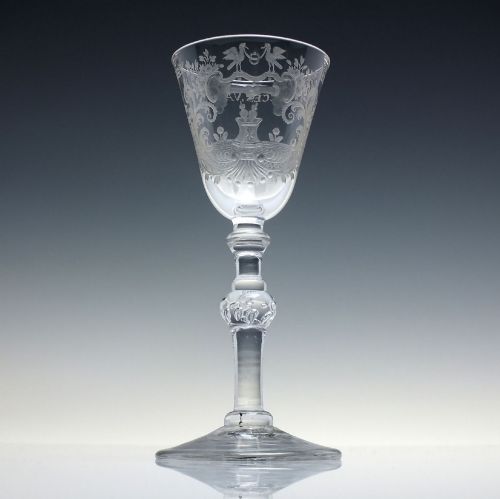

Antique Glass Wine Chalice
An antique glass wine chalice carries the weight of centuries past, offering a tangible connection to historical dining traditions through heavy lead crystal and delicate blown glass.
Antique Glass Wine Chalice
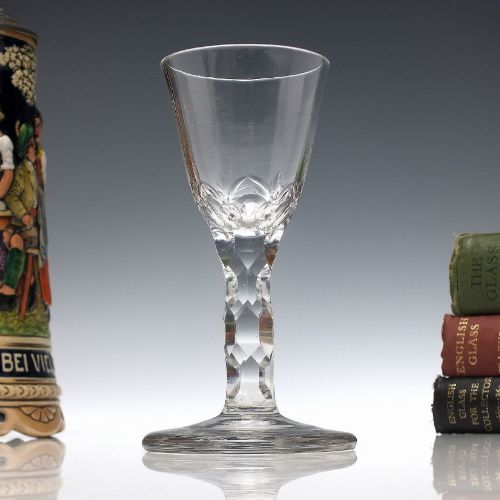
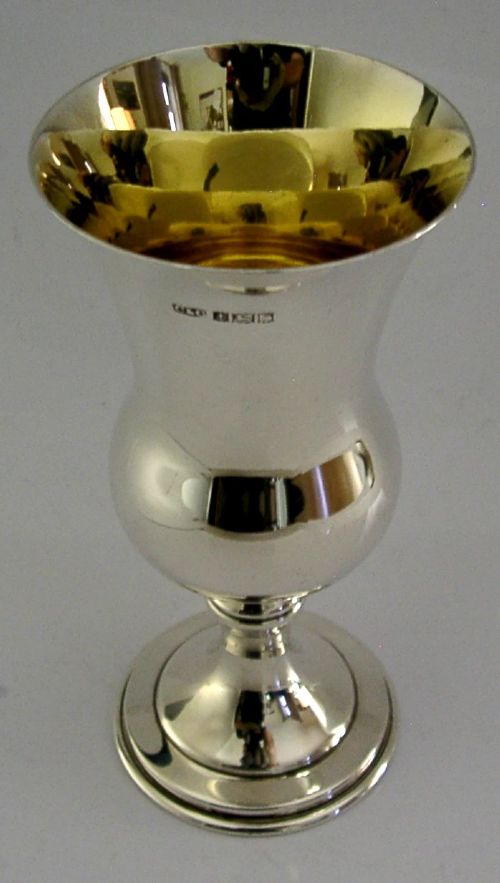
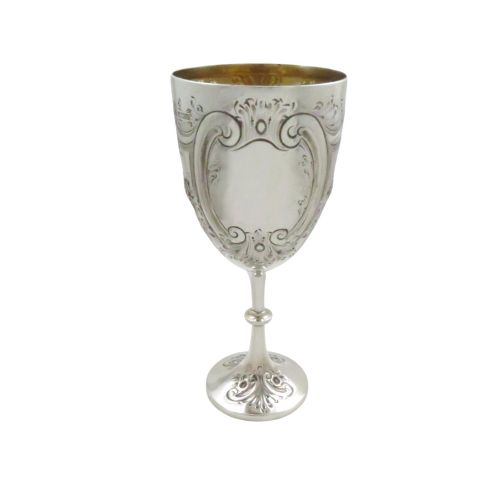
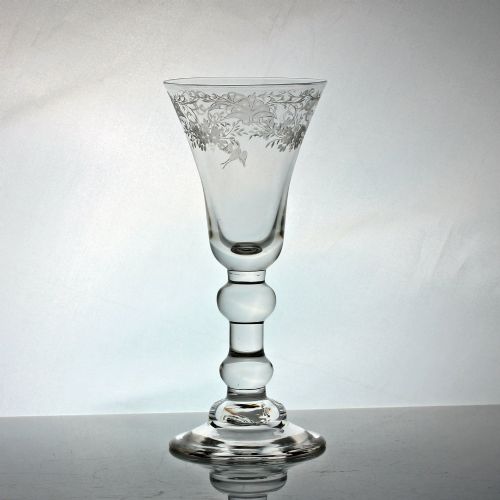
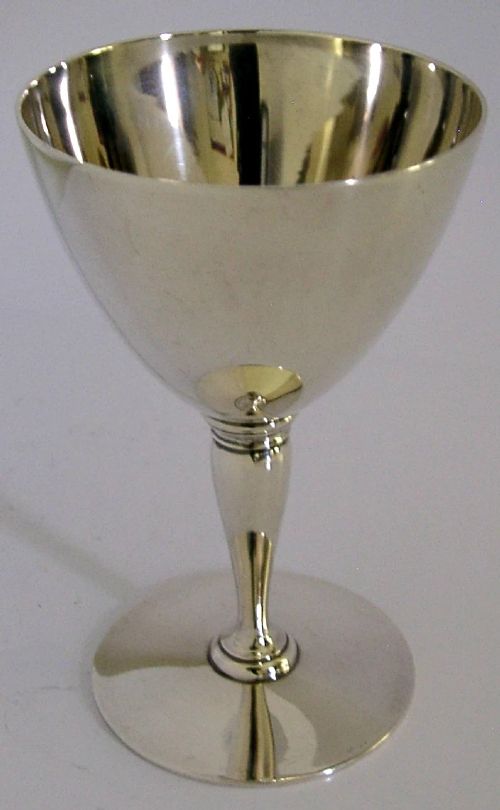
An antique glass wine chalice encompasses substantial goblets, rummers, and stemmed drinking vessels designed for formal consumption. These pieces emerge primarily from Georgian and Victorian periods, alongside early twentieth-century expressions such as Jugendstil and Art Deco.
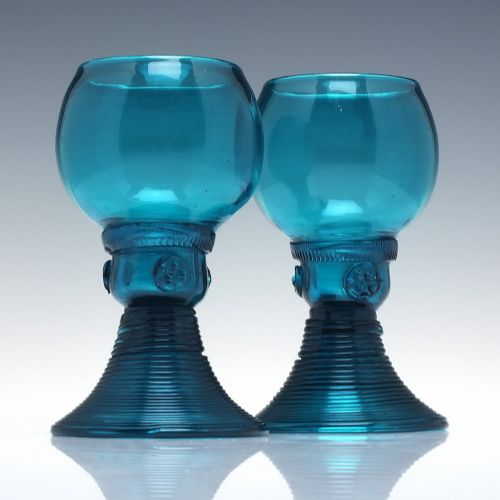
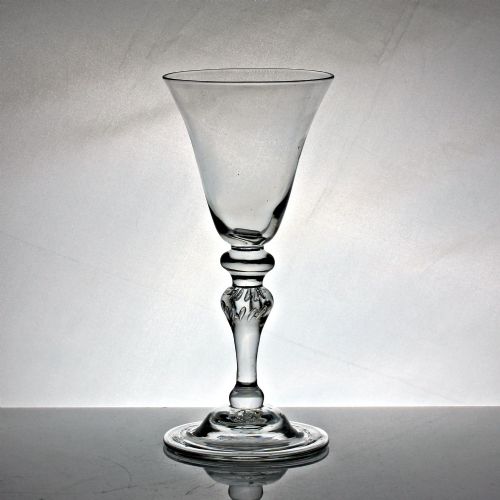
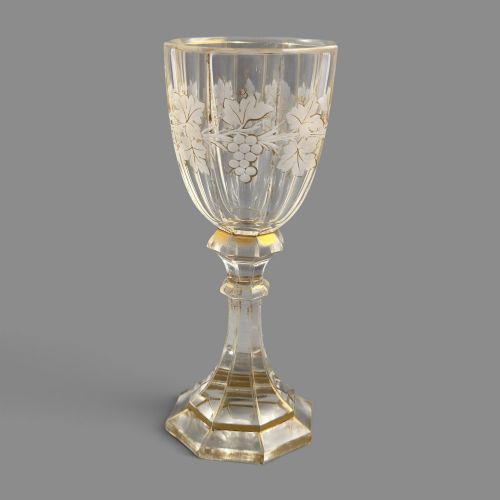
The forms on this page range from simple mid-eighteenth-century English balustroid and plain stem glasses to heavily decorated Bohemian römers and large French opalescent rummers. Buyers encounter diverse regional variations, including English lead glass and continental blown pieces.
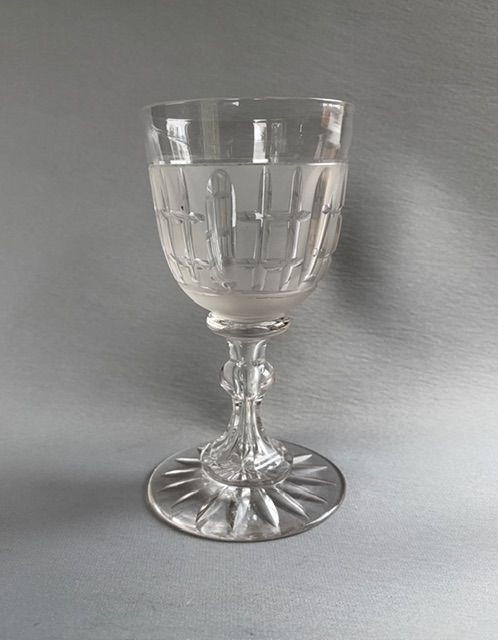
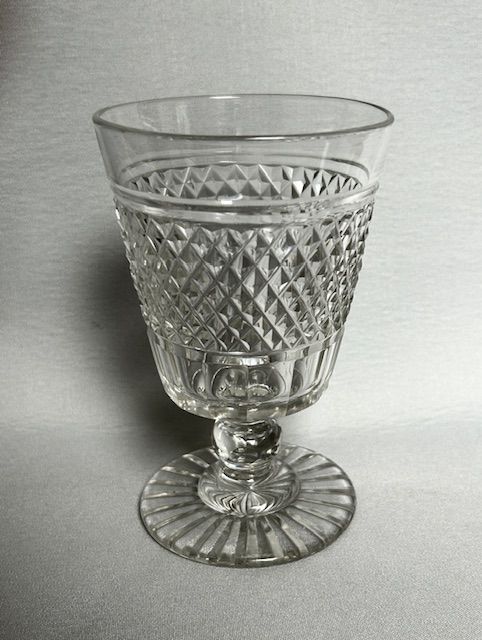
The category bridges utilitarian barware and decorative glassware, uniting heavy hobnail cut bucket rummers with delicately engraved armorial goblets. Each vessel reflects the drinking customs and glassmaking technology of its specific decade.
Distinctions in Quality
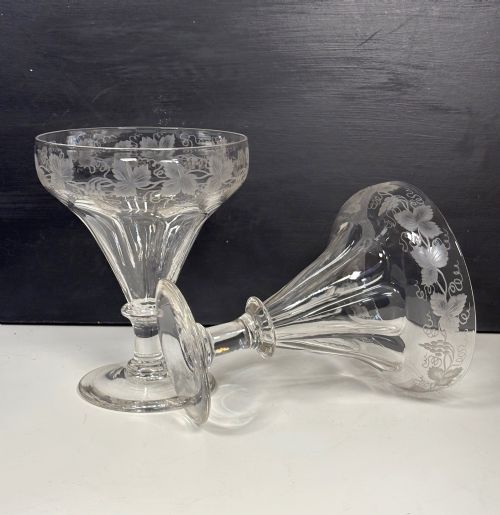
Quality rests upon the clarity of the metal, the precision of the wheel engraving, and the structural balance of the stem and foot. Superior examples display crisp, deep cutting without distortion in the glass body.
The artistic ambition of the decoration separates standard vessels from exceptional collector pieces. Painted polychrome enamel, delicate gilding, and well-executed armorial crests demonstrate higher workshop mastery than simple moulded surfaces.
The integrity of the material and the sophistication of period-specific techniques, whether an eighteenth-century balustroid formation or an engraved Jugendstil chalice, determine the standing of an individual piece.
Antique Glass Wine Chalice Retail Price Guide 2026
Typical asking prices for glass wine chalice among the pieces listed under this phrase on Sellingantiques today, from the lower quarter to the upper quarter. They describe what is for sale here now, not the wider market.
Some eighteenth-century drinkers needed marriage goblets engraved simply to remember whose health they were supposed to be pledging.
Tiffany and Co·Moser·Lobmeyer·Frits Hechert·Adelbert Niemeyer
The Antique Glass Wine Chalice Glossary
- Baluster stem
- A heavy, swelling stem form reminiscent of architectural balusters, common in mid-eighteenth-century English drinking vessels. It gives the piece a solid weight in the hand.
- Rocher or Römer
- A traditional continental European large drinking goblet, often green in colour with a wide, ribbed base and enamelled or engraved bowl decoration. These pieces originated in Germany and Bohemia.
- Hobnail cut
- A geometric surface pattern of raised, faceted points resembling the hobnails used in heavy boots. It creates intense light refraction across the body of a rummer.
- Twist stem
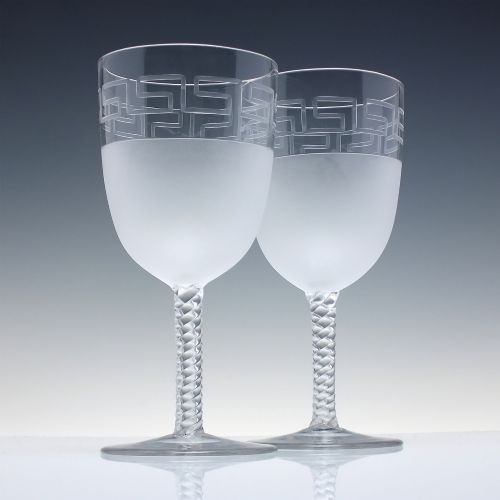
- A stem containing opaque white or coloured glass threads drawn into a spiral configuration inside the clear metal. Air twist and opaque twist variations appeared frequently in Georgian glassware.
- Armorial
- Bearing a heraldic coat of arms or family crest, usually hand-engraved or enamelled onto the bowl. Such pieces were often commissioned for specific marriages or aristocratic households.
Antique Glass Wine Chalice: Frequently Asked Questions
How were these chalices used historically?
These vessels served high-status dining tables and ceremonial functions, holding wine, beer, or punch during formal gatherings.
Larger rummers and goblets often circulated among multiple guests or marked significant life events such as marriages and political toasts.
How do I distinguish Georgian from Victorian pieces?
Georgian chalices generally feature simpler, heavier lead glass forms with baluster or air twist stems and restrained engraving. Victorian examples tend toward heavier ornamentation, including deep hobnail cutting, coloured glass bodies, and elaborate enamel work.
Stylistic markers like Jugendstil or Art Deco elements point firmly to late nineteenth and early twentieth-century production.
Can I use an antique chalice for drinking?
Most buyers acquire these pieces for display and collection rather than daily dining use due to their age and historical importance.
Hand washing in tepid water is mandatory if used, as modern dishwashers will damage antique glass and delicate gilding.
What is lead crystal in older glass?
Lead crystal refers to glass containing a high proportion of lead oxide, which increases weight, brilliance, and refractive index.
This material allowed makers to cut deep facets that catch candlelight far more effectively than standard soda-lime glass.
Why are some chalices green or blue?
Coloured glass was achieved by adding metallic oxides to the molten batch, a technique favoured in continental European workshops.
Bohemian and Liege makers produced notable green and turquoise vessels, particularly for römers and decorative rummers.