





Antique Glass Tube Barometer
An antique glass tube barometer is an atmospheric instrument housed in a timber case, prized by collectors for its marriage of precision science and period joinery.
Antique Glass Tube Barometer
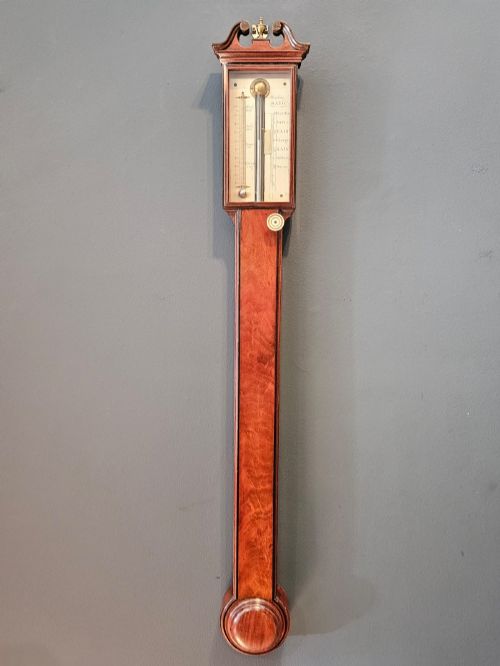
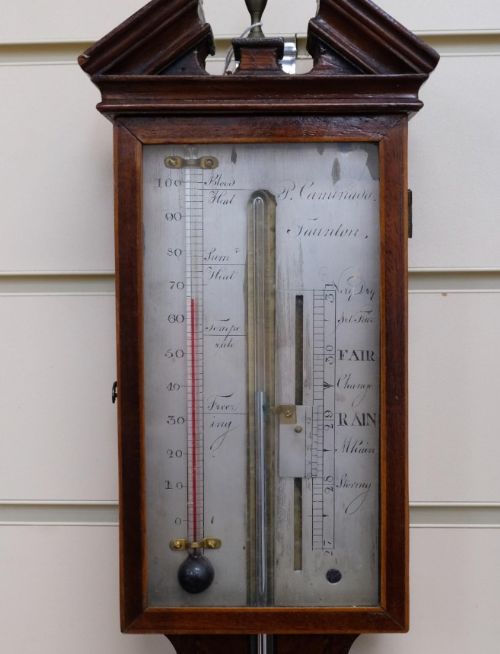
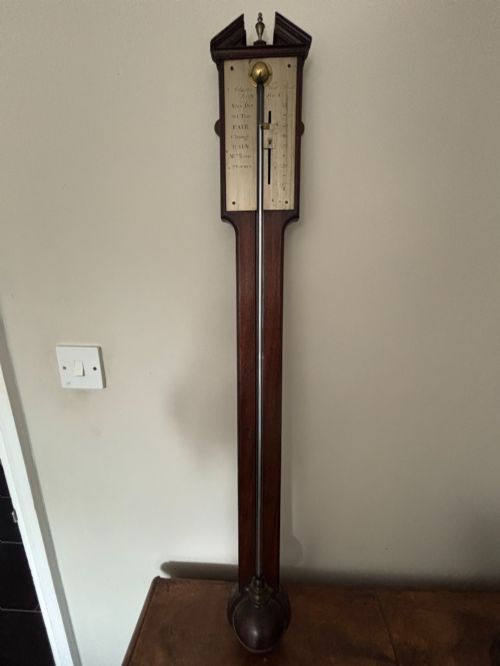
An antique glass tube barometer is primarily found in the form of a stick barometer enclosed in a timber trunk. These instruments measure atmospheric pressure through a column of mercury sealed within glass, mounted on a backplate that often includes a vernier scale and a thermometer.
The versions most commonly met on this page span the Georgian, Regency, and Victorian eras, predominantly constructed from figured mahogany. Wall-hung stick barometers dominate the selection, though variations such as desk barometers, angle barometers, and multi-function weather stations also appear.
Makers frequently signed their brass scales or registers, connecting these functional pieces directly to notable scientific instrument makers of London, provincial England, and Scotland. Alongside traditional stick models, buyers encounter Admiral Fitzroy storm barometers and combined clock-barometer pieces from the later nineteenth century.
Materials and construction
Makers built the cases using dense hardwoods such as mahogany and oak, occasionally applying ebonised finishes to highlight architectural mouldings. The timber protects the fragile internal reservoir and provides a stable backbone for the long glass tube.
Scale plates are formed from silvered brass or engraved bone, marked with weather descriptions and barometric measurements. Brass fittings, including cistern covers, gimbals, and indicator pointers, secure the instrument while adding metallic contrast to the dark wood.
Some nineteenth-century instruments combined time, temperature, and atmospheric pressure into a single wall-hung weather station for the home.
Markers of quality
Quality rests in the legibility of the engraved silvered metal scale and the finesse of the case joinery. Finer examples display well-figured mahogany veneers, crisp boxwood stringing, and heavy cast brass cistern covers rather than plain turned pine.
The presence of a signed backplate by a documented instrument maker elevates a piece above standard provincial work. Original glass tubes, intact vernier knobs, and secondary recording thermometers further separate superior examples from altered or incomplete survivals.
P. Caminada·George Adams London·Blunt·Negretti & Zambra London·S&B Solomons of London·Pillischer London·James Gatty·J Hicks of London·Charles Aiano·Tarone Gally & Co
The Antique Glass Tube Barometer Glossary
- Stick barometer
- A tall, vertical barometer enclosing a mercury-filled glass tube against a graduated scale. This form represents the primary shape seen in Georgian and Victorian examples.
- Vernier scale
- A small sliding auxiliary scale used to read barometric fractions with precision. It allows users to detect minute changes in atmospheric pressure.
- Silvered brass
- A brass plate treated with a silver solution and engraved with numbers and weather text. It forms the readable face behind the glass tube.
- Cistern
- The lower bulb or reservoir holding the mercury pool at the base of the glass tube. Protected by a wooden or brass cover, it balances external atmospheric pressure.
Antique Glass Tube Barometer: Frequently Asked Questions
How do stick barometers work?
A stick barometer balances the weight of a mercury column inside a sealed glass tube against atmospheric pressure. Changes in the air push the mercury up or down the scale.
Readings are taken by aligning the movable vernier indicator with the top of the mercury meniscus to track pressure trends.
Where should I hang a barometer?
Hang your barometer on an interior wall away from direct sunlight, radiators, and draughts. Stable indoor temperatures ensure the metal and wood components do not warp.
Position the instrument at eye level so the silvered scale and mercury column can be read clearly.
Are these barometers still accurate?
Antique barometers remain capable of indicating relative changes in air pressure when properly calibrated. They function as both scientific instruments and decorative antiques.
Extreme care must be taken if moving mercury-filled tubes to prevent air pockets from entering the glass.