

Antique Glass Salt Cellars
These antique glass salt cellars bring colour and heft to the dining table, combining pressed or cut vessels with silver mounts.
Antique Glass Salt Cellars
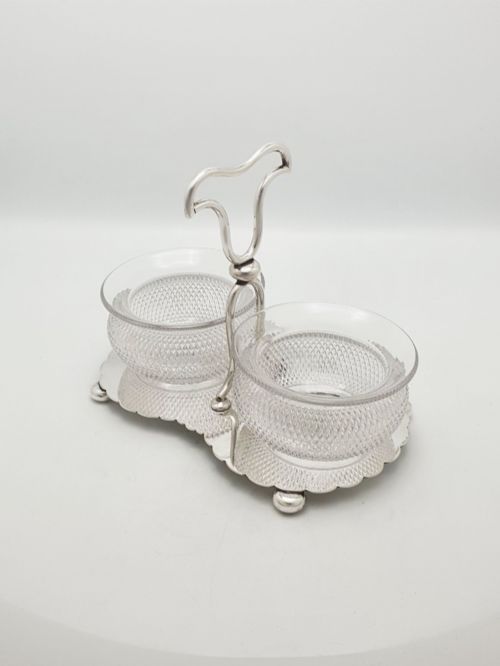
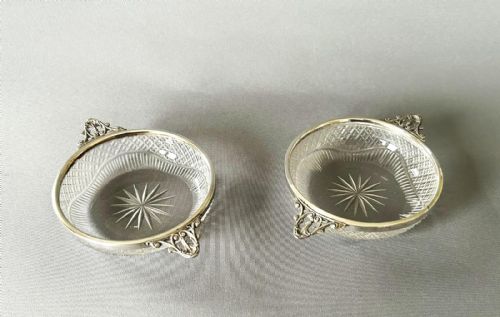
When you search for antique glass salt cellars, you encounter open table salts, cruet sets, and condiment stands dating from the Georgian period through the Victorian, Edwardian, and Art Deco eras. These pieces typically consist of a small glass bowl or dish, sometimes paired with a sterling silver or silver plated mount, frame, or spoon.
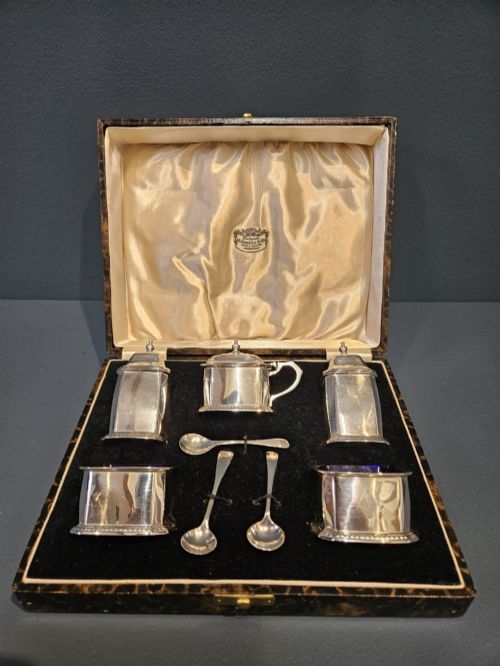
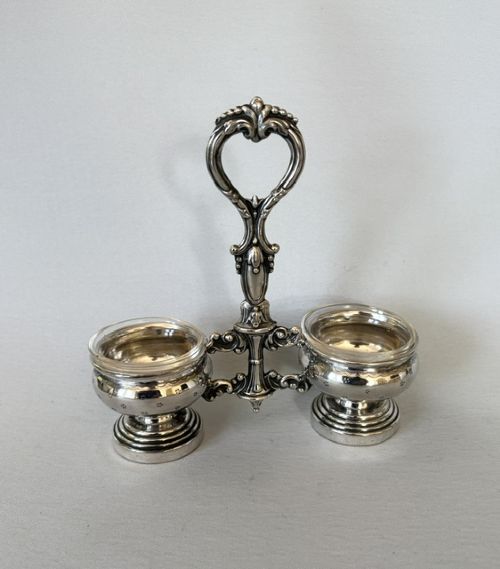
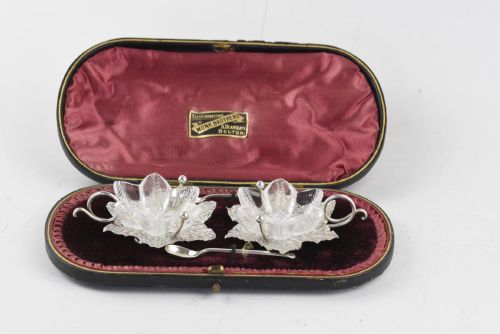
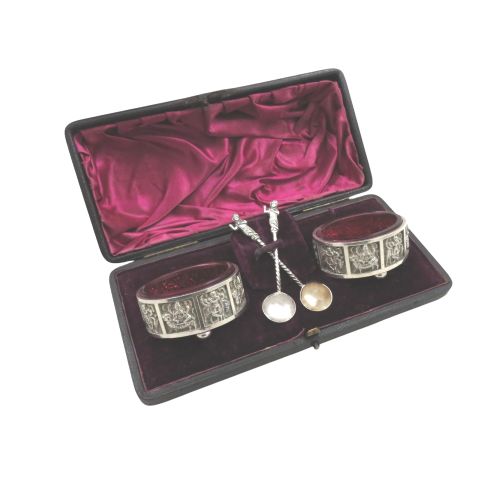
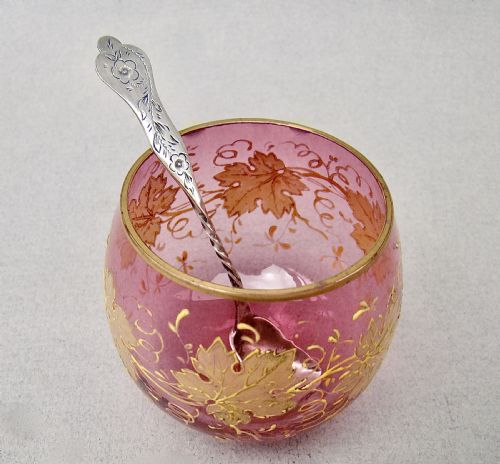
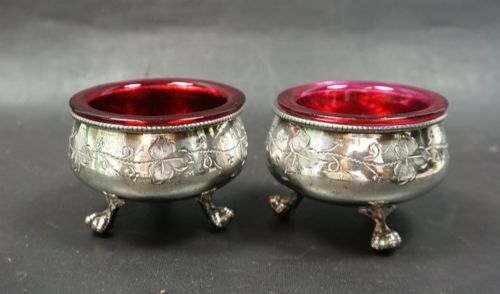
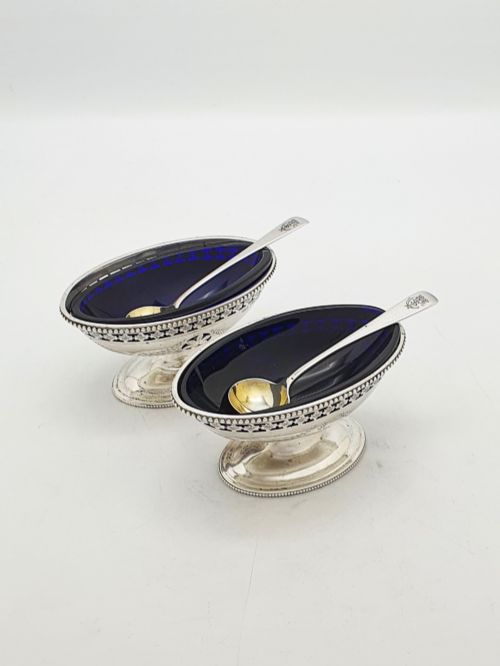
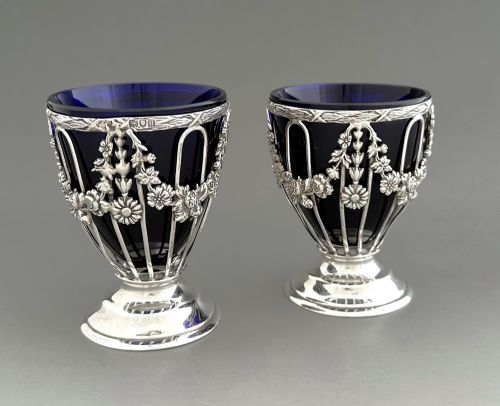
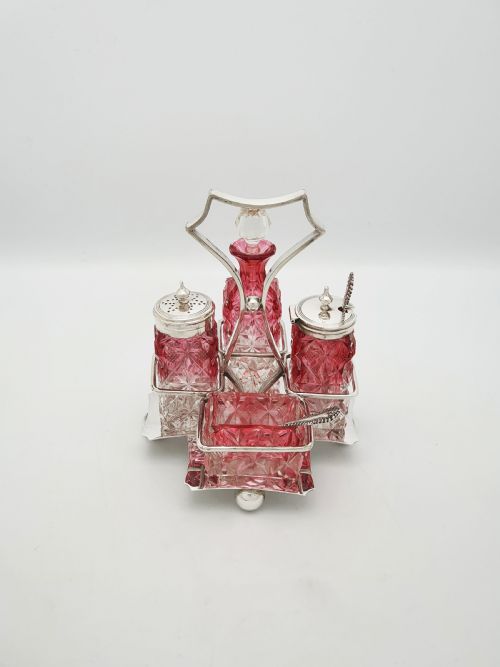
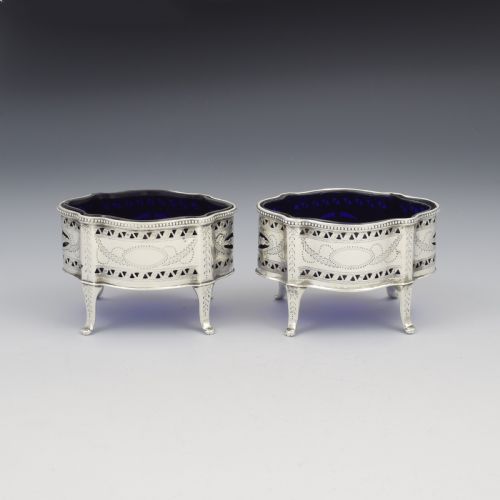
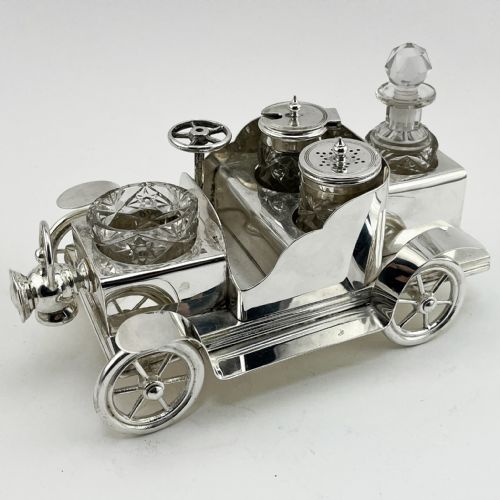
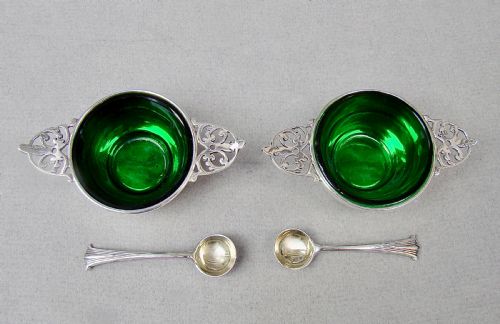
The most common examples on this page are Victorian and Edwardian items featuring coloured glass liners in cobalt blue or cranberry, housed within pierced or solid silver frames. You also find larger table pieces, such as double condiment stands and multi-bottle cruet sets designed to sit in the centre of the dining table.
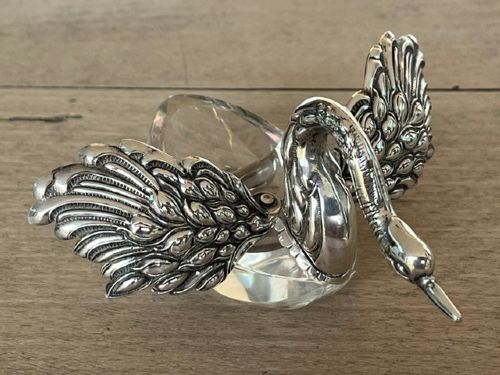
Form follows function across these items, ranging from simple boat-shaped salt cellars to novelty pieces shaped like swans, cars, or shells. Whether you examine a Georgian cut glass bowl or a 1930s Art Deco set, the primary role remains holding salt or condiments for dining.
Materials and methods
Makers utilised clear cut glass alongside deeply saturated coloured glass, notably cranberry and cobalt blue, often pairing the vessels with sterling silver or silver plate. Metalwork techniques involved piercing, wirework, and casting to create frames, mounts, and spoons that supported or contained the fragile glass bodies.
Production methods span hand-cut lead glass from the Georgian era to pressed glass and flashed techniques popular in the later nineteenth and early twentieth centuries. Artisans combined these glass bodies with fitted metal frames, sometimes adding velvet cases or enamel details to complete the condiment sets.
The listings span the Georgian, Victorian, Edwardian, and Art Deco periods, utilising glass, sterling silver, silver plate, and velvet.
Judging the work
Quality rests upon the crispness of the glass cutting, the weight and purity of the silver mount, and whether the glass liner is the original match for the frame. Heavy, hand-cut crystal and substantial gauge silver distinguish finer vessels from lighter, mass-produced silver-plated alternatives.
The presence of matching spoons, original fitted presentation cases, and undamaged enamel or gilding elevate an ensemble. Pieces that retain their correct coloured glass liners without chips demonstrate better preservation and greater desirability.
William Neale·Josiah Williams And Co
The Antique Glass Salt Cellars Glossary
- Open salt
- A small dish designed to hold loose salt on the dining table before shaker bottles became common. Diners used a tiny spoon or pinched the salt out by hand.
- Cruet set
- A matched group of condiment containers, such as salt, pepper, and mustard pots, held together in a metal stand or frame. These often included glass bottles with silver tops.
- Liners
- The removable glass inserts that sit inside metal salt cellars or condiment stands to protect the silver from corrosion by salt. They appear frequently in cobalt blue and cranberry glass.
- Cut glass
- Glass decorated by grinding facets or patterns into the surface using a rotating wheel. This technique creates sharp edges and deep refraction in high-end tableware.
- Silver plate
- A base metal, such as copper or Britannia metal, coated with a thin layer of sterling silver. It provided the look of solid silver at a lower cost during the Victorian and Edwardian periods.
Antique Glass Salt Cellars: Frequently Asked Questions
How did people use antique salt cellars?
Diners placed small open salt cellars beside each place setting or shared them down the length of the dining table. Guests used miniature spoons or their fingers to take salt and sprinkle it over their food.
Larger households utilised multi-bottle cruet sets or condiment stands to house salt, pepper, mustard, and oil within easy reach of everyone dining.
How do I know if the glass liner is original?
An original glass liner fits snugly into the silver frame without excessive wobble, matching the exact contours and interior dimensions of the metal mount. The colour, glass type, and wear patterns should also align with the age of the exterior frame.
Replacement liners often appear slightly loose or feature modern glass characteristics that differ from nineteenth-century production methods.
What periods are most common for these salts?
The majority of pieces hail from the Victorian and Edwardian eras, spanning the latter half of the nineteenth century through the early twentieth century. You also encounter earlier Georgian examples alongside later Art Deco sets from the 1930s.
Stylistic cues such as heavy geometric cutting point to Georgian origins, while pierced silver and cobalt liners point squarely to Victorian craftsmanship.
Can I use antique salt cellars today?
Many collectors continue to use open salt cellars on the dining table for coarse sea salt, spices, or herbs during dinner parties. The sturdy nature of thick glass and solid silver makes them practical for modern meals.
Care should be taken with pieces featuring delicate silver plate or antique glass liners, washing them by hand rather than placing them in a dishwasher.