
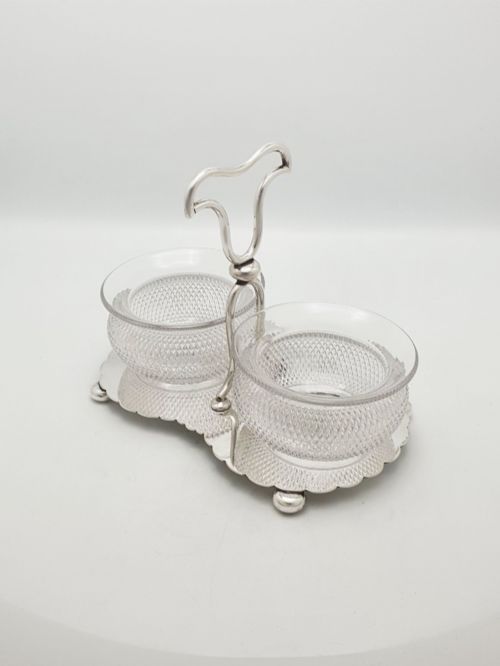


Antique Glass Jam Dish
These antique glass jam dish pieces bring vibrant colour and bright silver mounts to the tea table, built for serving sweet preserves in style.
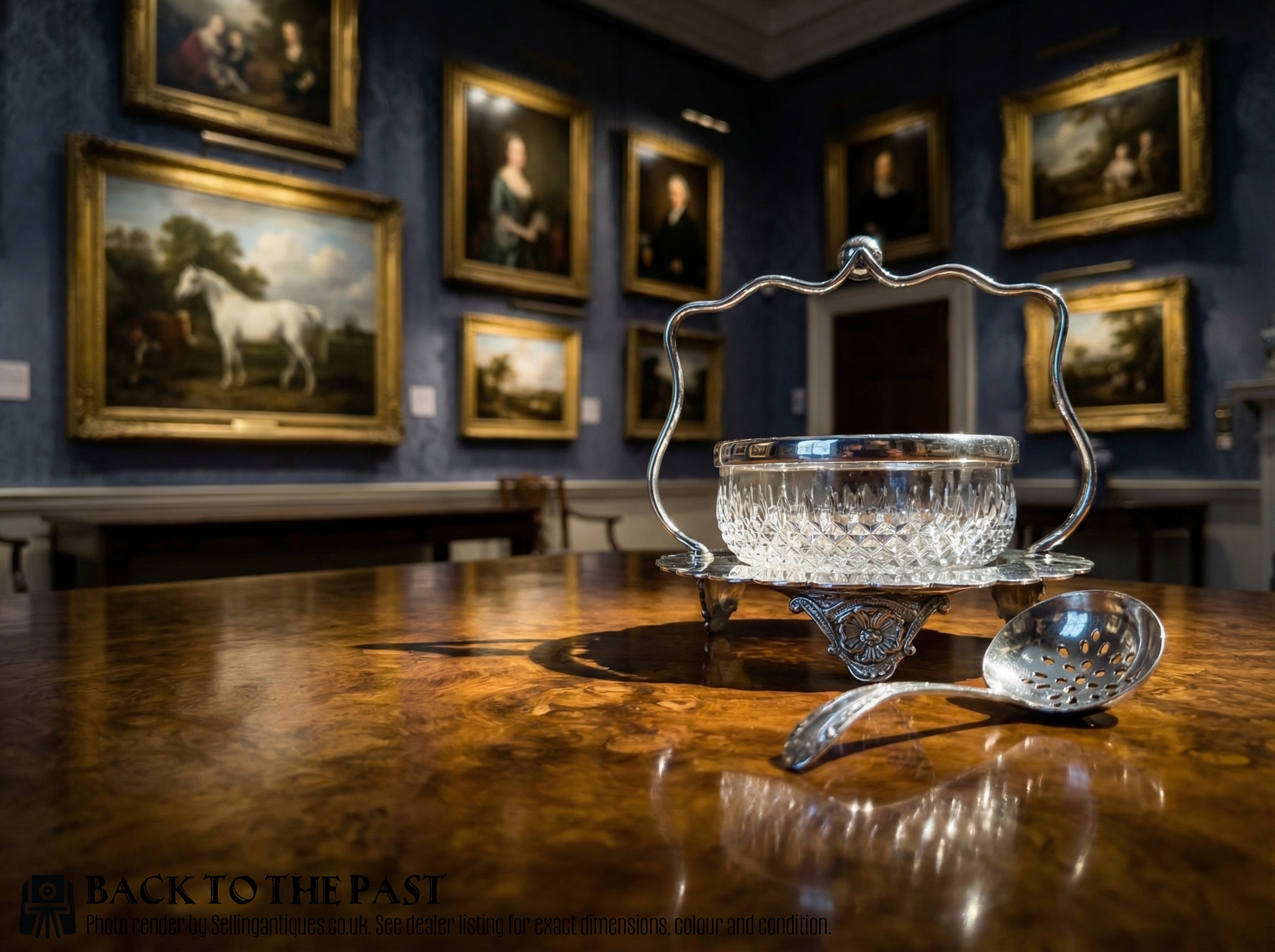
Antique Glass Jam Dish
An antique glass jam dish combines a vibrant glass vessel with a supportive mount of silver plate or sterling silver, designed for the dining table or tea service. The listings here feature preserve pots, relish caddies, and condiment stands spanning the Georgian, Victorian, Edwardian, and Art Deco periods.
Most examples you meet on this page date from the Edwardian era and the early twentieth century, frequently showcasing rich cranberry glass or vaseline glass. They appear both as single vessels and as twin bowls held within fitted metal stands, often accompanied by matching spoons.
Makers occasionally shaped these vessels into figurative forms, such as an apple, while other pieces rely on classic geometric cut glass mounted in silver gilt or silver plate. The form bridges practical serveware and decorative tablescape ornament, reflecting changing dining habits across the nineteenth and twentieth centuries.
How they were made
Makers shaped the glass vessels using techniques like mould blowing, free blowing, and precise wheel cutting to create deep facets and patterns. Cranberry glass achieved its distinct pinkish-red tone through the addition of gold chloride to the molten batch, while vaseline glass gained its yellowish-green hue from uranium oxide.
Metal mounts and stands relied on silver plating over base metal or solid sterling silver and silver gilt, fashioned through casting, piercing, and soldering. Silversmiths engineered supportive frames with handles and feet specifically contoured to cradle delicate glass bowls and liners securely.
What varies in quality
Quality depends upon the clarity and depth of colour in the glass, alongside the crispness of any wheel-cut faceting and the integrity of the metal mounts. Heavier lead crystal and deeply saturated cranberry or vaseline glass distinguish finer pieces from simpler commercial wares.
The sophistication of the metalwork also determines the tier of the piece, with substantial silver plating, silver gilt, or solid sterling silver mounts elevating the design. Maker attribution, such as work by Hukin and Heath, adds structural distinction and collectible merit to the ensemble.
Hukin and Heath
The Antique Glass Jam Dish Glossary
- Cranberry glass
- A transparent glass coloured red by the addition of gold, popular in Victorian and Edwardian tableware. It ranges in shade from pale pink to deep ruby.
- Vaseline glass
- A transparent or translucent glass containing uranium dioxide, producing a distinctive yellow-green colour. It often exhibits a strong green fluorescence under ultraviolet light.
- Silver plate
- A base metal, such as copper or Britannia metal, coated with a thin layer of silver using electrochemical or mechanical methods. It provided an accessible alternative to solid silver.
- Silver gilt
- Silver that has been coated with a thin layer of gold on its surface, creating a rich two-tone appearance. This finish protected the underlying silver from tarnishing while adding warmth.
- Cut glass
- Glass decorated by abrasive wheels that grind facets and patterns into the surface. The technique creates light-catching angles across bowls and dishes.
Antique Glass Jam Dish: Frequently Asked Questions
What were antique glass jam dishes used for?
These dishes served sweet preserves, marmalade, or relishes during formal breakfasts, afternoon teas, and dining table courses. They kept condiments accessible while adding a decorative focal point to the table.
The inclusion of stands, ladles, and lidded pots allowed hosts to present sticky preserves cleanly. Twin bowl formats enabled the simultaneous service of multiple preserves.
How do I date an antique glass jam dish?
Dating relies on stylistic markers, glass colours, and mounting techniques associated with specific design periods from Georgian times through Art Deco. Georgian pieces tend to feature heavy cut lead crystal, whilst Victorian and Edwardian examples frequently showcase cranberry glass in ornate silver-plated stands.
Art Deco items from the nineteen-thirties introduce cleaner geometric lines and simplified metal mounts. Hallmarks stamped onto silver or silver-plated components also provide precise year and maker attribution.
How do I care for cranberry glass?
Wash cranberry glass gently in lukewarm water using mild detergent and a soft cloth to protect the surface from scratching. Avoid sudden temperature changes to prevent thermal shock and cracking in older glass vessels.
Keep silver-plated stands polished with appropriate creams, taking care not to let abrasive compounds touch the glass. Store the pieces away from direct sunlight to preserve the depth of the glass colour.
What is the difference between cranberry and vaseline glass?
Cranberry glass gets its characteristic pinkish-red hue from gold content melted into the batch during production. Vaseline glass contains uranium dioxide, which yields a pale yellow-green colour and a notable glow under ultraviolet light.
Both types gained popularity during the Victorian and Edwardian periods for decorative tabletop serveware. They appear frequently in jam dishes, either as standalone bowls or fitted into metal stands.