


Cut Glass Preserve Pot
These cut glass preserve pot examples bring functional sparkle to the table, combining heavy cut crystal with precious silver mounts.
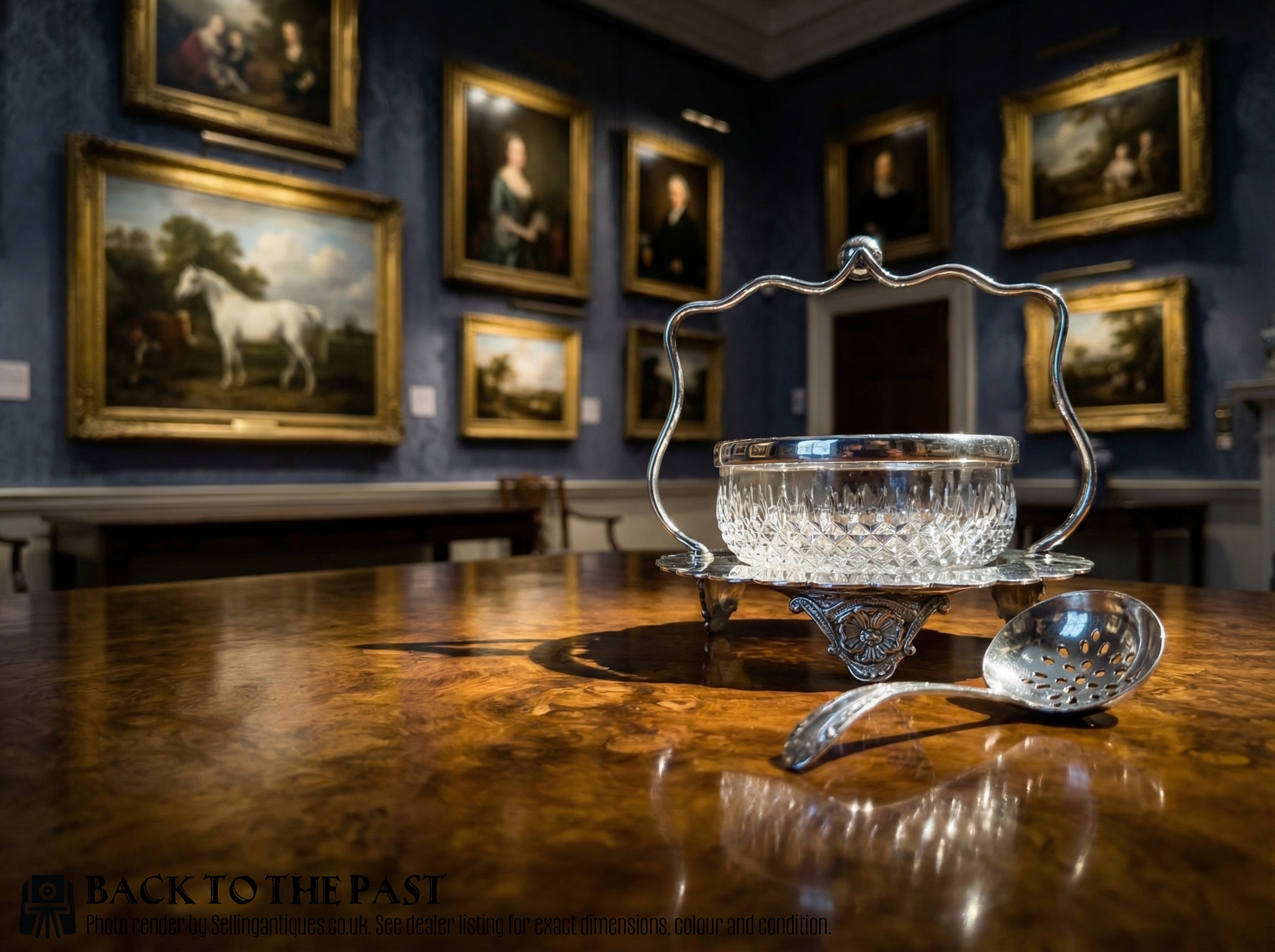
Cut Glass Preserve Pot
A cut glass preserve pot serves jam, honey, or condiments on the dining table, pairing a glass vessel with a matching lid and often a spoon. When searching for a cut glass preserve pot, buyers encounter various forms including lidded butter dishes, honey jars on stands, and condiment jars dating from the eighteenth century through to the Art Deco period.
The pieces appearing on this page span several distinct stylistic eras, covering Georgian, Regency, Victorian, Edwardian, and Art Deco designs. Most examples encountered here combine moulded or hand-cut vessels with either sterling silver mounts or silver-plated fittings.
How they were made
Makers produced these vessels using lead crystal, flint glass, or standard glass, shaping them through heavy cutting and moulding techniques to create light-reflecting facets. The resulting bodies feature deep geometric incisions or flutes designed to catch the light on the dining table.
Mounts and lids utilise sterling silver or silver plate, often bearing hallmarks that help pinpoint the manufacturing date and maker. Spoons accompanying these pots match the metalwork of the collars and covers, completing the fitted set.
Some preserve pots retain their original tiny spoons, designed specifically to navigate sticky marmalade without drowning in the jar.
What varies in quality
The weight and clarity of the glass set the foundation for quality, with heavy lead crystal and sharp, clean cutting distinguishing superior vessels from simpler moulded glass. Crisp facets and substantial walls demonstrate better craftsmanship in the underlying material.
The execution and material of the metal mounts dictate the upper tier of these pieces, where substantial sterling silver collars and fitted lids outweigh standard silver-plated alternatives. Maker marks from established firms add historical distinction to the finished object.
Asprey & Co.
The Cut Glass Preserve Pot Glossary
- Cut Glass
- Glass decorated by grinding facets or patterns into the surface using wheels. This technique creates brilliant optical effects and tactile texture on the vessel wall.
- Lead Crystal
- Glass containing a high proportion of lead oxide, which increases weight, brilliance, and softness for easier cutting. It forms the heavy, clear body of finer tablewares.
- Silver Plate
- A thin layer of silver fused to a base metal such as copper or nickel brass. This method provided the look of solid silver at a more accessible cost for domestic tableware.
- Sterling Silver
- An alloy consisting of pure silver and a small amount of other metals, usually copper, to add strength. British items commonly feature the lion passant mark to denote this standard.
- Condiment Jar
- A small vessel designed to hold table sauces, mustards, or preserves during a meal. These often sit on stands or feature dedicated spoons.
Cut Glass Preserve Pot: Frequently Asked Questions
What is a cut glass preserve pot used for?
These pots served jams, jellies, marmalades, and honey during formal breakfasts and afternoon teas. They kept sticky condiments contained while presenting them attractively on the dining table.
Many examples include a matching spoon and a fitted lid to protect the contents between uses. Some versions also feature an integrated stand or base plate to catch drips.
How do I tell Georgian from Edwardian pieces?
Georgian and Regency pieces tend to feature heavier, hand-cut lead glass with simpler, robust silver or unmounted rims. The cutting is often deeper and more individual to the glass cutter.
Edwardian and later examples frequently incorporate mass-produced moulded glass fitted with stamped silver-plated or hallmarked sterling silver collars. These later items often reflect prevailing Art Deco or Edwardian stylistic revivals.
Are these pots dishwasher safe?
Modern dishwashers use harsh detergents and high heat that can permanently cloud antique glass and damage delicate silver plating. Hand washing in warm, soapy water is essential to preserve the finish.
Silver mounts require occasional polishing with a suitable cloth to prevent tarnish while avoiding abrasive contact with the glass facets.
Do all preserve pots come with spoons?
Not every surviving pot retains its original spoon, as small silver items were easily misplaced over decades of use. Many pieces listed are paired with a replacement spoon or sold without one.
When an original spoon accompanies the pot, it typically matches the metalwork of the lid and collar, often sharing the same period hallmarks.