




Antique Silver Preserve Dish
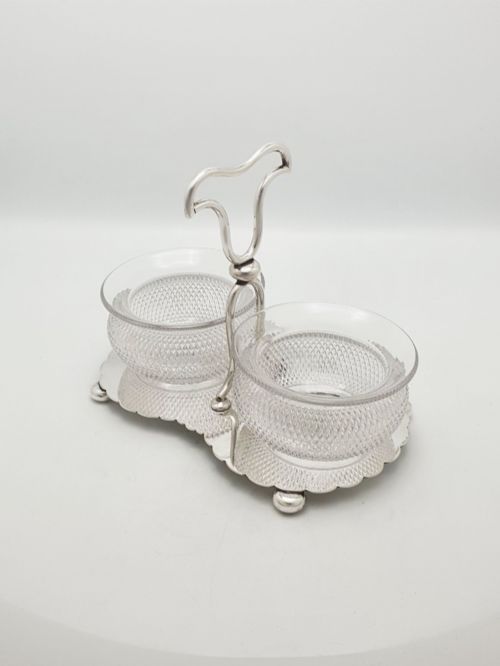
These antique silver preserve dish examples combine gleaming metal with coloured glass to grace a breakfast table.
Antique Silver Preserve Dish
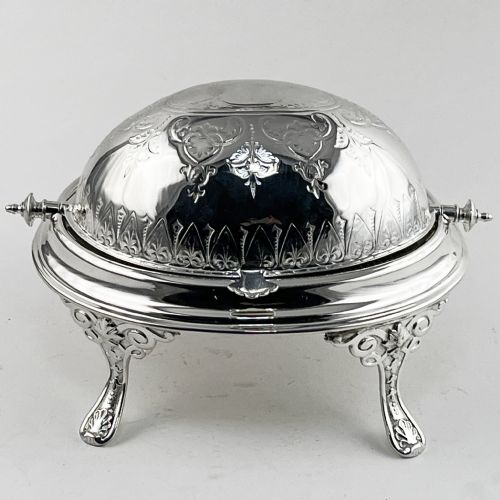
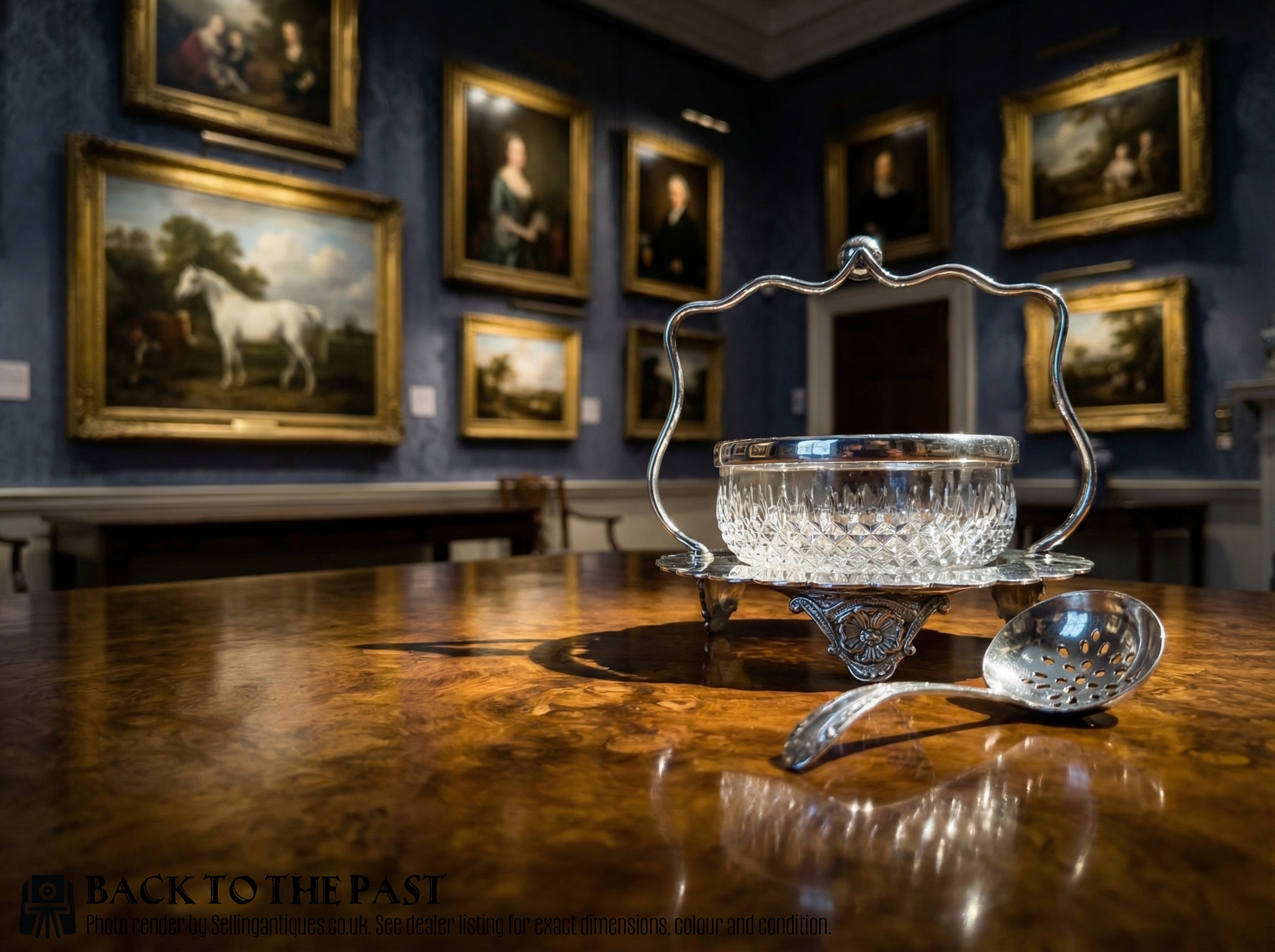
An antique silver preserve dish brings functional elegance to the table, designed specifically to hold jams, marmalades, and butter. These pieces range from simple glass bowls resting in plated stands to elaborate revolving lidded vessels.
Most examples encountered on this page date from the Victorian, Edwardian, and Art Deco periods. Makers utilised silver plate, sterling silver, and silver gilt alongside vibrant glass insertions to create practical serving vessels.
Materials and construction methods
The metalwork relies heavily on silver plating over nickel silver or solid sterling silver, shaped into pierced stands, frames, and fitted lids. Silversmiths often applied a thin layer of gold wash, known as silver gilt, to the interior of baskets to protect the metal from the acidic nature of fruit preserves.
Glass components feature free-blown, moulded, and deeply cut crystal designs, frequently in striking cranberry or vaseline hues. These glass liners fit securely into bespoke metal frames, sometimes accompanied by matching small spoons or knives.
Listings feature items spanning the Victorian, Edwardian, and Art Deco eras, constructed from silver plate, sterling silver, and cranberry glass.
Judging quality in preserve dishes
Quality reveals itself in the weight and crispness of the metal mountings, particularly the depth of piercing and the smoothness of any mechanical action on revolving lids. Thicker silver plating resists wear better over decades of polishing and use.
The glass insert adds another layer of distinction, where heavy, sharply faceted cut crystal or richly saturated cranberry glass commands greater attention than simple moulded liners. Maker marks stamped into the silver base also elevate a piece by confirming its origin.
Hukin and Heath·Adie Brothers
The Antique Silver Preserve Dish Glossary
- Silver Plate
- A thin layer of pure silver bonded to a base metal, typically nickel silver or copper, to provide the appearance of solid silver at a lower cost.
- Silver Gilt
- Sterling silver or silver-plated metal that has been coated with a thin layer of real gold, often applied to the inside of preserve bowls to prevent corrosion from fruit acids.
- Cranberry Glass
- A rich red-pink transparent glass created by adding gold chloride to the molten batch, widely popular during the Victorian era for tableware.
- Vaseline Glass
- A transparent yellowish-green glass containing uranium dioxide, which glows brightly under ultraviolet light and appeared frequently in early twentieth-century decorative items.
- Pierced Work
- A decorative technique where metal is cut through in geometric or floral patterns, commonly seen on the baskets and stands supporting glass preserve liners.
Antique Silver Preserve Dish: Frequently Asked Questions
What is an antique silver preserve dish?
An antique silver preserve dish is a table vessel designed to hold jams, jellies, and butter for formal dining. It typically consists of a glass bowl paired with a decorative metal stand and sometimes a matching spoon.
These items gained immense popularity during the Victorian and Edwardian periods when breakfast tables featured elaborate spread displays. They combine practical food storage with ornamental metalwork.
How do I date a silver preserve dish?
Dating relies on a combination of hallmarked stamps, stylistic clues, and manufacturing techniques. Sterling silver items often carry city assay marks, date letters, and maker initials that pinpoint the exact year of production.
Silver-plated pieces lack official date hallmarks but reveal their age through design characteristics. Victorian examples often feature ornate floral piercing, while Art Deco pieces display geometric lines and faceted crystal.
Can I use an antique preserve dish today?
These dishes remain entirely functional and add charm to a modern breakfast or afternoon tea table. They serve their original purpose holding jams and marmalades perfectly well.
Take care with silver gilt interiors and vintage glass by hand washing them gently after use. Acidic preserves should not be left in contact with silver plate for extended periods.