


Silver Plated Jam Dish
A silver plated jam dish brings brilliant colour and bright metalwork to the table, and these pieces offer both utility and charm.
Silver Plated Jam Dish
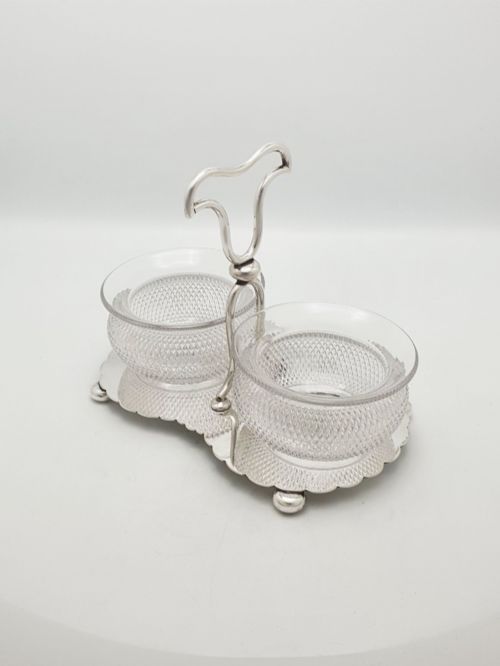
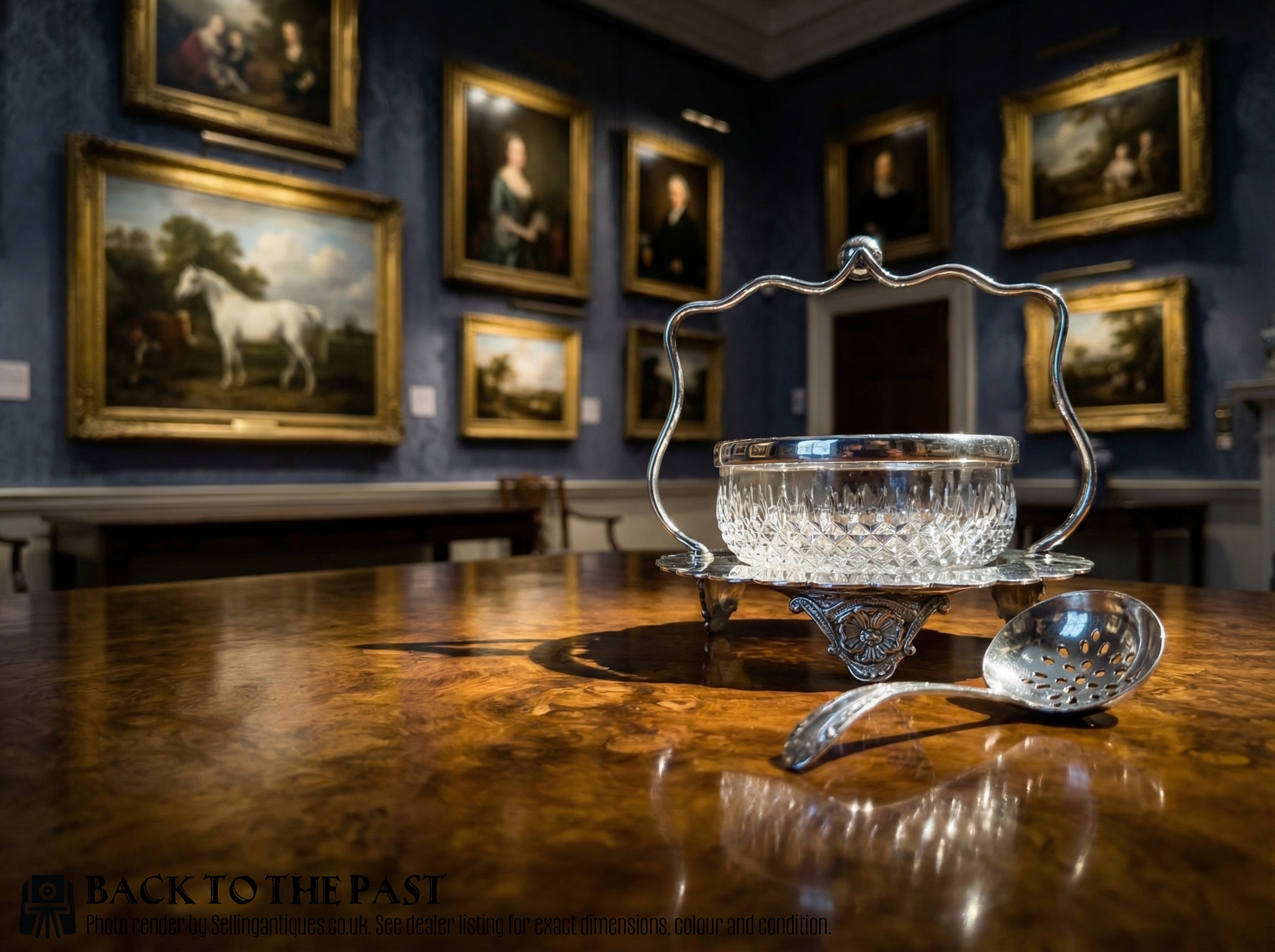
A silver plated jam dish serves preserves, condiments, and relishes at the table, combining a metal frame with a glass vessel. These items emerge from periods spanning the Victorian era through the Edwardian years and into Art Deco design.
The versions most commonly found here pair silver plate with rich cranberry glass or cut glass inserts. Many take the form of single pots with spoons, twin bowls on stands, or elaborate condiment frames and relish caddies.
How they were made
Makers formed the structural frames and stands using silver plate, applying a thin layer of silver over a base metal. This technique provided the lustrous appearance of solid silver at a more accessible cost for everyday dining.
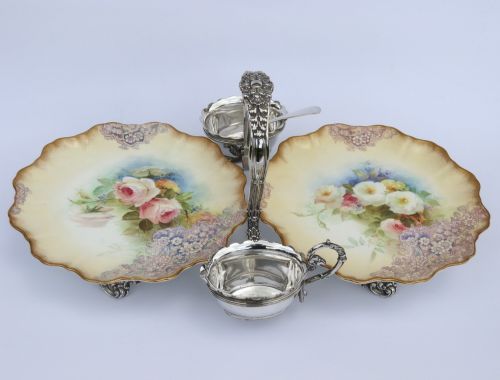
The glass elements were produced using skilled moulding, cutting, and colouration techniques to create vibrant cranberry, vaseline, or clear cut glass inserts. Specialised potteries also contributed hand-painted porcelain plates for specific dessert and preserve sets.
One exceptional piece takes the form of a miniature military cap, ready to serve jam with absolute tactical precision.
What varies in quality
Quality rests in the crispness of the metalwork casting, the weight and clarity of the glass insert, and the integrity of the silver plating. Finer pieces display sharper decorative details on the stands and heavier, more resonant glass bowls.
The harmony between the metal holder and its glass vessel defines the upper tier of production. Maker attribution and the inclusion of original matching spoons or hand-painted porcelain components further distinguish the best examples.
Walker and Hall·James Dixon and Sons·Doulton Burslem
The Silver Plated Jam Dish Glossary
- Silver Plate
- A base metal coated with a thin layer of silver. This method allowed manufacturers to create decorative tableware with a bright metallic finish.
- Cranberry Glass
- A rich red glass coloured by the addition of gold chloride during manufacture. It became highly popular for Victorian and Edwardian tableware.
- Condiment Stand
- A metal frame designed to hold multiple small dishes or jars for table sauces and preserves. These stands often incorporate carrying handles and dedicated spoon rests.
- Preserve Dish
- A vessel specifically shaped to hold jams, jellies, and fruit preserves. They frequently sit within fitted metal stands accompanied by matching spoons.
Silver Plated Jam Dish: Frequently Asked Questions
How do I clean a silver plated jam dish?
Wash the glass insert gently in warm soapy water using a soft cloth to avoid scratching the surface.
Polish the silver plated frame sparingly with a dedicated silver cloth, keeping polish away from the glass to preserve the metal finish.
Are the glass inserts original to the stands?
Many pieces retain their original fitted glass bowls, particularly those shaped specifically for unusual frames or novelty caddies.
Inspect the fit and rim measurements to confirm whether the glass sits flush within the metal collar.
How can I tell an Edwardian dish from an Art Deco one?
Edwardian pieces tend to feature flowing floral motifs, pierced scrollwork, and rich cranberry glass inserts.
Art Deco items shift toward geometric lines, crisp cut glass patterns, and streamlined frames dating from around nineteen thirty.
Can these dishes still be used for serving food?
These items function perfectly for serving jams, relishes, and condiments during meals.
Ensure the silver plating remains intact on any surfaces that come into direct contact with acidic preserves.