


Antique Silver Jam Dish
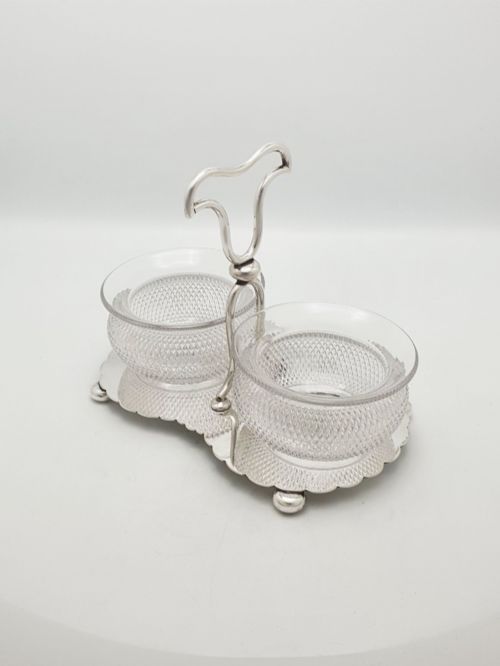
An antique silver jam dish brings bright glass and gleaming metal to the table, offering a traditional way to serve preserves with style.
Antique Silver Jam Dish
An antique silver jam dish combines a glass vessel with a metal holder, tray, or mount. These pieces span the Victorian, Edwardian, and Art Deco periods, showcasing the changing tastes of dining tables across decades.
The most common examples on this page pair silver plate with rich cranberry glass or cut glass, often accompanied by a dedicated spoon. Formats range from single preserve pots to twin bowls on stands and elaborate condiment caddies.
Makers such as Hukin and Heath created distinctive novelties, while larger firms produced practical stands and sets. The designs reflect formal breakfast and dessert traditions where presentation mattered greatly.
Materials and manufacture
The metal components rely on either sterling silver, silver gilt, or durable silver plate over a base metal. Silversmiths shaped mounts through casting and piercing, creating secure frames to cradle the delicate glass inserts.
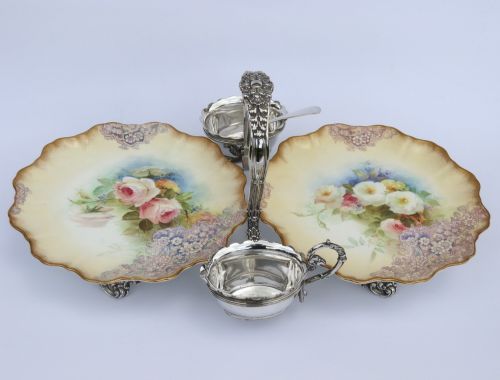
Glass sections involve techniques like mould-blowing, cutting, and flash-tinting to achieve vibrant cranberry or vaseline hues. Some high-end dessert sets incorporate hand-painted porcelain plates alongside the metalwork and glass.
The archive includes specialised condiment stands and dessert sets alongside single preserve pots.
Assessing quality and execution
Quality rests in the crispness of the metal casting, the weight of the silver plate or solid silver, and the clarity of the glass. Superior pieces feature heavier mounts, well-defined piercing, and glass free from cloudiness or chips.
Design ambition separates standard condiment holders from exceptional works. Novelty shapes, such as fruit forms, and integrated sets with matching spoons or painted porcelain elevate a piece above routine tablewares.
Walker and Hall·Hukin and Heath·James Dixon and Sons·Doulton Burslem·Henry James Hulbert
The Antique Silver Jam Dish Glossary
- Silver Plate
- A thin layer of pure silver bonded to a base metal such as copper or nickel silver. This technique allowed manufacturers to produce elaborate tableware at a lower cost than solid silver.
- Cranberry Glass
- A rich pinkish-red glass produced by adding gold chloride to the molten batch. It became exceptionally popular for Victorian and Edwardian tablewares.
- Silver Gilt
- Silver that has been coated with a thin layer of gold on its surface. This finish provides a warm golden sheen and protects the underlying silver from tarnishing.
- Vaseline Glass
- A type of glass coloured with uranium oxide, yielding a distinct yellowish-green hue. It often glows bright green under ultraviolet light.
- Condiment Stand
- A metal frame designed to hold multiple jars, bottles, or bowls for table sauces and preserves. These stands often include a central carrying handle.
Antique Silver Jam Dish: Frequently Asked Questions
What is an antique silver jam dish?
An antique silver jam dish is a table accessory consisting of a glass bowl held within a silver or silver-plated frame. They were designed to hold preserves, marmalade, or relishes for formal breakfast and dessert services.
These pieces combine functional glassware with decorative metalwork, reflecting the aesthetic preferences of Victorian, Edwardian, and Art Deco dining traditions.
How do I date an antique jam dish?
Dating relies on maker's marks, hallmarks stamped into the metal, and stylistic clues from the period. Victorian and Edwardian examples often feature ornate floral piercing, while Art Deco pieces show geometric lines.
Glass colour and cutting techniques also help narrow down the decade of production, matching the trends recorded across the late nineteenth and early twentieth centuries.
How were these dishes used originally?
These dishes sat on the dining table or sideboard during breakfast, afternoon tea, or formal dinners. Guests or hosts used a small spoon to transfer jam, jelly, or preserve onto their plates.
Many designs included a matching spoon and a fitted stand to catch drips, keeping the linen tablecloth clean during social gatherings.
How do I care for silver plated stands?
Care requires gentle cleaning with a soft cloth and a non-abrasive silver polish to maintain the finish without wearing through the plated layer. Harsh chemical dips should be avoided, particularly on pieces with fitted glass or gilt elements.
Glass inserts can usually be washed in warm soapy water separately from the metal mounts to prevent moisture becoming trapped between the components.
What is cranberry glass?
Cranberry glass is a transparent, pink-red decorative glass coloured with gold during the melting process. It was a staple material for Victorian and Edwardian tablewares, prized for its festive tone.
When combined with silver-plated stands, the deep red glass created a striking visual contrast that suited high-status dining rooms.