


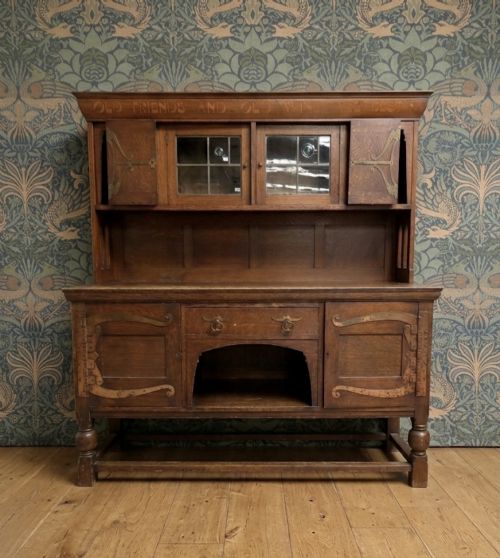
Antique Glass Credenza
An antique glass credenza brings nineteenth-century presence and refined display space to a room, uniting timber and glazed architecture.
Antique Glass Credenza
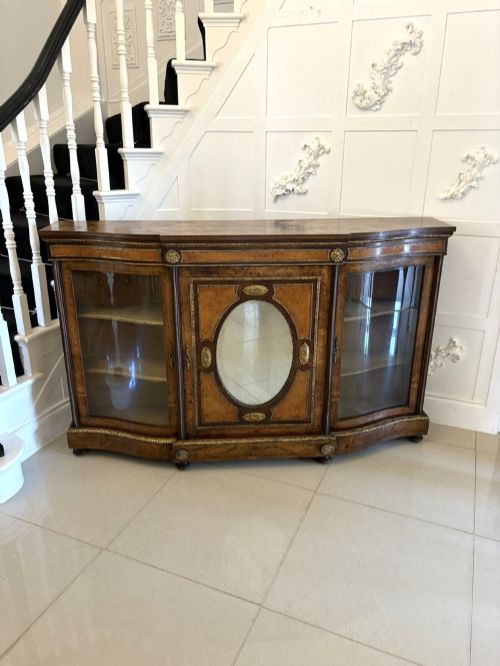
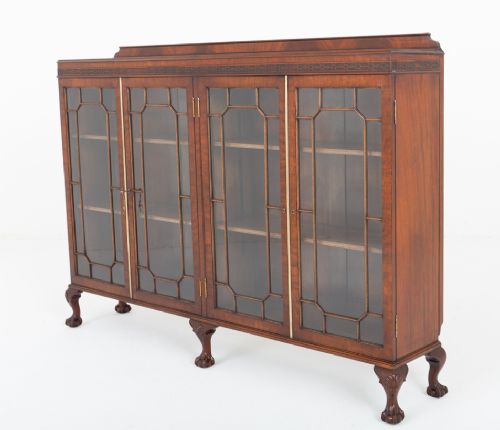
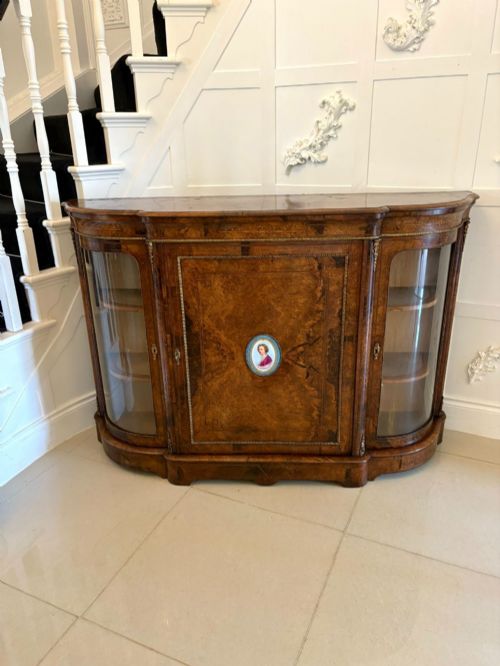
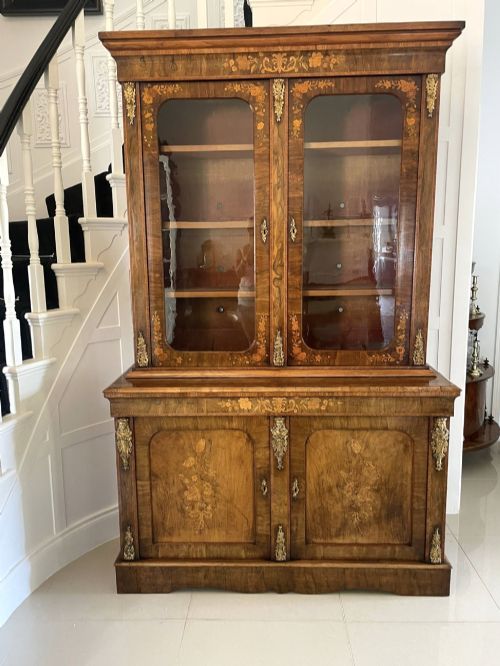
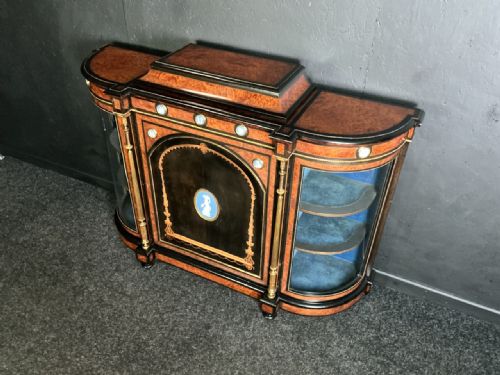
An antique glass credenza is a substantial low-standing cabinet designed for display and storage, commonly emerging from Victorian workshops. These pieces frequently combine a central glazed cupboard with flanking curved or straight side compartments enclosed by glass doors.
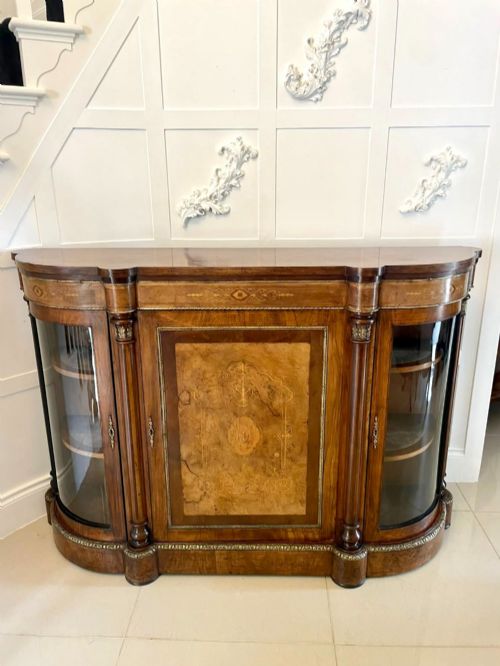
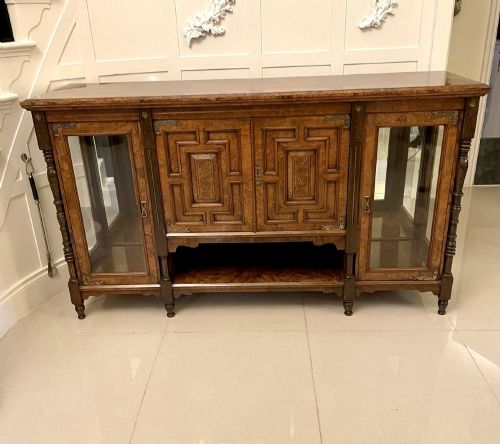
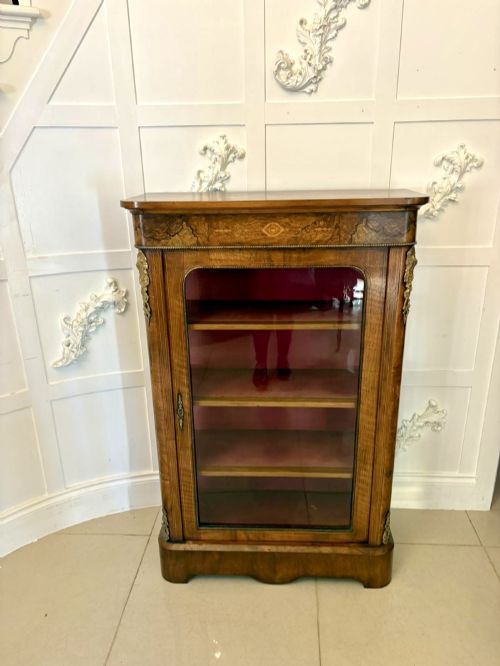
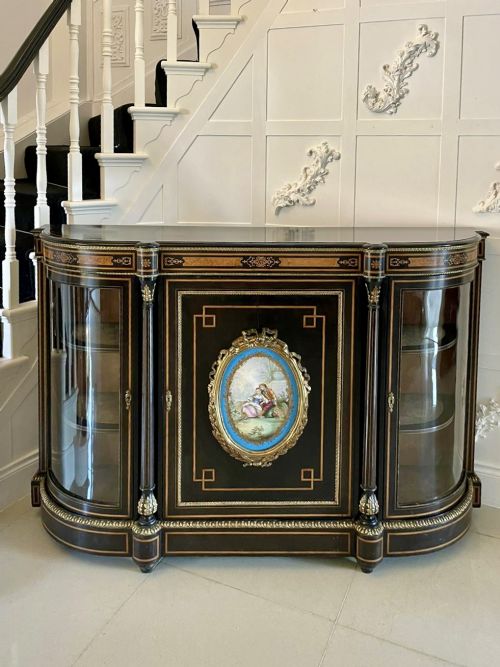
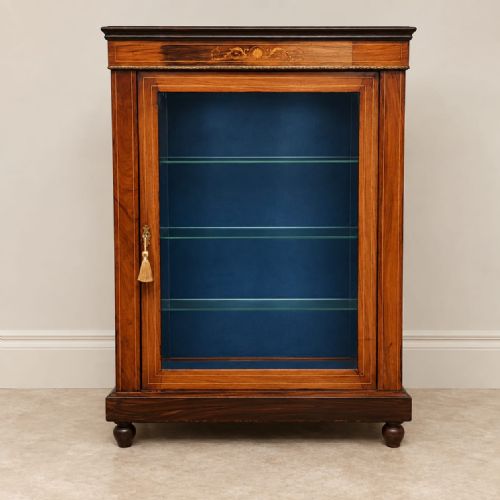
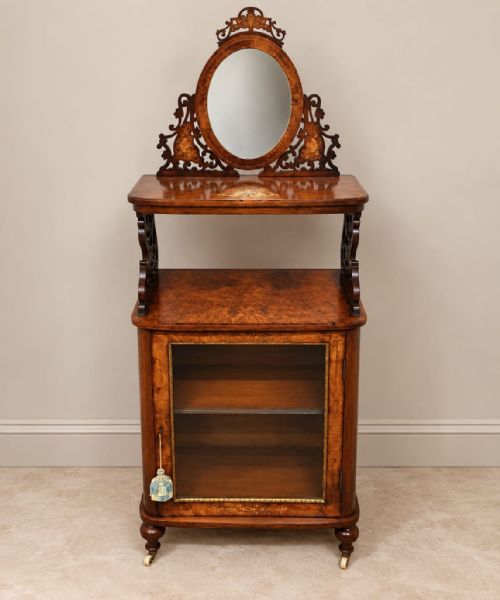
Buyers encountering this phrase find diverse nineteenth-century forms including serpentine shapes, pier cabinets, and inlaid sideboards. Walnut, mahogany, and ebonised woods dominate the construction, often enhanced with marquetry and gilt metal mounts.
Originating largely in the Victorian period, along with related Napoleon III and Aesthetic Movement examples, these items served formal drawing rooms and parlours for showing porcelain and decorative objects.
Materials and construction methods
Cabinet makers utilised dense hardwood timbers such as burr walnut, mahogany, and rosewood, frequently applying intricate floral marquetry and contrasting stringing. Carcasses were built using traditional joinery before receiving polished finishes that highlighted the natural grain.
Cast or chased ormolu and bronze mounts provided structural accent and decorative frame around glazed doors and panel edges. Glass panels were hand-set into timber framing to create secure vitrine enclosures for display.
Several cabinets retain their original internal velvet linings, ready to cushion delicate porcelain once again.
Distinctions in execution and design
The sophistication of the marquetry inlay and the precision of the cast ormolu mounts set finer examples apart from simpler production. Cabinet makers who employed detailed floral patterns and figured burr walnut veneers achieved a higher degree of visual depth.
Proportion and cabinet shaping also dictate standing, with serpentine fronts and exhibition-grade joinery representing the upper tier of period manufacture. The integration of porcelain plaques and amboyna banding further separates standard items from exceptional ones.
Ambrose Heal for Heal & Son·Maison Gagneau
The Antique Glass Credenza Glossary
- Credenza
- A low cabinet originally developed for dining rooms or drawing rooms, featuring central and side compartments often enclosed by glass. These pieces provide surface space for display alongside enclosed storage.
- Ormolu
- Gilded bronze or brass mounts applied to furniture for decorative effect. Makers used these metallic elements to frame panels and highlight architectural lines.
- Marquetry
- Decorative veneer work forming pictorial or geometric patterns using various coloured woods. Craftsmen cut thin slices of timber to fit precisely into a contrasting background veneer.
- Pier Cabinet
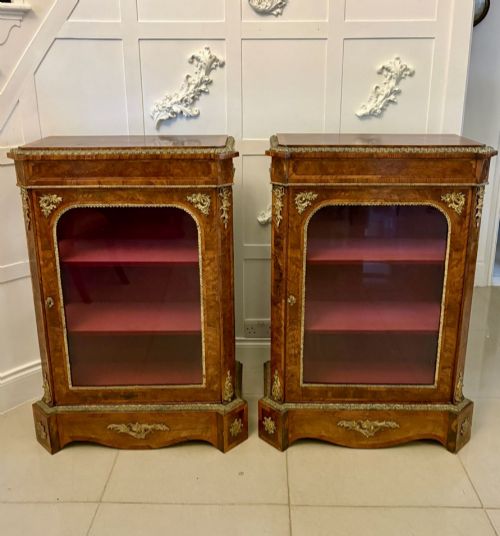
- A narrow display cabinet designed to fit against a wall space between windows. These upright glazed pieces typically house porcelain and small ornaments.
Antique Glass Credenza: Frequently Asked Questions
Where did people place these credenzas?
Victorian households positioned these cabinets against principal walls in drawing rooms and formal reception spaces. They functioned as focal points for displaying prized ceramics and glassware.
The low profile allowed the top surface to hold decorative objects while keeping the room feeling open.
How do I care for the timber?
Maintain wood surfaces by applying appropriate beeswax polish sparingly and buffing with a soft cloth. Keep the cabinet away from direct sunlight and steady heat sources to protect the veneers.
Regular dusting with a dry lint-free cloth prevents accumulation in the carved and inlaid details.
What is the difference between a credenza and a pier cabinet?
A credenza is typically a wide, low multi-section cabinet with central and side glass doors spanning the front. A pier cabinet is narrower and taller, designed specifically for placement in wall spaces between architectural openings.
Both forms utilise glass panelling for display, but their proportions serve different room layouts.
How can I identify nineteenth-century styles?
Examine the timber choices, mount designs, and inlay motifs to determine the period aesthetic. Victorian and Napoleon III pieces often feature burr walnut and ormolu, while Arts and Crafts examples lean towards solid oak.
Construction methods visible inside the cabinet also provide clues regarding the manufacturing era.